
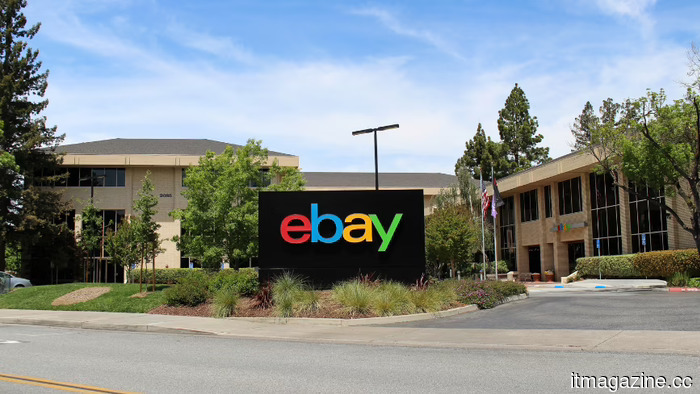
eBay turns down GameStop's $56 billion offer as
Ryan Cohen proposed a $125 per share offer, partly supported by a $20 billion commitment letter from TD Securities and, briefly, by selling old store signs on eBay. However, the eBay board, which had to initially ban and then unban him during the negotiations, has declined the offer.
eBay has officially rejected GameStop’s $56 billion takeover proposal, informing CEO Ryan Cohen on Tuesday that the bid is "neither credible nor attractive." Paul Pressler, eBay’s board chairman, communicated the rejection in a letter that was notably straightforward for U.S. mergers and acquisitions correspondence. “The Board, with the support of its independent advisors, has thoroughly reviewed your proposal and has decided to reject it,” Pressler stated.
The board highlighted concerns about the uncertainties surrounding GameStop’s acquisition financing and the risks associated with leveraging and merging the two companies.
Cohen’s offer, announced on May 4, included a cash-and-stock proposal at $125 per eBay share, representing a 20% premium over the previous closing price. The cash portion was intended to be financed by a $20 billion commitment letter from TD Securities. This letter, which Cohen disclosed, stipulated that the combined entity must retain an investment-grade credit rating after the deal closed. Moody’s quickly labeled the proposed acquisition as "credit negative" for eBay due to the implied leverage, indicating that without an investment-grade rating, the TD financing would be unaccessible.
Additionally, there was an unconventional funding source. On May 7, Cohen revealed on X his plan to sell items from his GameStop office, including store signs and old carpets, on eBay’s marketplace to help fund the offer. Initial estimates suggested that these items could generate around $138,000 against the $56 billion purchase price.
eBay suspended Cohen’s seller account within ten hours of his announcement but reinstated it on May 8 after determining that the suspension had been triggered by automated systems. This incident created the unusual situation where the target of a $56 billion takeover banned the bidder from its own platform before reversing the ban.
Investor reactions have varied. Michael Burry of Scion Asset Management closed his GameStop position shortly after Cohen’s announcement, advising CNBC: “Never confuse debt for creativity.” Since the bid was made public, GameStop shares have declined, while eBay shares have remained above the $125 offer level during parts of the past week, indicating that market participants see a low likelihood of the deal going through.
Cohen has expressed his willingness to take the offer directly to eBay shareholders through a special meeting; however, the path to a hostile bid still faces the same financing challenges that led to the board’s rejection. A merged GameStop-eBay entity with $20 billion of additional acquisition debt is widely thought to struggle in maintaining an investment-grade rating, which would invalidate the TD commitment letter and leave about half the offer unfunded.
GameStop’s existing business is significantly smaller than eBay’s, with GameStop ending the most recent fiscal year with around $4 billion in revenue compared to eBay’s $10.3 billion. The cash component of the proposed deal exceeds GameStop’s current market capitalization. This structural mismatch has been a focal point in analyst discussions since the bid was announced.
GameStop has not yet responded to the rejection, and Cohen's public remarks over the past week have been centered on his commitment to the deal and his readiness to engage directly with shareholders. eBay's board has not commented further beyond Pressler’s letter.
This incident adds to the list of unconventional strategies Cohen has pursued since taking charge of GameStop. The company's earlier transformations, the meme-stock phenomenon of 2021, the venture into NFTs and withdrawal from it, along with ongoing cost-cutting and treasury management measures, have all occurred in the public eye. The eBay offer was always expected to be the largest of these maneuvers; it appears to have concluded sooner than Cohen might have wished.
Other articles
 The release date for season 3 of The Rings of Power has been announced, and the One Ring will be making its appearance sooner than anticipated.
Prime Video has announced the release date for season 3 of Rings of Power, featuring new cast members and the introduction of the One Ring into the narrative.
The release date for season 3 of The Rings of Power has been announced, and the One Ring will be making its appearance sooner than anticipated.
Prime Video has announced the release date for season 3 of Rings of Power, featuring new cast members and the introduction of the One Ring into the narrative.
 Huawei is said to be experimenting with new technology for its largest phone battery to date.
A recent leak suggests that Huawei is testing new battery materials and designs that may allow smartphone capacity to exceed 10,000mAh.
Huawei is said to be experimenting with new technology for its largest phone battery to date.
A recent leak suggests that Huawei is testing new battery materials and designs that may allow smartphone capacity to exceed 10,000mAh.
 Google has significantly improved Gemini for Home, enhancing its ability to manage your smart home.
Google has launched a new update for Gemini for Home that features a more intelligent camera search, quicker device controls, enhanced onboarding, and various improvements to the Google Home app.
Google has significantly improved Gemini for Home, enhancing its ability to manage your smart home.
Google has launched a new update for Gemini for Home that features a more intelligent camera search, quicker device controls, enhanced onboarding, and various improvements to the Google Home app.
 How apprenticeship programs are broadening access to job opportunities.
Craft Education and WGU are working together to broaden apprenticeship degree pathways that integrate paid employment, hands-on training, and academic advancement in areas such as teaching and nursing.
How apprenticeship programs are broadening access to job opportunities.
Craft Education and WGU are working together to broaden apprenticeship degree pathways that integrate paid employment, hands-on training, and academic advancement in areas such as teaching and nursing.
 How apprenticeship programs are broadening access to job opportunities
Craft Education and WGU are collaborating to broaden apprenticeship degree options that integrate paid employment, hands-on training, and academic advancement in areas such as education and nursing.
How apprenticeship programs are broadening access to job opportunities
Craft Education and WGU are collaborating to broaden apprenticeship degree options that integrate paid employment, hands-on training, and academic advancement in areas such as education and nursing.
 AI voice conversations often come across as uncomfortable because assistants struggle with timing their responses.
Thinking Machines Lab is evaluating full duplex AI capable of listening and responding simultaneously, but the true assessment will be how beneficial faster voice conversations seem once individuals have the opportunity to experience them.
AI voice conversations often come across as uncomfortable because assistants struggle with timing their responses.
Thinking Machines Lab is evaluating full duplex AI capable of listening and responding simultaneously, but the true assessment will be how beneficial faster voice conversations seem once individuals have the opportunity to experience them.
eBay turns down GameStop's $56 billion offer as
The board of eBay has dismissed GameStop's $56 billion acquisition proposal, describing it as neither credible nor appealing, due to concerns over financing uncertainty and leverage.