
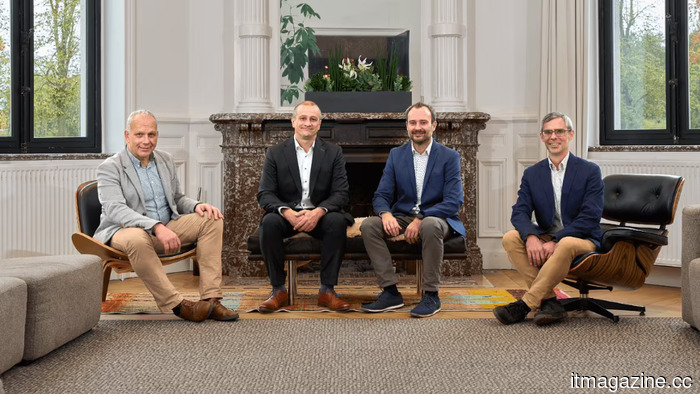
Dutch company Eyeo secures €40 million to develop NCOS color-splitting image sensors for commercial use.
Innovation Industries is leading the Series A round, with returning investors including imec.xpand, Invest-NL Deep Tech Fund, QBIC, HTGF, and BOM. The total funding has now reached €55 million. This capital will support in-house chip design and advancement towards volume sensors utilizing the company's NCOS color-splitting technology.
Eindhoven-based eyeo has successfully secured €40 million in Series A funding aimed at commercializing a sensor technology that it claims eliminates a limitation that has influenced digital imaging for fifty years. The funding round is spearheaded by Innovation Industries, with participation from existing investors like imec.xpand, Invest-NL Deep Tech Fund, QBIC, High-Tech Gründerfonds, and Brabant Development Agency (BOM). The total raised by eyeo now amounts to €55 million. This financing is also supported by the European Union under the InvestEU Fund.
The technology’s principle is straightforward. Every traditional digital image sensor, whether used in smartphones, cars, XR headsets, or security cameras, is situated behind a Bayer-pattern color filter that allows red, green, or blue light to pass through to each pixel while blocking the other two colors. Although functional, this method leads to roughly 70% of incoming light being wasted. eyeo’s Nanophotonic Color Splitting platform, known as NCOS, operates on an inverse principle, splitting the light to direct each photon to the appropriate pixel. According to eyeo, their patented design captures three times more light than a comparable sensor based on filters and overcomes the resolution limitations related to sub-micron pixel geometry. This platform is built upon 26 patents and is designed to integrate with existing CMOS sensor platforms, which is crucial for uptake by the leading sensor manufacturers.
Jeroen Hoet, co-founder and CEO of eyeo, highlighted the significance of this funding round as a critical stage in transitioning from research to commercial production. "Every modern device that perceives the world, from smartphones to autonomous systems, is constrained by a 50-year-old limitation," Hoet stated. "eyeo eliminates this limitation right at its source. Our technology is proven, patented, and validated at a commercial foundry, with tier-one clients already involved. This €40 million funding provides us with the resources needed to scale."
Eyeo has dedicated seven years to reaching this juncture. The company spun out of imec, a Belgian research institute, during which it developed and validated the NCOS technology in collaboration with imec’s nanoelectronics group. It has successfully completed process integration at a commercial foundry, secured multiple contracts with tier-one clients, and established a specialized sensor design center in Antwerp earlier in 2026 to complement its headquarters in Eindhoven. The workforce has quadrupled within the last year.
The Series A funding will focus on three main priorities. The first is expanding the integrated circuit (IC) and system architecture design team at the new Antwerp center. The second priority involves developing and launching next-generation color-splitting image sensors using 3D-stacked CMOS technology, which has been adopted by leading mobile-camera manufacturers over the past five years. The third priority is to increase sensor sales and establish commercial partnerships across smart-city, industrial, XR, and mobile markets. Eyeo points to a $30 billion total addressable market for imaging, with approximately seven billion image sensors sold annually as the supporting context for this demand.
Nard Sintenie, partner at Innovation Industries, remarked on the broader implications of eyeo’s innovation. "eyeo is providing a foundational breakthrough that redefines an entire category," he said. "This is a compelling instance of deep-tech innovation fostering genuine structural advancements in semiconductors, with effects reaching across the larger technology ecosystem." This perspective aligns with the growing European deep-tech venture capital interest in chip startups, as demonstrated by Innovation Industries establishing a focused semiconductor and photonics fund recently and imec.xpand opening a special office in the Netherlands to target the Eindhoven area.
Eyeo's focus area aligns geographically with the larger photonic-chip cluster that has developed around imec, PhotonDelta, and the High Tech Campus in Eindhoven. Neighboring companies such as Photon IP, SMART Photonics, and various PhotonDelta-supported startups are engaged in silicon-photonic, integrated, and now nanophotonic technologies. Eyeo aims to integrate into the image-sensor segment, which has thus far been primarily dominated by Sony, Samsung, and OmniVision, and has seen relatively few European players at the forefront.
The technical proposal from eyeo is part of a long-standing effort to revolutionize image sensors, which has been a prominent topic in optical-engineering research for two decades. Numerous academic and corporate teams have investigated splitter, plasmonic, and metasurface alternatives to the Bayer filter, most of which have stalled between laboratory demonstrations and manufacturable outcomes. Eyeo asserts that its NCOS process has successfully bridged this gap, as reflected in the strong lineup of Series A investors
Other articles
 Dua Lipa files a $15 million lawsuit against Samsung regarding a photo on the packaging of Crystal UHD TVs.
Dua Lipa has initiated a federal lawsuit for $15 million against Samsung Electronics, claiming that her backstage photo from 2024 has been utilized on the packaging for Crystal UHD TVs since 2025.
Dua Lipa files a $15 million lawsuit against Samsung regarding a photo on the packaging of Crystal UHD TVs.
Dua Lipa has initiated a federal lawsuit for $15 million against Samsung Electronics, claiming that her backstage photo from 2024 has been utilized on the packaging for Crystal UHD TVs since 2025.
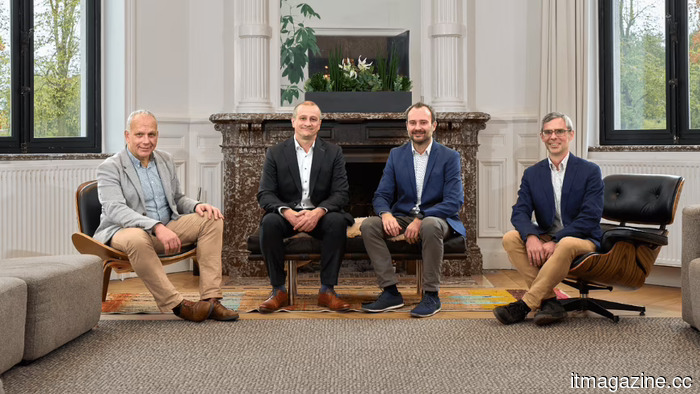 Dutch company Eyeo secures €40 million to commercialize NCOS color-splitting image sensors.
Eyeo has completed a €40 million Series A funding round, led by Innovation Industries, to advance its nanophotonic color-splitting sensor technology developed by imec.
Dutch company Eyeo secures €40 million to commercialize NCOS color-splitting image sensors.
Eyeo has completed a €40 million Series A funding round, led by Innovation Industries, to advance its nanophotonic color-splitting sensor technology developed by imec.
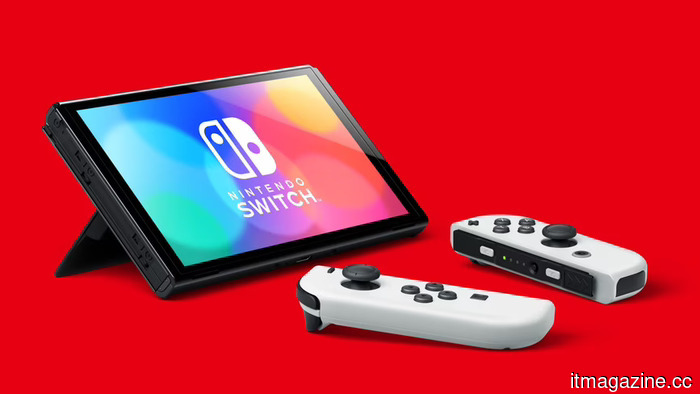 Nintendo's stock drops 7% following a price increase for the Switch 2.
Nintendo's FY27 forecast anticipates a 17% decline in Switch 2 hardware sales, along with a ¥100 billion impact from expenses related to memory, tariffs, and shipping.
Nintendo's stock drops 7% following a price increase for the Switch 2.
Nintendo's FY27 forecast anticipates a 17% decline in Switch 2 hardware sales, along with a ¥100 billion impact from expenses related to memory, tariffs, and shipping.
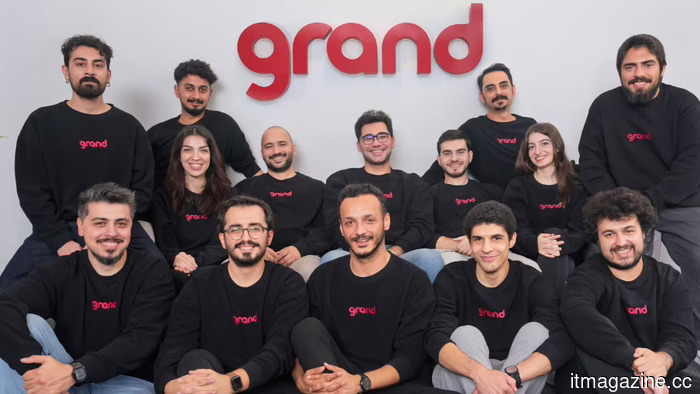 Turkey's Grand Games secures $70 million in Series B funding.
Grand Games, located in Istanbul, has secured $70 million in a Series B funding round led by the Growth Fund of Balderton Capital.
Turkey's Grand Games secures $70 million in Series B funding.
Grand Games, located in Istanbul, has secured $70 million in a Series B funding round led by the Growth Fund of Balderton Capital.
 Mortal Kombat 2 excels in fan service over narrative development.
Mortal Kombat 2 offers intense fatalities and plenty of fan service, yet its hasty storytelling and underutilized characters prevent this sequel from achieving a true Flawless Victory.
Mortal Kombat 2 excels in fan service over narrative development.
Mortal Kombat 2 offers intense fatalities and plenty of fan service, yet its hasty storytelling and underutilized characters prevent this sequel from achieving a true Flawless Victory.
 Dua Lipa is filing a $15 million lawsuit against Samsung over an image featured on the boxes of Crystal UHD TVs.
Dua Lipa has initiated a federal lawsuit seeking $15 million against Samsung Electronics, claiming that her backstage photo from 2024 has been used on the packaging of Crystal UHD TVs since 2025.
Dua Lipa is filing a $15 million lawsuit against Samsung over an image featured on the boxes of Crystal UHD TVs.
Dua Lipa has initiated a federal lawsuit seeking $15 million against Samsung Electronics, claiming that her backstage photo from 2024 has been used on the packaging of Crystal UHD TVs since 2025.
Dutch company Eyeo secures €40 million to develop NCOS color-splitting image sensors for commercial use.
Eyeo has completed a €40 million Series A funding round led by Innovation Industries to advance its Nanophotonic Color Splitting sensor technology developed by imec.