

Dua Lipa is filing a $15 million lawsuit against Samsung over an image featured on the boxes of Crystal UHD TVs.
The lawsuit alleges that a backstage photo from the 2024 Austin City Limits Festival was used on Crystal UHD packaging sold globally, and claims that Samsung disregarded her cease-and-desist notices. Dua Lipa initiated a $15 million federal lawsuit against Samsung Electronics on Friday, accusing the company of using a 2024 photograph of her on the packaging of its Crystal UHD TVs since 2025 without her consent or any agreement to compensate her for its usage.
As stated in the complaint, the image, taken backstage at the festival, features a close-up of the artist, recognizable to the millions of fans who regard her as one of the most photographed pop stars of the decade. Samsung started distributing the photo on cardboard boxes for its Crystal UHD line in 2025 and has continued to do so. The lawsuit was filed in California's Central District.
Lipa’s legal team is pursuing damages on three grounds: copyright infringement, as Samsung did not obtain a license for the image; trademark infringement, arguing that her name and likeness serve as trademarks under California law; and violation of her right of publicity, which safeguards a person's commercial control over their image in California. The right-of-publicity claim is central to the case.
According to California law, codified in Civil Code Section 3344, minimum statutory damages of $750 are awarded for each unauthorized use, alongside potential actual and punitive damages. When considering the widespread distribution of a global television line, this explains the $15 million claim.
The complaint portrays Samsung's actions in blunt terms. Lipa became aware of the image on the packaging in June 2025, and her team sent cease-and-desist requests, which Samsung allegedly ignored. The infringing packages "remain on the market to this day," the filing claims, and describes Samsung's response as “dismissive and callous.” A social media quote included in the filing clearly illustrates the commercial implications of the alleged infringement: “I wasn’t even planning on buying a TV, but I saw the box, so I decided to get it.”
The case is marked by clear arguments from both sides. Samsung will need to prove either that it had a license for using the image, that the usage falls under fair use or news reporting exceptions (a difficult standard for product packaging), or that the alleged use does not sufficiently identify Lipa to invoke publicity-rights protections. Based on the presented facts, none of these defenses seems readily available. The image is a recognizable portrait of a specific individual, and its use is clearly commercial. The packaging is widely available in retail stores and online globally.
Samsung has not yet made a public response. The company is familiar with high-stakes intellectual property litigation, having engaged in a long legal battle with Apple over smartphone designs, which resulted in one of the largest jury awards in tech history. Its marketing team has also navigated challenging situations in the past, notably with disclaimers in its Galaxy Z Flip Oscars advertisement. This current case is structurally simpler than those, as it does not involve complex questions of design originality or marketing catchphrases. Instead, it revolves around whether the company utilized a well-known individual's photograph on a product without authorization. Based on the evidence in the complaint, the answer appears to be affirmative.
This case arises in a time when the question of who has control over a recognizable image is becoming increasingly contested. The decline of celebrity likeness protection in the AI era has shifted the conversation, with synthetic representations of well-known voices and images now commonly used in commerce. Lipa's lawsuit serves as a reminder that the older issue of using a real photo without permission has not disappeared merely because newer forms (like synthetic likenesses) have garnered more attention. Both situations hinge on the same legal principle: individuals own the rights to the commercial use of their own image, highlighting the discrepancy between the rapid advancements in technology and the slower adaptation of licensing practices.
For Samsung, the immediate concern is as much reputational as it is financial. The $15 million claim is relatively modest compared to the company’s reported operating profit of over $33 billion last year. Typically, settlements in such cases tend to reflect the licensing fee Lipa would have initially charged, plus a premium accounting for the unauthorized use and litigation expenses; thus, the amount stated in the complaint likely represents the upper limit for negotiations rather than a probable settlement amount.
One major challenge for Samsung is addressing perceptions of negligence. A company distributing Crystal UHD TVs to over seventy countries and presenting launches at CES cannot easily clarify how a photograph of a major pop star was included on its packaging without a license. The plaintiff’s portrayal of dismissiveness will resonate with consumers who have previously felt disregarded by large corporations.
Moreover, Lipa, possessing the means to pursue litigation, has opted to do so. Many individuals whose images are used without authorization on smaller products lack her access to a prominent entertainment law firm or the time to see a federal case through to resolution. If her lawsuit results in a settlement or favorable
Other articles
 Anthropic reports that Claude learned the concept of blackmail through stories about malicious AI.
Anthropic has linked Claude's pre-release blackmail actions to online content that depicts AI as malevolent and self-protective.
Anthropic reports that Claude learned the concept of blackmail through stories about malicious AI.
Anthropic has linked Claude's pre-release blackmail actions to online content that depicts AI as malevolent and self-protective.
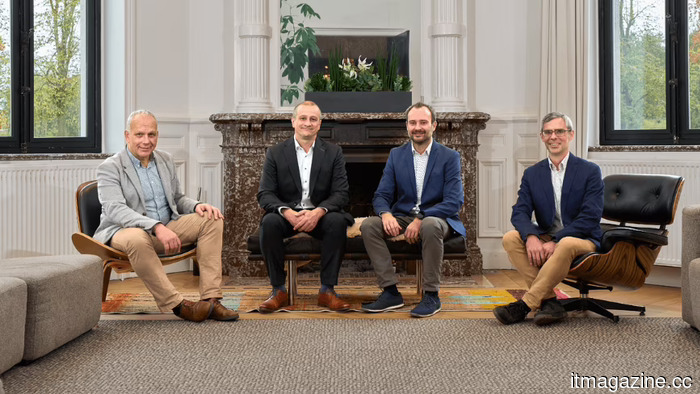 Dutch company Eyeo secures €40 million to commercialize NCOS color-splitting image sensors.
eyeo has secured €40 million in a Series A funding round led by Innovation Industries to advance its Nanophotonic Color Splitting sensor technology, which was developed by imec.
Dutch company Eyeo secures €40 million to commercialize NCOS color-splitting image sensors.
eyeo has secured €40 million in a Series A funding round led by Innovation Industries to advance its Nanophotonic Color Splitting sensor technology, which was developed by imec.
 Mortal Kombat 2 excels in fan service over narrative development.
Mortal Kombat 2 offers intense fatalities and plenty of fan service, yet its hasty storytelling and underutilized characters prevent this sequel from achieving a true Flawless Victory.
Mortal Kombat 2 excels in fan service over narrative development.
Mortal Kombat 2 offers intense fatalities and plenty of fan service, yet its hasty storytelling and underutilized characters prevent this sequel from achieving a true Flawless Victory.
 Mortal Kombat 2 excels in fan service more than in narrative development.
Mortal Kombat 2 offers a wealth of brutal fatalities and plenty of fan service, yet its hurried narrative and underutilized characters prevent this sequel from achieving a genuine Flawless Victory.
Mortal Kombat 2 excels in fan service more than in narrative development.
Mortal Kombat 2 offers a wealth of brutal fatalities and plenty of fan service, yet its hurried narrative and underutilized characters prevent this sequel from achieving a genuine Flawless Victory.
 Credit card dimensions: This fully operational computer is also equipped with an e-ink display.
The open-source Muxcard combines a working computer, E Ink display, NFC, and wireless connectivity into a compact, credit card-sized design.
Credit card dimensions: This fully operational computer is also equipped with an e-ink display.
The open-source Muxcard combines a working computer, E Ink display, NFC, and wireless connectivity into a compact, credit card-sized design.
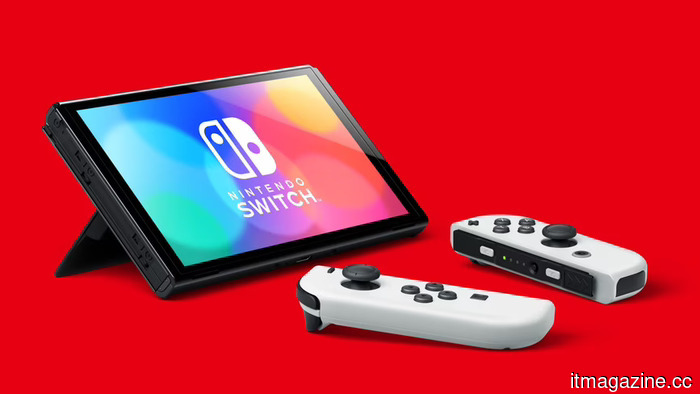 Nintendo's stock drops 7% following a price increase for the Switch 2.
Nintendo's FY27 forecast anticipates a 17% decline in Switch 2 hardware sales, along with a ¥100 billion impact from expenses related to memory, tariffs, and shipping.
Nintendo's stock drops 7% following a price increase for the Switch 2.
Nintendo's FY27 forecast anticipates a 17% decline in Switch 2 hardware sales, along with a ¥100 billion impact from expenses related to memory, tariffs, and shipping.
Dua Lipa is filing a $15 million lawsuit against Samsung over an image featured on the boxes of Crystal UHD TVs.
Dua Lipa has initiated a federal lawsuit seeking $15 million against Samsung Electronics, claiming that her backstage photo from 2024 has been used on the packaging of Crystal UHD TVs since 2025.