
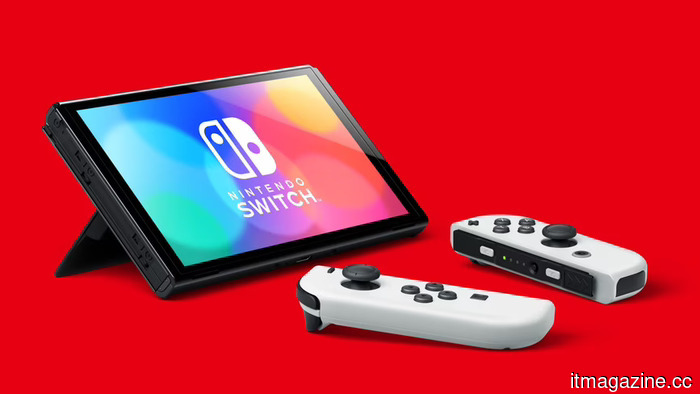
Nintendo's stock drops 7% following a price increase for the Switch 2.
FY27 hardware guidance indicates 16.5 million units of Switch 2, representing a 17% decrease. Memory and shipping expenses are expected to impact results by ¥100 billion. Starting September, the price in the US will increase to $499.99, while in Japan, it will rise to ¥59,980 from May 25.
Nintendo's shares fell approximately 7% during Tokyo trading on Monday, following Friday's annual results that highlighted a record fiscal year but a cautious outlook for the upcoming year. Since the beginning of 2026, the stock has lost nearly 30% of its value.
The fiscal year 2026, which ended in March, marked the strongest year in Nintendo’s history, with revenues nearly doubling to ¥2.31 trillion and a net profit growth of 52.1% to ¥424 billion. The Switch 2 launched in early June 2025, making it the largest console launch by units in the company's history, but the accompanying figures have raised concerns in the market.
For FY27, Nintendo anticipates revenues of ¥2.05 trillion, a decrease of 11.4%, and a net profit drop of 26.9% to ¥310 billion. Projected hardware sales for the Switch 2 are 16.5 million units, down 16.9% compared to FY26. The company attributed this pessimistic outlook to a ¥100 billion combined impact from increased memory and material costs, US tariffs on Asian electronics, and heightened shipping costs related to the situation in Iran.
The Switch 2’s price will rise to $499.99 in the US starting September 1, up from the launch price of $449.99, and to ¥59,980 in Japan from May 25, increasing from ¥49,980. Other regions will adjust their prices on varying timelines.
The cause for this increase is well-known. The Switch 2 is equipped with 12GB of LPDDR5X RAM from Micron, with Nintendo now paying around 41% more per chip than at the time of launch. NAND flash prices have risen roughly 8%. These increases stem from an AI-induced DRAM shortage, leading to record margins for SK Hynix, as demand from AI data centers outpaces supply from manufacturers.
Console makers, smartphone manufacturers, and PC OEMs are all facing similar allocation challenges. Sony had raised PS5 prices in March, and Nintendo is now adopting a similar strategy for the Switch 2.
What transitioned a typical memory-cost situation into a more severe market reaction is the gaming pipeline associated with the hardware. The Switch 2 had a strong launch with titles from Nintendo’s well-known franchises, but analysts are now seeing a shortage of anticipated first-party games in the following twelve months. There are currently no confirmed releases for Zelda or 3D Mario, and while the third-party game lineup is broader than that of the original Switch, no exclusive titles have yet proven to drive hardware sales.
The pessimistic outlook suggests that the Switch 2 could experience a standard decline in hardware demand if high-profile games are not consistently released. Conversely, the optimistic perspective posits that the slower release schedule is a strategic decision, with the expectation that the latter half of FY27 will feature significant titles that boost both hardware sales and software integration rates.
President Shuntaro Furukawa has publicly maintained a positive stance, characterizing the FY27 forecast as conservative and presenting the price increase as a means of recovering margins rather than suppressing demand. However, investors appear to interpret the gap between FY26 and FY27 differently.
The stock's drop since the beginning of the year indicates that the market views this guidance as a major indicator rather than merely a temporary adjustment.
The competitive landscape is also relevant. Reports suggest that Microsoft’s next-generation Xbox is facing delays, and Sony has indicated that PS6 development may not yield hardware until 2028 or 2029, also due to memory-cost issues. This situation gives the Switch 2 an extended generation, theoretically allowing more opportunities to broaden the install base prior to the launch of a competing console.
The 13-month gap between the Switch 2’s launch and a potential PS6 has historically provided a strategic advantage for Nintendo; if this window expands further, the advantage could increase.
However, Nintendo's traditional software release cycle depends on a steady flow of first-party hits. The company has typically managed this flow effectively, but the FY27 guidance suggests that the upcoming twelve months may present a lighter schedule than usual. Whether this is indicative of the Switch 2 experiencing an early slowdown or a fundamental change in Nintendo's first-party development strategy will become clearer in the next two quarters.
Currency fluctuations present another factor. The yen has modestly appreciated throughout 2026, diminishing some of the favorable foreign exchange effects that have positively impacted Nintendo’s earnings in recent years. The FY27 guidance assumes a more cautious exchange rate trajectory; if the yen weakens once more,
Other articles
 Amazon is readying its inaugural Swiss franc bond as part of a six-part initiative to invest in AI capital expenditures.
Amazon has appointed BNP Paribas, Deutsche Bank, and JPMorgan to manage its inaugural bond issuance in Swiss francs.
Amazon is readying its inaugural Swiss franc bond as part of a six-part initiative to invest in AI capital expenditures.
Amazon has appointed BNP Paribas, Deutsche Bank, and JPMorgan to manage its inaugural bond issuance in Swiss francs.
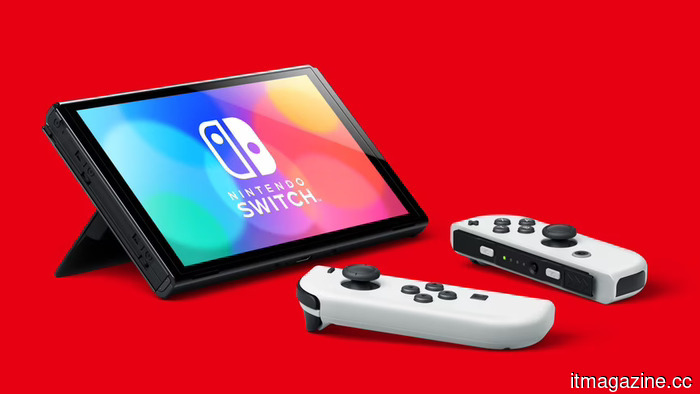 Nintendo's stock drops by 7% due to an increase in the price of the Switch 2.
Nintendo's guidance for FY27 anticipates a 17% decline in Switch 2 hardware sales, along with a ¥100 billion impact on costs due to memory, tariffs, and shipping.
Nintendo's stock drops by 7% due to an increase in the price of the Switch 2.
Nintendo's guidance for FY27 anticipates a 17% decline in Switch 2 hardware sales, along with a ¥100 billion impact on costs due to memory, tariffs, and shipping.
 Dutch company Eyeo secures €40 million to commercialize NCOS color-splitting image sensors.
Eyeo has completed a €40 million Series A funding round, led by Innovation Industries, to advance its nanophotonic color-splitting sensor technology developed by imec.
Dutch company Eyeo secures €40 million to commercialize NCOS color-splitting image sensors.
Eyeo has completed a €40 million Series A funding round, led by Innovation Industries, to advance its nanophotonic color-splitting sensor technology developed by imec.
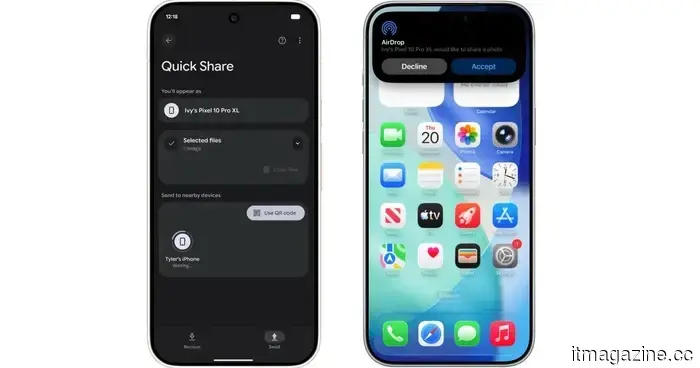 I used to find transferring files between devices stressful — now I hardly give it a second thought.
For a long time, transferring a file between my iPhone, Android phone, and MacBook felt like trying to broker peace between opposing countries. But now, without any major announcement, the conflict has ended — and my workflow has never been more serene.
I used to find transferring files between devices stressful — now I hardly give it a second thought.
For a long time, transferring a file between my iPhone, Android phone, and MacBook felt like trying to broker peace between opposing countries. But now, without any major announcement, the conflict has ended — and my workflow has never been more serene.
 If the manufacturer of your router or drone is prohibited from operating in the US, they will continue to receive updates until 2029.
The FCC has prolonged support for updates on restricted routers and drones until 2029, with the goal of mitigating cybersecurity threats posed by unsupported and vulnerable equipment.
If the manufacturer of your router or drone is prohibited from operating in the US, they will continue to receive updates until 2029.
The FCC has prolonged support for updates on restricted routers and drones until 2029, with the goal of mitigating cybersecurity threats posed by unsupported and vulnerable equipment.
 Amazon is set to issue its inaugural Swiss franc bond as part of a six-part initiative focused on AI capital expenditures.
Amazon has appointed BNP Paribas, Deutsche Bank, and JPMorgan for its inaugural bond issuance in Swiss francs.
Amazon is set to issue its inaugural Swiss franc bond as part of a six-part initiative focused on AI capital expenditures.
Amazon has appointed BNP Paribas, Deutsche Bank, and JPMorgan for its inaugural bond issuance in Swiss francs.
Nintendo's stock drops 7% following a price increase for the Switch 2.
Nintendo's FY27 forecast anticipates a 17% decline in Switch 2 hardware sales, along with a ¥100 billion impact from expenses related to memory, tariffs, and shipping.