

I stopped using physical books, and my reading experience has improved tremendously.
If you're someone who prefers traditional books, you might find it hard to accept my suggestion of choosing an e-reader over physical books, and I completely understand that sentiment. The charm of the scent of pages, the heft of the book in your hands, and the entire reading ritual can be very appealing.
However, if you’d grant me a moment to persuade you, there are compelling arguments in favor of e-readers over physical books. Let me outline the benefits of e-readers—once you see what you've been missing, returning to physical books can become quite difficult.
Your entire library fits in your bag
This is the most obvious benefit, yet it often doesn’t receive enough recognition. I tend to read multiple books concurrently, and lugging around two or three physical copies can be impractical. Even just carrying around thick books can be a hassle.
With an e-reader, you can carry hundreds of books in a lightweight device. Switching between different titles is instantaneous. If you travel often, this convenience alone might be sufficient reason to make the switch.
A hefty hardcover book may look good on your shelf, but it’s cumbersome during your commute.
Heavy books can feel like exercise, not a reading experience
If you enjoy reading fantasy novels, you’re likely aware that they can be quite unwieldy. You constantly need to adjust your grip, find a way to keep the book open, and somehow maintain comfort. While thinner books are manageable, once a book exceeds a certain thickness, it begins to hinder your reading experience.
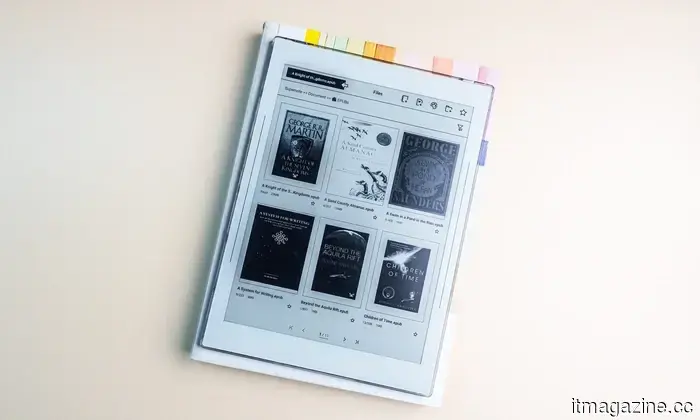
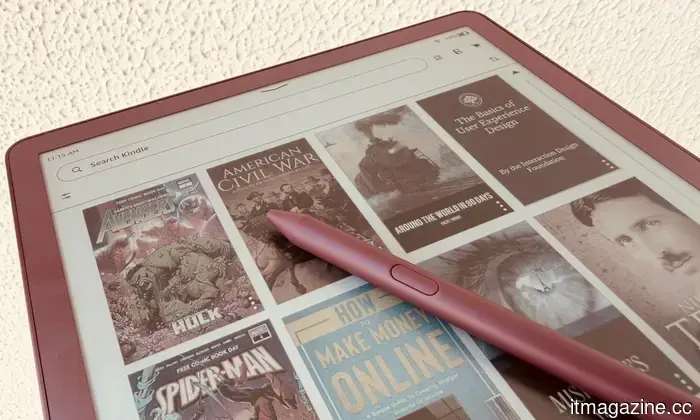
An e-reader remains light regardless of whether you’re engrossed in a short novel or an expansive fantasy series. Whether I’m reading The Count of Monte Cristo or the next installment in Brandon Sanderson’s The Stormlight Archive, my Supernote Nomad feels the same.
Reading at night without disturbing others
I often read at night, and this is where physical books tend to fail me. Conventional lamps and book lights rarely provide a comfortable illumination. The lighting is often inadequate, and sharing a room complicates the whole arrangement.
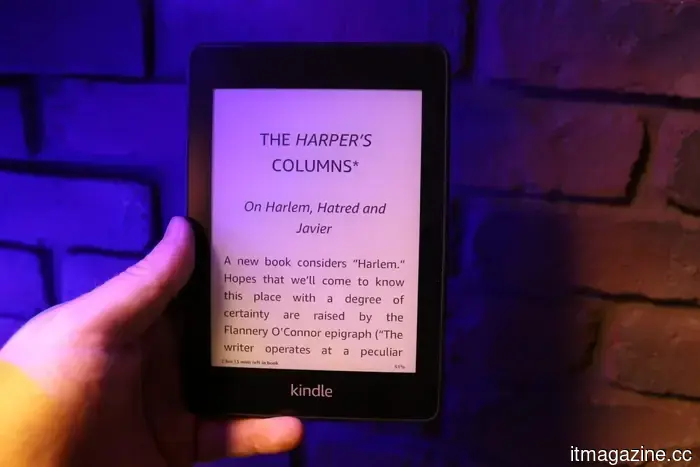
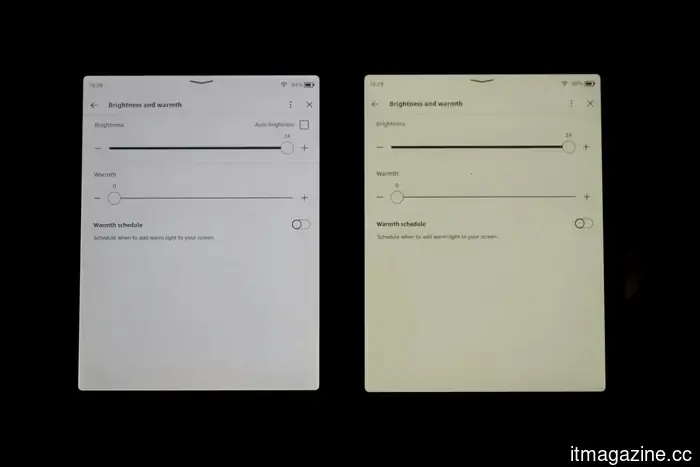
Most e-readers, such as Kindles, come equipped with a backlight that you can adjust to your preferred brightness level. You can even switch to a warm light setting to reduce eye strain.
I've read at 3 AM with the brightness dimmed, and it felt completely natural—no lamps needed, and no squinting involved.
Look up any word without losing your spot
As English isn’t my first language, and even for native speakers, encountering unfamiliar words while reading is common. In a physical book, your options are to grab your phone for a definition—which often leads to distraction—or to skip the word, potentially losing some contextual meaning.
On a Kindle or most other e-readers, simply tapping a word brings up its definition instantly. You can translate it, add it to a vocabulary list, and resume reading in mere seconds. I now look up far more words than I ever did with physical books, and my reading comprehension has genuinely improved as a result.
Taking notes you'll actually refer to later
In the past, I used to annotate physical books with a pen, but those notes would just remain on the pages, rarely to be revisited. Transferring them to a useful format required more effort than I was willing to exert.
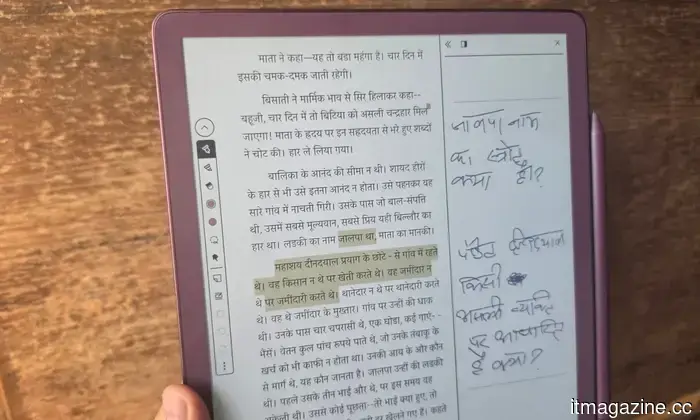
With my Supernote Nomad, I can leverage its Digest feature to clip my reading material and quickly add any handwritten notes. I can then export these notes to Obsidian for further processing.
For any e-reader user, highlighting a section and adding a note takes just a few seconds. Most e-readers also compile all your highlights and notes in one place, allowing you to easily review them without having to flip through pages.
In physical books, my notes often faded into obscurity. With an e-reader, they've transformed into something that I actually utilize.
Books are more affordable and easier to acquire
Purchasing physical books tends to be more expensive than their digital counterparts. Additionally, as many publishers phase out mass-market paperbacks, we're often left with trade paperbacks and hardcovers, which may be visually appealing but come with a much higher price tag.
E-books typically don't face this issue. I've bought several e-books at less than half the price of their physical versions. Moreover, e-books are frequently on sale, making them even more budget-friendly.
When you find a book you want to read at midnight, you don’t have to wait for delivery or make a trip to a store. You can buy it and start reading immediately—a level of convenience that becomes quite appealing once you're accustomed to it.
Should you make the switch?
If you cherish the experience of physical books—the covers, the scent, the aesthetic of shelves—that’s a perfectly valid reason to continue with them. There’s absolutely nothing wrong with that. I, too, am building my own bookshelf and will always have a place for those special editions.
However, for the sake of convenience, ease of discovery



Other articles
 How can small enterprises handle their finances and accounting in a single location?
Centralized financial management enables small businesses to oversee accounting, invoicing, expenses, and reporting within a single system. By consolidating disparate tools into one platform, businesses enhance accuracy, minimize manual tasks, and achieve clearer, real-time insights into their financial performance and operations.
How can small enterprises handle their finances and accounting in a single location?
Centralized financial management enables small businesses to oversee accounting, invoicing, expenses, and reporting within a single system. By consolidating disparate tools into one platform, businesses enhance accuracy, minimize manual tasks, and achieve clearer, real-time insights into their financial performance and operations.
 I abandoned physical books, and my reading experience has improved immensely.
Reading at night, integrated dictionaries, more affordable books, and notes that you'll find useful in the future. This is why you should consider abandoning physical books and never returning to them.
I abandoned physical books, and my reading experience has improved immensely.
Reading at night, integrated dictionaries, more affordable books, and notes that you'll find useful in the future. This is why you should consider abandoning physical books and never returning to them.
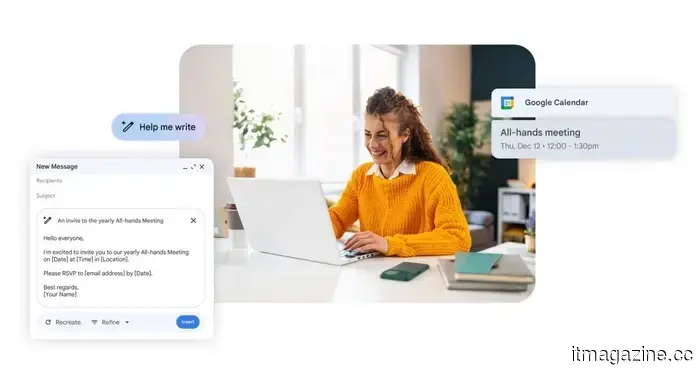 How Google Workspace aids small businesses in scaling with the assistance of an AI co-founder.
Google Workspace with Gemini supports small teams in working more efficiently by serving as a digital co-founder, automating tasks, and enhancing productivity in daily workflows.
How Google Workspace aids small businesses in scaling with the assistance of an AI co-founder.
Google Workspace with Gemini supports small teams in working more efficiently by serving as a digital co-founder, automating tasks, and enhancing productivity in daily workflows.
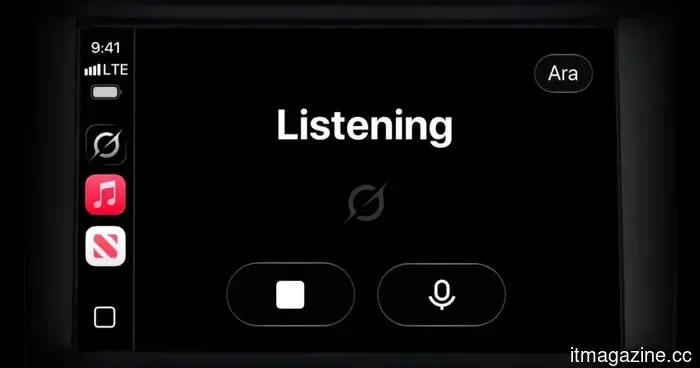 Grok Voice Mode has now launched on CarPlay, in case you like conversing with an outspoken AI while driving.
xAI has introduced Grok Voice Mode for Apple CarPlay, allowing millions of drivers to engage in hands-free AI conversations featuring Grok's distinctive sarcastic personality.
Grok Voice Mode has now launched on CarPlay, in case you like conversing with an outspoken AI while driving.
xAI has introduced Grok Voice Mode for Apple CarPlay, allowing millions of drivers to engage in hands-free AI conversations featuring Grok's distinctive sarcastic personality.
 How should financial management change as a business expands?
This post is presented in collaboration with QuickBooks. Effective financial management that scales involves having systems that adapt to increasing complexity. Recommended Videos What is effective for a solo operator invoicing a few clients may not be sufficient when there are employees, various revenue streams, and a team involved in sharing financial information. The tools […]
How should financial management change as a business expands?
This post is presented in collaboration with QuickBooks. Effective financial management that scales involves having systems that adapt to increasing complexity. Recommended Videos What is effective for a solo operator invoicing a few clients may not be sufficient when there are employees, various revenue streams, and a team involved in sharing financial information. The tools […]
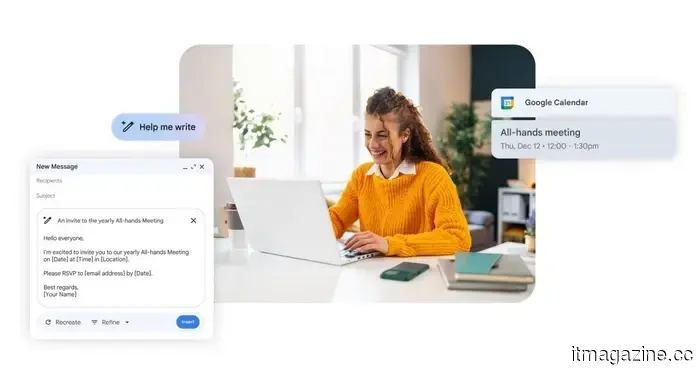 How Google Workspace supports small businesses in scaling with the assistance of an AI co-founder.
Google Workspace with Gemini assists small teams in working more efficiently by serving as a digital co-founder, automating tasks and enhancing productivity throughout daily workflows.
How Google Workspace supports small businesses in scaling with the assistance of an AI co-founder.
Google Workspace with Gemini assists small teams in working more efficiently by serving as a digital co-founder, automating tasks and enhancing productivity throughout daily workflows.
I stopped using physical books, and my reading experience has improved tremendously.
Reading at night, integrated dictionaries, more affordable books, and notes that will prove useful later. This is the argument for abandoning physical books and not returning to them.