
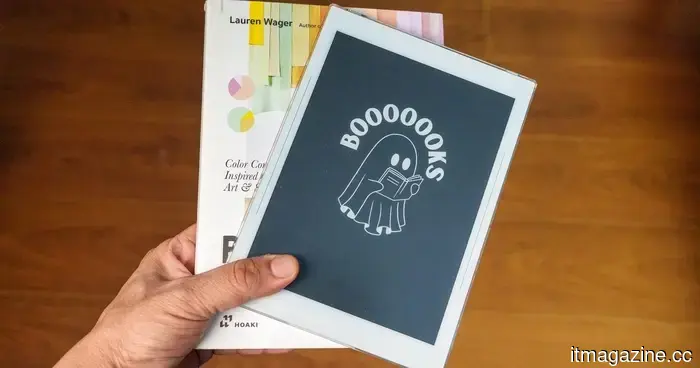
I abandoned physical books, and my reading experience has improved immensely.
If you're a traditionalist when it comes to books, you might scoff at my suggestion to use an e-reader instead of purchasing physical copies, and I understand your perspective. The charm of the scent of pages, the heft of a book in hand, and the entire experience is indeed hard to resist.
However, if you can give me a moment to persuade you, there's a compelling argument in favor of e-readers over physical books. Let me present the case for e-readers: once you grasp what you've been missing, it’s tough to revert.
Your entire library fits in your bag
This is the most apparent benefit, yet it doesn't receive enough recognition. I usually read multiple books simultaneously, and lugging around two or three physical books is impractical. Just carrying hefty books can be a struggle.
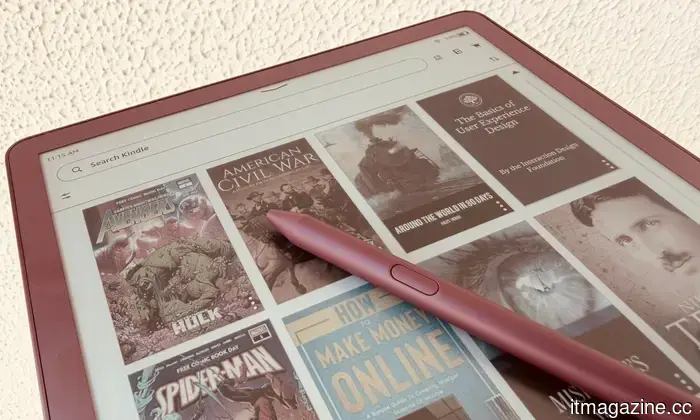
With an e-reader, you can have hundreds of books stored in a compact device. Transitioning between titles is instantaneous. If you travel often, this alone is a strong incentive to switch.
A thousand-page hardcover may look impressive on your shelf but is cumbersome during your commute.
Heavy books become a workout, not a reading experience
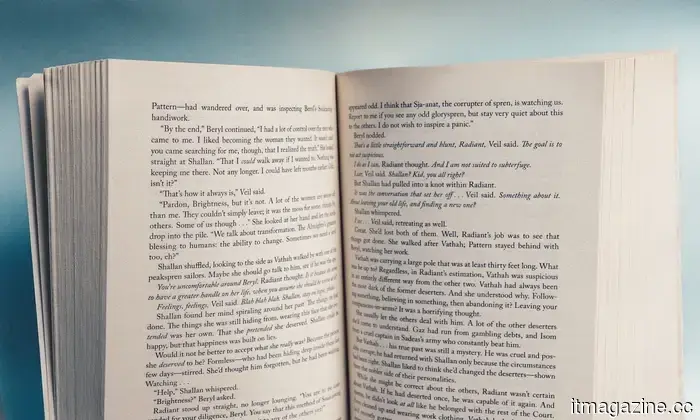
If you share my passion for fantasy novels, you know they can be quite unwieldy. You constantly have to adjust your grip, find a way to keep the pages open, and remain comfortable. Thin books are manageable, but once a book exceeds a certain thickness, it becomes a nuisance.
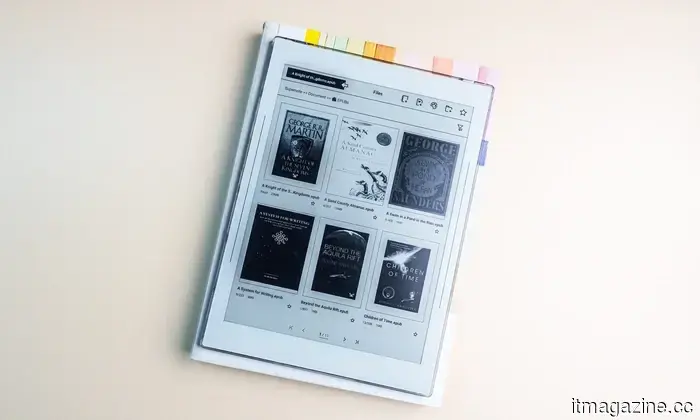
An e-reader maintains the same weight whether you’re diving into a short novel or an extensive fantasy series. That’s the beauty of it. Whether I'm engaged with The Count of Monte Cristo or the latest volume in Brandon Sanderson’s The Stormlight Archive, my Supernote Nomad feels consistent.
Reading at night without disturbing others
I do most of my reading at night, and this is where physical books fall short for me. Lamps and book lights never feel comfortable; the lighting is rarely just right, and if you share a space, the whole setup can be troublesome.
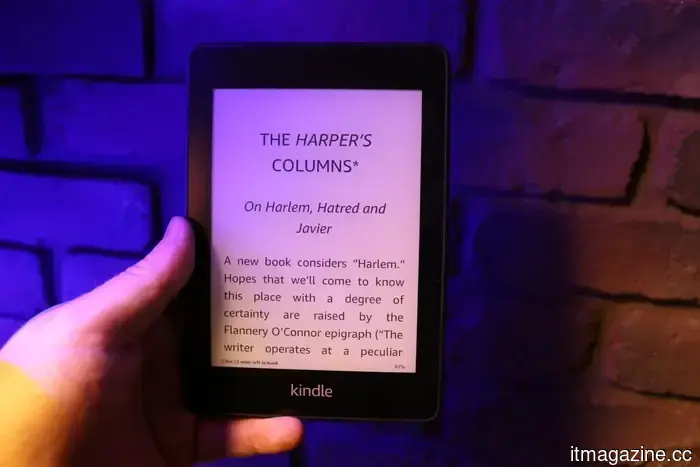
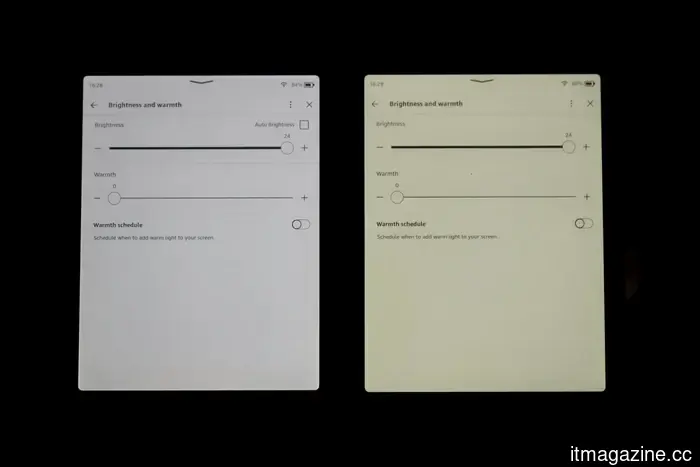
Many e-readers, including Kindles, come equipped with a built-in backlight that you can adjust to your desired brightness. You can even switch to a warm light mode for added comfort.
I have read at 3 AM with the brightness turned down low, and it felt entirely natural. No lamps and no squinting needed.
Look up any word without losing your place
English isn’t my first language, and even fluent speakers often encounter unfamiliar words while reading. In a physical book, you either have to grab your phone to look it up—leading to distraction—or skip it, losing some meaning.
On a Kindle or most e-readers, you simply tap the word, and the definition appears immediately. You can translate it, add it to a vocabulary list, and resume reading in seconds. I look up many more words now than I ever did with physical books, and my reading comprehension has genuinely improved as a result.
Taking notes you’ll actually use later
I used to annotate physical books with a pen, but those notes would remain on the page, seldom referenced again. Transferring those notes somewhere useful required more effort than I was willing to invest.
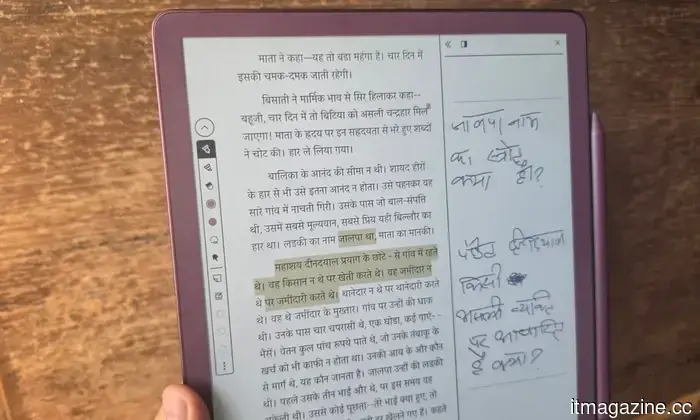
With my Supernote Nomad, I can utilize its Digest feature to clip my readings and swiftly add any necessary handwritten notes. I can easily export these notes to Obsidian for further processing.
Using any e-reader, highlighting a passage and adding notes takes just seconds. Most e-readers also compile all your highlights and notes in one location, allowing you to quickly navigate through them without flipping pages.
In physical books, my notes remained on the page. With an e-reader, they become something I actually utilize.
Since these notes are digital, you can integrate them into your note-taking app for further material digestion.
Books are more affordable and easier to obtain
Purchasing physical books tends to be pricier than acquiring digital versions. Additionally, as most publishers are moving away from mass-market paperbacks, we often have only trade paperbacks and hardcovers, which, while visually appealing, come with a higher price tag.
E-books don’t face this issue. I have bought several titles at significantly lower prices than their physical counterparts. Furthermore, e-books are frequently on sale, making them even more economical.
And when you discover a book you want to read at midnight, there’s no need to wait for delivery or drive to a store. You can purchase it and begin reading right away. The convenience is undeniable once you get accustomed to it.
Should you switch?
If you cherish the experience of physical books—the covers, the aroma, the bookshelf aesthetic—there’s nothing wrong with that. It’s a valid reason to stay with them. I personally enjoy curating my own bookshelf and will always treasure those special editions.
However, for the sake of convenience and ease of discovering and reading new material, I suggest you at least consider investing in an e-reader. Now is an excellent time to buy, as


Other articles
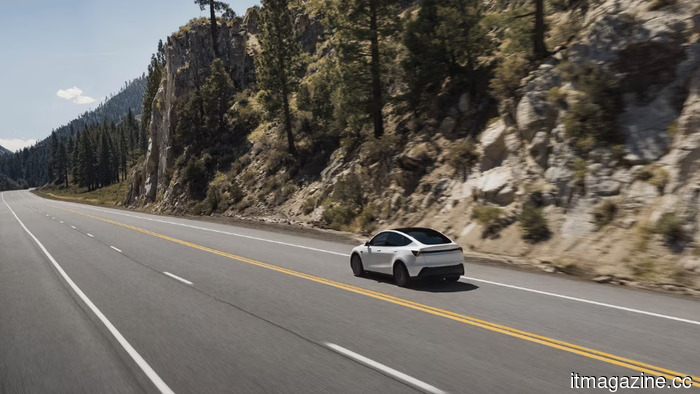 The Tesla Model Y becomes the first vehicle to successfully complete NHTSA ADAS safety assessments, as the agency looks into 3.2 million Teslas due to crashes involving FSD.
The Trump administration revealed that the Tesla Model Y has successfully met the NHTSA's updated ADAS safety standards. Meanwhile, the same agency is examining 3.2 million Teslas in relation to crashes involving Full Self-Driving capabilities.
The Tesla Model Y becomes the first vehicle to successfully complete NHTSA ADAS safety assessments, as the agency looks into 3.2 million Teslas due to crashes involving FSD.
The Trump administration revealed that the Tesla Model Y has successfully met the NHTSA's updated ADAS safety standards. Meanwhile, the same agency is examining 3.2 million Teslas in relation to crashes involving Full Self-Driving capabilities.
 How can small businesses streamline their invoicing process and accelerate their payment collection?
This post is presented in collaboration with QuickBooks. Automated invoicing employs software for the automatic sending, tracking, and follow-up of invoices. Suggested Videos For small businesses, this difference is noteworthy. When invoices are dispatched late, contain mistakes, or remain in a client’s inbox without any follow-up, payments are delayed. And that […]
How can small businesses streamline their invoicing process and accelerate their payment collection?
This post is presented in collaboration with QuickBooks. Automated invoicing employs software for the automatic sending, tracking, and follow-up of invoices. Suggested Videos For small businesses, this difference is noteworthy. When invoices are dispatched late, contain mistakes, or remain in a client’s inbox without any follow-up, payments are delayed. And that […]
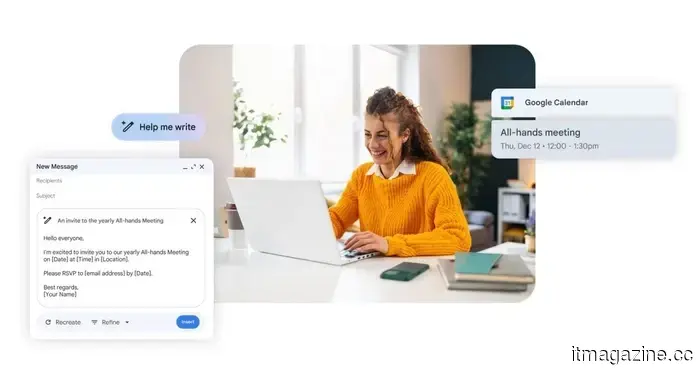 How Google Workspace assists small businesses in scaling with an AI co-founder.
Google Workspace with Gemini assists small teams in working more efficiently by serving as a digital co-founder, streamlining tasks and enhancing productivity throughout daily workflows.
How Google Workspace assists small businesses in scaling with an AI co-founder.
Google Workspace with Gemini assists small teams in working more efficiently by serving as a digital co-founder, streamlining tasks and enhancing productivity throughout daily workflows.
 How can small enterprises handle their finances and accounting in a single location?
Centralized financial management enables small businesses to oversee accounting, invoicing, expenses, and reporting within a single system. By consolidating disparate tools into one platform, businesses enhance accuracy, minimize manual tasks, and achieve clearer, real-time insights into their financial performance and operations.
How can small enterprises handle their finances and accounting in a single location?
Centralized financial management enables small businesses to oversee accounting, invoicing, expenses, and reporting within a single system. By consolidating disparate tools into one platform, businesses enhance accuracy, minimize manual tasks, and achieve clearer, real-time insights into their financial performance and operations.
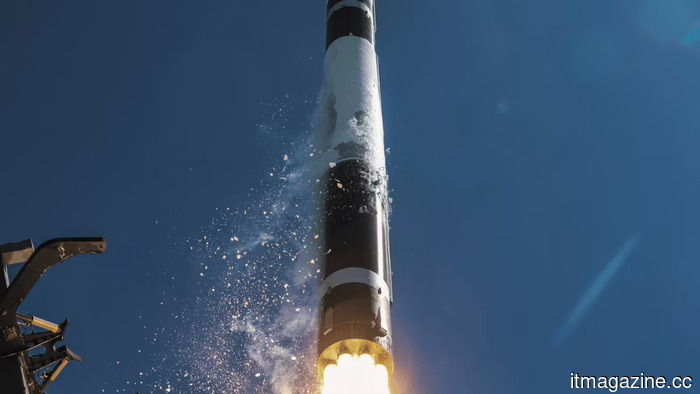 Rocket Lab's revenue for Q1 2026 increases by 64% to a record $200 million, while its backlog reaches $2.2 billion and its stock climbs by 30%.
Rocket Lab announced a record Q1 revenue of $200 million, a backlog amounting to $2.2 billion, and a $30 million hypersonics deal with Anduril. The stock rose by 30%, although the Neutron rocket has yet to fly.
Rocket Lab's revenue for Q1 2026 increases by 64% to a record $200 million, while its backlog reaches $2.2 billion and its stock climbs by 30%.
Rocket Lab announced a record Q1 revenue of $200 million, a backlog amounting to $2.2 billion, and a $30 million hypersonics deal with Anduril. The stock rose by 30%, although the Neutron rocket has yet to fly.
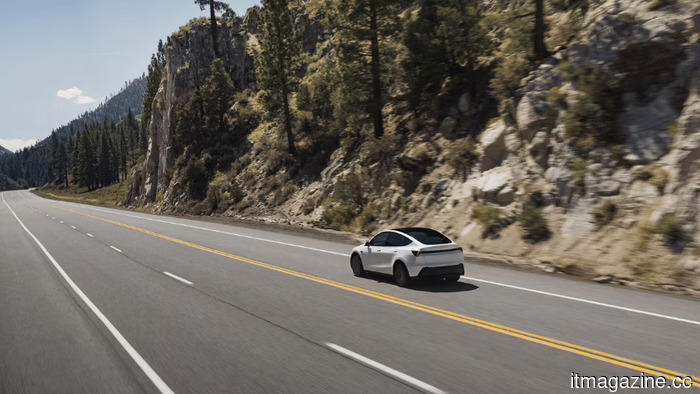 Tesla Model Y is the first vehicle to successfully pass the NHTSA's ADAS safety evaluations, while the agency is also looking into 3.2 million Teslas related to FSD crash incidents.
The Trump administration revealed that the Tesla Model Y has met NHTSA's new safety standards for ADAS. Meanwhile, the agency is currently examining 3.2 million Teslas in relation to crashes involving Full Self-Driving technology.
Tesla Model Y is the first vehicle to successfully pass the NHTSA's ADAS safety evaluations, while the agency is also looking into 3.2 million Teslas related to FSD crash incidents.
The Trump administration revealed that the Tesla Model Y has met NHTSA's new safety standards for ADAS. Meanwhile, the agency is currently examining 3.2 million Teslas in relation to crashes involving Full Self-Driving technology.
I abandoned physical books, and my reading experience has improved immensely.
Reading at night, integrated dictionaries, more affordable books, and notes that you'll find useful in the future. This is why you should consider abandoning physical books and never returning to them.