
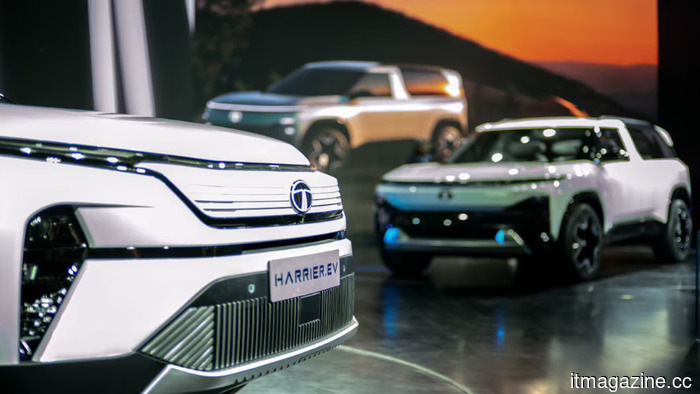
Tata and JSW to invest $1 billion in developing India's independence from Chinese batteries.
The two conglomerates are independently financing R&D centers dedicated to developing next-generation battery technologies and advanced electric vehicle (EV) systems. This investment serves as a safeguard since both companies currently source vital battery components from Chinese suppliers and wish to establish alternatives in the event that Beijing tightens export regulations again.
India’s two biggest conglomerates in the steel and other sectors are investing nearly $1 billion into a pressing concern for the country's electric vehicle industry: what will happen when Chinese suppliers become unresponsive?
Tata Group and JSW Group are each funding research-and-development centers aimed at cultivating in-house knowledge of next-generation battery technologies and advanced EV systems, according to a Bloomberg report from Wednesday, which cited sources familiar with their plans. Together, their investment amounts to just under $1 billion.
Both companies share a common concern. The Indian EV industry, including their operations, largely depends on Chinese cells, materials, and equipment. China’s tightening of export restrictions on graphite, lithium-processing equipment, and battery manufacturing machinery has elevated this reliance to a board-level issue rather than just a procurement challenge.
Tata’s R&D initiative is part of Agratas, the company’s battery division, which is currently constructing a 20 GWh gigafactory in Sanand, Gujarat, to supply Tata Motors. The latest funding focuses on upstream aspects: chemistry, cell design, and process expertise that the group has typically licensed or sourced. Agratas has previously collaborated with Tata Technologies to accelerate battery solutions for transportation and renewable energy storage, and this new investment extends those efforts into materials and proprietary cell formats.
JSW Group’s approach differs but shares similarities. JSW Motors, the joint venture through which the conglomerate markets MG vehicles in India alongside SAIC, inaugurated JNEXT, the JSW NextGen Technology Center, in Pune this past February in partnership with Tata Elxsi.
Neither company has publicly disclosed the investment amounts. Sources for Bloomberg suggest a combined investment of “nearly $1 billion,” allocated to several years of R&D initiatives rather than capital expenditures for production lines.
The impetus for this investment is policy changes from across the Himalayas. Late last year, executives and engineers from Reliance Industries scoured Wuxi to secure about $1.1 billion in equipment for a planned battery facility, but shortly after, Beijing imposed stricter export controls on crucial battery manufacturing technology. This has since caused numerous delays and rerouting of equipment shipments to India.
In the interim, Tata Motors has had to increase reliance on Chinese suppliers. The Curvv.ev was launched with cells sourced from Octillion Power Systems, and the company has formed a sourcing agreement with Envision AESC for higher-density battery packs. These arrangements have tightened rather than diversified the supply chain, making the development of a domestic chemistry program the clear medium-term safeguard.
JSW's dependence is structurally different. The MG joint venture, in which Sajjan Jindal’s group holds a 35% stake, obtains approximately 60% of its components from China. JSW has publicly set a goal of producing one million new-energy vehicles by 2030, along with a 10 GWh battery plant in partnership with LG Energy Solution.
The new R&D initiative is intended to make these targets feasible without needing to renegotiate the SAIC partnership every time Beijing alters its regulations. This dependency mirrors the challenges Europe is facing, impacting capital decisions in Mumbai and New Delhi as much as in Berlin and Paris.
In the competitive landscape, Tata is no longer the unchallenged leader in India’s EV sector. Mahindra has surpassed it in EV revenue in the most recent fiscal year, although Tata still maintains the lead in sales volume. Meanwhile, JSW’s MG has doubled its market share over the past year.
These competing R&D investments come amid this changing hierarchy: both groups need proprietary technology to protect their profit margins, not merely to compete with their rivals' offerings.
This pattern is familiar. The push for domestic battery cell production in Europe, catalyzed by the collapse of Northvolt and concerns over energy security, serves as a close parallel. Indian companies have observed this closely, recognizing the same principles of chemical sovereignty, recycling capabilities (seen in UK recycler Altilium’s recent funding round), and policy support for local cell production, which now dominate discussions in India.
What sets India apart is that its industrial policy, including the PLI scheme for advanced chemical cells, has been implemented for several years; however, private R&D funding was previously lacking. The announcements from Tata and JSW address this funding gap.
What’s at stake? Despite the $1 billion investment in research, neither conglomerate is likely to eclipse Chinese leadership in battery chemistry within this decade. Their realistic goal is to develop enough internal capabilities to specify, validate, and customize cells, qualify alternative suppliers, and negotiate with Chinese partners from a more secure position.
This ambition affects their expenditure plans. Most of the funds will be directed towards recruiting talent, acquiring lab equipment,
Other articles
 Google addresses the silent installation of Gemini Nano in Chrome but does not fully tackle the issue of user consent.
Parisa Tabriz, the Vice President and General Manager of Google Chrome, has addressed the criticism regarding Chrome's approach of quietly downloading a 4GB Gemini Nano model onto users' devices.
Google addresses the silent installation of Gemini Nano in Chrome but does not fully tackle the issue of user consent.
Parisa Tabriz, the Vice President and General Manager of Google Chrome, has addressed the criticism regarding Chrome's approach of quietly downloading a 4GB Gemini Nano model onto users' devices.
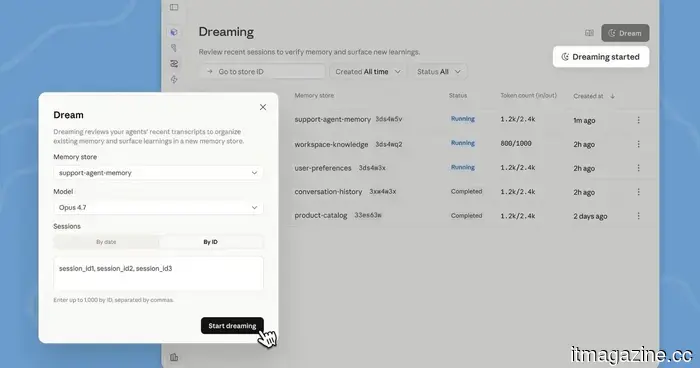 Anthropic has recently enabled Claude to dream between tasks, enhancing the agents' intelligence significantly.
Claude's new Dreaming feature is a memory refinement system that operates between sessions, analyzing previous agent behavior to pinpoint frequent errors and workflow patterns, and subsequently updates the memory.
Anthropic has recently enabled Claude to dream between tasks, enhancing the agents' intelligence significantly.
Claude's new Dreaming feature is a memory refinement system that operates between sessions, analyzing previous agent behavior to pinpoint frequent errors and workflow patterns, and subsequently updates the memory.
 Huawei makes smart devices an extension of humanity.
Huawei held a global launch of its new products in Bangkok.
Huawei makes smart devices an extension of humanity.
Huawei held a global launch of its new products in Bangkok.
 Your Galaxy Watch can now alert you before you lose consciousness.
Samsung and Chung-Ang University Hospital have confirmed that the Galaxy Watch can predict fainting episodes up to five minutes in advance, achieving an accuracy rate of 84.6%.
Your Galaxy Watch can now alert you before you lose consciousness.
Samsung and Chung-Ang University Hospital have confirmed that the Galaxy Watch can predict fainting episodes up to five minutes in advance, achieving an accuracy rate of 84.6%.
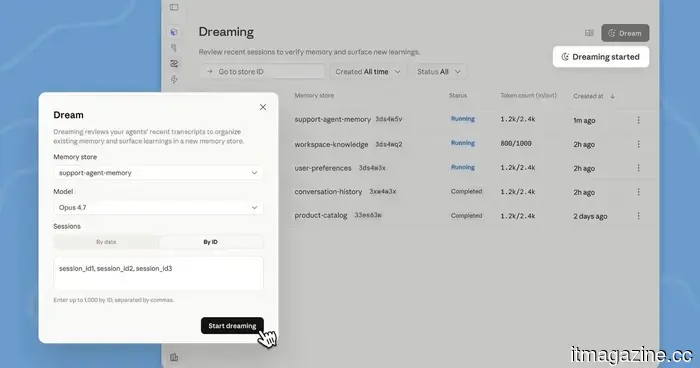 Anthropic has just instructed Claude to dream between tasks, which significantly enhances the intelligence of agents.
Claude's new Dreaming feature is a memory refinement system that operates between sessions, analyzing previous agent behavior to spot consistent errors and workflow patterns, and subsequently updates its memory.
Anthropic has just instructed Claude to dream between tasks, which significantly enhances the intelligence of agents.
Claude's new Dreaming feature is a memory refinement system that operates between sessions, analyzing previous agent behavior to spot consistent errors and workflow patterns, and subsequently updates its memory.
 Huawei makes smart devices an extension of humanity.
Huawei held a global launch of its new products in Bangkok.
Huawei makes smart devices an extension of humanity.
Huawei held a global launch of its new products in Bangkok.
Tata and JSW to invest $1 billion in developing India's independence from Chinese batteries.
Tata Group and JSW Group are individually investing in research and development centers focused on next-generation batteries and electric vehicle systems, with a total funding of $1 billion.