

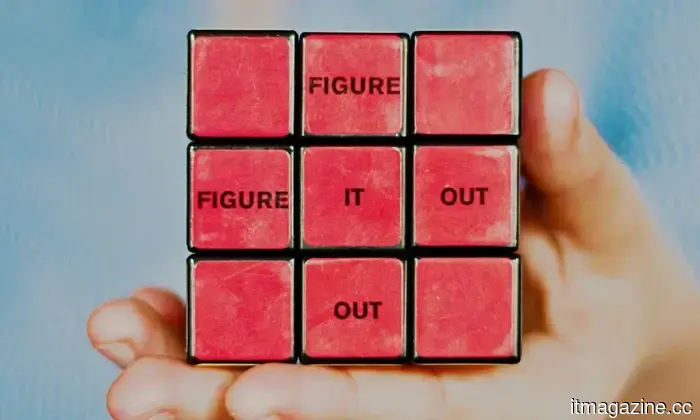
A recent study indicates that even short periods of AI usage may impair your thinking skills.
AI provides rapid responses, but a recent study indicates it may come at the expense of something more important.
A research study conducted by scholars from Carnegie Mellon, MIT, Oxford, and UCLA suggests that utilizing an AI chatbot for merely 10 minutes could impair your capacity to think critically and solve problems. The results are somewhat concerning.
Wired reported that the researchers tasked participants with solving problems, including basic fractions and reading comprehension. Some participants had access to an AI assistant capable of resolving the issues for them.
When the AI assistance was suddenly taken away, these participants were much more likely to either give up or answer incorrectly. Essentially, once the AI support was removed, individuals faced difficulties.
Is there cause for concern regarding AI's impact on our cognitive abilities?
Michiel Bakker, an assistant professor at MIT involved in the research, is cautious about sounding overly negative. "The main point is not that we should prohibit AI in schools or workplaces," he states. "AI can definitely enhance immediate performance, which can be beneficial. However, we must be more discerning about the type of assistance AI provides and the timing of that assistance."
The troubling aspect of this situation is that persistence—your ability to persist when facing challenges—is crucial for human learning and the acquisition of new skills over time. It appears that AI is subtly undermining this quality.
So, how can we address this issue?
Bakker suggests that AI tools need to be redesigned to function like effective educators. Rather than simply providing answers, they should guide users through the problem-solving process. "Systems that deliver direct answers may result in significantly different long-term outcomes compared to systems that provide scaffolding, coaching, or challenges," he explains.
Striking this balance is complicated, and AI companies are already contending with related dilemmas. For now, it may be helpful to reflect: is your AI assistant fostering your growth or merely doing your thinking for you?
Rachit is an experienced technology journalist with over seven years of experience focusing on consumer technology.
Character.AI is facing a lawsuit for allegedly allowing its chatbot to pose as a medical professional in Pennsylvania.
Character.AI has found itself in trouble again, as the company faces legal action due to one of its fictional bots allegedly acting as a healthcare provider. Previously, Character.AI implemented parental controls amid various lawsuits over inappropriate content and messages related to self-harm. Now, the administration of Pennsylvania Governor Josh Shapiro has initiated a lawsuit against Character Technologies, the entity behind Character.AI. It is claimed that the platform permitted a chatbot to present itself as a licensed medical practitioner in the state.
LG’s upcoming Tandem OLED display technology aims to resolve longstanding consumer issues.
The next-generation Tandem OLED technology promises more than double the lifespan and an 18% reduction in power consumption. For years, OLED display users have dealt with a quiet set of compromises: screens that dim over time, panels that struggle in bright environments, and laptops that deplete their battery more quickly than anticipated. LG Display's latest OLED lineup, unveiled at SID Display Week 2026 in Los Angeles, directly addresses all three concerns with new technologies across various product categories.
You can now rely on Perplexity for medical advice, or at least more than ChatGPT or Gemini.
This marks a significant advancement in providing dependable AI health information. Perplexity is focusing on one of the most challenging areas for AI: health guidance. This time, it’s not only about delivering better answers but also ensuring that those answers derive from trustworthy sources.





Other articles
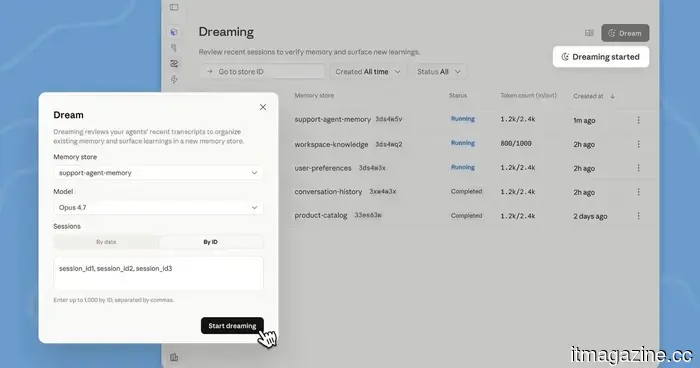 Anthropic has just instructed Claude to dream between tasks, which significantly enhances the intelligence of agents.
Claude's new Dreaming feature is a memory refinement system that operates between sessions, analyzing previous agent behavior to spot consistent errors and workflow patterns, and subsequently updates its memory.
Anthropic has just instructed Claude to dream between tasks, which significantly enhances the intelligence of agents.
Claude's new Dreaming feature is a memory refinement system that operates between sessions, analyzing previous agent behavior to spot consistent errors and workflow patterns, and subsequently updates its memory.
 Tata and JSW to invest $1 billion in developing India's independence from Chinese batteries.
Tata Group and JSW Group are individually investing in research and development centers focused on next-generation batteries and electric vehicle systems, with a total funding of $1 billion.
Tata and JSW to invest $1 billion in developing India's independence from Chinese batteries.
Tata Group and JSW Group are individually investing in research and development centers focused on next-generation batteries and electric vehicle systems, with a total funding of $1 billion.
 Huawei makes smart devices an extension of humanity.
Huawei held a global launch of its new products in Bangkok.
Huawei makes smart devices an extension of humanity.
Huawei held a global launch of its new products in Bangkok.
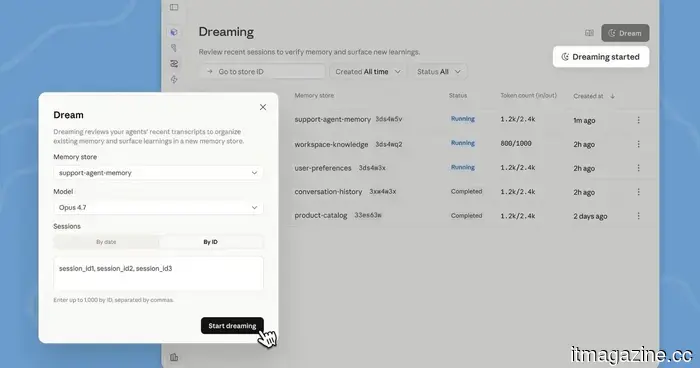 Anthropic has recently enabled Claude to dream between tasks, enhancing the agents' intelligence significantly.
Claude's new Dreaming feature is a memory refinement system that operates between sessions, analyzing previous agent behavior to pinpoint frequent errors and workflow patterns, and subsequently updates the memory.
How AI Orchestration Layers Are Transforming the Car Purchasing Experience
BadCo.AI is developing AI orchestration layers that integrate CRM systems, dealership operations, and customer interaction to create a smoother car buying experience.
Anthropic has recently enabled Claude to dream between tasks, enhancing the agents' intelligence significantly.
Claude's new Dreaming feature is a memory refinement system that operates between sessions, analyzing previous agent behavior to pinpoint frequent errors and workflow patterns, and subsequently updates the memory.
How AI Orchestration Layers Are Transforming the Car Purchasing Experience
BadCo.AI is developing AI orchestration layers that integrate CRM systems, dealership operations, and customer interaction to create a smoother car buying experience.
 Google addresses the silent installation of Gemini Nano in Chrome but does not fully tackle the issue of user consent.
Parisa Tabriz, the Vice President and General Manager of Google Chrome, has addressed the criticism regarding Chrome's approach of quietly downloading a 4GB Gemini Nano model onto users' devices.
Google addresses the silent installation of Gemini Nano in Chrome but does not fully tackle the issue of user consent.
Parisa Tabriz, the Vice President and General Manager of Google Chrome, has addressed the criticism regarding Chrome's approach of quietly downloading a 4GB Gemini Nano model onto users' devices.
A recent study indicates that even short periods of AI usage may impair your thinking skills.
A recent study conducted by researchers from MIT, Carnegie Mellon, Oxford, and UCLA discovered that even short periods of using AI can negatively impact your problem-solving skills once the tool is no longer available.