

Amazon steps back from the grocery sector in Singapore, focusing more on cross-border operations instead.
Amazon Fresh and its local fulfilment network will cease operations on July 6, resulting in a small number of job losses in Singapore. However, AWS, retail, and Global Selling will continue, as the company believes Singaporean consumers prefer catalogs from the US, Japan, and Germany over local replenishment.
On Wednesday, Amazon confirmed the closure of Amazon Fresh in Singapore and the discontinuation of its local fulfilment operations. The grocery service, including partnerships with Little Farms and AS Watson, will conclude on July 6. A "small number" of roles in Singapore will be eliminated, though the company did not specify how many. Those affected will be offered internal transfers if available, or severance and career-transition assistance if not.
Peter Li, Amazon Singapore’s country manager, mentioned in the announcement that these changes were made in response to consumer demand patterns, revealing that Singaporean customers primarily prefer products from Amazon’s US, Japanese, and German stores instead of locally stocked items.
Amazon employs approximately 2,500 individuals across Singapore in sectors such as retail, Global Selling, entertainment, devices, and AWS, none of which will be impacted by this decision. The company reaffirmed its "deep" commitment to Singapore, a remark that somewhat contrasts with the closure of a key service.
Amazon Fresh's model has struggled in Singapore due to the country's small size and high population density, with existing supermarket competition from FairPrice, RedMart, and Sheng Siong, alongside numerous last-mile delivery services. Amazon entered the grocery sector in 2017 with Prime Now, later rebranding it as Amazon Fresh and partnering with local retailers like AS Watson's Cold Storage and Little Farms for organic offerings. However, the competition in a city where supermarkets are mere moments away from customers made it difficult for Amazon to establish a viable grocery model.
By shutting down Amazon Fresh, the company can now focus its investments on areas where demand is more evident, notably cross-border shipments of products not readily available from local retailers. This strategy aligns with similar decisions made globally, including the recent closures of the Try Before You Buy clothing service, the sale of Amazon Care, and the reduction of physical Amazon Go and Amazon Fresh stores in the US, consolidating its grocery presence to Whole Foods.
While the Singapore job cuts are minor in scale, they occur during a year marked by significant layoffs at Amazon, including 16,000 corporate positions eliminated in January—the largest in the company’s history. Other tech firms have also announced substantial workforce reductions, such as Meta’s planned layoffs of 8,000 and Atlassian’s cut of 1,600 roles. Amazon’s leadership has characterized these global layoffs as efforts to create a flatter organizational structure rather than as a direct result of productivity boosts from AI, although this explanation has not alleviated concerns among affected teams. The situation in Singapore reflects a similar assessment: determining where to allocate resources based on observed demand.
AWS remains a key focus for the company. Amazon has pledged S$12 billion (about US$9 billion) to expand cloud infrastructure in Singapore in 2024, and the AWS Asia-Pacific headquarters was inaugurated at IOI Central Boulevard last year. The Global Selling division, which supports Singaporean exporters in listing products on Amazon’s international sites, continues to grow alongside Amazon's investments in AI infrastructure.
For customers, the real change will be minimal. Users of Amazon Fresh will need to switch to FairPrice, RedMart, or Cold Storage’s apps starting in July, while those who primarily use Amazon.sg for cross-border shopping should experience no interruptions, with expectations of increased selections from US, Japanese, and German stores in the near future.
For the impacted employees, the immediate concern is potential internal transfers, while the broader Singapore tech job market—which saw the addition of 55,000 positions in 2025, mostly filled by non-residents—poses a longer-term challenge.
Other articles
 Why Nexus Luxembourg has established itself as a staple in Europe's AI schedule.
Nexus Luxembourg is scheduled for 10-11 June 2026, featuring over 150 speakers, 250 competing startups, and a grand prize of €100,000.
Why Nexus Luxembourg has established itself as a staple in Europe's AI schedule.
Nexus Luxembourg is scheduled for 10-11 June 2026, featuring over 150 speakers, 250 competing startups, and a grand prize of €100,000.
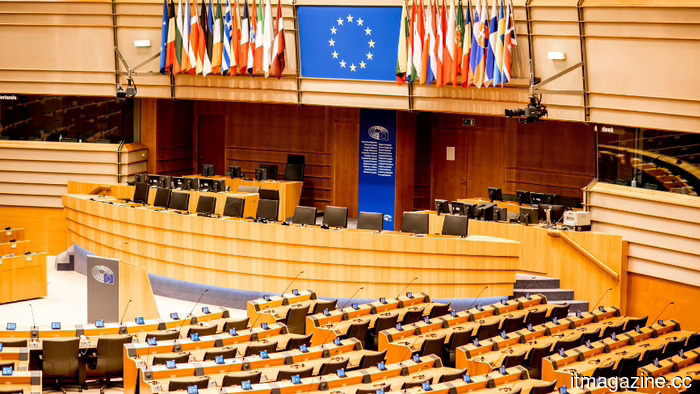 Brussels reaches an agreement to simplify the AI Act and prohibit nudification applications.
Parliament and the Council have reached an agreement to extend the deadline for high-risk classifications under the EU AI Act to December 2027 and to prohibit AI nudification tools, resolving a prolonged stalemate.
Brussels reaches an agreement to simplify the AI Act and prohibit nudification applications.
Parliament and the Council have reached an agreement to extend the deadline for high-risk classifications under the EU AI Act to December 2027 and to prohibit AI nudification tools, resolving a prolonged stalemate.
 Scale AI secures a $500 million contract with the Pentagon, five times larger than its previous agreement.
Scale AI has secured a $500 million contract from the Chief Digital and Artificial Intelligence Office of the Pentagon, marking a fivefold increase in the company's current contract.
Scale AI secures a $500 million contract with the Pentagon, five times larger than its previous agreement.
Scale AI has secured a $500 million contract from the Chief Digital and Artificial Intelligence Office of the Pentagon, marking a fivefold increase in the company's current contract.
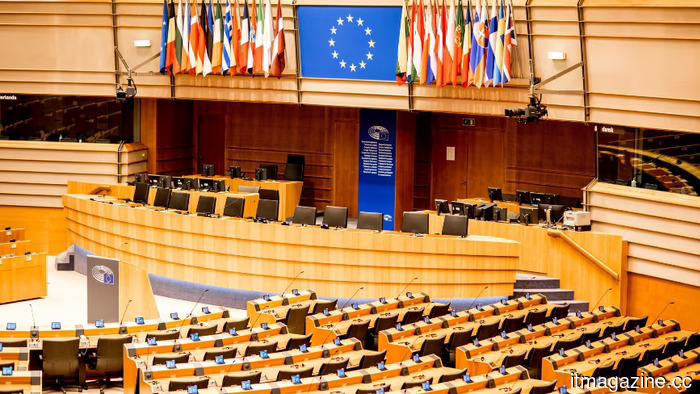 Brussels reaches an agreement to streamline the AI Act and prohibit nudification applications.
Parliament and the Council have reached an agreement to extend the deadline for high-risk provisions of the EU AI Act to December 2027 and to prohibit AI nudification tools, resolving a prolonged stalemate.
Moonshot AI’s $20 billion valuation confirms it as one of the fastest-growing AI funding journeys in China.
Moonshot AI, the Beijing-based creator of the Kimi chatbot, is concluding a $2 billion funding round with a post-money valuation exceeding $20 billion.
Brussels reaches an agreement to streamline the AI Act and prohibit nudification applications.
Parliament and the Council have reached an agreement to extend the deadline for high-risk provisions of the EU AI Act to December 2027 and to prohibit AI nudification tools, resolving a prolonged stalemate.
Moonshot AI’s $20 billion valuation confirms it as one of the fastest-growing AI funding journeys in China.
Moonshot AI, the Beijing-based creator of the Kimi chatbot, is concluding a $2 billion funding round with a post-money valuation exceeding $20 billion.
Amazon steps back from the grocery sector in Singapore, focusing more on cross-border operations instead.
Amazon will discontinue Amazon Fresh and local fulfillment in Singapore on July 6, 2026, resulting in a limited number of layoffs.