

Skyroot has become India’s inaugural space-tech unicorn prior to the Vikram-1 launch in June.
GIC and funds managed by BlackRock are leading a new funding round that more than doubles the company’s valuation for 2023. This funding coincides with the scheduled orbital launch of Vikram-1 from Sriharikota, marking the first attempt by a private Indian rocket to reach this milestone.
Skyroot Aerospace, a private launch-vehicle developer based in Hyderabad, has entered unicorn status with this latest funding round supported by GIC and BlackRock-managed funds, as reported by Bloomberg on Wednesday. This makes Skyroot the first space-technology company in India to achieve a valuation exceeding $1 billion, a target the country's emerging private space sector has aimed for since the regulatory changes in 2020.
The growth is notable. In Skyroot’s previous funding round, which raised $51 million in a Series B led by GIC in 2023, the company was valued at around $519 million. Reports of an upcoming unicorn round began appearing in April, with this new round designed to approximately double that amount.
Bloomberg's recent confirmation has settled any uncertainties. The updated cap table now includes investors such as GIC, Temasek, Greenko, Mukesh Bansal, and funds managed by BlackRock, which had previously provided Skyroot with ₹100 crore in debt financing in March.
This funding aligns with a key operational goal. Skyroot is gearing up for the orbital launch of Vikram-1, its inaugural commercial-class rocket, with a launch window set for June 2026. The rocket has already been sent to the Satish Dhawan Space Centre at Sriharikota, the Indian government's launch facility historically used by ISRO for state missions. A successful Vikram-1 launch would mark the first instance of a privately developed orbital rocket reaching space from India.
The Vikram-1 launch represents a significant commercial advance beyond the company's November 2022 sub-orbital demonstration with Vikram-S, which made Skyroot the first private Indian entity to reach space. Vikram-1 is distinctly designed as a three-stage solid-fueled rocket capable of delivering up to 480 kg of payload to a 500 km sun-synchronous orbit, putting it in direct competition with international small-satellite launch providers.
The makeup of the investors is significant. GIC and Temasek, both Singapore sovereign funds, have been actively investing in Indian deeptech for several years. Their ongoing involvement in Skyroot's growth stages reflects their confidence in the stability of the regulatory environment, which is crucial for the long-term capital commitments required in rocketry.
Previous reports suggested that this new investment will support Vikram-1’s commercial operations, the development of a larger Vikram-2 launch vehicle, and the infrastructure for consistent orbital missions.
The broader Indian context has shifted positively for Skyroot. The Indian Space Policy 2023 has opened the launch and satellite services sectors to private operators, with ISRO increasingly acting as a facilitator of commercial initiatives rather than the sole provider. Skyroot has emerged as a major beneficiary of these changes, along with Hyderabad-based competitor Agnikul Cosmos and other smaller firms.
Skyroot’s financing rationale rests on three main points. First, there is growing demand for small-satellite launch capacity that current providers, including SpaceX’s rideshare program, are not always able to fulfill to the desired frequency. Second, India’s labor costs and engineering expertise provide Skyroot with a competitive economic advantage over US firms in the same payload category. Third, the liberalized regulatory landscape is politically committed to supporting private rocketry as a national priority.
However, the round does not resolve the operational challenges ahead. Independent evaluations of the company’s performance indicate that while Skyroot’s Vikram-S sub-orbital demonstration was a technical success, it did not test the orbital-class systems required by Vikram-1 for commercial operations. The June launch window will be the first real test of the company's claims regarding commercial cadence.
If Vikram-1 achieves its orbit as scheduled, Skyroot's unicorn valuation may very well appear conservative. Conversely, if the launch is delayed or fails, the company will have the time to address any operational issues. However, this would also represent a significant setback to the positive political-economic narrative evolving around Indian private space endeavors. The investors who closed the unicorn round on Wednesday are banking on successful execution, and the Skyroot team has approximately six weeks to deliver results.
Other articles
 Why Nexus Luxembourg has established itself as a staple in Europe's AI schedule.
Nexus Luxembourg is scheduled for 10-11 June 2026, featuring over 150 speakers, 250 competing startups, and a grand prize of €100,000.
Why Nexus Luxembourg has established itself as a staple in Europe's AI schedule.
Nexus Luxembourg is scheduled for 10-11 June 2026, featuring over 150 speakers, 250 competing startups, and a grand prize of €100,000.
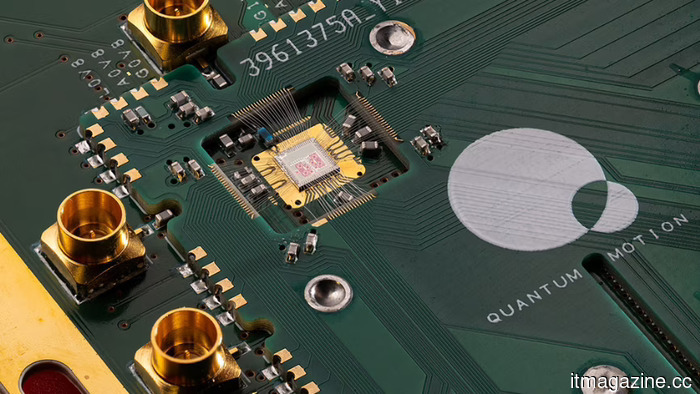 Quantum Motion secures $160 million in the EU's initial significant late-stage investment.
The European Union's newly established Scaleup Europe Fund has directed a $160 million investment into Quantum Motion, a UK-based company specializing in silicon-CMOS spin-qubit technology.
Quantum Motion secures $160 million in the EU's initial significant late-stage investment.
The European Union's newly established Scaleup Europe Fund has directed a $160 million investment into Quantum Motion, a UK-based company specializing in silicon-CMOS spin-qubit technology.
 Brussels reaches an agreement to simplify the AI Act and prohibit nudification applications.
Parliament and the Council have reached an agreement to extend the deadline for high-risk classifications under the EU AI Act to December 2027 and to prohibit AI nudification tools, resolving a prolonged stalemate.
Brussels reaches an agreement to simplify the AI Act and prohibit nudification applications.
Parliament and the Council have reached an agreement to extend the deadline for high-risk classifications under the EU AI Act to December 2027 and to prohibit AI nudification tools, resolving a prolonged stalemate.
 Brussels has reached an agreement to modify the AI Act and prohibit nudification applications.
Parliament and the Council have reached an agreement to extend the EU AI Act's high-risk deadline to December 2027 and prohibit AI nudification tools, resolving a lengthy impasse.
Brussels has reached an agreement to modify the AI Act and prohibit nudification applications.
Parliament and the Council have reached an agreement to extend the EU AI Act's high-risk deadline to December 2027 and prohibit AI nudification tools, resolving a lengthy impasse.
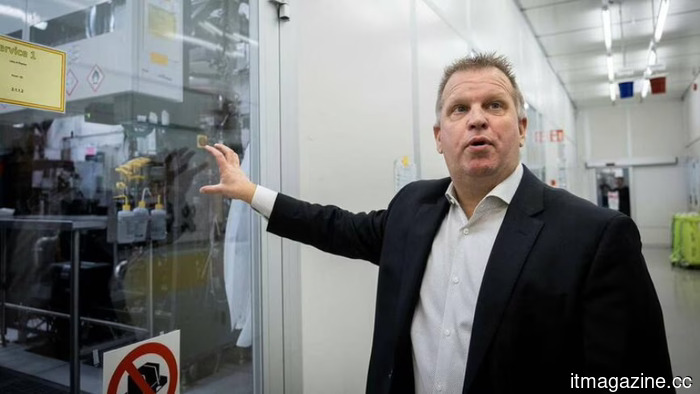 Silex, a pure-play MEMS foundry, has set the price for its IPO in Stockholm.
Silex Microsystems started strong on its Nasdaq Stockholm debut on 7 May 2026, following a pricing of SEK 81 per share.
Silex, a pure-play MEMS foundry, has set the price for its IPO in Stockholm.
Silex Microsystems started strong on its Nasdaq Stockholm debut on 7 May 2026, following a pricing of SEK 81 per share.
 Amazon steps back from the grocery sector in Singapore, focusing more on cross-border operations instead.
Amazon will discontinue Amazon Fresh and local fulfillment in Singapore on July 6, 2026, resulting in a limited number of layoffs.
Amazon steps back from the grocery sector in Singapore, focusing more on cross-border operations instead.
Amazon will discontinue Amazon Fresh and local fulfillment in Singapore on July 6, 2026, resulting in a limited number of layoffs.
Skyroot has become India’s inaugural space-tech unicorn prior to the Vikram-1 launch in June.
Skyroot Aerospace has completed a funding round that achieved unicorn valuation, supported by funds managed by GIC and BlackRock, in anticipation of the scheduled launch of Vikram-1 in June.