

Why Nexus Luxembourg has established itself as a staple in Europe’s AI calendar.
On June 10 and 11, the Grand Duchy will host the third edition of its prominent tech summit, right before the significant provisions of the EU AI Act come into effect. This event has gained importance and influence, especially this year.
Despite having a smaller population than Manchester, Luxembourg plays a significant role in European finance and has recently positioned itself as a credible destination for technology. The country's national strategy for digital sovereignty aims to enhance data, AI, and quantum capabilities by 2030. Currently, it is home to over 810 active startups, with more than 240 incorporating AI as a fundamental element.
The MeluXina supercomputer and Tier IV data centers form part of the foundational infrastructure. The primary public highlight of this initiative takes place again this June.
On June 10 and 11, 2026, Nexus Luxembourg will return to Luxexpo The Box for its third iteration, a two-day summit that has quickly become one of the most prominent AI and technology events in Europe. Organized by The Dots and Paperjam, this year's summit will feature 13,500 square meters of space, five conference stages, and more than 150 speakers, drawing over 10,000 attendees from over 50 countries.
The latest insights from the EU tech landscape, a piece from our wise founder Boris, and some questionable AI-generated art will be part of this week’s update. It's free to subscribe and delivered to your inbox weekly.
The 2026 edition is organized as a “4-in-1” experience, offering four curated tracks that run concurrently, rather than a single extensive agenda. The Intelligence Forum serves as the conference's main focus, addressing applied AI, autonomous systems, cybersecurity, sovereignty, and productivity tools across various sectors. The Fintech Sphere gathers players from the financial services sector, founders, and regulators to discuss the future of finance in Europe, fitting for Luxembourg, where fintech forms a key part of the economy.
The Launchpad Arena will host the startup competition, while the Luxembourg Makes It Happen track is situated at the venue's heart, bringing together institutions, EU policymakers, national champions, and keynote speakers.
This structured approach is intentional, reflecting a trend observed in Europe's leading tech events: a broad unconference format no longer garners interest from senior decision-makers, who now prefer well-defined sessions with relevant attendees. Nexus Luxembourg is positioning itself accordingly.
The centerpiece of the Launchpad Arena is the Nexus Luxembourg Awards. This year, 250 startups and scaleups have been chosen across ten categories to compete live for a grand prize of €100,000. The prize consists of €25,000 in cash and €75,000 in high-quality business services, including workspace, consultancy, and media exposure, which signals Luxembourg’s desire to embed winners locally rather than just provide financial support.
The ten categories showcase the current focus areas of European tech investment: cybersecurity, fintech and digital finance, govtech and digital society, green and climate tech, health tech and biotech, Industry 4.0, smart mobility and autonomous driving, space tech, web3 and digital assets, and data & AI, with space especially highlighting Luxembourg's position as a hub in the European space economy.
Luxembourg, while small, is significant in the tech world. The country’s R&D grants, which can cover up to 80% of qualifying costs, its English-speaking workforce, and its proximity to Brussels contribute to its appeal. Companies like Talkwalker, OCSiAI, and JobToday have demonstrated that Luxembourg's ecosystem can generate internationally relevant firms. The challenge now is to achieve this at scale and with consistency.
Nexus Luxembourg serves as a key element in this endeavor and is strategically aligned with the broader European movement towards technological self-determination and digital sovereignty, prioritizing investments in data, AI, and quantum infrastructure.
The “Luxembourg Makes It Happen” track exemplifies this strategy.
Attendees can expect a diverse array of topics from more than 150 speakers, including cybersecurity, data sovereignty, fintech and digital finance, govtech, green and climate tech, space tech, Industry 4.0, smart mobility, and healthtech. Additional speaker announcements will be made leading up to the event, but the lineup will likely include a mix of European policymakers, founders of significant businesses, and select international voices to enhance the discussion.
Logistically, Luxexpo The Box is well-equipped for this event format, with five stages and 13,500 square meters of exhibition space, making it easier to move around and engage with speakers compared to other large European events.
The significance of this year’s summit lies in its timing. The event concludes just weeks before the EU AI Act's major implementation deadline. Luxembourg’s startup ecosystem has surpassed 800 active companies, and the number of those utilizing AI has doubled since 2020. The MeluXina supercomputer is now in its second generation, and Luxembourg has positioned itself as a credible option for
Other articles
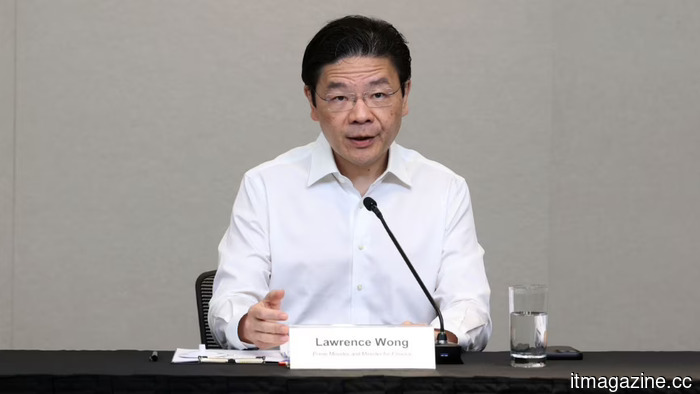 Lawrence Wong remains firm: AI will not lead to jobless growth in Singapore.
Singapore's parliament has reconfirmed Prime Minister Lawrence Wong's commitment made in February, stating that the nation will not undergo jobless growth.
Lawrence Wong remains firm: AI will not lead to jobless growth in Singapore.
Singapore's parliament has reconfirmed Prime Minister Lawrence Wong's commitment made in February, stating that the nation will not undergo jobless growth.
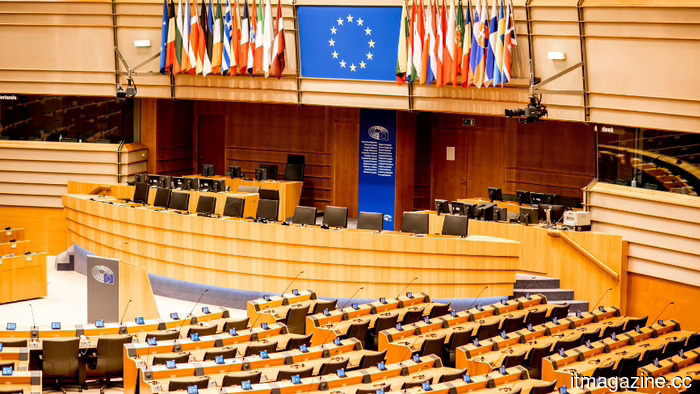 Brussels reaches an agreement to simplify the AI Act and prohibit nudification applications.
Parliament and the Council have reached an agreement to extend the deadline for high-risk classifications under the EU AI Act to December 2027 and to prohibit AI nudification tools, resolving a prolonged stalemate.
Brussels reaches an agreement to simplify the AI Act and prohibit nudification applications.
Parliament and the Council have reached an agreement to extend the deadline for high-risk classifications under the EU AI Act to December 2027 and to prohibit AI nudification tools, resolving a prolonged stalemate.
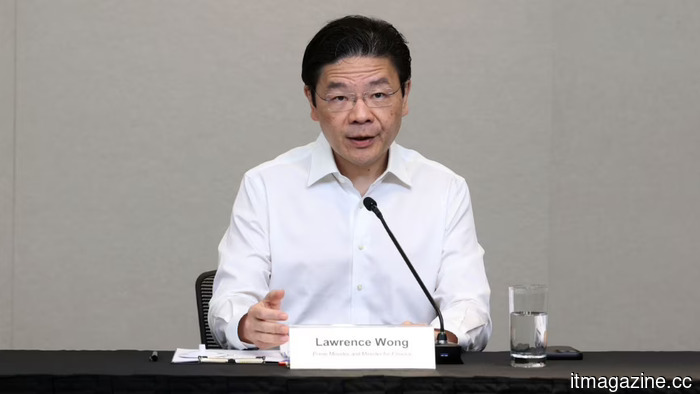 Lawrence Wong stands firm: AI will not lead to jobless growth in Singapore.
Singapore's parliament has reiterated Prime Minister Lawrence Wong's commitment made in February that the nation will not face jobless growth.
Lawrence Wong stands firm: AI will not lead to jobless growth in Singapore.
Singapore's parliament has reiterated Prime Minister Lawrence Wong's commitment made in February that the nation will not face jobless growth.
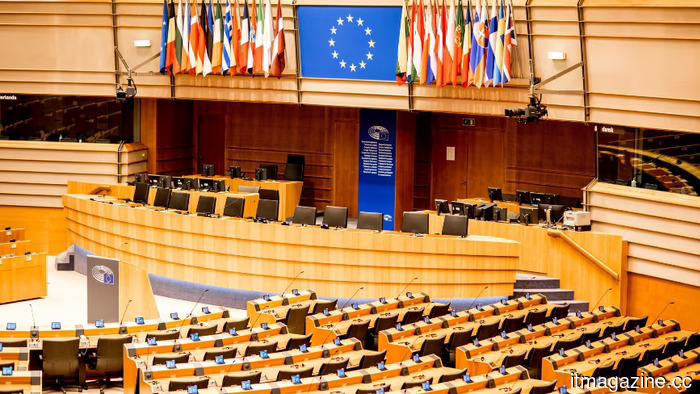 Brussels reaches an agreement to streamline the AI Act and prohibit nudification applications.
Parliament and the Council have reached an agreement to extend the deadline for high-risk provisions of the EU AI Act to December 2027 and to prohibit AI nudification tools, resolving a prolonged stalemate.
Brussels reaches an agreement to streamline the AI Act and prohibit nudification applications.
Parliament and the Council have reached an agreement to extend the deadline for high-risk provisions of the EU AI Act to December 2027 and to prohibit AI nudification tools, resolving a prolonged stalemate.
 Amazon steps back from the grocery sector in Singapore, focusing more on cross-border operations instead.
Amazon will discontinue Amazon Fresh and local fulfillment in Singapore on July 6, 2026, resulting in a limited number of layoffs.
Amazon steps back from the grocery sector in Singapore, focusing more on cross-border operations instead.
Amazon will discontinue Amazon Fresh and local fulfillment in Singapore on July 6, 2026, resulting in a limited number of layoffs.
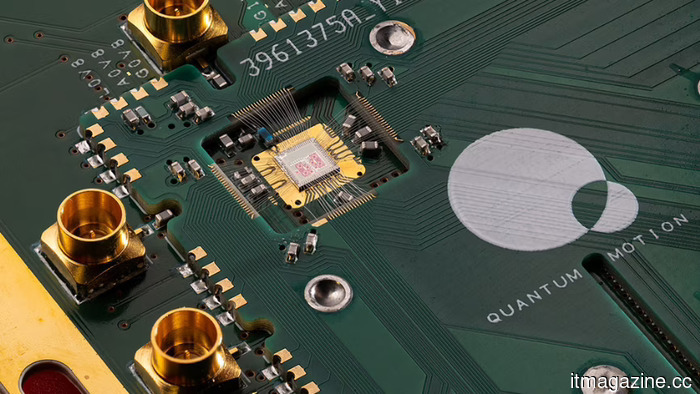 Quantum Motion secures $160 million in the EU's initial significant late-stage investment.
The European Union's newly established Scaleup Europe Fund has directed a $160 million investment into Quantum Motion, a UK-based company specializing in silicon-CMOS spin-qubit technology.
Quantum Motion secures $160 million in the EU's initial significant late-stage investment.
The European Union's newly established Scaleup Europe Fund has directed a $160 million investment into Quantum Motion, a UK-based company specializing in silicon-CMOS spin-qubit technology.
Why Nexus Luxembourg has established itself as a staple in Europe’s AI calendar.
Nexus Luxembourg will take place from June 10 to 11, 2026, featuring over 150 speakers, 250 competing startups, and a grand prize of €100,000.