
Supreme Court refuses to postpone the contempt order regarding Apple's App Store.
Justice Elena Kagan rejected Apple's emergency stay request on Wednesday, acting on behalf of the court and choosing not to forward the application to the full bench. Apple will now return to Judge Yvonne Gonzalez Rogers in Oakland to debate the commission it can legally charge for app purchases made through external links.
On Wednesday, the US Supreme Court also chose not to suspend the lower court's ruling that found Apple in contempt in the ongoing Epic Games App Store case. According to Reuters, Justice Kagan denied Apple's emergency stay application without involving the full court, indicating that the decision was straightforward.
Kagan acted quickly, less than an hour after Epic's opposition to Apple's request was shared, and before Apple could respond. This denial keeps the Ninth Circuit's contempt ruling in effect as Apple's petition for certiorari continues.
The contempt ruling stems from a decision made by US District Judge Yvonne Gonzalez Rogers, who determined in April 2025 that Apple had "wilfully" failed to comply with the anti-steering injunctions from the initial judgment in Epic Games v. Apple. The Ninth Circuit upheld this ruling, dismissing Apple’s claim that the contempt order should be paused while seeking Supreme Court review.
The key issue at stake is the commission, if any, that Apple can impose on payments made via external links in iOS apps. Prior to the contempt ruling by Gonzalez Rogers, Apple charged a 27 percent commission on such payments, which is three percentage points below the standard App Store rate. The judge’s contempt order extended the original anti-steering injunction, preventing Apple from collecting any fees from third-party storefronts, which means the company has not collected commissions on external-link payments for nearly a year.
Apple's petition to the Supreme Court contended that the order forces the company to give up billions in commission revenue while its appeal is ongoing. Epic's CEO Tim Sweeney accused Apple of employing "stall tactics" by seeking a stay so soon after the Circuit Court's ruling. The denial of the stay means the financial pressure remains as the cert petition is reviewed.
The case now returns to Judge Gonzalez Rogers in Oakland, according to US News' confirmation of the procedural status. Her court will decide the legal commission rate, if any, that Apple can charge developers for purchases made through external-link redirections. The judge has previously referred the issue to the federal prosecutor's office for potential criminal contempt proceedings, concluding that Apple executives lied under oath regarding the company's compliance stance.
The initial Epic Games v. Apple ruling dates back to 2021, which was mostly favorable to Apple, with the Supreme Court declining to hear cross-appeals in January 2024. The anti-steering provision, ordering Apple to permit developers to link to external payment options from iOS apps, is the only element of the judgment that was unfavorable to the company. Compliance concerning this provision has been under litigation for nearly four years.
Apple's petition for certiorari, submitted in early April, requests that the court examine both the contempt finding and the scope of the initial injunction. The Supreme Court has not yet decided whether to take up the case. Wednesday's denial of the stay is a distinct procedural matter from the certiorari issue, but it prevents Apple from postponing the implementation of Judge Gonzalez Rogers's order while the cert petition is pending.
The next significant step will be the proceedings in Oakland regarding the lawful commission rate. There is no set timeline for this determination, and any ruling made by Judge Gonzalez Rogers can itself be appealed. The fee dispute that began with Epic's lawsuit against Apple in 2020 remains unresolved, as evidenced by Wednesday's developments.
Altri articoli
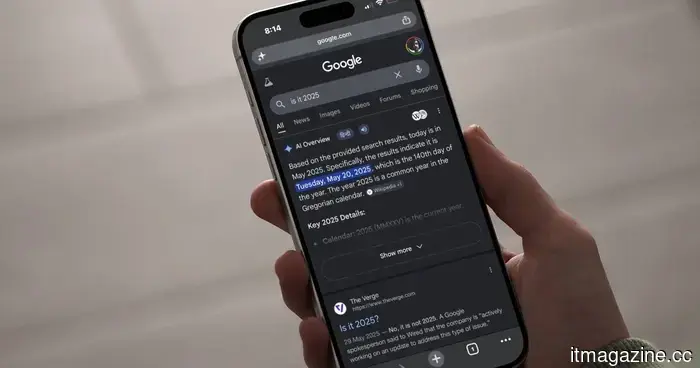 Google Search updates aim to transform AI responses into a launching pad for you, rather than a cul-de-sac.
Google is introducing five updates to AI Mode and AI Overviews in Search aimed at bringing more links to the forefront and providing users with additional incentives to click on the websites associated with them.
Google Search updates aim to transform AI responses into a launching pad for you, rather than a cul-de-sac.
Google is introducing five updates to AI Mode and AI Overviews in Search aimed at bringing more links to the forefront and providing users with additional incentives to click on the websites associated with them.
 Character.AI is facing a lawsuit for supposedly allowing a chatbot to act as a medical professional in Pennsylvania.
Pennsylvania has filed a lawsuit against Character.AI after investigators reported that a chatbot falsely presented itself as a licensed psychiatrist and provided medical advice to users.
Character.AI is facing a lawsuit for supposedly allowing a chatbot to act as a medical professional in Pennsylvania.
Pennsylvania has filed a lawsuit against Character.AI after investigators reported that a chatbot falsely presented itself as a licensed psychiatrist and provided medical advice to users.
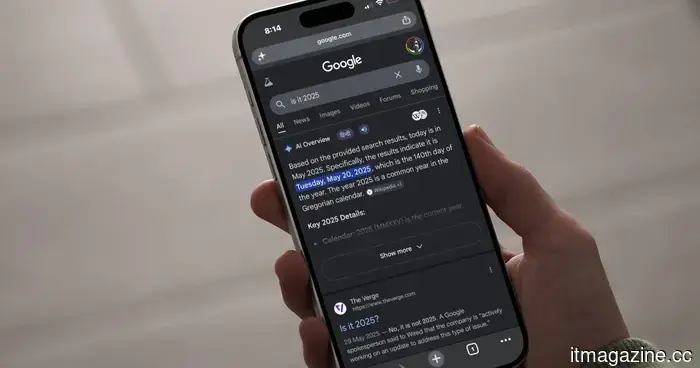 Google Search updates aim to transform AI responses into a starting point for your inquiries rather than a concluding one.
Google is launching five updates to AI Mode and AI Overviews in Search aimed at highlighting more links and encouraging users to visit the websites associated with them.
Google Search updates aim to transform AI responses into a starting point for your inquiries rather than a concluding one.
Google is launching five updates to AI Mode and AI Overviews in Search aimed at highlighting more links and encouraging users to visit the websites associated with them.
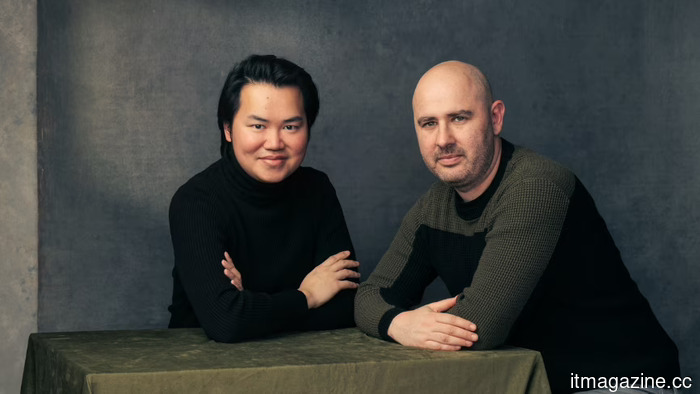 Ethos secures $22.75 million in Series A funding to address the issues AI has caused in the hiring process.
Ethos, the AI expert-matching platform based in London and established by former DeepMind and McKinsey alumni, has secured $22.75 million in a Series A funding round.
Ethos secures $22.75 million in Series A funding to address the issues AI has caused in the hiring process.
Ethos, the AI expert-matching platform based in London and established by former DeepMind and McKinsey alumni, has secured $22.75 million in a Series A funding round.
 Supreme Court refuses to postpone the contempt order regarding Apple's App Store.
On Wednesday, Justice Elena Kagan rejected Apple's emergency stay request on behalf of the US Supreme Court, maintaining the Ninth Circuit's contempt order.
Supreme Court refuses to postpone the contempt order regarding Apple's App Store.
On Wednesday, Justice Elena Kagan rejected Apple's emergency stay request on behalf of the US Supreme Court, maintaining the Ninth Circuit's contempt order.
 Google is developing a "24/7 personal assistant" that closely resembles its response to OpenClaw.
Google is developing an AI agent named Remy within its Gemini app, aiming to compete in a rapidly evolving market that is already dominated by OpenClaw, Meta, and Anthropic.
Google is developing a "24/7 personal assistant" that closely resembles its response to OpenClaw.
Google is developing an AI agent named Remy within its Gemini app, aiming to compete in a rapidly evolving market that is already dominated by OpenClaw, Meta, and Anthropic.
Supreme Court refuses to postpone the contempt order regarding Apple's App Store.
On Wednesday, Justice Elena Kagan, representing the US Supreme Court, rejected Apple's request for an emergency stay, allowing the contempt order from the Ninth Circuit to remain effective.