
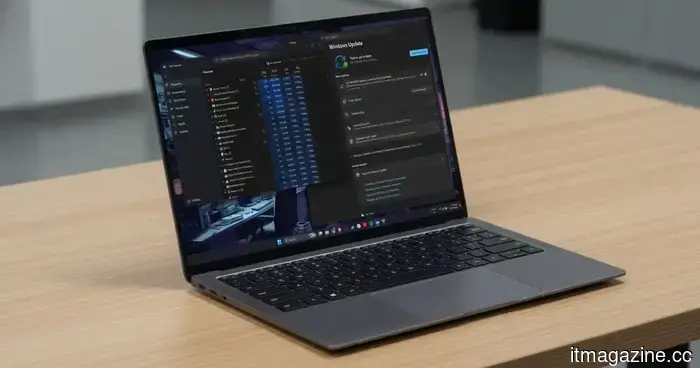
The most significant update for Windows 11 might be the least thrilling one.
The April preview release addresses underlying issues that can cause PCs to operate slowly, including RAM usage and startup behavior.
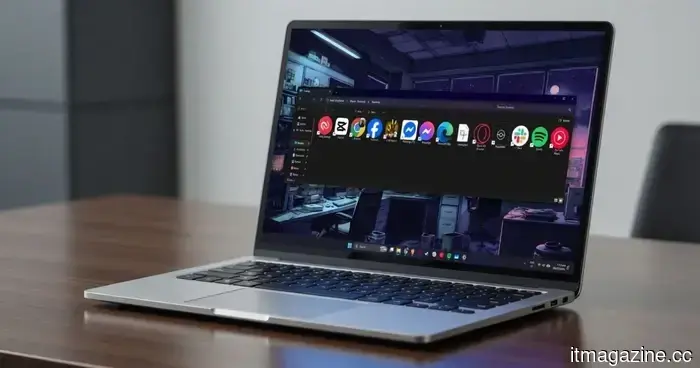
Microsoft's most recent update for Windows 11 focuses on the slowdowns users frequently experience. KB5083631, an optional preview update for Windows 11 versions 24H2 and 25H2, aims to resolve memory leaks, delays during startup, and the problematic behavior of File Explorer that can make the OS feel sluggish.
This release has a more defined goal than just another interface modification. Microsoft seeks to alleviate the difficulties arising when services consume excessive RAM, applications take too long to launch after a restart, or when explorer.exe remains active in the background after its windows have been closed.
Identifying RAM culprits
One of the key performance improvements in Windows 11 targets Delivery Optimization, the service responsible for managing Windows Update and downloading from the Microsoft Store in the background. This service has been associated with memory leaks and unusually high RAM usage, so reducing its impact could benefit PCs that are already under stress.
The startup applications are also being improved. Programs found under Settings, Apps, Startup are expected to start more quickly after a reboot, which is particularly beneficial for work computers and older laptops that may struggle with lengthy startup lists.
File Explorer is also getting enhancements. The update optimizes the behavior of explorer.exe so that the process properly terminates after File Explorer windows are closed, preventing it from unnecessarily consuming resources.
Additional refinements
The update also fixes issues with File Explorer’s dark mode flickering, saved View and Sort settings, loading of the taskbar system tray, and crashes linked to Task View, taskbar menus, and Quick Access.
While these fixes may seem minor, they impact the aspects of Windows that users frequently interact with. Improved startup performance, saved folder formats, reduced stuck processes, and fewer visual errors can contribute to a more user-friendly experience, even if performance enhancements are hard to quantify.
There is still a limit to these improvements. Microsoft is making promises about meaningful fixes, but the actual enhancement for individual users’ PCs will only be discernible after they have installed the update and evaluated its performance in regular use.
Update availability
Most users do not need to rush into this optional preview update. It is currently available for those who manually check for updates and want to access the latest Windows 11 changes early, but the same fixes are set to be released to all users with the Patch Tuesday update on May 12, 2026.
This timeline suggests that waiting for the mandatory release might be a safer option for those relying on a stable PC for work or education, as it will combine these performance updates with vital security patches.
Currently, KB5083631 is most suitable for users experiencing noticeable slowdowns, high background memory usage, dark mode flickers, or persistent explorer.exe processes. Others can afford to wait a few days to receive the fixes without needing to pursue a preview build.




Other articles
 Ethos secures $22.75 million in Series A funding to address the issues AI has caused in the hiring process.
Ethos, the AI expert-matching platform based in London and established by former DeepMind and McKinsey alumni, has secured $22.75 million in a Series A funding round.
Ethos secures $22.75 million in Series A funding to address the issues AI has caused in the hiring process.
Ethos, the AI expert-matching platform based in London and established by former DeepMind and McKinsey alumni, has secured $22.75 million in a Series A funding round.
 Ethos secures $22.75 million in Series A funding to address the issues AI has caused in hiring.
Ethos, the London-based platform for matching AI experts, established by former DeepMind and McKinsey alumni, has secured $22.75 million in a Series A funding round.
Ethos secures $22.75 million in Series A funding to address the issues AI has caused in hiring.
Ethos, the London-based platform for matching AI experts, established by former DeepMind and McKinsey alumni, has secured $22.75 million in a Series A funding round.
 Windows 11 File Explorer is receiving the update it should have received long ago.
Microsoft indicates that improvements to Windows 11 File Explorer extend beyond just preloading, focusing also on launch sequence, disk accesses, freezes, and visual lags that have contributed to a perception of sluggishness in the application.
Windows 11 File Explorer is receiving the update it should have received long ago.
Microsoft indicates that improvements to Windows 11 File Explorer extend beyond just preloading, focusing also on launch sequence, disk accesses, freezes, and visual lags that have contributed to a perception of sluggishness in the application.
 LG's next-generation Tandem OLED display technology is addressing several persistent issues faced by consumers.
LG Display's third-generation Tandem OLED extends panel lifespan, reduces power consumption by 18%, and achieves a peak brightness of 1,200 nits.
LG's next-generation Tandem OLED display technology is addressing several persistent issues faced by consumers.
LG Display's third-generation Tandem OLED extends panel lifespan, reduces power consumption by 18%, and achieves a peak brightness of 1,200 nits.
 Anthropic integrates SpaceX computing resources and increases the rate limits for the Opus API.
Anthropic has increased Claude Code's five-hour rate limits to double their previous amounts and has also raised the Opus API rate limits, attributing these changes to a new compute agreement with SpaceX for Colossus 1.
Anthropic integrates SpaceX computing resources and increases the rate limits for the Opus API.
Anthropic has increased Claude Code's five-hour rate limits to double their previous amounts and has also raised the Opus API rate limits, attributing these changes to a new compute agreement with SpaceX for Colossus 1.
 Google has proposed concessions regarding the ranking of news in search results for the EU.
Google has submitted proposals to the European Commission aimed at altering the way its search engine ranks news content, as part of an effort to resolve the DMA investigation.
Google has proposed concessions regarding the ranking of news in search results for the EU.
Google has submitted proposals to the European Commission aimed at altering the way its search engine ranks news content, as part of an effort to resolve the DMA investigation.
The most significant update for Windows 11 might be the least thrilling one.
Microsoft's optional update for Windows 11 addresses key issues such as memory leaks, startup delays, and File Explorer functionality, with a broader release anticipated during May 2026 Patch Tuesday.