

Ethos secures $22.75 million in Series A funding to address the issues AI has caused in the hiring process.
The London-based AI expert-matching platform, founded by former DeepMind and McKinsey alumni, is currently being valued at a time when AI has noticeably impacted the hiring landscape. Andreessen Horowitz is leading this funding round, with General Catalyst, the initial seed investor, participating again.
Generative AI has, in just around 30 months, significantly simplified job application processes for candidates while complicating the evaluation process for employers. There is a noticeable imbalance: tools that assist candidates have inundated the market with seamless CVs, polished cover letters, and enhanced portfolios, whereas the tools for recruiters that traditionally help sift through candidates have not evolved at a comparable rate.
Consequently, by mid-2026, the hiring market will feature a rapid scaling of the cheapest inputs while the most valuable input, the recruiter’s time, gets overwhelmed. Ethos, an AI startup based in London and founded by alumni of Google DeepMind and McKinsey, believes this is a problem worth investing in. On Wednesday, the company announced a Series A funding round of $22.75 million led by Andreessen Horowitz, with participation from General Catalyst, XTX, and Evantic.
This represents one of the larger Series A funding rounds for a UK AI startup this year, indicating how seriously Andreessen Horowitz views the labor-market implications of AI's commercial impact.
What Ethos actually does
In simple terms, Ethos operates as an AI-driven expert network. While companies like GLG and Guidepoint have spent many years curating lists of consultants, retired executives, and specialists for paid consultations, Ethos employs AI for this curation process.
The parallel coverage from TNW on the wider expert-network landscape, particularly in relation to Anthropic’s $1.5 billion enterprise services firm, is relevant here: the rosters of GLG and Guidepoint have become data partners in Claude Opus 4.7. Ethos, according to this evidence, is adopting an opposite approach: instead of integrating existing expert networks into AI products, it creates the expert profiles through AI and then matches them to opportunities at a scale that only a model-based system can manage.
The mechanism, as outlined on the company’s product page, involves two main components. An Ethos voice agent conducts a detailed interview with each expert, revealing the nuances of their professional knowledge that a standard CV cannot convey. Simultaneously, Ethos’s AI reviews the expert’s existing work portfolio, which includes academic papers, code repositories, blog posts, podcast appearances, and conference talks, to form a comprehensive understanding of the individual’s expertise. This combined profile is then autonomously matched with opportunities from the platform's client base.
The range of opportunities is notably broad. According to the company, Ethos matches its experts with consulting projects, expert calls, market research surveys, AI data-labeling tasks, and full-time positions. The AI-data aspect is critically important.
Frontier model labs require high-quality, domain-specific training data, especially in areas where general-purpose web data is inadequate, such as finance, medicine, law, and advanced engineering. Ethos has positioned itself, in its promotional materials, as a conduit through which these labs can access verified domain experts at scale.
The traction figures mentioned in the announcement are compelling enough, if accurate, to validate the Series A funding. The company claims that over 5,000 experts join the platform weekly from diverse fields including accounting, banking, consulting, law, technology, and healthcare, in addition to skilled trades such as electricians and plumbers.
The cross-collar reach—integrating white-collar specialists and qualified tradespeople—is unusual for an expert network and aligns with Ethos’s broader message that the value lies in verified expertise, independent of the credentialing path.
In terms of earnings, the average expert on Ethos earns an additional £4,500 per month through the platform, with the top 10% making over £7,000. Since January, the number of experts earning through Ethos has surged six-fold. An independent review on AItrainer.work reported that Ethos’s per-hour rates range from $105 to $225, which is significantly higher than typical AI-training pay and aligns with the platform’s mid-to-senior level focus.
Whether these figures remain robust will, as usual in expert-network economics, depend on the sustainability of the underlying customer demand. The economic model of paid expert calls falters if one of three scenarios occurs: the customer base shrinks, the supply of qualified experts exceeds demand, or the AI-driven matching leads to enough successful engagements that it commodifies the experts.
Ethos is betting that none of these situations will materialize quickly enough to hinder its growth, and it believes that broadening its customer base from private equity and consultancy to include AI labs and corporate research functions will provide significant opportunities.
The founders and why a16z invested
Ethos is co-founded by two individuals with complementary backgrounds. James Lo
Other articles
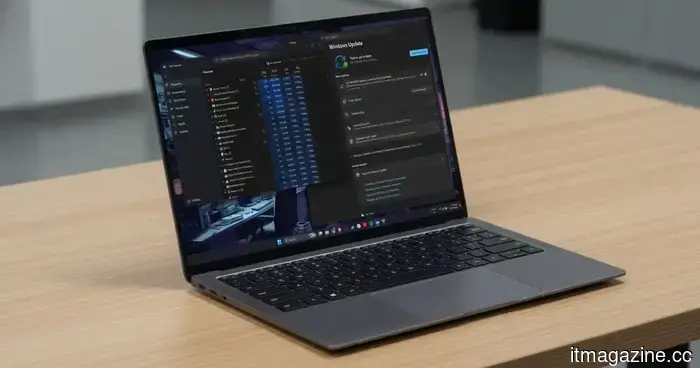 The most significant update for Windows 11 might be the least thrilling one.
Microsoft's optional update for Windows 11 addresses key issues such as memory leaks, startup delays, and File Explorer functionality, with a broader release anticipated during May 2026 Patch Tuesday.
The most significant update for Windows 11 might be the least thrilling one.
Microsoft's optional update for Windows 11 addresses key issues such as memory leaks, startup delays, and File Explorer functionality, with a broader release anticipated during May 2026 Patch Tuesday.
 Supreme Court refuses to postpone the contempt order regarding Apple's App Store.
On Wednesday, Justice Elena Kagan, representing the US Supreme Court, rejected Apple's request for an emergency stay, allowing the contempt order from the Ninth Circuit to remain effective.
Supreme Court refuses to postpone the contempt order regarding Apple's App Store.
On Wednesday, Justice Elena Kagan, representing the US Supreme Court, rejected Apple's request for an emergency stay, allowing the contempt order from the Ninth Circuit to remain effective.
 Google has proposed concessions regarding the ranking of news in search results for the EU.
Google has submitted proposals to the European Commission aimed at altering the way its search engine ranks news content, as part of an effort to resolve the DMA investigation.
Google has proposed concessions regarding the ranking of news in search results for the EU.
Google has submitted proposals to the European Commission aimed at altering the way its search engine ranks news content, as part of an effort to resolve the DMA investigation.
 Windows 11 File Explorer is receiving the update it should have received long ago.
Microsoft indicates that improvements to Windows 11 File Explorer extend beyond just preloading, focusing also on launch sequence, disk accesses, freezes, and visual lags that have contributed to a perception of sluggishness in the application.
Windows 11 File Explorer is receiving the update it should have received long ago.
Microsoft indicates that improvements to Windows 11 File Explorer extend beyond just preloading, focusing also on launch sequence, disk accesses, freezes, and visual lags that have contributed to a perception of sluggishness in the application.
 Ethos secures $22.75 million in Series A funding to address the issues AI has caused in hiring.
Ethos, the London-based platform for matching AI experts, established by former DeepMind and McKinsey alumni, has secured $22.75 million in a Series A funding round.
Ethos secures $22.75 million in Series A funding to address the issues AI has caused in hiring.
Ethos, the London-based platform for matching AI experts, established by former DeepMind and McKinsey alumni, has secured $22.75 million in a Series A funding round.
 Anthropic integrates SpaceX computing resources and increases the rate limits for the Opus API.
Anthropic has increased Claude Code's five-hour rate limits to double their previous amounts and has also raised the Opus API rate limits, attributing these changes to a new compute agreement with SpaceX for Colossus 1.
Anthropic integrates SpaceX computing resources and increases the rate limits for the Opus API.
Anthropic has increased Claude Code's five-hour rate limits to double their previous amounts and has also raised the Opus API rate limits, attributing these changes to a new compute agreement with SpaceX for Colossus 1.
Ethos secures $22.75 million in Series A funding to address the issues AI has caused in the hiring process.
Ethos, the AI expert-matching platform based in London and established by former DeepMind and McKinsey alumni, has secured $22.75 million in a Series A funding round.