

Peter Sarlin's Qutwo achieves a $380 million valuation in an angel funding round.
Following the sale of Silo AI to AMD for $665 million, the Helsinki entrepreneur is at it again. Qutwo's angel round values a quantum-classical orchestration layer, despite having no quantum hardware shipped yet, with customers already investing tens of millions in it.
There’s a specific kind of European startup narrative that typically doesn't unfold at this pace. Qutwo, the Helsinki-based company specializing in quantum-classical orchestration, recently emerged from stealth mode in February and has just completed an angel round with a valuation of around $380 million.
The company is merely three months out of stealth with no quantum hardware available for commercial shipping. Qutwo OS, its product, is a software layer that enables enterprise customers to commence running workloads in a hybrid classical/quantum-inspired environment now, based on the expectation that some of these workloads will transition to actual quantum hardware when it is ready.
Given these details, securing $380 million in an angel round is a remarkable achievement. The key reason for this fundraising, and at such a figure, is the founder.
Peter Sarlin's background is notable. He joins Qutwo with one of the strongest records among recent AI founders in Europe. Sarlin co-founded Silo AI in Helsinki in 2017 and sold it to AMD in 2024 for $665 million, a deal AMD termed the acquisition of Europe's largest private AI lab. The announcement for this deal came in July, with its completion on August 12, 2024.
Silo AI wasn't merely a speculative venture; it had significant enterprise customers, including Allianz, Philips, Rolls-Royce, and Unilever, and had developed multilingual open-source models before AMD acquired the team to bolster its AI software capabilities.
This context is essential because Qutwo is being valued more like a seasoned founder-led endeavor rather than a typical early-stage startup. Sarlin has already established and exited a significant AI company in Europe. His next venture is focused on the orchestration layer between classical AI and quantum computing.
Qutwo's proposition isn’t that quantum computing is ready now; rather, it emphasizes the need for enterprises to prepare their AI and machine learning workloads for when quantum hardware becomes commercially viable.
The company is developing Qutwo OS, an orchestration layer intended to connect existing enterprise systems with future quantum computing environments. This software will classify, route, and optimize workloads, utilizing a hybrid classical and quantum-inspired approach now and interfacing with real quantum hardware when it is feasible.
This represents a strategic gamble: the real value may not lie solely in the hardware, but in determining how workloads are managed.
Moreover, Qutwo is not waiting for the hardware market to mature before making sales. It is currently collaborating with Zalando on AI “lifestyle agents” and with OP Pohjola on quantum-AI research for financial services applications such as risk analysis, portfolio optimization, and fraud detection. Reports indicate that Qutwo secured €20 million in future contracts at its launch.
Recently, Qutwo has raised €25 million in an angel round at a valuation of €325 million, approximately $380 million. For a company that has only recently emerged from stealth, this is quite atypical. It also reflects the structure Sarlin preferred.
Many startups at this stage would opt for an institutional seed or Series A round. Instead, Qutwo has pursued an angel round, likely to maintain more control for the founder and to attract a selected group of strategic investors without adopting the governance framework associated with a conventional VC-led round.
For a founder fresh off a $665 million exit, supported by a family office, this structure is logical. This fundraising round provides Qutwo with a public valuation benchmark while avoiding the typical constraints of early institutional venture funding.
Contextually within Europe, this funding round coincides with a time when investments in quantum and AI sectors are becoming more substantial. Qutwo is not attempting to manufacture quantum hardware itself; instead, it is focusing on the software layer that could enable enterprises to utilize that hardware effectively.
This strategy positions it as a complement to the hardware companies in Europe rather than a direct competitor.
The wider European narrative is also significant: a Helsinki-based founder, European enterprise clients, family-office support, and a vision that aims to reduce reliance on US-based AI and computing infrastructure.
For European deep tech, this presents a compelling signal. The exit of Silo AI didn't merely return funds; it also produced a founder who is reinvesting credibility, capital, and commercial expertise into a more ambitious technical initiative.
However, there are risks involved. The first is the dependency on hardware: Qutwo’s ultimate strategic value hinges on the efficacy of quantum hardware for real enterprise workloads. If the timeline extends beyond anticipated, Qutwo would remain a hybrid classical and quantum-inspired software entity, which, while still valuable, may fall short of the implied valuation.
The second risk pertains to competition. AWS Braket, Azure Quantum, Google Quantum AI
Other articles
 Razr Fold versus Galaxy Z Fold 7: I’m tentatively impressed by what Motorola’s first foldable device brings to the table, all while saving $300.
Motorola focused its first release on creating the most robust hardware case possible. In contrast, Samsung dedicated seven generations to designing the most reliable daily-use case.
Razr Fold versus Galaxy Z Fold 7: I’m tentatively impressed by what Motorola’s first foldable device brings to the table, all while saving $300.
Motorola focused its first release on creating the most robust hardware case possible. In contrast, Samsung dedicated seven generations to designing the most reliable daily-use case.
 You can now regain a bit of privacy with approximate location sharing in Chrome.
Chrome on Android now allows approximate location sharing, enabling users to restrict the accuracy with which websites can monitor their location while still providing necessary functionalities.
You can now regain a bit of privacy with approximate location sharing in Chrome.
Chrome on Android now allows approximate location sharing, enabling users to restrict the accuracy with which websites can monitor their location while still providing necessary functionalities.
 The CEO of Xbox has decided to abandon the Copilot AI for consoles in order to redirect the platform's focus towards prioritizing gameplay experiences.
Microsoft has halted the development of Xbox Copilot AI for consoles and mobile devices, as CEO Asha Sharma refocuses efforts on enhancing player experience and improving the core platform.
The CEO of Xbox has decided to abandon the Copilot AI for consoles in order to redirect the platform's focus towards prioritizing gameplay experiences.
Microsoft has halted the development of Xbox Copilot AI for consoles and mobile devices, as CEO Asha Sharma refocuses efforts on enhancing player experience and improving the core platform.
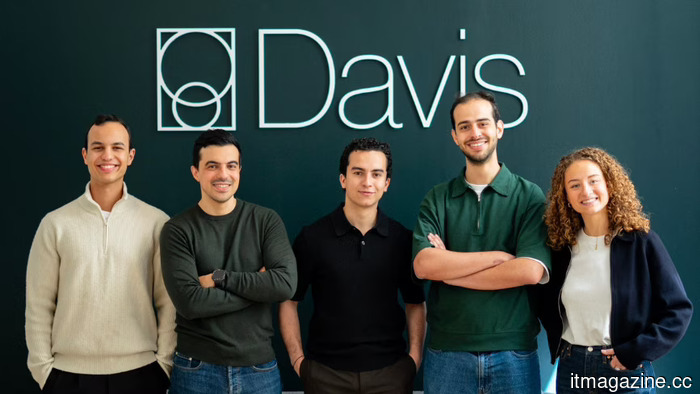 Davis secures $5.5 million in pre-seed funding to streamline real estate development.
Davis, based in Paris, has secured a $5.5 million pre-seed funding to accelerate real estate development from months to days, utilizing a new generative model known as Gaudi-1.
Davis secures $5.5 million in pre-seed funding to streamline real estate development.
Davis, based in Paris, has secured a $5.5 million pre-seed funding to accelerate real estate development from months to days, utilizing a new generative model known as Gaudi-1.
 Apple resolves the consumer lawsuit regarding Siri for $250 million.
Apple has resolved the Landsheft consumer class action regarding Siri AI marketing for $250 million. The related securities fraud case involving shareholders is still ongoing.
Apple resolves the consumer lawsuit regarding Siri for $250 million.
Apple has resolved the Landsheft consumer class action regarding Siri AI marketing for $250 million. The related securities fraud case involving shareholders is still ongoing.
 Reasons the EU's anonymization approach might not withstand the GDPR evaluation
Sergei Vassilvitskii, a scientist at Google, has alerted the European Commission that the anonymization technique used for mandatory search-data sharing under the DMA can be compromised in under two hours.
Reasons the EU's anonymization approach might not withstand the GDPR evaluation
Sergei Vassilvitskii, a scientist at Google, has alerted the European Commission that the anonymization technique used for mandatory search-data sharing under the DMA can be compromised in under two hours.
Peter Sarlin's Qutwo achieves a $380 million valuation in an angel funding round.
Qutwo, the company specializing in quantum-classical orchestration and founded by Peter Sarlin of Silo AI, has achieved a $380 million valuation following an angel investment round.