
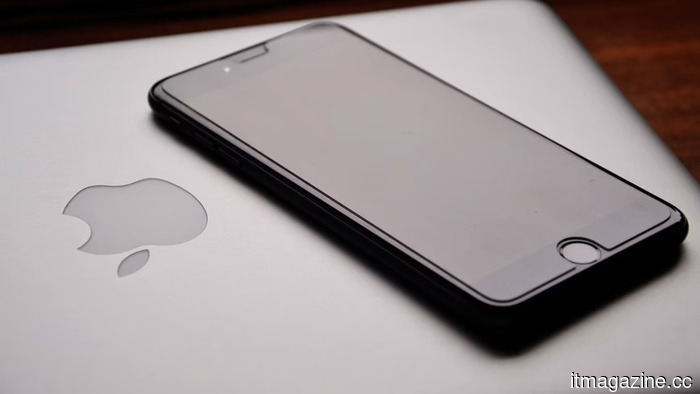
Apple reaches a $250 million settlement in the consumer Siri lawsuit.
iPhone 16 and 15 Pro purchasers in the US between June 2024 and March 2025 will receive between $25 and $95 for each device. Apple has not admitted any wrongdoing. This settled case pertains to consumers; however, a separate securities-fraud lawsuit that Apple is attempting to dismiss remains ongoing.
On Tuesday afternoon, Apple agreed to pay $250 million to settle a federal class-action lawsuit regarding the marketing of Siri features powered by Apple Intelligence, which the company later acknowledged were not ready by the iPhone 16's launch in September 2024. The settlement details were confirmed by Reuters in a report distributed through Investing.com.
The agreement, reached late last year and now officially submitted for court approval, will provide eligible iPhone 16 and iPhone 15 Pro owners about 36 million devices purchased between June 10, 2024, and March 29, 2025, with compensation ranging from $25 to $95 per device. This settlement addresses a segment of Apple’s legal challenges concerning Siri but does not resolve all of them.
Clarifying what was settled and what remains distinct
There has been some misunderstanding in early articles regarding the nature of this lawsuit. The settled case is Landsheft v. Apple, a consumer class action initiated by plaintiff Peter Landsheft in the Northern District of California in 2024.
The complaint claims false advertising and unfair competition under California consumer-protection laws, arguing that Apple promoted Siri capabilities in its marketing of the iPhone 16 that, according to the plaintiffs, “were not available at the time, are not available now, and will not be available for at least two years.”
According to the Clarkson Law Firm's class-action page, the suit was consolidated with similar claims, and the settlement is designed for consumer compensation per device rather than governance restitution.
Separately, there exists a securities-fraud lawsuit filed by shareholders, contending that Apple’s marketing of Siri made misleading statements that artificially inflated the company's stock price before the acknowledgment of delays in March 2025. MacRumors reported in late February that Apple requested a judge to dismiss the securities-fraud claims in this unrelated case, alongside claims linked to Epic Games. The $250 million settlement does not resolve the ongoing securities-fraud case, which Apple continues to contest. Reuters’ coverage mistakenly referred to the settled case as a “shareholder lawsuit,” but subsequent detailed articles clarify that the settled matter pertains to the consumer class action.
This distinction is important because, over the long term, the more significant risk for Apple lies not in consumer payouts but in securities-fraud liabilities. Payments to iPhone owners are manageable on Apple's balance sheet, whereas a judgment determining that Apple deliberately made false statements to investors regarding its product roadmap would have serious regulatory and reputational implications.
Timeline of the dispute
The factual background is now well documented. At WWDC in June 2024, Apple introduced Apple Intelligence as the key feature of the upcoming iPhone 16, highlighting a significantly upgraded Siri in its demonstration.
In marketing, the new Siri was portrayed as capable of utilizing a user's personal information to answer questions, manage apps efficiently, and function as a more adept assistant across the device. The iPhone 16 was launched in September 2024, heavily advertised through television, online, and print media.
However, in March 2025, Apple publicly admitted that the personalized Siri features would be delayed indefinitely, stating they would arrive “in the coming year.” Following this, reports from MacRumors, AppleInsider, and 9to5Mac indicated that Apple removed the related advertising. The Landsheft complaint, filed in 2024 and amended through 2025 and 2026, considered this sequence of delay and removal as clear evidence that Apple had marketed features it knew or should have known were not deliverable on the iPhone 16’s expected timeline.
Implications of the settlement
Three key outcomes arise from Tuesday’s filing. First, by settling without admitting fault, Apple has sidestepped a contentious trial that would have led to the revelation of internal communications regarding what executives understood about Siri's readiness upon the marketing campaign’s launch.
The settlement is structured to maintain the no-fault admission while allowing the plaintiffs to receive compensation. This is a typical outcome for consumer class actions of this size; the more contentious securities-fraud case, where Apple is still contesting claims, has a lower likelihood of settlement for similar discovery-related reasons.
Second, Apple Intelligence, as both a brand and product roadmap, now operates under a court-recorded acknowledgment that its initial marketing claims were sufficiently challenged that a $250 million settlement was deemed preferable to the prospect of defending them in court. Although the settlement does not rule on the underlying claims, the financial implications are significant.
Third, there is a timing aspect concerning WWDC 2026, scheduled for June 8. Apple has indicated that the long-awaited personalized Siri features will be
Other articles
 Will Apple’s iOS 27 introduce third-party AI options and assist Chinese iPhones in overcoming their AI challenges?
Apple is said to be preparing to enable users to select third-party AI models for the first time in its forthcoming iOS 27 release, broadening Apple's capabilities.
Will Apple’s iOS 27 introduce third-party AI options and assist Chinese iPhones in overcoming their AI challenges?
Apple is said to be preparing to enable users to select third-party AI models for the first time in its forthcoming iOS 27 release, broadening Apple's capabilities.
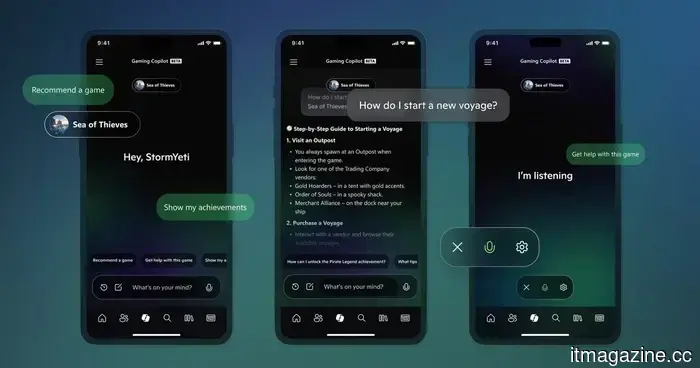 The CEO of Xbox has abandoned the Copilot AI initiative for consoles in order to concentrate on prioritizing gameplay experiences.
Microsoft has halted the development of Xbox Copilot AI for consoles and mobile, as CEO Asha Sharma redirects attention to enhancing player experience and core platform upgrades.
The CEO of Xbox has abandoned the Copilot AI initiative for consoles in order to concentrate on prioritizing gameplay experiences.
Microsoft has halted the development of Xbox Copilot AI for consoles and mobile, as CEO Asha Sharma redirects attention to enhancing player experience and core platform upgrades.
 DeepSeek's $45 billion valuation also serves as a strategic statement from Beijing.
China's Big Fund is currently in discussions to take the lead on DeepSeek's initial external funding round, valued at $45 billion, which is more than double the amount that was being considered a fortnight ago.
DeepSeek's $45 billion valuation also serves as a strategic statement from Beijing.
China's Big Fund is currently in discussions to take the lead on DeepSeek's initial external funding round, valued at $45 billion, which is more than double the amount that was being considered a fortnight ago.
 Peter Sarlin's Qutwo reaches a $380 million valuation in an angel funding round.
Qutwo, the company that orchestrates quantum and classical technologies and was established by Peter Sarlin from Silo AI, has achieved a valuation of $380 million in an angel investment round.
Peter Sarlin's Qutwo reaches a $380 million valuation in an angel funding round.
Qutwo, the company that orchestrates quantum and classical technologies and was established by Peter Sarlin from Silo AI, has achieved a valuation of $380 million in an angel investment round.
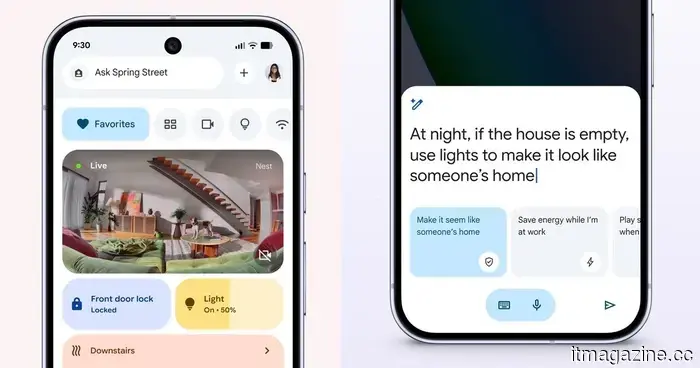 This Google Home update focuses on enhanced automation capabilities.
The Google Home update enhances automation by introducing new triggers, conditions, and actions, enabling more intelligent control over devices such as locks, lights, appliances, and sensors.
This Google Home update focuses on enhanced automation capabilities.
The Google Home update enhances automation by introducing new triggers, conditions, and actions, enabling more intelligent control over devices such as locks, lights, appliances, and sensors.
 Reasons the EU's anonymization approach might not withstand the GDPR evaluation
Sergei Vassilvitskii, a scientist at Google, has alerted the European Commission that the anonymization technique used for mandatory search-data sharing under the DMA can be compromised in under two hours.
Reasons the EU's anonymization approach might not withstand the GDPR evaluation
Sergei Vassilvitskii, a scientist at Google, has alerted the European Commission that the anonymization technique used for mandatory search-data sharing under the DMA can be compromised in under two hours.
Apple reaches a $250 million settlement in the consumer Siri lawsuit.
Apple has resolved the Landsheft consumer class action regarding the marketing of Siri AI for $250 million. Meanwhile, the related securities-fraud case involving shareholders is still ongoing.