
You can now regain a bit of privacy with approximate location sharing in Chrome.
A highly anticipated return, with a few conditions.
Google is finally offering Chrome users a feature that has been noticeably absent for years: a middle option between “share everything” and “share nothing.” Honestly, it’s about time.
What does approximate location sharing in Chrome entail?
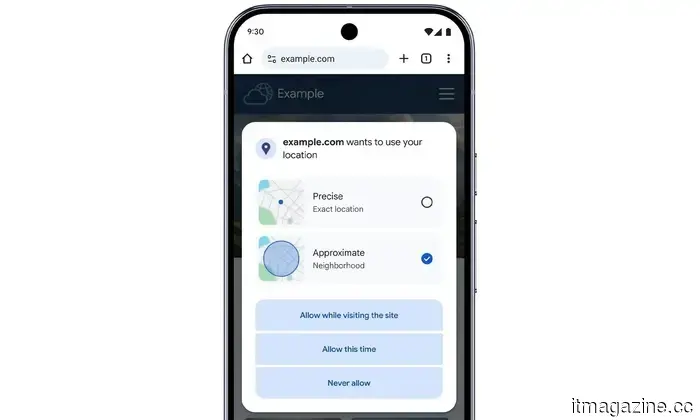
Google has rolled out approximate location sharing in Chrome for Android, allowing users to decide whether to share their precise location or a more general area, like their neighborhood.
Previously, most websites either had full access to the exact location or none at all. With this update, Chrome provides an additional layer of control directly in the permission prompt, allowing users to select between Precise and Approximate location according to the site’s actual needs.
The rationale is simple. Certain functions, like navigation or deliveries, require an exact location, while others, like weather updates or local news, do not. This feature addresses that need, enabling users to share just enough information to make services work without disclosing their exact location each time.
Why does this matter more than it seems?
While it might appear to be just a minor toggle, it significantly addresses a longstanding privacy issue. Location data is one of the most sensitive types of information that a browser can collect. For years, websites have often requested more precise data than necessary. This update shifts that dynamic, restoring control to users.
With incidents of dubious Chrome extensions mishandling user data and Google working on ways to curtail automatic data sharing, features like this are becoming essential rather than just an added benefit. The expansion of approximate location sharing to desktop browsers in the coming months indicates that Google is taking this seriously.
Privacy is transitioning from an all-or-nothing approach to a more intelligent, selective control. Thus, even minor updates like this represent a significant victory.
Varun is an experienced technology journalist and editor with over eight years in the consumer tech media field.
Google is implementing a new system to prevent questionable Android apps from causing chaos.
Android's upcoming security feature includes a public record for official apps.
Android security is gaining an extra layer of accountability, specifically targeting a problem that digital signatures can't effectively address. Google has announced it will extend Binary Transparency across the Android ecosystem. This initiative will log official releases of Google apps for Android and Mainline modules on a public append-only ledger, simplifying the process of verifying whether the software on a device matches the version Google intended to distribute.
Why digital signatures are no longer sufficient.
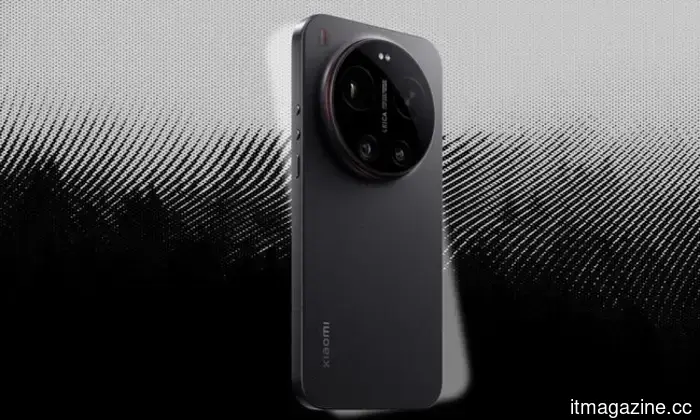
I tested the Xiaomi 17 Ultra’s camera, and I don't think I'll ever switch back to an iPhone.
In a market characterized by sluggish innovation and complacency, the renowned "Apple imitator" is setting a high bar for everyone.
In the realm of flagship phones, the term “Ultra” is beginning to lose its significance. Many brands use it liberally, but few truly deliver products that feel genuinely “ultra.” Consider the Samsung Galaxy S26 Ultra; it is indeed a solid device, but is it thrilling? Not really. This reflects a broader issue in the U.S. market, where some of the most compelling Android flagships are simply unavailable.
Meanwhile, companies like Vivo, Oppo, and Honor are discreetly advancing smartphone cameras into realms that feel more akin to dedicated cameras than ever before. Then there’s the Xiaomi 17 Ultra. After a couple of weeks of use, it’s evident that this isn’t merely a phone with an excellent camera; it’s a camera that just happens to function as a phone. In many ways, it resembles a modern revival of the Samsung Galaxy Camera.
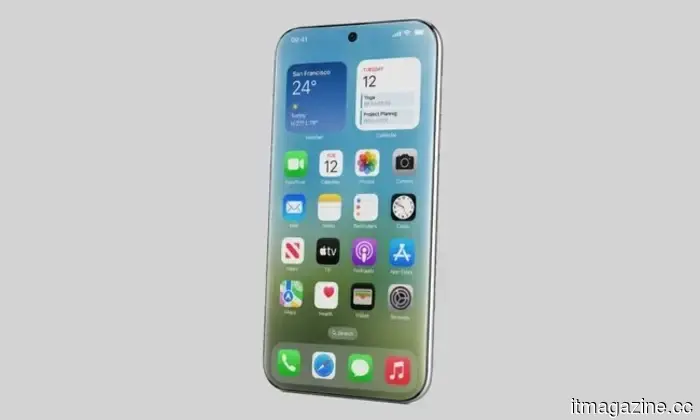
Apple’s iPhone 20 might finally abandon the design we’ve known for years.
Apple's 20th anniversary iPhone could feature a complete glass design, eliminate buttons, and quickly make current iPhones seem outdated.
The iPhone’s evolution began in 2007, reshaping the smartphone landscape by replacing physical keyboards with a 3.5-inch multi-touch display. Now, as it approaches its 20th anniversary, Apple may be gearing up for another significant design transformation, a seamless, entirely buttonless iPhone.
Is Apple preparing for its most substantial iPhone redesign in years?

Other articles
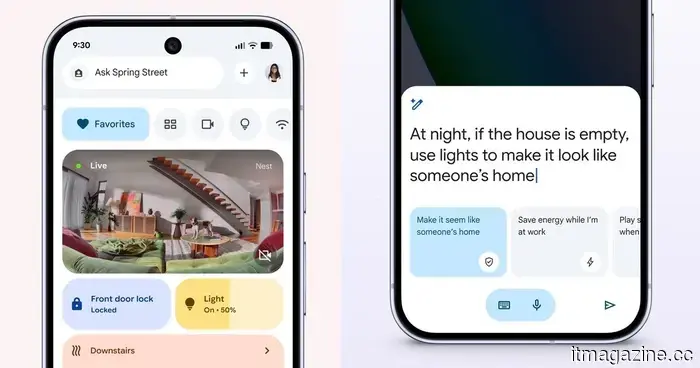 This update for Google Home focuses entirely on more intelligent automation.
The latest update for Google Home enhances automation by introducing new triggers, conditions, and actions, enabling more intelligent control of devices such as locks, lights, appliances, and sensors.
This update for Google Home focuses entirely on more intelligent automation.
The latest update for Google Home enhances automation by introducing new triggers, conditions, and actions, enabling more intelligent control of devices such as locks, lights, appliances, and sensors.
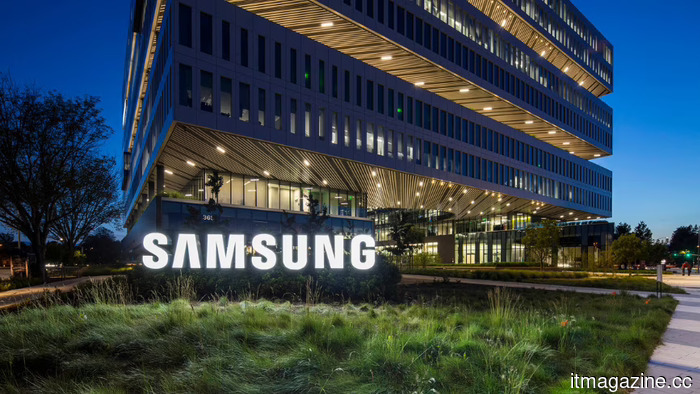 Samsung Electronics surpasses $1 trillion, joining TSMC.
On Wednesday, Samsung Electronics reached a market capitalization of $1 trillion, becoming the second Asian company to achieve this milestone, following TSMC.
Samsung Electronics surpasses $1 trillion, joining TSMC.
On Wednesday, Samsung Electronics reached a market capitalization of $1 trillion, becoming the second Asian company to achieve this milestone, following TSMC.
 DeepSeek's valuation of $45 billion serves as a strategic declaration from Beijing.
China's Big Fund is currently in discussions to spearhead DeepSeek's initial external funding round at $45 billion, which is more than twice the amount that was being considered two weeks prior.
DeepSeek's valuation of $45 billion serves as a strategic declaration from Beijing.
China's Big Fund is currently in discussions to spearhead DeepSeek's initial external funding round at $45 billion, which is more than twice the amount that was being considered two weeks prior.
 DeepSeek's $45 billion valuation also serves as a strategic statement from Beijing.
China's Big Fund is currently in discussions to take the lead on DeepSeek's initial external funding round, valued at $45 billion, which is more than double the amount that was being considered a fortnight ago.
DeepSeek's $45 billion valuation also serves as a strategic statement from Beijing.
China's Big Fund is currently in discussions to take the lead on DeepSeek's initial external funding round, valued at $45 billion, which is more than double the amount that was being considered a fortnight ago.
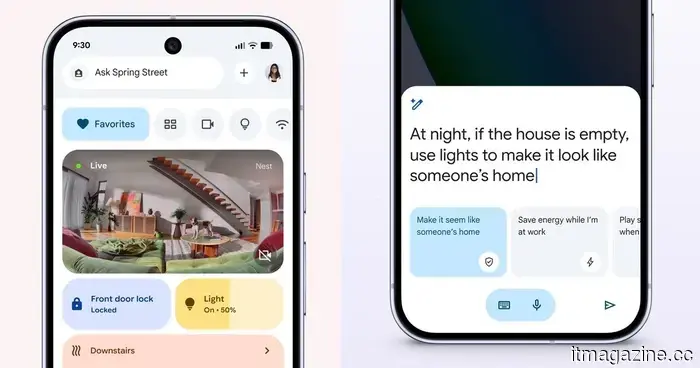 This Google Home update focuses on enhanced automation capabilities.
The Google Home update enhances automation by introducing new triggers, conditions, and actions, enabling more intelligent control over devices such as locks, lights, appliances, and sensors.
This Google Home update focuses on enhanced automation capabilities.
The Google Home update enhances automation by introducing new triggers, conditions, and actions, enabling more intelligent control over devices such as locks, lights, appliances, and sensors.
 Will Apple’s iOS 27 introduce third-party AI options and aid Chinese iPhones in overcoming their AI challenges?
Apple is said to be preparing to let users select third-party AI models for the first time in the soon-to-be-released iOS 27, broadening Apple's offerings.
Will Apple’s iOS 27 introduce third-party AI options and aid Chinese iPhones in overcoming their AI challenges?
Apple is said to be preparing to let users select third-party AI models for the first time in the soon-to-be-released iOS 27, broadening Apple's offerings.
You can now regain a bit of privacy with approximate location sharing in Chrome.
Chrome on Android now allows approximate location sharing, enabling users to restrict the accuracy with which websites can monitor their location while still providing necessary functionalities.