

Peter Sarlin's Qutwo reaches a $380 million valuation in an angel funding round.
Following the sale of Silo AI to AMD for $665 million, the Helsinki entrepreneur is on a new venture. Qutwo, which has priced its angel round at a valuation of about $380 million, offers a quantum-classical orchestration layer, even though no quantum hardware is yet available, and customers are already investing tens of millions in it.
There’s a specific type of European startup narrative that typically doesn't progress this quickly. Qutwo, the Helsinki-based company focused on quantum-classical orchestration that emerged from stealth mode in February, has successfully secured an angel round valuation around $380 million.
The company has only recently come out of stealth, with no commercially available quantum hardware. Its offering, Qutwo OS, is a software layer that enables enterprise customers to begin executing workloads in a hybrid classical/quantum-inspired environment now, based on the expectation that some will transition to real quantum hardware in the future when it becomes available.
Given these circumstances, an angel round valuation of $380 million is quite remarkable. The justification for the round’s valuation stems from the founder’s reputation.
Peter Sarlin’s background
Peter Sarlin brings to Qutwo one of the most impressive records among recent AI founders in Europe. He co-founded Silo AI in Helsinki in 2017, subsequently selling it to AMD in 2024 for $665 million, a deal AMD referred to as acquiring Europe’s largest private AI laboratory. The announcement occurred in July, with the transaction completed on August 12, 2024.
Silo AI was not merely a speculative entity. It serviced enterprise clients like Allianz, Philips, Rolls-Royce, and Unilever, and had developed multilingual open-source models prior to AMD acquiring the team to enhance its AI software capabilities.
This background is significant because Qutwo is being valued less like an ordinary early-stage startup and more like a founder-led second venture. Sarlin has already established and exited from a notable European AI firm, and his next initiative focuses on bridging classical AI with quantum computing.
What does Qutwo offer?
Qutwo’s proposition is not that quantum computing is ready for use today, but that businesses must prepare their AI and machine learning workflows for when quantum hardware becomes effectively viable.
The company is developing Qutwo OS, a software layer that acts as an intermediary between current enterprise systems and future quantum computing environments. This software aims to classify, route, and optimize workloads using a blend of classical and quantum-inspired computing now, eventually connecting to genuine quantum hardware as it becomes feasible.
This strategic approach suggests that its value may lie not solely in the hardware but also in the management layer that determines the optimal allocation of workloads.
Qutwo is not waiting for the hardware market to develop before beginning to sell. It is already collaborating with Zalando on AI “lifestyle agents” and with OP Pohjola on quantum-AI research for financial services involving areas like risk assessment, portfolio optimization, and fraud detection. Reports indicate that Qutwo had €20 million in signed future contracts at its launch.
Qutwo has raised a €25 million angel round at a valuation of €325 million, approximately $380 million. For a company that has been out of stealth for just months, this is quite unusual. It also reflects Sarlin’s desired structure.
Most startups at this phase typically pursue an institutional seed or Series A funding. Qutwo opted for an angel round, likely to maintain greater founder control and attract a selective group of strategic investors without adopting the governance format of a standard VC-led round.
For a founder who just completed a $665 million exit and has backing from a family office, this structure makes sense. The funding gives Qutwo a public valuation benchmark without necessitating adherence to the typical early institutional venture process.
The European context
The funding round occurs at a time when European investment in quantum and AI is gaining traction. Qutwo is not aiming to create quantum hardware itself, but is positioning itself around the software layer that will enable that hardware to be utilized by enterprises.
This strategy allows it to complement Europe’s hardware firms rather than compete directly with them.
The broader European narrative is also significant: a founder based in Helsinki, enterprise clients from Europe, family-office-backed incubation, and a strategy aimed at decreasing reliance on US AI and computing infrastructure.
For European deep tech, this represents a compelling signal. The exit from Silo AI did not just yield returns on investment; it produced a founder who is now rechanneling credibility, finances, and industry experience into a more ambitious technical endeavor.
The first challenge is hardware dependency. Qutwo’s full strategic potential relies on quantum hardware becoming applicable for real enterprise workloads. Should this take longer than anticipated, Qutwo remains a hybrid classical and quantum-inspired software entity, which retains value but is likely to be less than the current valuation suggests.
The second challenge is competition. Major players like AWS Braket, Azure Quantum, Google Quantum AI, as
Other articles
 This update for Google Home focuses entirely on more intelligent automation.
The latest update for Google Home enhances automation by introducing new triggers, conditions, and actions, enabling more intelligent control of devices such as locks, lights, appliances, and sensors.
This update for Google Home focuses entirely on more intelligent automation.
The latest update for Google Home enhances automation by introducing new triggers, conditions, and actions, enabling more intelligent control of devices such as locks, lights, appliances, and sensors.
 This Google Home update focuses on enhanced automation capabilities.
The Google Home update enhances automation by introducing new triggers, conditions, and actions, enabling more intelligent control over devices such as locks, lights, appliances, and sensors.
This Google Home update focuses on enhanced automation capabilities.
The Google Home update enhances automation by introducing new triggers, conditions, and actions, enabling more intelligent control over devices such as locks, lights, appliances, and sensors.
 DeepSeek's $45 billion valuation also serves as a strategic statement from Beijing.
China's Big Fund is currently in discussions to take the lead on DeepSeek's initial external funding round, valued at $45 billion, which is more than double the amount that was being considered a fortnight ago.
DeepSeek's $45 billion valuation also serves as a strategic statement from Beijing.
China's Big Fund is currently in discussions to take the lead on DeepSeek's initial external funding round, valued at $45 billion, which is more than double the amount that was being considered a fortnight ago.
 Apple reaches a $250 million settlement in the consumer Siri lawsuit.
Apple has resolved the Landsheft consumer class action regarding the marketing of Siri AI for $250 million. Meanwhile, the related securities-fraud case involving shareholders is still ongoing.
Apple reaches a $250 million settlement in the consumer Siri lawsuit.
Apple has resolved the Landsheft consumer class action regarding the marketing of Siri AI for $250 million. Meanwhile, the related securities-fraud case involving shareholders is still ongoing.
 Peter Sarlin's Qutwo achieves a $380 million valuation in an angel funding round.
Qutwo, the company specializing in quantum-classical orchestration and founded by Peter Sarlin of Silo AI, has achieved a $380 million valuation following an angel investment round.
Peter Sarlin's Qutwo achieves a $380 million valuation in an angel funding round.
Qutwo, the company specializing in quantum-classical orchestration and founded by Peter Sarlin of Silo AI, has achieved a $380 million valuation following an angel investment round.
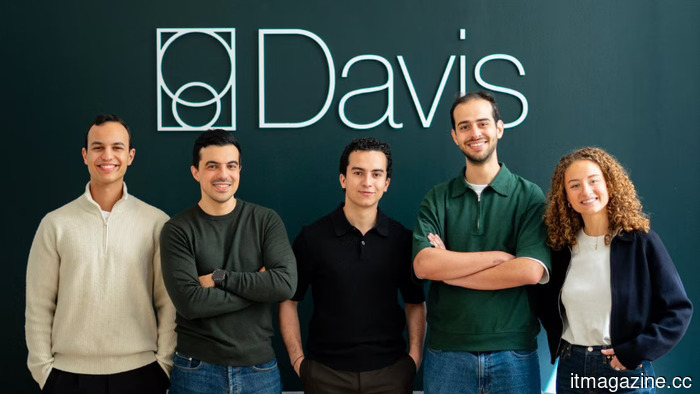 Davis secures $5.5 million in pre-seed funding to streamline real estate development.
Davis, located in Paris, has secured $5.5 million in pre-seed funding to streamline real estate development from months down to days, utilizing a new generative model named Gaudi-1.
Davis secures $5.5 million in pre-seed funding to streamline real estate development.
Davis, located in Paris, has secured $5.5 million in pre-seed funding to streamline real estate development from months down to days, utilizing a new generative model named Gaudi-1.
Peter Sarlin's Qutwo reaches a $380 million valuation in an angel funding round.
Qutwo, the company that orchestrates quantum and classical technologies and was established by Peter Sarlin from Silo AI, has achieved a valuation of $380 million in an angel investment round.