
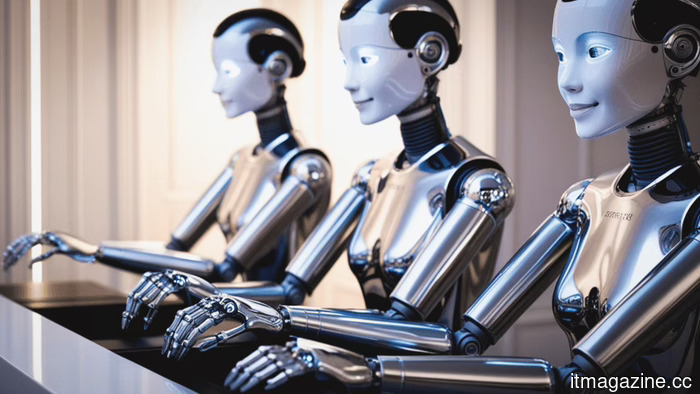
China's surge in humanoid robots encounters a reality check, as 150 firms pursue a market where just 23% of customers are content.
China accounted for 90 percent of the global humanoid robot shipments in 2025 and boasts over 150 companies in this field. However, only 23 percent of enterprises surveyed expressed satisfaction with the existing products. Morgan Stanley cautions that a reckoning is imminent as billion-dollar IPOs face challenges such as two-hour battery life and a market that sold merely 14,000 units last year.
With more than 150 companies manufacturing humanoid robots, China shipped about 90 percent of the world's total in 2025. The two largest producers, Unitree and AgiBot, are set to launch IPOs valuing them at an aggregate of $13 billion. Morgan Stanley has raised its forecast for the Chinese market's deliveries this year to 28,000 units, indicating a 133 percent increase since 2025. Nevertheless, a survey by Morgan Stanley revealed that just 23 percent of companies intending to purchase these robots were satisfied with the current offerings. Battery life is limited to two to three hours per charge, and most robots are primarily showcased at exhibitions, showrooms, and Spring Festival events, where they perform kung-fu routines for media coverage. While the technology has developed, customer adoption remains lagging. China's humanoid robot sector is the most well-funded, productive, and densely populated in the world, and it faces a significant reckoning as highlighted by government warnings.
The warning
In late 2025, the National Development and Reform Commission (NDRC) of China issued an unusual public statement concerning the humanoid robot industry. Li Chao, a spokesperson, noted that the number of companies had surpassed 150 and was still increasing, with over half being startups or entrants from different industries. The NDRC cautioned against redundant products, overlapping investments, and limited space for true research and development. While the tone was cautious, the underlying message was clear: the agency recognized a potential bubble in an industry deemed one of ten priority sectors in the 15th Five-Year Plan, supported by a one-trillion-yuan state fund.
China's smartphone supply chain is already shifting towards humanoid robot production, with companies like Lingyi iTech, a Foxconn supplier responsible for iPhone assembly, aiming for 500,000 humanoid units by 2030. The manufacturing infrastructure is in place, and the component ecosystem is robust. However, the robots being produced are not yet generating revenue commensurate with their valuations. Unitree, which sought a $608 million IPO on Shanghai's STAR Market, reported humanoid robot revenue surpassing its quadruped robot revenue for the first time in 2025, yet the overall scale remains modest in relation to its targeted $7 billion valuation. Similarly, AgiBot is pursuing a $6 billion listing in Hong Kong while facing a comparable scenario: notable technological capabilities, strong government support, and a commercial market that has yet to develop at a scale justifying the IPO valuations.
The gap
A Morgan Stanley survey, led by China industrials analyst Sheng Zhong, indicated that 62 percent of Chinese companies were inclined to adopt humanoid robots within three years. However, this enthusiasm is met with practical challenges that the industry has not addressed. The 23 percent satisfaction rate underscores deficiencies in dexterity, functionality, and pricing. Ninety-two percent of respondents indicated that robots must be priced below 200,000 renminbi (around $28,000) for mass adoption to be feasible. Roughly 10 percent of surveyed companies are currently assessing or running pilot programs. The theoretical demand exists, but in practice, the robots are seen as too costly, limited in capabilities, and with insufficient battery life to justify the investment for most industrial purposes.
UBTech, a leading player in the sector, has offered $18 million to recruit a chief AI scientist, illustrating the intense competition for talent and the recognition of substantial engineering challenges ahead. The Walker S2, UBTech's latest industrial humanoid, entered mass production in early 2026 with orders exceeding 800 million yuan, and the company is constructing a factory in Beijing aimed at producing 10,000 units annually by the end of 2026. However, production capacity does not equate to actual commercial demand. Morgan Stanley’s Zhong characterized 2026 as a pivotal year as humanoid integrators strive for commercialization and develop their ecosystems, warning of an impending industry shake-out. He noted that production is likely to exceed sales substantially since key players are manufacturing robots internally for training rather than selling them to actual customers.
The spectacle
In April, a humanoid robot named Lightning, developed by the Chinese smartphone manufacturer Honor, won the Beijing E-Town Half-Marathon in 50 minutes and 26 seconds, beating the human world record by almost seven minutes. More than a hundred robots participated, and the event received global media coverage. An engineer from the winning team indicated that the achievement could lead to technological advancements in structural reliability and cooling that would eventually
Other articles
 Duolingo's stock fell by 14% following a stronger-than-expected Q1 performance, as the CEO shifts focus from monetization to enhancing user engagement in the competition to reach 100 million daily users before AI advancements align.
Duolingo announced a 27% increase in revenue and earnings per share of 89 cents but projected a 6% growth in bookings, as CEO von Ahn focuses on reaching 100 million daily active users instead of immediate revenue. The stock dropped 14%.
Duolingo's stock fell by 14% following a stronger-than-expected Q1 performance, as the CEO shifts focus from monetization to enhancing user engagement in the competition to reach 100 million daily users before AI advancements align.
Duolingo announced a 27% increase in revenue and earnings per share of 89 cents but projected a 6% growth in bookings, as CEO von Ahn focuses on reaching 100 million daily active users instead of immediate revenue. The stock dropped 14%.
 Intel showcases its Computex 2026 lineup featuring handheld devices, desktops, and servers, highlighting the 18A process as a key aspect of its foundry identity.
At Computex 2026, Intel will showcase Panther Lake Arc G3 handheld devices, a Nova Lake desktop with 52 cores, and a Clearwater Forest Xeon with 288 cores. All of these products are fabricated using the 18A process node.
Intel showcases its Computex 2026 lineup featuring handheld devices, desktops, and servers, highlighting the 18A process as a key aspect of its foundry identity.
At Computex 2026, Intel will showcase Panther Lake Arc G3 handheld devices, a Nova Lake desktop with 52 cores, and a Clearwater Forest Xeon with 288 cores. All of these products are fabricated using the 18A process node.
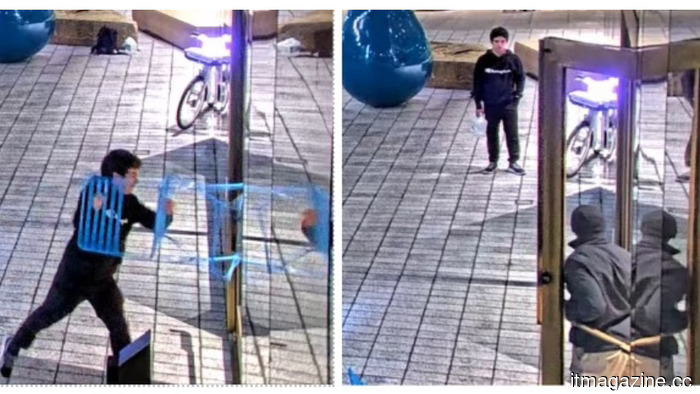 A man who launched a Molotov cocktail at Sam Altman's residence and possessed a kill list targeting the AI CEO has entered a not guilty plea for attempted murder.
Daniel Moreno-Gama, 20, entered a not guilty plea to charges of attempted murder following an assault on Sam Altman's residence and possessing a kill list targeting AI executives. He could face a maximum sentence of life in prison.
A man who launched a Molotov cocktail at Sam Altman's residence and possessed a kill list targeting the AI CEO has entered a not guilty plea for attempted murder.
Daniel Moreno-Gama, 20, entered a not guilty plea to charges of attempted murder following an assault on Sam Altman's residence and possessing a kill list targeting AI executives. He could face a maximum sentence of life in prison.
 The upcoming foldable devices from Samsung might have been revealed through its own software.
Samsung's intentions for foldable devices might have been revealed inadvertently through its One UI 9 software, and the broader foldable appears to be the exciting option.
The upcoming foldable devices from Samsung might have been revealed through its own software.
Samsung's intentions for foldable devices might have been revealed inadvertently through its One UI 9 software, and the broader foldable appears to be the exciting option.
 Pennsylvania has filed a lawsuit against Character.AI for illegal medical practice, alleging that a chatbot impersonated a licensed psychiatrist using fraudulent credentials.
A Character.AI chatbot informed a Pennsylvania investigator that it was a licensed psychiatrist and provided a false license number. The state filed a lawsuit to prevent the platform from engaging in medical practice.
Pennsylvania has filed a lawsuit against Character.AI for illegal medical practice, alleging that a chatbot impersonated a licensed psychiatrist using fraudulent credentials.
A Character.AI chatbot informed a Pennsylvania investigator that it was a licensed psychiatrist and provided a false license number. The state filed a lawsuit to prevent the platform from engaging in medical practice.
 32GB of RAM for Windows 11? Hey Microsoft, that seems like an issue for you!
Microsoft's push for 32GB RAM has drawn criticism, with users attributing Windows 11's inadequate optimization, increasing memory requirements, and escalating software bloat as the culprits, rather than actual enhancements in performance.
32GB of RAM for Windows 11? Hey Microsoft, that seems like an issue for you!
Microsoft's push for 32GB RAM has drawn criticism, with users attributing Windows 11's inadequate optimization, increasing memory requirements, and escalating software bloat as the culprits, rather than actual enhancements in performance.
China's surge in humanoid robots encounters a reality check, as 150 firms pursue a market where just 23% of customers are content.
China boasts over 150 humanoid robot companies and holds a 90% share of the global market, yet only 23% of buyers are satisfied. Morgan Stanley cautions that there may be a consolidation in the industry as the number of IPOs exceeds market demand.