
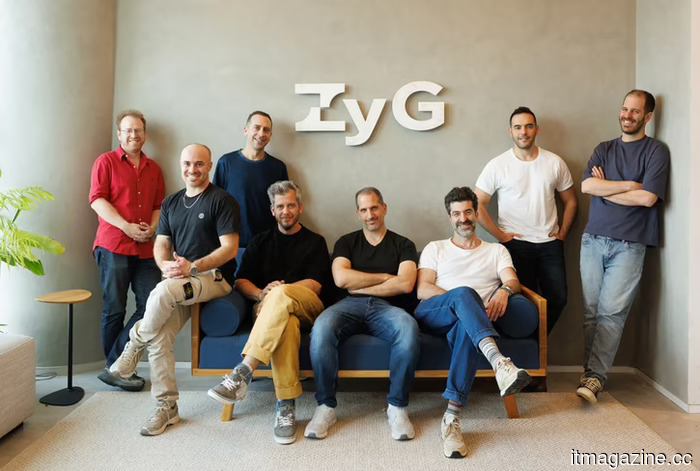
The founders of IronSource have secured $60 million at a valuation of $500 million for Zyg, an AI-driven platform that automates advertising in the e-commerce sector.
**TL;DR**
Zyg, a new e-commerce platform created by five co-founders of IronSource, raised $60 million at a $500 million valuation led by Accel just two months after launching from stealth with a $58 million seed round. The platform utilizes AI agents that autonomously manage advertising, retention, support, and inventory forecasting for direct-to-consumer sellers on platforms like Meta. Ironically, the team that developed IronSource’s ad tech for human media buyers is now creating agents to replace them.
The IronSource founders dedicated a decade to building tools that enabled mobile app developers to monetize through advertisements, culminating in a $4.4 billion sale to Unity in 2022. After observing Unity dismantle their ad network, they left in 2024 and returned to establish Zyg, arguing that the human management of digital advertising can be automated by AI. Zyg's recent funding of $60 million at a $500 million valuation, inclusive of a $58 million seed round from just two months prior, positions it effectively in a market ripe for automation. This funding reinforces the belief that AI agents will not just assist in e-commerce advertising but can entirely replace human operators.
**The Thesis**
Zyg markets itself as an agentic operating system for scaling e-commerce. It automates various business tasks that direct-to-consumer sellers currently rely on human operators, disparate software tools, and ad agencies for, such as campaign creation and optimization, customer retention, support, and inventory forecasting. CEO Omer Kaplan conveyed to Bloomberg that Zyg's agents are already actively managing campaigns on Meta’s platforms, substantially taking charge themselves. The customer base includes businesses generating between $2 million and $15 million annually, which require advanced advertising capabilities but cannot afford dedicated teams.
The structural irony lies in the fact that IronSource developed the infrastructure used by app developers for user acquisition and monetization, relying on a large workforce of media buyers. Zyg's proposition suggests those professionals are now viewed as an expense that AI can eliminate. The same group that created tools for human advertisers is now crafting agents meant to make these individuals unnecessary; this reflects a transition rather than a pivot.
**The Market**
Zyg is entering a burgeoning category that barely existed a year ago and is now attracting significant investment. Hightouch recently secured $150 million at a $2.75 billion valuation to develop an agentic marketing platform, while Shopify introduced Agentic Storefronts allowing sales within AI platforms like ChatGPT. Meta is developing fully automated advertising capabilities where AI handles every aspect from creative development to performance optimization without any human input. AI marketplaces are revolutionizing advertising creation and distribution, effectively reducing the gap between advertiser intent and campaign execution.
However, the competitive landscape indicates Zyg's timing is crucial but its opportunity may be limited. Once Meta finalizes its own advertising automation, the added value of third-party platforms may be questioned. Zyg contends that Meta's optimization will only benefit Meta, whereas direct-to-consumer brands require agents that optimize across various functions—advertising, customer retention, support, and inventory management—simultaneously.
**The Speed**
Achieving a $500 million valuation within two months post-stealth is unusual even in the funding landscape of 2026. This rapid growth reflects a trend in AI venture capital: experienced founders with successful exits can secure valuations that do not align with current revenue. For example, VAST Data raised $1 billion at a $30 billion valuation amid a surge in AI infrastructure demand, and in Q1 2026 alone, $297 billion was invested in startups, with AI capturing 80 percent of the total. In this environment, a team that built and sold a company for $4.4 billion, with deep knowledge of advertising infrastructure, fits the profile for commanding substantial pre-revenue valuations.
Accel, which spearheaded Zyg's funding, established a $5 billion fund in April specifically for AI investments. Their support for Zyg aligns with their belief that significant returns from AI will originate from specialized vertical platforms that deploy agents within individual industries. Major platforms are integrating agent infrastructure—Google aims to turn Chrome into a workplace with autonomous browsing features.
**The Talent**
Zyg was founded by five original IronSource founders, including Tomer Bar-Zeev as chairman and Omer Kaplan as CEO, alongside Assaf Ben Ami, Nadav Ashkenazy, and Daniel Shinar. The team also incorporates cybersecurity and AI experts from Unit 81, an elite Israeli military tech unit. Most of the funding will be directed towards recruiting AI talent in Israel, where competition for skilled engineers is high due to demand from global companies. The influx of AI investment within Israeli startups underscores the importance of top talent.
The link to Unit 81 is significant on several levels; creating agents that autonomously manage ad campaigns and handle sensitive data necessitates a robust security framework typical of military intelligence backgrounds. An agent operating ad campaigns has
Other articles
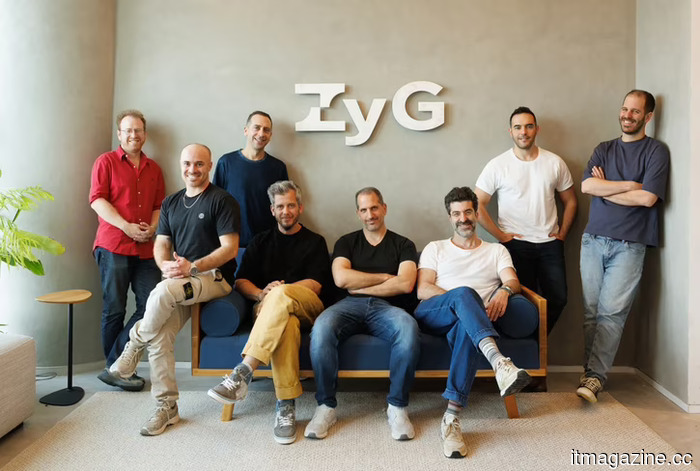 The founders of IronSource have raised $60 million, achieving a valuation of $500 million for Zyg, an AI platform designed to autonomously manage e-commerce advertising.
Zyg secured $60 million in funding, led by Accel, at a $500 million valuation just two months after emerging from stealth mode. The IronSource team is developing AI agents designed to take the place of human ad buyers for direct-to-consumer brands.
The founders of IronSource have raised $60 million, achieving a valuation of $500 million for Zyg, an AI platform designed to autonomously manage e-commerce advertising.
Zyg secured $60 million in funding, led by Accel, at a $500 million valuation just two months after emerging from stealth mode. The IronSource team is developing AI agents designed to take the place of human ad buyers for direct-to-consumer brands.
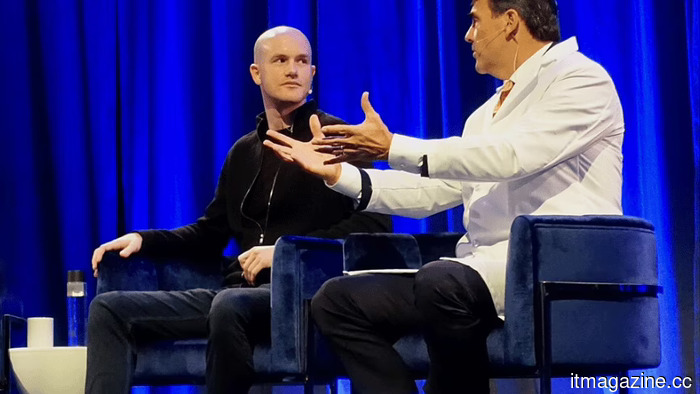 Coinbase reduces its workforce by 14% and restructures to focus on AI-driven teams as cryptocurrency revenue declines by 26% and trading volumes reach an 18-month low.
Coinbase is cutting 660 jobs and reorganizing into AI-native pods while implementing a five-layer management limit. Revenue for Q1 is anticipated to decline by 26% due to a 48% drop in crypto trading volumes.
Coinbase reduces its workforce by 14% and restructures to focus on AI-driven teams as cryptocurrency revenue declines by 26% and trading volumes reach an 18-month low.
Coinbase is cutting 660 jobs and reorganizing into AI-native pods while implementing a five-layer management limit. Revenue for Q1 is anticipated to decline by 26% due to a 48% drop in crypto trading volumes.
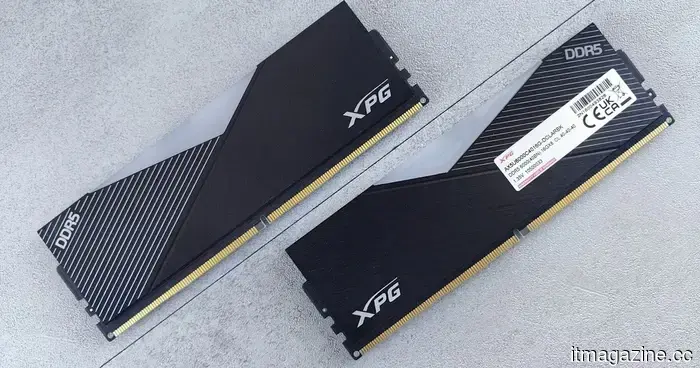 Next-generation DDR6 memory, boasting incredible speeds, is currently in development, but it will be a considerable wait.
Samsung, SK Hynix, and Micron have initiated early development of DDR6 in collaboration with substrate manufacturers, aiming for speeds that surpass DDR5 by more than two times, although mass production remains years in the future.
Next-generation DDR6 memory, boasting incredible speeds, is currently in development, but it will be a considerable wait.
Samsung, SK Hynix, and Micron have initiated early development of DDR6 in collaboration with substrate manufacturers, aiming for speeds that surpass DDR5 by more than two times, although mass production remains years in the future.
 Metalenz's innovative face scanning technology is embedded beneath the phone's display, eliminating the need for unsightly cutouts.
Metalenz has demonstrated that payment-grade facial authentication can function with a fully powered-on display, a feat that Apple has attempted to achieve for years without success.
Metalenz's innovative face scanning technology is embedded beneath the phone's display, eliminating the need for unsightly cutouts.
Metalenz has demonstrated that payment-grade facial authentication can function with a fully powered-on display, a feat that Apple has attempted to achieve for years without success.
 Nscale has invested €695 million in Portugal, while the crypto-to-AI neocloud reaches a valuation of $14.6 billion within two years, collaborating with Microsoft.
Nscale is set to provide 66,000 Nvidia Rubin GPUs for Microsoft's 1.2 GW Sines campus. Once a crypto miner, it has now become Europe's most valuable AI infrastructure startup, valued at $14.6 billion.
Nscale has invested €695 million in Portugal, while the crypto-to-AI neocloud reaches a valuation of $14.6 billion within two years, collaborating with Microsoft.
Nscale is set to provide 66,000 Nvidia Rubin GPUs for Microsoft's 1.2 GW Sines campus. Once a crypto miner, it has now become Europe's most valuable AI infrastructure startup, valued at $14.6 billion.
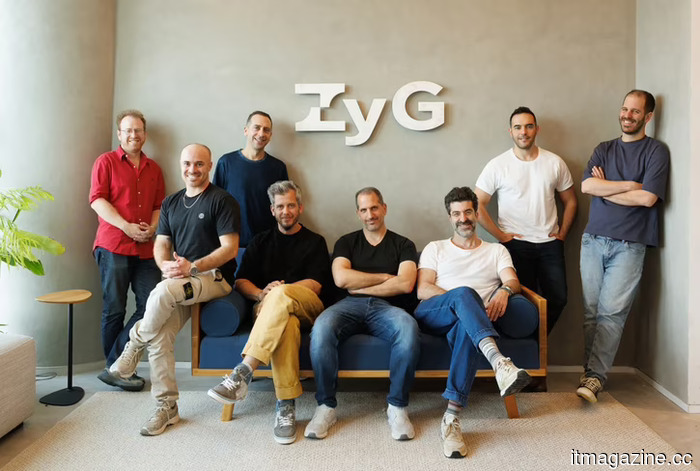 Founders of IronSource secure $60 million at a valuation of $500 million for Zyg, an agentic AI platform designed to automate advertising in e-commerce.
Zyg secured $60 million in funding, led by Accel, at a valuation of $500 million just two months following their stealth phase. The IronSource team is developing AI agents designed to take the place of human ad buyers for direct-to-consumer brands.
Founders of IronSource secure $60 million at a valuation of $500 million for Zyg, an agentic AI platform designed to automate advertising in e-commerce.
Zyg secured $60 million in funding, led by Accel, at a valuation of $500 million just two months following their stealth phase. The IronSource team is developing AI agents designed to take the place of human ad buyers for direct-to-consumer brands.
The founders of IronSource have secured $60 million at a valuation of $500 million for Zyg, an AI-driven platform that automates advertising in the e-commerce sector.
Zyg secured $60 million in funding, spearheaded by Accel, at a valuation of $500 million just two months following its stealth launch. The team at IronSource is developing AI agents designed to take the place of human ad buyers for direct-to-consumer brands.