
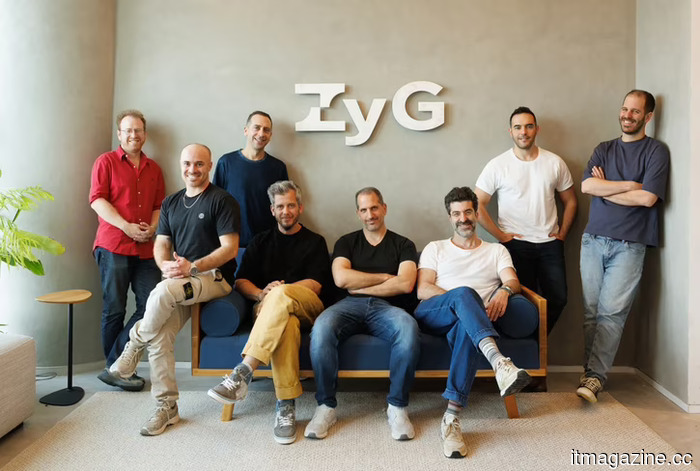
The founders of IronSource have raised $60 million, achieving a valuation of $500 million for Zyg, an AI platform designed to autonomously manage e-commerce advertising.
TL;DR: Zyg, an agentic e-commerce platform founded by five co-founders of IronSource, has raised $60 million at a valuation of $500 million, just two months after its stealth launch with a $58 million seed round. The platform uses AI agents to automate advertising, retention, support, and inventory forecasting for direct-to-consumer sellers on platforms like Meta. Ironically, the team that previously created advertising technology for human media buyers is now developing AI agents intended to replace them.
The IronSource founders spent a decade creating tools to help mobile app developers monetize through advertising. They sold the company to Unity for $4.4 billion in 2022, watched Unity disassemble their ad network, and left in 2024 to launch Zyg, which posits that the work previously done by human ad managers can now be automated using AI agents. The new startup has raised $60 million at a $500 million valuation, led by Accel and supported by Bessemer Venture Partners and Lightspeed Venture Partners. Zyg has quickly attracted a total of $118 million without any public customer success stories, betting on AI agents to fully replace the human oversight of e-commerce advertising.
Zyg refers to itself as an agentic operating system for scalable e-commerce. It automates business processes currently handled by direct-to-consumer sellers through a mix of human operators, disparate software tools, and advertising agencies, covering campaign management on Meta and others, customer retention, support, and inventory predictions. CEO Omer Kaplan stated to Bloomberg that Zyg's agents are actively managing advertising on Meta, performing most activities autonomously. The company targets businesses with annual revenues ranging from $2 million to $15 million, which require advanced advertising capabilities but lack the resources for dedicated teams.
The structure of the situation is noteworthy. IronSource created the tools used by app developers to gain users and monetize via ads, relying on professionals such as media buyers and performance marketers. Zyg's claim is that these roles are now a cost center that AI agents can phase out. The same team that developed tools for human ad buyers is now crafting agents intended to render those individuals unnecessary—not as a pivot but as a succession.
Zyg is entering a rapidly evolving space that was virtually nonexistent a year ago and is now drawing significant investment. Last week, Hightouch secured $150 million at a $2.75 billion valuation for its agentic marketing platforms, led by Goldman Sachs and Bain Capital. Shopify recently introduced Agentic Storefronts, enabling merchants to sell products within ChatGPT, Perplexity, and Microsoft Copilot, while Meta is progressing toward fully automated advertising where AI handles various tasks from URL input to budget allocation without human involvement.
Although Zyg's timing seems advantageous, its opportunity may be limited. Once Meta finalizes automating advertising processes, the challenge for Zyg will be demonstrating the added value of a third-party platform versus a self-contained Meta system. Zyg asserts that Meta's optimizations serve its own interests; thus, direct-to-consumer brands require agents capable of optimizing across multiple aspects such as advertising, retention, support, and inventory, requiring a business-wide perspective rather than just focusing on a single channel's metrics. This holistic approach distinguishes an agentic operating system from a mere automated advertising tool and supports Zyg's ambitious valuation.
Achieving a $500 million valuation just two months post-stealth is unusual, even in the context of 2026's funding climate. However, this rapid momentum aligns with a pattern in AI venture capital where repeat founders with prior exits can demand valuations that may not correlate with present revenue. VAST Data recently achieved a $30 billion valuation while raising $1 billion amidst a surge in AI infrastructure demand. The broader funding landscape saw $297 billion invested in startups in Q1 2026 alone, with AI capturing 80 percent of that total. In this environment, a team with a proven track record of substantial exits and deep expertise in advertising infrastructure appears well-positioned to command significant pre-revenue valuations.
Accel, the lead investor in Zyg's funding round, recently raised a $5 billion fund in April specifically for AI ventures. This investment aligns with Accel's belief that future AI returns will arise from vertical platforms deploying agents across specific industries rather than foundational model companies. Other major tech companies, including Google, are integrating agent capabilities into their offerings, and all major platforms are establishing their own agent infrastructures. Zyg's opportunity lies in its team’s depth of knowledge in e-commerce advertising, which may provide a competitive edge that general-purpose agent platforms can't replicate.
Zyg's founding team includes five original IronSource founders: Tomer Bar-Zeev (chairman), Omer Kaplan (CEO), Assaf Ben Ami (CFO and COO), and Nadav Ashkenazy and Daniel Shinar, alongside experts from Israel's elite military technology unit, Unit 81. The funding aims to recruit AI professionals in Israel, a
Other articles
 Nscale has invested €695 million in Portugal, while the crypto-to-AI neocloud has reached a valuation of $14.6 billion in just two years with the support of Microsoft.
Nscale will provide 66,000 Nvidia Rubin GPUs to Microsoft's 1.2 GW Sines campus. Once a crypto miner, it is now Europe's most valuable AI infrastructure startup, valued at $14.6 billion.
Nscale has invested €695 million in Portugal, while the crypto-to-AI neocloud has reached a valuation of $14.6 billion in just two years with the support of Microsoft.
Nscale will provide 66,000 Nvidia Rubin GPUs to Microsoft's 1.2 GW Sines campus. Once a crypto miner, it is now Europe's most valuable AI infrastructure startup, valued at $14.6 billion.
 Employees at Google DeepMind have decided to unionize following a Pentagon AI agreement that contradicts eight years of ethical commitments.
Staff at DeepMind UK voted 98% in favor of joining the CWU and Unite following Google's signing of a classified Pentagon agreement for "any lawful purpose." They are advocating for the cessation of military AI applications and the reinstatement of ethical standards.
Employees at Google DeepMind have decided to unionize following a Pentagon AI agreement that contradicts eight years of ethical commitments.
Staff at DeepMind UK voted 98% in favor of joining the CWU and Unite following Google's signing of a classified Pentagon agreement for "any lawful purpose." They are advocating for the cessation of military AI applications and the reinstatement of ethical standards.
 Tesla's FSD rollout in Europe faces skepticism from regulators, as Musk has been indicating.
Reuters has revealed internal communications from EU regulators that express ongoing doubts regarding Tesla's assertions about the safety of its FSD and its rollout plan, even after receiving type approval in the Netherlands in April.
Tesla's FSD rollout in Europe faces skepticism from regulators, as Musk has been indicating.
Reuters has revealed internal communications from EU regulators that express ongoing doubts regarding Tesla's assertions about the safety of its FSD and its rollout plan, even after receiving type approval in the Netherlands in April.
 Tesla’s rollout of FSD in Europe faces skepticism from regulators, a sentiment that Musk has been conveying.
Reuters has released internal communications from EU regulators demonstrating ongoing doubt regarding Tesla's assertions about the safety of its FSD and its rollout approach, even after receiving Dutch type approval in April.
Tesla’s rollout of FSD in Europe faces skepticism from regulators, a sentiment that Musk has been conveying.
Reuters has released internal communications from EU regulators demonstrating ongoing doubt regarding Tesla's assertions about the safety of its FSD and its rollout approach, even after receiving Dutch type approval in April.
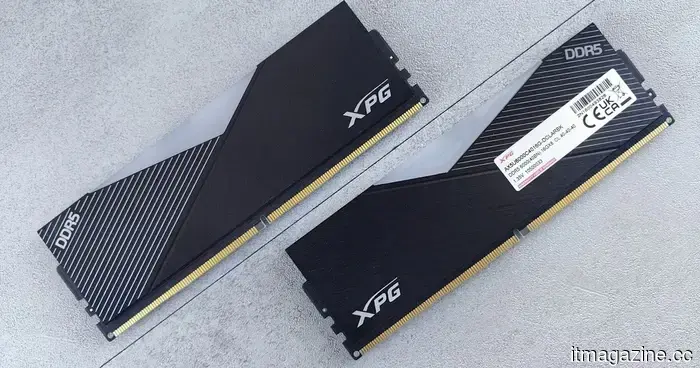 Next-generation DDR6 memory, boasting incredible speeds, is currently in development, but it will be a considerable wait.
Samsung, SK Hynix, and Micron have initiated early development of DDR6 in collaboration with substrate manufacturers, aiming for speeds that surpass DDR5 by more than two times, although mass production remains years in the future.
Next-generation DDR6 memory, boasting incredible speeds, is currently in development, but it will be a considerable wait.
Samsung, SK Hynix, and Micron have initiated early development of DDR6 in collaboration with substrate manufacturers, aiming for speeds that surpass DDR5 by more than two times, although mass production remains years in the future.
 Workers at Google DeepMind have decided to unionize following a Pentagon AI agreement that goes against eight years of ethical commitments.
Staff at DeepMind UK voted 98% in favor of joining CWU and Unite following Google's agreement to a secret Pentagon contract for "any lawful purpose." They are calling for an end to military applications of AI and a return to ethical practices.
Workers at Google DeepMind have decided to unionize following a Pentagon AI agreement that goes against eight years of ethical commitments.
Staff at DeepMind UK voted 98% in favor of joining CWU and Unite following Google's agreement to a secret Pentagon contract for "any lawful purpose." They are calling for an end to military applications of AI and a return to ethical practices.
The founders of IronSource have raised $60 million, achieving a valuation of $500 million for Zyg, an AI platform designed to autonomously manage e-commerce advertising.
Zyg secured $60 million in funding, led by Accel, at a $500 million valuation just two months after emerging from stealth mode. The IronSource team is developing AI agents designed to take the place of human ad buyers for direct-to-consumer brands.