
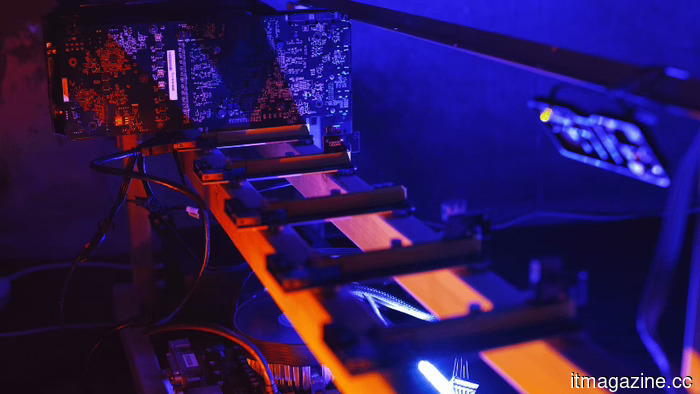
Nscale has invested €695 million in Portugal, while the crypto-to-AI neocloud reaches a valuation of $14.6 billion within two years, collaborating with Microsoft.
Nscale, a crypto miner that has transformed into a $14.6 billion neocloud, is investing €695 million in Portugal to supply Microsoft’s Start Campus in Sines with 66,000 Nvidia Rubin GPUs. This agreement furthers the rapid AI infrastructure expansion in Europe, funded by private capital responding to GPU demand rather than through government initiatives.
Two years back, Nscale was engaged in cryptocurrency mining. On Tuesday, the company revealed its €695 million ($812 million) investment in Portugal, part of its ongoing collaboration with Microsoft, which will see over 66,000 Nvidia Rubin GPUs delivered to a site with 1.2 gigawatts of permitted capacity. Following a $2 billion Series C round in March, backed by major players such as Nvidia, Lenovo, Dell, Citadel, Jane Street, and Nokia, Nscale is now valued at $14.6 billion. It operates data centers across the UK, Norway, Portugal, Iceland, and the United States, with plans to go public in 2026, marking a rapid shift from a crypto miner to Europe’s leading AI infrastructure company in just twenty-four months. This raises the question of whether Europe will solve its computing crisis not through governments or large tech companies, but via new entities that barely existed three years ago.
The investment in Portugal includes €230 million for shared infrastructure and €465 million for an additional 200-megawatt building at the Sines data center site, which is located in a deep-water port town on Portugal's Atlantic coast. The Start Campus is permitted for a total capacity of 1.2 gigawatts, ranking it among the largest data center developments in Southern Europe. In October 2025, Microsoft announced a multi-year deal to lease capacity at the site, committing $10 billion to alleviate computing capacity shortages that have limited Azure’s AI expansion. Nscale’s role is to provide the GPU infrastructure necessary for Microsoft to serve its cloud clients, operating under a partnership model where Nscale delivers the hardware and the hyperscaler manages customer relations.
The upcoming delivery of 66,000 Nvidia Rubin GPUs starting in late 2027 signifies a significant allocation of next-gen silicon. Rubin, which is Nvidia's successor to the Blackwell architecture, began production in 2026, and demand is already outweighing supply. Nscale’s ability to secure this commitment signals both its strong relationship with Nvidia, which invested £500 million in the firm during its Series C round, and the substantial compute capacity need from Microsoft in Europe. Nscale's collaboration with BT and Nvidia in the UK already offers 14 megawatts of sovereign AI data center capacity, and the expansion into Portugal mirrors this model, utilizing a region with lower energy costs and fewer grid limitations than the UK.
Nscale functions as what the industry refers to as a neocloud: a cloud provider that exclusively focuses on providing GPU compute services to AI developers, without the myriad of additional services offered by hyperscalers like AWS, Azure, and Google Cloud. The model appears straightforward: operate at scale by acquiring GPUs, place them in data centers equipped with adequate power and cooling, and lease access to AI firms unable to directly procure hardware from Nvidia. However, in reality, this approach necessitates immense capital investment, long-term agreements with reliable customers, and the capability to develop data center capacity more swiftly than hyperscalers. CoreWeave, the leading player in the US, went public in 2025 and has secured over $50 billion in contracts with major companies like OpenAI, Meta, and Anthropic. Nscale is following this model with a geographical strategy, asserting that Europe requires its own compute infrastructure, positioning itself to dominate the continent’s AI economy as the first to establish it.
The transition from crypto to AI is central to the model itself. Nscale separated from Arkon Energy, a cryptocurrency mining infrastructure provider, in early 2024. Crypto mining firms already possessed two essential assets for AI infrastructure: access to large electrical capacity and experience managing GPU-heavy computing environments in facilities limited by power. When AI demand made GPU compute significantly more profitable per megawatt than mining Bitcoin, the economic rationale for transitioning became clear. In February 2026, Morgan Stanley repositioned the entire crypto mining sector as a component of energy infrastructure for the AI economy. Nscale executed this transition more quickly and on a broader scale than its competitors, securing $3.1 billion across three funding rounds in under eighteen months.
OpenAI's suspension of its Stargate UK data center project in April, due to electricity prices four times higher than those in the US and unresolved copyright regulations, highlighted Europe's precarious position in the global compute race. Even when a hyperscaler invests in AI infrastructure on European soil, energy costs and regulatory ambiguity can thwart the investment before any GPUs are powered up. Portugal presents a different scenario with lower electricity prices than the UK, abundant renewable energy, a location that facilitates connectivity to submarine cable networks linking Europe
Other articles
 Metalenz's innovative face scanning technology is embedded beneath the phone's display, eliminating the need for unsightly cutouts.
Metalenz has demonstrated that payment-grade facial authentication can function with a fully powered-on display, a feat that Apple has attempted to achieve for years without success.
Metalenz's innovative face scanning technology is embedded beneath the phone's display, eliminating the need for unsightly cutouts.
Metalenz has demonstrated that payment-grade facial authentication can function with a fully powered-on display, a feat that Apple has attempted to achieve for years without success.
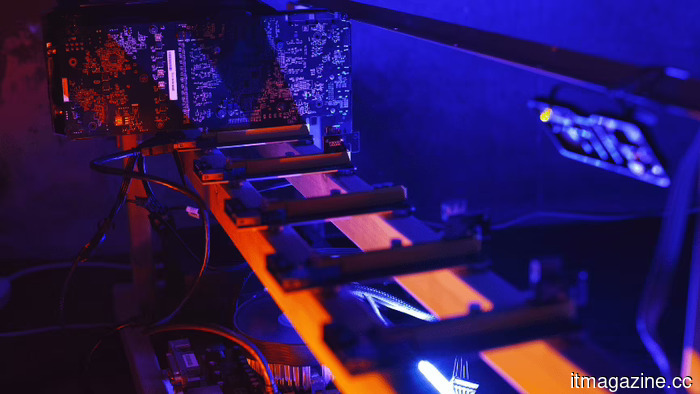 Nscale has invested €695 million in Portugal, while the crypto-to-AI neocloud has reached a valuation of $14.6 billion in just two years with the support of Microsoft.
Nscale will provide 66,000 Nvidia Rubin GPUs to Microsoft's 1.2 GW Sines campus. Once a crypto miner, it is now Europe's most valuable AI infrastructure startup, valued at $14.6 billion.
Nscale has invested €695 million in Portugal, while the crypto-to-AI neocloud has reached a valuation of $14.6 billion in just two years with the support of Microsoft.
Nscale will provide 66,000 Nvidia Rubin GPUs to Microsoft's 1.2 GW Sines campus. Once a crypto miner, it is now Europe's most valuable AI infrastructure startup, valued at $14.6 billion.
 Coinbase reduces its workforce by 14% and restructures to focus on AI-driven pods as cryptocurrency revenue falls 26% and trading volumes reach an 18-month low.
Coinbase is reducing its workforce by 660 employees and reorganizing into AI-focused pods with a limitation of five management layers. Revenue for Q1 is projected to decline by 26% as cryptocurrency trading volumes decrease by 48%.
Coinbase reduces its workforce by 14% and restructures to focus on AI-driven pods as cryptocurrency revenue falls 26% and trading volumes reach an 18-month low.
Coinbase is reducing its workforce by 660 employees and reorganizing into AI-focused pods with a limitation of five management layers. Revenue for Q1 is projected to decline by 26% as cryptocurrency trading volumes decrease by 48%.
 Tesla’s rollout of FSD in Europe faces skepticism from regulators, a sentiment that Musk has been conveying.
Reuters has released internal communications from EU regulators demonstrating ongoing doubt regarding Tesla's assertions about the safety of its FSD and its rollout approach, even after receiving Dutch type approval in April.
Tesla’s rollout of FSD in Europe faces skepticism from regulators, a sentiment that Musk has been conveying.
Reuters has released internal communications from EU regulators demonstrating ongoing doubt regarding Tesla's assertions about the safety of its FSD and its rollout approach, even after receiving Dutch type approval in April.
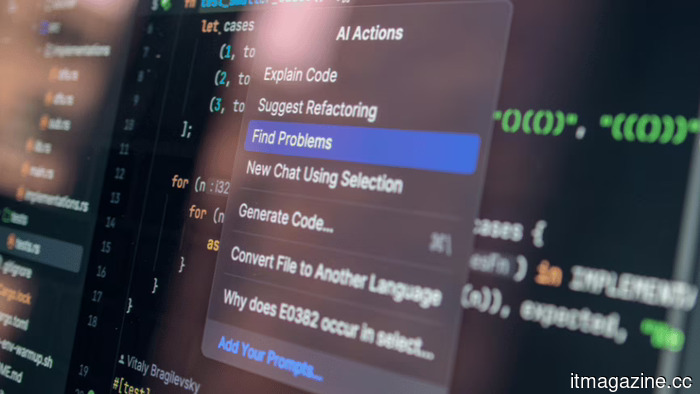 Google, Microsoft, and xAI have consented to share evaluations of AI models with the government before their release, as the Mythos crisis necessitates an increase in oversight.
Five leading AI laboratories are now providing models for evaluation by the US government. This voluntary program lacks statutory authority but includes all significant AI developers following the Mythos crisis.
Google, Microsoft, and xAI have consented to share evaluations of AI models with the government before their release, as the Mythos crisis necessitates an increase in oversight.
Five leading AI laboratories are now providing models for evaluation by the US government. This voluntary program lacks statutory authority but includes all significant AI developers following the Mythos crisis.
 Coinbase reduces its workforce by 14% and restructures to focus on AI-driven teams as cryptocurrency revenue declines by 26% and trading volumes reach an 18-month low.
Coinbase is cutting 660 jobs and reorganizing into AI-native pods while implementing a five-layer management limit. Revenue for Q1 is anticipated to decline by 26% due to a 48% drop in crypto trading volumes.
Coinbase reduces its workforce by 14% and restructures to focus on AI-driven teams as cryptocurrency revenue declines by 26% and trading volumes reach an 18-month low.
Coinbase is cutting 660 jobs and reorganizing into AI-native pods while implementing a five-layer management limit. Revenue for Q1 is anticipated to decline by 26% due to a 48% drop in crypto trading volumes.
Nscale has invested €695 million in Portugal, while the crypto-to-AI neocloud reaches a valuation of $14.6 billion within two years, collaborating with Microsoft.
Nscale is set to provide 66,000 Nvidia Rubin GPUs for Microsoft's 1.2 GW Sines campus. Once a crypto miner, it has now become Europe's most valuable AI infrastructure startup, valued at $14.6 billion.