
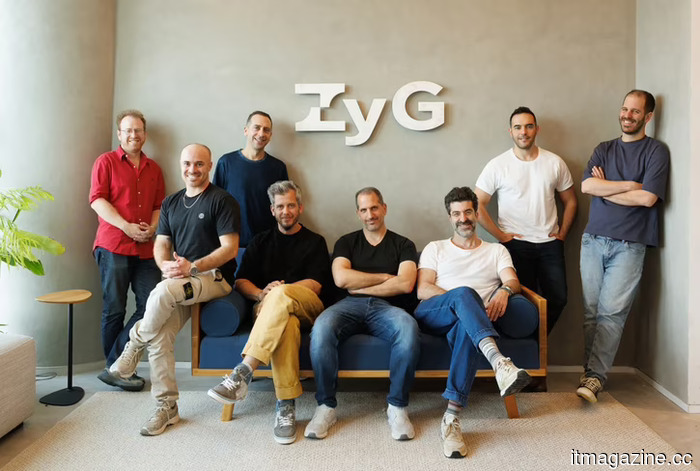
Founders of IronSource secure $60 million at a valuation of $500 million for Zyg, an agentic AI platform designed to automate advertising in e-commerce.
**TL;DR** Zyg, the autonomous e-commerce platform founded by five ex-IronSource members, secured $60 million at a $500 million valuation, led by Accel, just two months after its stealth launch with a $58 million seed round. The company leverages AI agents to automate advertising, retention, support, and inventory forecasting for direct-to-consumer (DTC) sellers on platforms like Meta. The irony lies in the fact that the creators of IronSource's ad tech, which catered to human media buyers, are now developing agents intended to replace them.
The IronSource founders dedicated a decade to creating tools that assisted mobile app developers in monetizing their products through advertising. They sold IronSource to Unity for $4.4 billion in 2022, observed Unity dismantle their ad network, left the company in 2024, and have now re-emerged with a startup that posits that the previously human-managed realm of digital advertising can be automated using AI agents. Zyg recently raised $60 million, achieving a $500 million valuation on Tuesday with backing from Accel, along with investments from Bessemer Venture Partners and Lightspeed Venture Partners. Only two months post-launch, the company has garnered a total of $118 million in funding without showcasing any public customer case studies. The premise is that AI agents can fully replace the individuals overseeing e-commerce advertising.
**The Thesis**
Zyg positions itself as an agentic operating system for scaling e-commerce businesses. Its platform automates essential functions that DTC sellers typically handle through human operators, disparate software tools, and advertising agencies, including campaign creation and optimization on platforms like Meta, customer retention, support, and inventory forecasting. CEO Omer Kaplan mentioned to Bloomberg that Zyg's agents are currently managing advertising campaigns on Meta and are largely self-sufficient. The company's clientele comprises businesses with annual revenues ranging from $2 million to $15 million, a segment that requires sophisticated advertising yet cannot afford the necessary operational teams.
The structural irony is apparent. IronSource provided the infrastructure for app developers to gain users and monetize via advertising, relying on a wide range of professionals—media buyers, growth managers, and performance marketers—who focused on optimizing campaigns across platforms like Meta, Google, and IronSource's own ad networks. Zyg's assertion is that these professionals have now become a cost burden that AI agents can eliminate. The creators of the tools utilized by human ad buyers are now developing agents aimed at making these humans redundant. This isn't simply a pivot; it's a succession.
**The Market**
Zyg is entering a nascent category that has rapidly attracted substantial investments, an area that barely existed a year ago. Last week, Hightouch raised $150 million at a $2.75 billion valuation to develop a similar agentic marketing platform for enterprises, led by Goldman Sachs and Bain Capital. Meanwhile, Shopify unveiled Agentic Storefronts, allowing merchants to sell products through ChatGPT, Perplexity, and Microsoft Copilot. Meta is also progressing towards fully automated advertising, where an advertiser merely inputs a business URL, and Meta’s AI manages creative generation, audience targeting, budget allocation, and performance optimization autonomously. AI marketplaces are revolutionizing the process of advertising creation and distribution, significantly reducing the gap between an advertiser's intent and a campaign's execution.
Zyg's timing appears opportune, but its window for success may be limited. Once Meta finalizes its automation of the advertising workflow, the added value of a third-party platform may be questioned. Zyg contends that Meta’s optimization is solely for Meta. A DTC brand requires agents that can optimize not only advertising and retention but also support and inventory management simultaneously, ensuring decisions reflect the overall business rather than just individual performance metrics. This cross-functional integration distinguishes an agentic operating system from a simple automated ad tool, reinforcing the rationale behind its ambitious valuation.
**The Speed**
Achieving a $500 million valuation just two months after stealth launch is atypical, even in the projected funding climate of 2026. However, this rapid growth illustrates a prevailing trend in AI venture capital: repeat founders with a successful exit can command valuations that are not reliant on current revenues. For example, VAST Data raised $1 billion at a $30 billion valuation due to soaring AI infrastructure demand. In Q1 2026 alone, $297 billion was invested in startups, with AI comprising 80 percent of that total. In this landscape, a team that has previously built and sold a $4.4 billion company, possessing in-depth knowledge of advertising infrastructure and applying that expertise to the dominant sector for AI agent deployment, aligns with the profile that attracts substantial pre-revenue valuations.
Accel, the lead investor, recently raised a $5 billion fund in April specifically to support AI startups. Their investment in Zyg aligns with the belief that returns in AI will stem not from foundational model companies but from vertical platforms utilizing agents within
Other articles
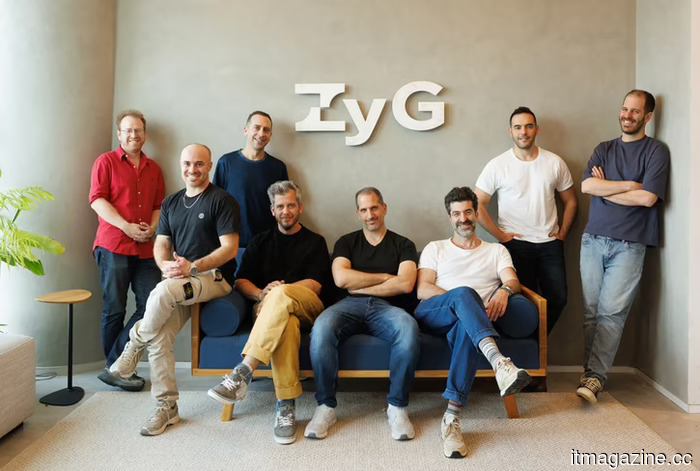 The founders of IronSource have secured $60 million at a valuation of $500 million for Zyg, an AI-driven platform that automates advertising in the e-commerce sector.
Zyg secured $60 million in funding, spearheaded by Accel, at a valuation of $500 million just two months following its stealth launch. The team at IronSource is developing AI agents designed to take the place of human ad buyers for direct-to-consumer brands.
The founders of IronSource have secured $60 million at a valuation of $500 million for Zyg, an AI-driven platform that automates advertising in the e-commerce sector.
Zyg secured $60 million in funding, spearheaded by Accel, at a valuation of $500 million just two months following its stealth launch. The team at IronSource is developing AI agents designed to take the place of human ad buyers for direct-to-consumer brands.
 Workers at Google DeepMind have decided to unionize following a Pentagon AI agreement that goes against eight years of ethical commitments.
Staff at DeepMind UK voted 98% in favor of joining CWU and Unite following Google's agreement to a secret Pentagon contract for "any lawful purpose." They are calling for an end to military applications of AI and a return to ethical practices.
Workers at Google DeepMind have decided to unionize following a Pentagon AI agreement that goes against eight years of ethical commitments.
Staff at DeepMind UK voted 98% in favor of joining CWU and Unite following Google's agreement to a secret Pentagon contract for "any lawful purpose." They are calling for an end to military applications of AI and a return to ethical practices.
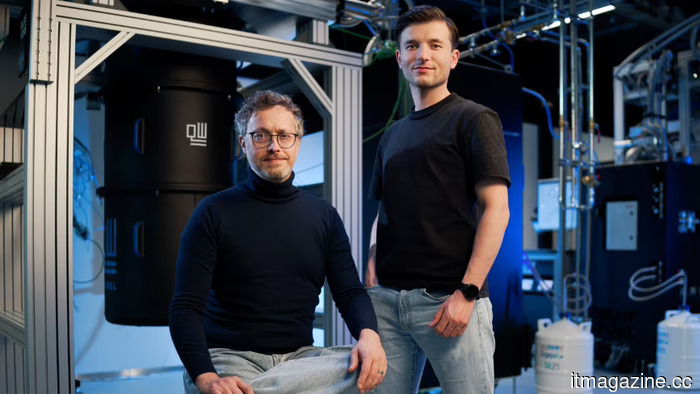 Inside QuantWare's €152 million funding round for the construction of KiloFab
QuantWare has successfully completed a €152 million Series B funding round, led by Intel Capital, In-Q-Tel, and ETF Partners, marking the largest deeptech financing round in the Netherlands to date.
Inside QuantWare's €152 million funding round for the construction of KiloFab
QuantWare has successfully completed a €152 million Series B funding round, led by Intel Capital, In-Q-Tel, and ETF Partners, marking the largest deeptech financing round in the Netherlands to date.
 Google, Microsoft, and xAI have consented to provide evaluations of AI models to the government before their release, as the Mythos crisis necessitates an increase in oversight.
Five leading AI laboratories are now presenting their models for assessment by the US government. This voluntary program lacks legal authority but includes all major AI developers following the Mythos crisis.
Google, Microsoft, and xAI have consented to provide evaluations of AI models to the government before their release, as the Mythos crisis necessitates an increase in oversight.
Five leading AI laboratories are now presenting their models for assessment by the US government. This voluntary program lacks legal authority but includes all major AI developers following the Mythos crisis.
 Nscale has invested €695 million in Portugal, while the crypto-to-AI neocloud reaches a valuation of $14.6 billion within two years, collaborating with Microsoft.
Nscale is set to provide 66,000 Nvidia Rubin GPUs for Microsoft's 1.2 GW Sines campus. Once a crypto miner, it has now become Europe's most valuable AI infrastructure startup, valued at $14.6 billion.
Nscale has invested €695 million in Portugal, while the crypto-to-AI neocloud reaches a valuation of $14.6 billion within two years, collaborating with Microsoft.
Nscale is set to provide 66,000 Nvidia Rubin GPUs for Microsoft's 1.2 GW Sines campus. Once a crypto miner, it has now become Europe's most valuable AI infrastructure startup, valued at $14.6 billion.
 Google, Microsoft, and xAI have consented to provide pre-release evaluations of their government AI models as the Mythos crisis compels an increase in oversight.
Five leading AI laboratories are currently submitting their models for evaluation by the US government. This voluntary initiative lacks legal authority but includes all significant AI developers following the Mythos crisis.
Google, Microsoft, and xAI have consented to provide pre-release evaluations of their government AI models as the Mythos crisis compels an increase in oversight.
Five leading AI laboratories are currently submitting their models for evaluation by the US government. This voluntary initiative lacks legal authority but includes all significant AI developers following the Mythos crisis.
Founders of IronSource secure $60 million at a valuation of $500 million for Zyg, an agentic AI platform designed to automate advertising in e-commerce.
Zyg secured $60 million in funding, led by Accel, at a valuation of $500 million just two months following their stealth phase. The IronSource team is developing AI agents designed to take the place of human ad buyers for direct-to-consumer brands.