
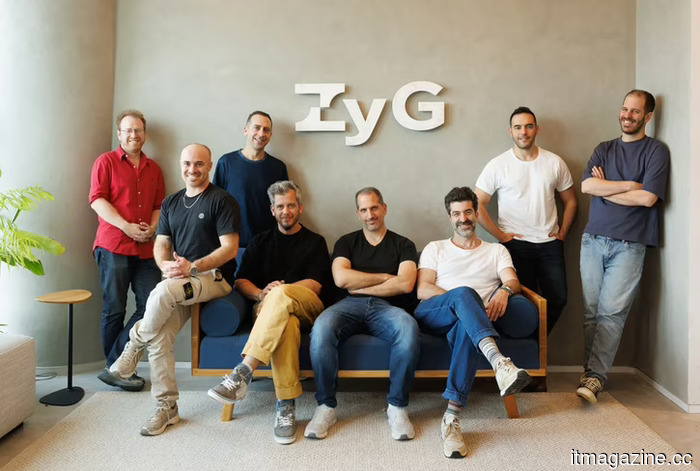
The founders of IronSource have secured $60 million at a $500 million valuation for Zyg, an AI platform designed to automate advertising in e-commerce.
**Summary:** Zyg, an agentic e-commerce platform founded by five IronSource co-founders, has secured $60 million at a valuation of $500 million, led by Accel, just two months after emerging from stealth with a $58 million seed round. The company utilizes AI agents that autonomously manage advertising, retention, support, and inventory forecasting for DTC sellers on platforms like Meta. Ironically, the same team that built IronSource’s ad tech for human media buyers is now creating AI agents intended to replace them.
The IronSource founders spent a decade developing tools to help mobile app developers monetize through advertising. After selling the company to Unity for $4.4 billion in 2022, they saw Unity dismantle their ad network, leading them to leave in 2024 and start Zyg, which aims to automate the digital advertising management that IronSource once supported. With a recent funding round, Zyg has raised $118 million in eight weeks, despite having no public customer case studies. Their bet is on the ability of AI agents to supplant human managers in e-commerce advertising.
**The Thesis:** Zyg positions itself as an agentic operating system for scaling e-commerce. The platform automates functions currently handled by humans and disparate software tools, including campaign creation and optimization on platforms like Meta, as well as customer retention, support, and inventory forecasting. CEO Omer Kaplan stated that Zyg’s AI agents are already autonomously managing advertising campaigns on Meta’s platforms. The target market includes businesses with annual revenues between $2 million and $15 million, which require advanced advertising solutions but cannot afford dedicated teams.
There’s inherent irony in this development, as IronSource built the infrastructure relied on by professional media buyers and performance marketers for campaign optimization. Zyg's premise is that these roles have become unnecessary as AI agents take over, with the founding team now developing solutions that eliminate the need for human ad managers. This shift is seen as a succession rather than a mere pivot.
**The Market:** Zyg is stepping into a burgeoning sector that has attracted substantial investment in the past year. Hightouch recently secured $150 million for an agentic marketing platform for enterprises, reflecting the growing interest in automation across the industry. Companies like Shopify and Meta are enhancing their platforms to incorporate automated advertising features, further driving the evolution of AI-generated advertising and distribution without human involvement.
Zyg's timing appears crucial yet its opportunity may be fleeting. Should Meta finalize its own automation processes, Zyg will have to demonstrate the distinct value of its third-party platform. Zyg argues that Meta prioritizes its own optimization, while DTC brands require agents capable of streamlining advertising, retention, support, and inventory management collectively.
**The Speed:** Attracting a $500 million valuation in just two months post-stealth is unusual, even in a robust funding landscape. This rapid growth reflects a common trend in AI venture capital: founders with successful past exits can secure higher valuations irrespective of current revenue. Accel, having raised a $5 billion fund to support AI companies, has invested in Zyg, aligning with a belief that significant returns will come not from foundational AI models, but from specialized platforms in specific industries.
**The Talent:** Zyg was founded by five original IronSource co-founders and includes cybersecurity and AI experts from Israel’s Unit 81. Their funding will primarily target recruitment of AI talent in Israel, where competition is fierce amid a surge in investments in AI startups. The military background of some team members emphasizes the relevance of security in managing AI agents with access to sensitive business data, underscoring the dual challenges of AI development and operational governance.
**The Question:** As agentic AI technology explores various sectors, a key consideration arises: will these platforms become the foundation for industries, or will existing systems integrate agent functionalities? In e-commerce advertising, major players like Meta, Google, Amazon, and Shopify are already embedding AI automation within their offerings.
Zyg’s proposition is that attempting to solve multi-platform challenges from within a single system is impractical. A DTC brand operating across multiple platforms needs an AI agent that comprehensively understands its business ecosystem rather than treating it as a series of isolated channels. This insight mirrors IronSource’s previous success, establishing a monetization layer across ad networks. However, now the aim is to fully eliminate the human element. Whether Zyg can successfully implement this model at scale for mid-sized brands that can’t afford engineering teams yet generate sufficient revenue to justify AI functionalities will determine the validity of its $500 million valuation. The next two months will be pivotal for the founders as they navigate their forthcoming journey with $118 million in funding.
Other articles
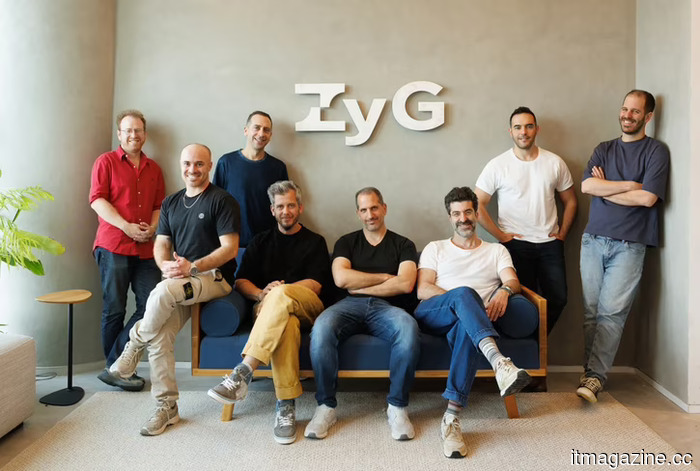 The founders of IronSource have raised $60 million, achieving a valuation of $500 million for Zyg, an AI platform designed to autonomously manage e-commerce advertising.
Zyg secured $60 million in funding, led by Accel, at a $500 million valuation just two months after emerging from stealth mode. The IronSource team is developing AI agents designed to take the place of human ad buyers for direct-to-consumer brands.
The founders of IronSource have raised $60 million, achieving a valuation of $500 million for Zyg, an AI platform designed to autonomously manage e-commerce advertising.
Zyg secured $60 million in funding, led by Accel, at a $500 million valuation just two months after emerging from stealth mode. The IronSource team is developing AI agents designed to take the place of human ad buyers for direct-to-consumer brands.
 Google, Microsoft, and xAI have consented to provide pre-release evaluations of their government AI models as the Mythos crisis compels an increase in oversight.
Five leading AI laboratories are currently submitting their models for evaluation by the US government. This voluntary initiative lacks legal authority but includes all significant AI developers following the Mythos crisis.
Google, Microsoft, and xAI have consented to provide pre-release evaluations of their government AI models as the Mythos crisis compels an increase in oversight.
Five leading AI laboratories are currently submitting their models for evaluation by the US government. This voluntary initiative lacks legal authority but includes all significant AI developers following the Mythos crisis.
 Workers at Google DeepMind have voted in favor of unionizing following a Pentagon AI agreement that supersedes eight years of commitments to ethical practices.
Staff at DeepMind UK voted 98% in favor of joining CWU and Unite following Google's agreement on a confidential Pentagon contract for "any lawful purpose." They are advocating for the cessation of military AI applications and the reinstatement of ethical standards.
Workers at Google DeepMind have voted in favor of unionizing following a Pentagon AI agreement that supersedes eight years of commitments to ethical practices.
Staff at DeepMind UK voted 98% in favor of joining CWU and Unite following Google's agreement on a confidential Pentagon contract for "any lawful purpose." They are advocating for the cessation of military AI applications and the reinstatement of ethical standards.
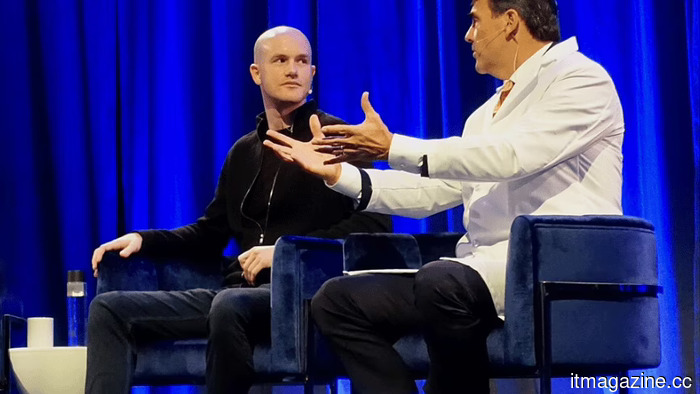 Coinbase reduces its workforce by 14% and restructures to focus on AI-driven teams as cryptocurrency revenue declines by 26% and trading volumes reach an 18-month low.
Coinbase is cutting 660 jobs and reorganizing into AI-native pods while implementing a five-layer management limit. Revenue for Q1 is anticipated to decline by 26% due to a 48% drop in crypto trading volumes.
Coinbase reduces its workforce by 14% and restructures to focus on AI-driven teams as cryptocurrency revenue declines by 26% and trading volumes reach an 18-month low.
Coinbase is cutting 660 jobs and reorganizing into AI-native pods while implementing a five-layer management limit. Revenue for Q1 is anticipated to decline by 26% due to a 48% drop in crypto trading volumes.
 Inside QuantWare's €152 million funding round to develop KiloFab
QuantWare has finalized a €152 million Series B funding round, which was led by Intel Capital, In-Q-Tel, and ETF Partners, marking the largest deeptech financing round in the Netherlands to date.
Inside QuantWare's €152 million funding round to develop KiloFab
QuantWare has finalized a €152 million Series B funding round, which was led by Intel Capital, In-Q-Tel, and ETF Partners, marking the largest deeptech financing round in the Netherlands to date.
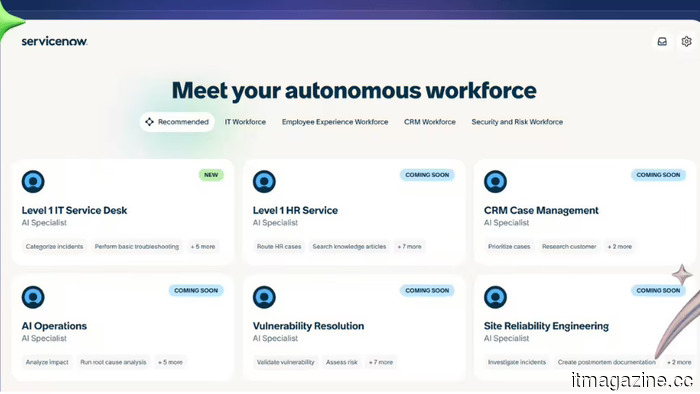 ServiceNow anticipates reaching $30 billion by 2030, with one-third of its annual contract value coming from AI.
ServiceNow anticipates achieving $30 billion in subscription revenue by 2030, with 30% of that annual contract value coming from Now Assist, its primary AI product. The presentation during investor day serves as a structural response to worries regarding AI-SaaS displacement.
ServiceNow anticipates reaching $30 billion by 2030, with one-third of its annual contract value coming from AI.
ServiceNow anticipates achieving $30 billion in subscription revenue by 2030, with 30% of that annual contract value coming from Now Assist, its primary AI product. The presentation during investor day serves as a structural response to worries regarding AI-SaaS displacement.
The founders of IronSource have secured $60 million at a $500 million valuation for Zyg, an AI platform designed to automate advertising in e-commerce.
Zyg secured $60 million in funding, with Accel leading the investment, at a valuation of $500 million just two months after emerging from stealth mode. The IronSource team is developing AI agents to take over the roles of human ad buyers for direct-to-consumer (DTC) brands.