
Workers at Google DeepMind have voted in favor of unionizing following a Pentagon AI agreement that supersedes eight years of commitments to ethical practices.
**TL;DR**
Workers at Google DeepMind in the UK voted overwhelmingly, with 98 percent in favor, to unionize after Google entered into a classified Pentagon AI agreement for "any lawful purpose," marking the first organized effort in a leading AI lab. The union's demands include a halt to military AI usage, reinstating Google's previous commitment to not develop weapons, and establishing an independent ethics board.
In 2018, a petition signed by four thousand Google employees opposed Project Maven, a Pentagon initiative that utilized Google's AI for analyzing drone footage, leading the company to not renew the contract. Google had also released a set of AI principles dedicated to not developing weapons or surveillance tech that violates international norms, alongside forming an AI ethics team. This episode was viewed as a strong assertion that tech workers could define their companies' moral boundaries. However, by 2026, Google had signed a classified Pentagon deal, erased its weapons pledge, and dismissed the leadership of the ethics team formed post-Project Maven, prompting the AI researchers to seek unionization as their only recourse.
**The Vote**
In April, employees at Google DeepMind’s UK offices voted to align with the Communication Workers Union and Unite the Union, achieving 98 percent support. They recently sent a letter to management seeking formal acknowledgment of the unions as their representatives. If granted, they would become the first unionized workers at a leading AI lab. The motivation behind the vote was not primarily salary or working conditions, but opposition to the Pentagon's military involvement. Over 580 Google staff, including 20 senior executives and researchers, had previously urged CEO Sundar Pichai to reject the military AI contract. Additionally, over 100 DeepMind employees signed a letter insisting that no DeepMind technologies be used in weapon development. Despite this, the company went ahead with the agreement.
The union's specific demands include ceasing the use of Google AI by both the Israeli and US military, reinstating the company’s earlier commitment to avoid developing AI weapons or surveillance systems, forming an independent ethics oversight body, and granting researchers the right to refuse participation in projects on moral grounds. These demands focus on governance, emerging from a perceived need for accountability due to the dismantling of previous ethical structures when they conflicted with profit-making.
**The Deal**
The classified Pentagon contract allows the military to use Google’s AI models on secure networks, where Google cannot track queries, outputs, or decisions made. DeepMind researcher Alex Turner criticized the agreement, highlighting that Google has no control over usage and relies on ambiguous language without legal enforcement of safety measures. Although the contract incorporates advisory guidelines against mass surveillance and autonomous weapons, it allows the government to request modifications to safety protocols, which cannot be independently verified on a classified network.
Reports suggest that Google's deal is less restrictive than OpenAI’s, which maintains control over its safety policies. Anthropic is the only company that declined to give the Pentagon unrestricted access, asserting its models wouldn't be used for military or mass surveillance applications, leading to the Pentagon categorizing it as a supply-chain risk and halting its use. This comparison emphasizes a stark message to AI researchers: companies that uphold ethical limits face repercussions, while those that waive them prosper.
**The History**
The successful 2018 protest against Project Maven occurred because Google was not reliant on military contracts, able to forgo minor Pentagon revenues without significant impact. By 2026, classified AI contracts are worth billions, and the Pentagon has shown willingness to retaliate against companies that resist collaboration, with competitors already signing similar agreements. The conditions that once empowered workers from influencing company policies have changed. Google silently removed its explicit commitment against developing military AI in early 2025, thereby eliminating an internal standard for challenging military projects.
The dismissals of Timnit Gebru and Margaret Mitchell, leaders of Google’s Ethical AI team, in 2020 and 2021 signaled that internal dissent regarding AI ethics would not be tolerated. Furthermore, 28 employees protesting the Project Nimbus contract with the Israeli government were let go in 2024. By 2026, it has become clear that Google seeks military and governmental AI contracts despite internal dissent, with those who publicly object facing termination. The union vote represents the workers' collective response to this trend, appealing for influence over how their creations are utilized since individual dissent leads to job loss.
**The Context**
Both Meta and Microsoft have laid off 23,000 employees while investing tens of billions in AI, transferring human roles into GPU infrastructure. This restructuring across Big Tech is leading to job losses in support, moderation, quality assurance, and engineering, concentrating resources on those who develop AI models. The DeepMind workforce stands as some of the most valuable in the AI sector, and their unionization indicates recognition of their temporary leverage. As AI models evolve, fewer researchers may be required, minimizing workers' opportunity to influence the use of their work with each new generation.
Chinese courts have ruled that
Other articles
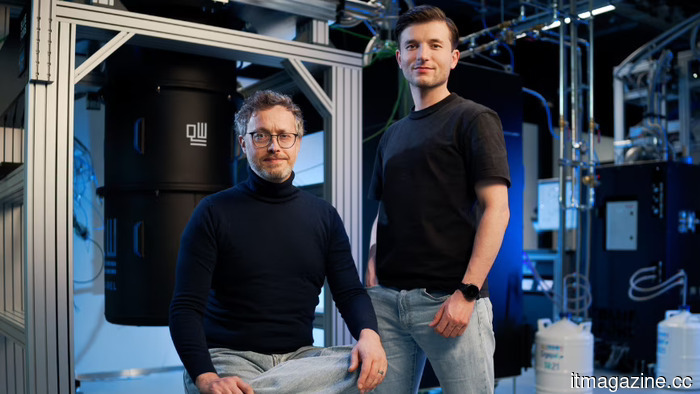 Inside QuantWare's €152 million funding round aimed at developing KiloFab.
QuantWare has completed a €152 million Series B funding round, spearheaded by Intel Capital, In-Q-Tel, and ETF Partners, marking the largest deep tech funding round in the Netherlands to date.
Inside QuantWare's €152 million funding round aimed at developing KiloFab.
QuantWare has completed a €152 million Series B funding round, spearheaded by Intel Capital, In-Q-Tel, and ETF Partners, marking the largest deep tech funding round in the Netherlands to date.
 Fervo Energy initiates a $1.33 billion IPO, marking the biggest climate-tech listing of 2026.
Fervo Energy has initiated its IPO roadshow, aiming to raise up to $1.33 billion by offering shares at a price range of $21 to $24. This Nasdaq listing is presented as the climate-tech platform for the AI infrastructure sector.
Fervo Energy initiates a $1.33 billion IPO, marking the biggest climate-tech listing of 2026.
Fervo Energy has initiated its IPO roadshow, aiming to raise up to $1.33 billion by offering shares at a price range of $21 to $24. This Nasdaq listing is presented as the climate-tech platform for the AI infrastructure sector.
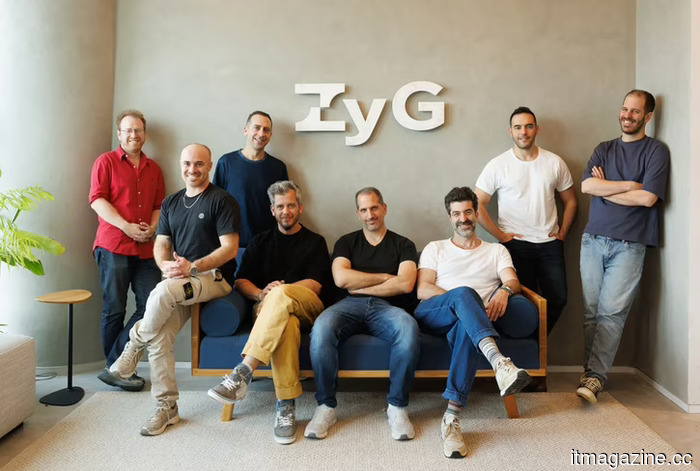 The founders of IronSource have secured $60 million at a $500 million valuation for Zyg, an AI platform designed to automate advertising in e-commerce.
Zyg secured $60 million in funding, with Accel leading the investment, at a valuation of $500 million just two months after emerging from stealth mode. The IronSource team is developing AI agents to take over the roles of human ad buyers for direct-to-consumer (DTC) brands.
The founders of IronSource have secured $60 million at a $500 million valuation for Zyg, an AI platform designed to automate advertising in e-commerce.
Zyg secured $60 million in funding, with Accel leading the investment, at a valuation of $500 million just two months after emerging from stealth mode. The IronSource team is developing AI agents to take over the roles of human ad buyers for direct-to-consumer (DTC) brands.
 Coinbase reduces its workforce by 14% and reorganizes around AI-focused pods as cryptocurrency revenue declines by 26% and trading volumes reach an 18-month low.
Coinbase is reducing its workforce by 660 employees and reorganizing into AI-focused teams with a maximum of five layers of management. Revenue for Q1 is projected to decline by 26% due to a 48% decrease in cryptocurrency trading volumes.
Coinbase reduces its workforce by 14% and reorganizes around AI-focused pods as cryptocurrency revenue declines by 26% and trading volumes reach an 18-month low.
Coinbase is reducing its workforce by 660 employees and reorganizing into AI-focused teams with a maximum of five layers of management. Revenue for Q1 is projected to decline by 26% due to a 48% decrease in cryptocurrency trading volumes.
 Tesla's FSD rollout in Europe faces skepticism from regulators, as Musk has been indicating.
Reuters has revealed internal communications from EU regulators that express ongoing doubts regarding Tesla's assertions about the safety of its FSD and its rollout plan, even after receiving type approval in the Netherlands in April.
Tesla's FSD rollout in Europe faces skepticism from regulators, as Musk has been indicating.
Reuters has revealed internal communications from EU regulators that express ongoing doubts regarding Tesla's assertions about the safety of its FSD and its rollout plan, even after receiving type approval in the Netherlands in April.
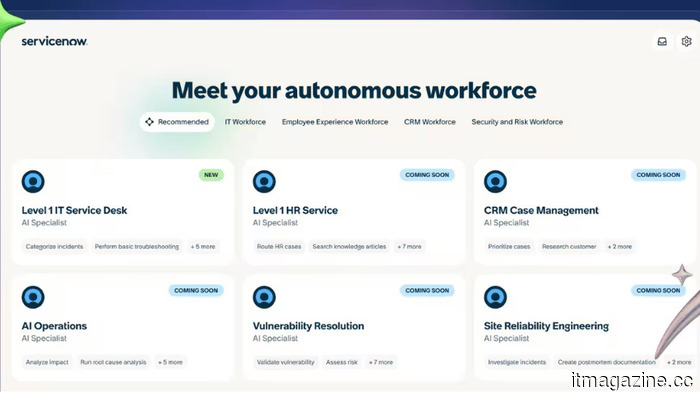 ServiceNow estimates that by 2030, it will reach $30 billion, with one-third of its annual contract value coming from AI.
ServiceNow anticipates $30 billion in subscription revenue by 2030, with 30% of that annual contract value (ACV) coming from Now Assist, the company's premier AI product. The presentation during the investor day addresses concerns regarding potential displacement by AI-SaaS.
ServiceNow estimates that by 2030, it will reach $30 billion, with one-third of its annual contract value coming from AI.
ServiceNow anticipates $30 billion in subscription revenue by 2030, with 30% of that annual contract value (ACV) coming from Now Assist, the company's premier AI product. The presentation during the investor day addresses concerns regarding potential displacement by AI-SaaS.
Workers at Google DeepMind have voted in favor of unionizing following a Pentagon AI agreement that supersedes eight years of commitments to ethical practices.
Staff at DeepMind UK voted 98% in favor of joining CWU and Unite following Google's agreement on a confidential Pentagon contract for "any lawful purpose." They are advocating for the cessation of military AI applications and the reinstatement of ethical standards.