
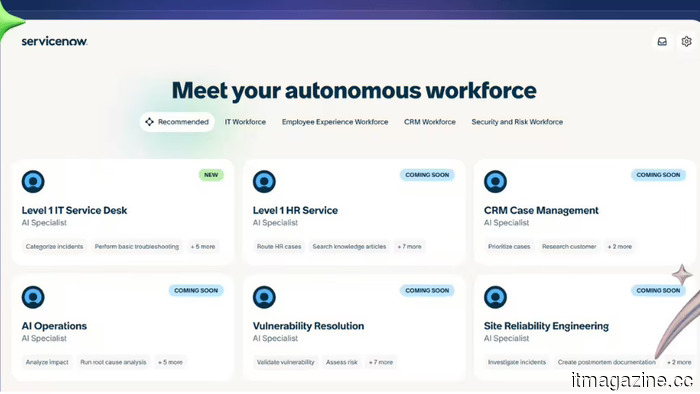
ServiceNow anticipates reaching $30 billion by 2030, with one-third of its annual contract value coming from AI.
TL;DR: On May 4, 2026, ServiceNow used its investor day to forecast $30 billion in subscription revenue by 2030, with Now Assist expected to account for roughly 30% of that annual recurring revenue (ACV). This presentation actively addressed concerns regarding AI-SaaS displacement.
By 2026, ServiceNow has emerged as a key example of whether enterprise software firms can benefit from AI advancements or risk being replaced by them. Recently, the company provided its most definitive response to investors yet. According to Bloomberg, ServiceNow anticipates reaching $30 billion in subscription revenue by 2030, with CFO Gina Mastantuono indicating that approximately 30% of that revenue will come from Now Assist, the company's main AI product.
The investor-day narrative was intentional. Coverage from The Cerbat Gem described the presentation as a “Control Tower” narrative, where ServiceNow positions itself as the platform for coordinating, governing, and implementing enterprise AI rather than a vendor whose workflow software could be overshadowed by broader AI models. Mastantuono increased the company’s short-term AI ACV target from $1 billion to $1.5 billion, noting that Now Assist's current ACV stands at about $750 million as of Q1 2026, rising from $600 million at the end of 2025.
Importance of the pitch now
Throughout 2026, ServiceNow has had to present structural arguments to investors. Fortune reported in April that even with strong earnings, ServiceNow could not quell the overall skepticism regarding the potential threat from AI agents and direct deployments to the workflow-software middleware that the company has traditionally occupied. Coverage of new AI services from Anthropic and the OpenAI Deployment Company, which coincided with ServiceNow's announcement, illustrates the competitive dynamics at play. These AI-native initiatives target the same customer base that ServiceNow has developed over two decades.
ServiceNow's counterargument is that it serves as the operating system for enterprise AI implementations rather than being simply an application itself. Now Assist is framed as the orchestration layer, while the growth in ACV serves as proof that clients are willing to invest in that framework. The $30 billion revenue target for 2030 encapsulates both claims into a believable long-term revenue projection.
Contextualizing the numbers
ServiceNow projects that its 2026 subscription revenue will exceed its previous $15 billion target by approximately $500 million organically. To reach over $30 billion by 2030, it implies a continuous growth rate of about 19% annually, which is higher than the industry consensus for traditional SaaS but lower than ServiceNow’s recent quarterly growth figures. For the more optimistic forecast of $32 billion by 2030, Now Assist needs to increase not just in financial value, but also in its share of overall ACV, ultimately representing about a third of all subscription income.
Achieving this depends on several factors that public-market investors may be skeptical about. TNW has observed the broader trend of AI-related stock valuation compression recently, highlighted by Palantir’s stock decline and Citi’s price-target reductions. ServiceNow’s stock has also been part of this trend. The investor-day forecast serves, in part, as a counterpoint: it suggests that the company possesses both a solid customer base and traction with its AI products to support a different valuation trajectory than what the wider AI-SaaS sector is currently experiencing.
Key indicators to monitor
Three factors will be crucial in determining whether the $30 billion forecast becomes a reality. The first is the quarterly ACV progress of Now Assist: growing from $600 million at the end of 2025 to $750 million in Q1 and aiming for $1.5 billion by year-end demands sustained growth that typically does not occur by chance in enterprise software. The second factor is competitive pressure: the number of enterprise clients who prefer ServiceNow for orchestrating their AI deployments over competitors like Anthropic-Blackstone or OpenAI’s DeployCo. The third factor is profitability: ServiceNow’s AI solutions have so far maintained a gross margin consistent with the company average; maintaining this as computing costs increase will be essential for ensuring that the $30 billion figure translates into the necessary cash flows.
No single investor-day presentation can resolve these questions. However, they are indeed the pertinent questions, and based on available evidence, ServiceNow seems ready to be assessed against them. This willingness to be measured is a competitive signal in itself for 2026.
Other articles
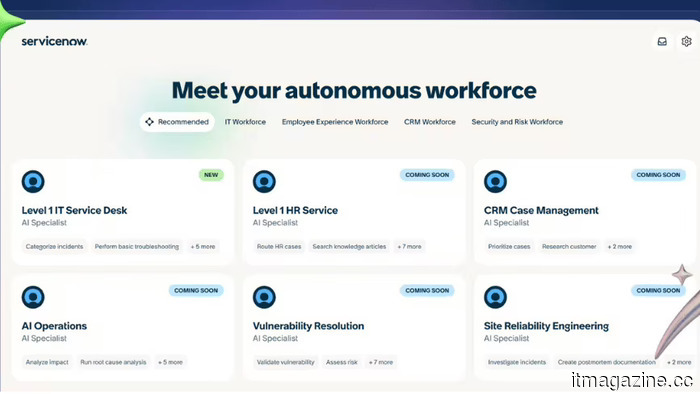 ServiceNow anticipates reaching $30 billion by 2030, with one-third of annual contract value (ACV) coming from AI.
ServiceNow forecasts $30 billion in subscription revenue for 2030, with 30% of that annual contract value coming from Now Assist, the company’s premier AI product. The presentation for investors addresses concerns about the potential displacement of AI in the SaaS sector.
ServiceNow anticipates reaching $30 billion by 2030, with one-third of annual contract value (ACV) coming from AI.
ServiceNow forecasts $30 billion in subscription revenue for 2030, with 30% of that annual contract value coming from Now Assist, the company’s premier AI product. The presentation for investors addresses concerns about the potential displacement of AI in the SaaS sector.
 Fervo Energy initiates a $1.33 billion IPO, marking the biggest climate-tech listing of 2026.
Fervo Energy has initiated its IPO roadshow, aiming to raise up to $1.33 billion by offering shares at a price range of $21 to $24. This Nasdaq listing is presented as the climate-tech platform for the AI infrastructure sector.
Fervo Energy initiates a $1.33 billion IPO, marking the biggest climate-tech listing of 2026.
Fervo Energy has initiated its IPO roadshow, aiming to raise up to $1.33 billion by offering shares at a price range of $21 to $24. This Nasdaq listing is presented as the climate-tech platform for the AI infrastructure sector.
 Coinbase reduces its workforce by 14% and restructures to focus on AI-driven pods as cryptocurrency revenue falls 26% and trading volumes reach an 18-month low.
Coinbase is reducing its workforce by 660 employees and reorganizing into AI-focused pods with a limitation of five management layers. Revenue for Q1 is projected to decline by 26% as cryptocurrency trading volumes decrease by 48%.
Coinbase reduces its workforce by 14% and restructures to focus on AI-driven pods as cryptocurrency revenue falls 26% and trading volumes reach an 18-month low.
Coinbase is reducing its workforce by 660 employees and reorganizing into AI-focused pods with a limitation of five management layers. Revenue for Q1 is projected to decline by 26% as cryptocurrency trading volumes decrease by 48%.
 Metalenz's latest face scan technology is integrated beneath the phone display, eliminating the need for unsightly cutouts.
Metalenz has just demonstrated that payment-grade facial recognition can function with a fully lit display, a feat that Apple has been attempting to achieve for years without success.
Metalenz's latest face scan technology is integrated beneath the phone display, eliminating the need for unsightly cutouts.
Metalenz has just demonstrated that payment-grade facial recognition can function with a fully lit display, a feat that Apple has been attempting to achieve for years without success.
 Google, Microsoft, and xAI have consented to provide evaluations of AI models to the government before their release, as the Mythos crisis necessitates an increase in oversight.
Five leading AI laboratories are now presenting their models for assessment by the US government. This voluntary program lacks legal authority but includes all major AI developers following the Mythos crisis.
Google, Microsoft, and xAI have consented to provide evaluations of AI models to the government before their release, as the Mythos crisis necessitates an increase in oversight.
Five leading AI laboratories are now presenting their models for assessment by the US government. This voluntary program lacks legal authority but includes all major AI developers following the Mythos crisis.
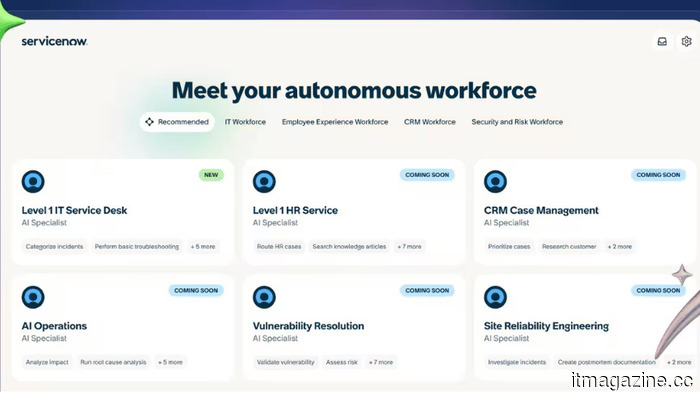 ServiceNow estimates that by 2030, it will reach $30 billion, with one-third of its annual contract value coming from AI.
ServiceNow anticipates $30 billion in subscription revenue by 2030, with 30% of that annual contract value (ACV) coming from Now Assist, the company's premier AI product. The presentation during the investor day addresses concerns regarding potential displacement by AI-SaaS.
ServiceNow estimates that by 2030, it will reach $30 billion, with one-third of its annual contract value coming from AI.
ServiceNow anticipates $30 billion in subscription revenue by 2030, with 30% of that annual contract value (ACV) coming from Now Assist, the company's premier AI product. The presentation during the investor day addresses concerns regarding potential displacement by AI-SaaS.
ServiceNow anticipates reaching $30 billion by 2030, with one-third of its annual contract value coming from AI.
ServiceNow anticipates achieving $30 billion in subscription revenue by 2030, with 30% of that annual contract value coming from Now Assist, its primary AI product. The presentation during investor day serves as a structural response to worries regarding AI-SaaS displacement.