
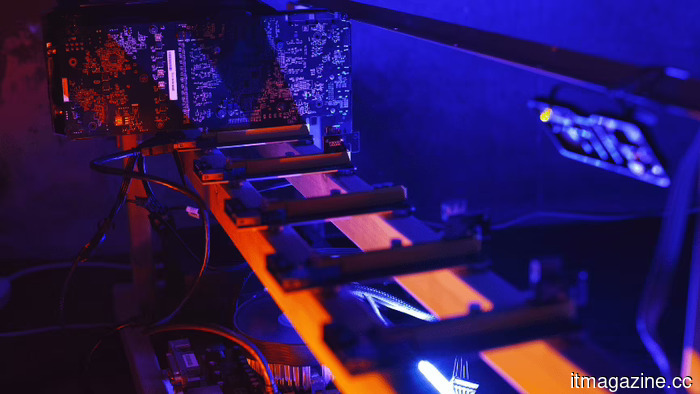
Nscale has invested €695 million in Portugal, while the crypto-to-AI neocloud has reached a valuation of $14.6 billion in just two years with the support of Microsoft.
Nscale, a former crypto miner that has transformed into a $14.6 billion neocloud, is set to invest €695 million in Portugal to provide 66,000 Nvidia Rubin GPUs to Microsoft’s Start Campus in Sines. This deal continues the rapid development of AI infrastructure in Europe, financed by private investments driven by GPU demand rather than governmental compute programs.
Just two years ago, Nscale was primarily a cryptocurrency mining enterprise. On Tuesday, the company revealed its €695 million ($812 million) infrastructure investment in Portugal, which expands its collaboration with Microsoft by supplying over 66,000 Nvidia Rubin GPUs to a location with a permitted capacity of 1.2 gigawatts. Following a $2 billion Series C fundraiser in March, supported by Nvidia, Lenovo, Dell, Citadel, Jane Street, and Nokia, Nscale's valuation now stands at $14.6 billion. The firm manages data centers in the UK, Norway, Portugal, Iceland, and the United States, and its CEO has indicated plans for an initial public offering in 2026. Over a span of twenty-four months, the company has shifted from being a crypto miner to becoming Europe's highest-valued AI infrastructure firm. This raises the question of whether Europe's solution to the compute crisis will emerge from a new type of company that scarcely existed three years ago, rather than from governments or major tech firms.
The investment in Portugal includes €230 million earmarked for shared infrastructure and €465 million for an additional 200-megawatt facility at the Start Campus data center in Sines, a port town on Portugal’s Atlantic coast. The Start Campus, approved for a total capacity of 1.2 gigawatts, ranks among the largest data center projects in Southern Europe. In October 2025, Microsoft announced a multiyear agreement to lease capacity at this site and has committed $10 billion to its development to address computing capacity shortages affecting Azure's AI expansion. Nscale will provide the GPU infrastructure that Microsoft will employ for its cloud customers, creating a model in which the neocloud supplies the hardware while the hyperscaler manages customer relationships.
The delivery of 66,000 Nvidia Rubin GPUs, expected to start in late 2027, signifies a significant commitment to next-generation technology. The Rubin chips, which are set to replace the Blackwell architecture, began production in 2026, and their demand currently outweighs supply. Nscale's securing of this major commitment is indicative of its solid relationship with Nvidia, which invested £500 million in the company during its Series C, as well as the large demand for compute capacity from Microsoft in Europe. Nscale's partnership with BT and Nvidia in the UK is already yielding 14 megawatts of government-backed AI data center capacity, and the expansion into Portugal replicates this model in a region with lower energy costs and fewer grid constraints compared to Britain.
Nscale embodies the neocloud model: a cloud provider dedicated solely to leasing GPU compute resources to AI developers, without the myriad of supplementary services provided by hyperscalers like AWS, Azure, and Google Cloud. The model is theoretically straightforward: acquire GPUs in bulk, host them in data centers equipped with adequate power and cooling, and rent them to AI firms unable to secure hardware directly from Nvidia. However, in practice, it demands substantial capital, long-term agreements with financially stable clients, and the ability to develop data center capacity more swiftly than traditional hyperscalers. CoreWeave, the leading entity in the U.S. in this category, went public in 2025 and has secured over $50 billion in contracts with OpenAI, Meta, and Anthropic. Nscale is pursuing a similar path with a focus on geography: Europe needs its own compute infrastructure, and the first company to construct it will gain a crucial foothold in the continent's AI economy.
The shift from crypto to AI is not merely incidental but fundamental to the model. Nscale was spun off from Arkon Energy, a cryptocurrency mining infrastructure provider, in early 2024. Crypto mining firms already possessed the essential resources for AI infrastructure: access to large-scale energy supplies and experience managing GPU-heavy computing environments in energy-limited settings. As AI demand made GPU compute significantly more profitable per megawatt than mining Bitcoin, the rationale for the transition became clear. Morgan Stanley reclassified the entire crypto mining sector as an energy infrastructure play for the AI economy in February 2026. Nscale effectively executed this transition more rapidly and on a larger scale than its rivals, raising $3.1 billion across three funding rounds in under eighteen months.
OpenAI's decision to halt its Stargate UK data center project in April, citing electricity costs that were four times higher than in the United States and unresolved copyright regulations, highlighted Europe's precarious position in the global compute competition. Even when a hyperscaler commits to building AI infrastructure in Europe, factors like energy prices and regulatory uncertainty can thwart investments before operations commence. Portugal
Altri articoli
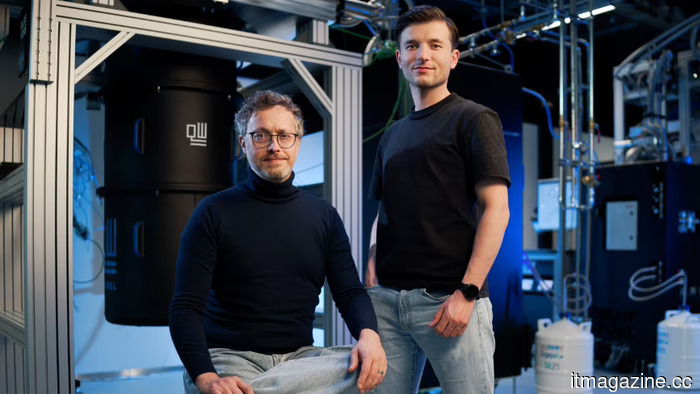 Inside QuantWare's €152 million funding round for the construction of KiloFab
QuantWare has successfully completed a €152 million Series B funding round, led by Intel Capital, In-Q-Tel, and ETF Partners, marking the largest deeptech financing round in the Netherlands to date.
Inside QuantWare's €152 million funding round for the construction of KiloFab
QuantWare has successfully completed a €152 million Series B funding round, led by Intel Capital, In-Q-Tel, and ETF Partners, marking the largest deeptech financing round in the Netherlands to date.
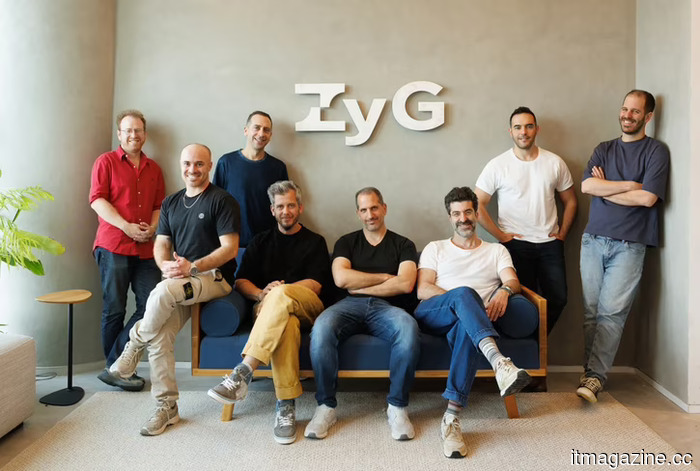 The founders of IronSource have raised $60 million, achieving a valuation of $500 million for Zyg, an AI platform designed to autonomously manage e-commerce advertising.
Zyg secured $60 million in funding, led by Accel, at a $500 million valuation just two months after emerging from stealth mode. The IronSource team is developing AI agents designed to take the place of human ad buyers for direct-to-consumer brands.
The founders of IronSource have raised $60 million, achieving a valuation of $500 million for Zyg, an AI platform designed to autonomously manage e-commerce advertising.
Zyg secured $60 million in funding, led by Accel, at a $500 million valuation just two months after emerging from stealth mode. The IronSource team is developing AI agents designed to take the place of human ad buyers for direct-to-consumer brands.
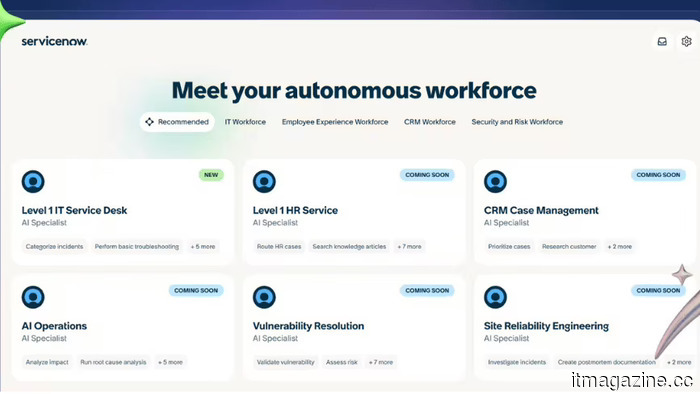 ServiceNow anticipates reaching $30 billion by 2030, with one-third of annual contract value (ACV) coming from AI.
ServiceNow forecasts $30 billion in subscription revenue for 2030, with 30% of that annual contract value coming from Now Assist, the company’s premier AI product. The presentation for investors addresses concerns about the potential displacement of AI in the SaaS sector.
ServiceNow anticipates reaching $30 billion by 2030, with one-third of annual contract value (ACV) coming from AI.
ServiceNow forecasts $30 billion in subscription revenue for 2030, with 30% of that annual contract value coming from Now Assist, the company’s premier AI product. The presentation for investors addresses concerns about the potential displacement of AI in the SaaS sector.
 Workers at Google DeepMind have voted in favor of unionizing following a Pentagon AI agreement that supersedes eight years of commitments to ethical practices.
Staff at DeepMind UK voted 98% in favor of joining CWU and Unite following Google's agreement on a confidential Pentagon contract for "any lawful purpose." They are advocating for the cessation of military AI applications and the reinstatement of ethical standards.
Workers at Google DeepMind have voted in favor of unionizing following a Pentagon AI agreement that supersedes eight years of commitments to ethical practices.
Staff at DeepMind UK voted 98% in favor of joining CWU and Unite following Google's agreement on a confidential Pentagon contract for "any lawful purpose." They are advocating for the cessation of military AI applications and the reinstatement of ethical standards.
 Tesla’s rollout of FSD in Europe faces skepticism from regulators, a sentiment that Musk has been conveying.
Reuters has released internal communications from EU regulators demonstrating ongoing doubt regarding Tesla's assertions about the safety of its FSD and its rollout approach, even after receiving Dutch type approval in April.
Tesla’s rollout of FSD in Europe faces skepticism from regulators, a sentiment that Musk has been conveying.
Reuters has released internal communications from EU regulators demonstrating ongoing doubt regarding Tesla's assertions about the safety of its FSD and its rollout approach, even after receiving Dutch type approval in April.
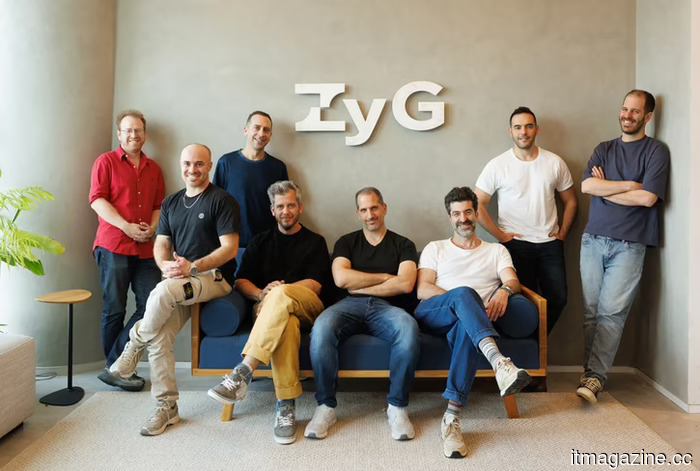 The founders of IronSource have secured $60 million at a valuation of $500 million for Zyg, an AI-driven platform that automates advertising in the e-commerce sector.
Zyg secured $60 million in funding, spearheaded by Accel, at a valuation of $500 million just two months following its stealth launch. The team at IronSource is developing AI agents designed to take the place of human ad buyers for direct-to-consumer brands.
The founders of IronSource have secured $60 million at a valuation of $500 million for Zyg, an AI-driven platform that automates advertising in the e-commerce sector.
Zyg secured $60 million in funding, spearheaded by Accel, at a valuation of $500 million just two months following its stealth launch. The team at IronSource is developing AI agents designed to take the place of human ad buyers for direct-to-consumer brands.
Nscale has invested €695 million in Portugal, while the crypto-to-AI neocloud has reached a valuation of $14.6 billion in just two years with the support of Microsoft.
Nscale will provide 66,000 Nvidia Rubin GPUs to Microsoft's 1.2 GW Sines campus. Once a crypto miner, it is now Europe's most valuable AI infrastructure startup, valued at $14.6 billion.