
Tesla's FSD rollout in Europe faces skepticism from regulators, as Musk has been indicating.
TL;DR: Reuters has revealed internal communications from EU regulators indicating ongoing skepticism about Tesla's Full Self-Driving (FSD) safety claims and rollout plans. Tesla's timeline for receiving EU approval in Q2-Q3 2026 now appears overly ambitious.
Despite Elon Musk's public optimism regarding Tesla's FSD rollout in Europe, this viewpoint is not mirrored by the European regulators responsible for its approval. An exclusive analysis from Reuters, published on Tuesday, showcased that various EU national authorities have consistently questioned the safety benefits asserted by FSD and the overall rollout strategy employed by Tesla.
The documents summarized by Reuters include direct communications, such as a mid-April statement from a Swedish Transport Agency investigator who expressed his "surprise" that FSD was allowed to exceed speed limits, stating that such behavior contravenes European traffic laws. Other regulators voiced frustration at Tesla's approach of prompting vehicle owners to pressure their governments for quicker FSD approval.
On April 10, 2026, the Netherlands’ RDW became the first EU national authority to officially approve Tesla's “FSD (Supervised)” driver-assistance system, a milestone Tesla has characterized as the beginning of its wider EU rollout. The system is currently seeking broader EU approval through the relevant technical committee, which has critical meetings planned for the remainder of 2026. For FSD to receive EU-wide approval, at least 55% of EU member states and 65% of the bloc's population must vote in favor.
An analysis by InsideEVs highlighted that Tesla had informed regulators during a private presentation about its expectation for EU-wide approval within the second or third quarter of this year. However, the documents from Reuters indicate that this timeline is optimistic from the regulators' perspective.
In addition to speed-limit concerns, regulators have identified specific technical issues. As reported by RideApart in April, testing indicated that Tesla’s FSD-Supervised system did not consistently detect motorcyclists, raising significant safety concerns in markets where motorcycles represent a larger share of vehicles compared to the U.S.
According to Reuters, Swedish, German, and French regulators have expressed similar concerns in their internal communications, suggesting that Tesla's safety claims for FSD predominantly reflect U.S. driving conditions and do not adequately account for differences in EU traffic environments. Moreover, the lobbying approach taken by Tesla has not alleviated regulatory skepticism; instead, it has reinforced it.
Regarding the rollout, the technical committee process, which requires 55% of states and 65% of the population for approval, favors coalition-building among larger member states. Current records from FSD Tracker reveal that Germany, France, Italy, Spain, and Poland have not yet embraced the type approval granted by the Netherlands. The documents from Reuters imply that the skepticism from major states is more rooted in the technical evidence provided by Tesla than in the lobbying efforts.
In a larger European context, TNW has noted the EU's ongoing initiatives toward digital sovereignty and technical independence, which influences the FSD approval scenario. The Commission has been increasingly inclined to establish its own technical standards instead of relying on those from Silicon Valley, making the arrival of a U.S.-based automaker with assertive timeline estimates an event that regulators in 2026 have grown more doubtful about.
This does not imply that FSD will ultimately be denied EU approval. The Dutch type approval is legitimate, the technical committee is operational, and Tesla has previously demonstrated its capacity to modify its software to meet specific market needs in regulatory conflicts. However, the disconnect highlighted by Reuters suggests that a projected six-month rollout timeframe could extend to 12 to 18 months. Based on the current records, Musk's public confidence seems to be ahead of the actual regulatory situation. Upcoming committee meetings in July and October will clarify whether this gap narrows or widens.
Other articles
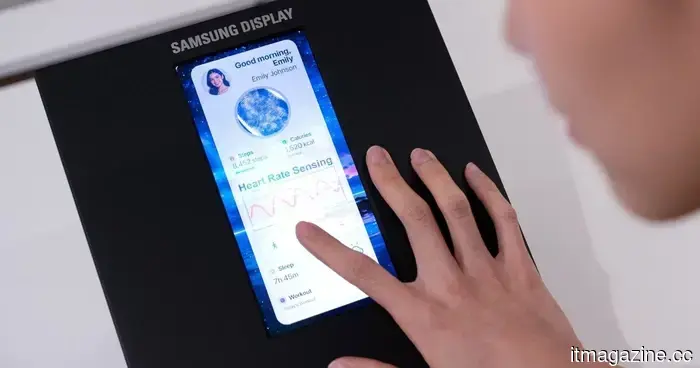 Samsung showcases an exceptionally bright OLED display for smartphones that maintains color accuracy.
Samsung has introduced a new OLED panel that can reach brightness levels of up to 3,000 nits and offers expanded color coverage, with the goal of enhancing outdoor visibility and overall display quality.
Samsung showcases an exceptionally bright OLED display for smartphones that maintains color accuracy.
Samsung has introduced a new OLED panel that can reach brightness levels of up to 3,000 nits and offers expanded color coverage, with the goal of enhancing outdoor visibility and overall display quality.
 Google, Microsoft, and xAI have consented to provide evaluations of AI models to the government before their release, as the Mythos crisis necessitates an increase in oversight.
Five leading AI laboratories are now presenting their models for assessment by the US government. This voluntary program lacks legal authority but includes all major AI developers following the Mythos crisis.
Google, Microsoft, and xAI have consented to provide evaluations of AI models to the government before their release, as the Mythos crisis necessitates an increase in oversight.
Five leading AI laboratories are now presenting their models for assessment by the US government. This voluntary program lacks legal authority but includes all major AI developers following the Mythos crisis.
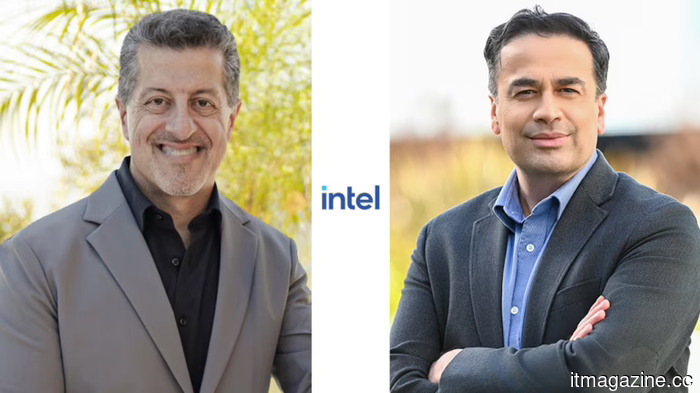 Intel has appointed Qualcomm veteran Alex Katouzian to head a new Client Computing and Physical AI division.
Intel has brought on Alex Katouzian, who spent 25 years at Qualcomm, to head a newly formed Client Computing and Physical AI division. This marks the second high-profile recruitment from Qualcomm during CEO Lip-Bu Tan's leadership.
Intel has appointed Qualcomm veteran Alex Katouzian to head a new Client Computing and Physical AI division.
Intel has brought on Alex Katouzian, who spent 25 years at Qualcomm, to head a newly formed Client Computing and Physical AI division. This marks the second high-profile recruitment from Qualcomm during CEO Lip-Bu Tan's leadership.
 Tesla’s rollout of FSD in Europe faces skepticism from regulators, a sentiment that Musk has been conveying.
Reuters has released internal communications from EU regulators demonstrating ongoing doubt regarding Tesla's assertions about the safety of its FSD and its rollout approach, even after receiving Dutch type approval in April.
Tesla’s rollout of FSD in Europe faces skepticism from regulators, a sentiment that Musk has been conveying.
Reuters has released internal communications from EU regulators demonstrating ongoing doubt regarding Tesla's assertions about the safety of its FSD and its rollout approach, even after receiving Dutch type approval in April.
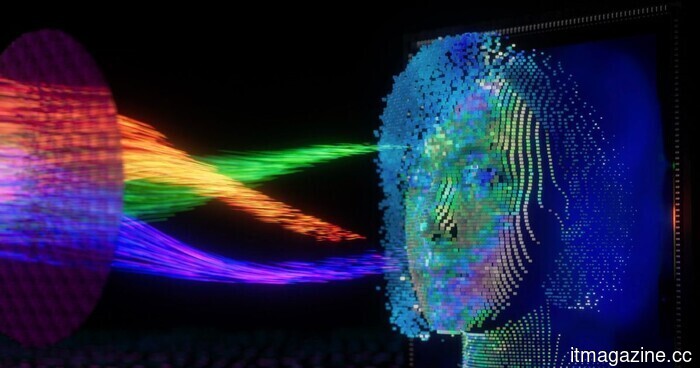 Metalenz's innovative face scanning technology is embedded beneath the phone's display, eliminating the need for unsightly cutouts.
Metalenz has demonstrated that payment-grade facial authentication can function with a fully powered-on display, a feat that Apple has attempted to achieve for years without success.
Metalenz's innovative face scanning technology is embedded beneath the phone's display, eliminating the need for unsightly cutouts.
Metalenz has demonstrated that payment-grade facial authentication can function with a fully powered-on display, a feat that Apple has attempted to achieve for years without success.
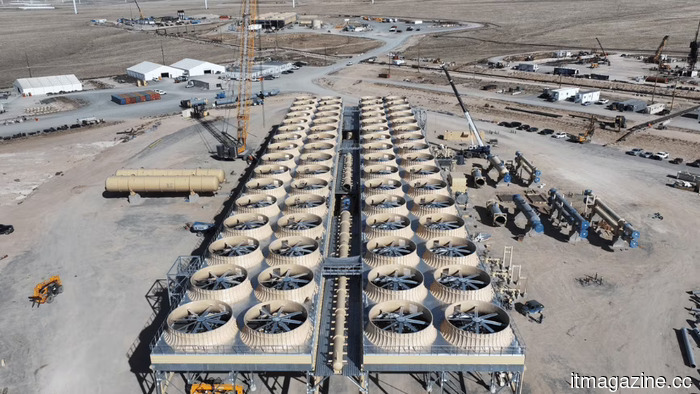 Fervo Energy initiates a $1.33 billion IPO, marking the biggest climate-tech listing of 2026.
Fervo Energy has initiated its IPO roadshow, aiming to raise up to $1.33 billion by offering shares at a price range of $21 to $24. This Nasdaq listing is presented as the climate-tech platform for the AI infrastructure sector.
Fervo Energy initiates a $1.33 billion IPO, marking the biggest climate-tech listing of 2026.
Fervo Energy has initiated its IPO roadshow, aiming to raise up to $1.33 billion by offering shares at a price range of $21 to $24. This Nasdaq listing is presented as the climate-tech platform for the AI infrastructure sector.
Tesla's FSD rollout in Europe faces skepticism from regulators, as Musk has been indicating.
Reuters has revealed internal communications from EU regulators that express ongoing doubts regarding Tesla's assertions about the safety of its FSD and its rollout plan, even after receiving type approval in the Netherlands in April.