
Tesla's rollout of FSD in Europe faces skepticism from regulators, as Musk has been indicating.
TL;DR: Reuters has revealed internal communications from EU regulators that highlight ongoing doubts regarding the safety claims and rollout strategy of Tesla's Full Self-Driving (FSD) system. The timeline for Tesla's EU approval in Q2-Q3 2026 appears overly optimistic.
Elon Musk’s public assurance about the rollout of Tesla’s Full Self-Driving in Europe does not align with the views of the European regulators who need to authorize it. An exclusive report from Reuters on Tuesday disclosed that several national authorities within the EU have consistently expressed skepticism regarding the claimed safety advantages of FSD and the overall strategy for its deployment.
As reported by Reuters through Investing.com, the documents include direct exchanges where an investigator from the Swedish Transport Agency mentioned in mid-April that he was “quite surprised” to find that FSD was allowed to exceed set speed limits, arguing that such behavior should not be permitted under European traffic legislation. Other regulators voiced their irritation with what they consider Tesla's tactic of encouraging vehicle owners to lobby their respective governments to expedite FSD approval.
On April 10, 2026, the Netherlands’ RDW became the first national authority in the EU to officially approve Tesla’s “FSD (Supervised)” driver-assistance system, an achievement that Tesla has presented as the initiation of a broader EU rollout. The system is now pursuing wider EU approval through the necessary technical committee, with essential meetings planned for the remainder of 2026. A favorable vote from representatives of 55% of EU member states and 65% of the bloc’s population is required for FSD to meet the EU-wide approval criteria.
An analysis by InsideEVs on the regulatory landscape noted that Tesla had indicated in a private presentation to regulators that it anticipated EU-wide approval in the second or third quarter of this year. However, the Reuters documents suggest that this optimistic timeline may not reflect the reality within regulatory discussions.
In addition to concerns about speed limits, regulators have voiced specific technical issues. In April, RideApart reported that Tesla’s FSD-Supervised system, even at the level of Dutch type approval, did not consistently identify motorcyclists in independent road assessments—a significant safety concern in regions where motorcycles make up a larger portion of vehicles compared to the US.
According to the summary by Reuters, regulators from Sweden, Germany, and France have all raised related issues in their internal correspondence, stating that Tesla’s safety assertions for FSD are largely based on US driving conditions, which differ from those in Europe in ways that the system has not fully adapted to. Furthermore, the lobbying approach led by Tesla seems, rather than providing reassurance, to have intensified skepticism among authorities.
Implications for the rollout
The technical committee’s process, which requires votes from 55% of states and 65% of the population, is structurally geared towards facilitating coalition-building among larger member states. FSD Tracker's ongoing record of national approvals indicates that Germany, France, Italy, Spain, and Poland have yet to adopt the type approval seen in the Netherlands. The documents from Reuters imply that the skepticism from major states is primarily driven by the fundamental technical evidence provided by Tesla, rather than solely by its lobbying efforts.
There is a broader European context to consider. TNW has noted the EU's wider move towards digital sovereignty and technological independence, with the FSD approval issue fitting into this narrative. The Commission has been increasingly inclined to establish its own technical standards rather than accept the frameworks proposed by Silicon Valley, making it clear that a US-based automaker with assertive timelines is viewed with growing skepticism by regulators in 2026.
This does not rule out the possibility of FSD receiving EU approval in the future. The Dutch type approval is valid, the technical committee process is underway, and Tesla has previously demonstrated an ability to modify its software to meet specific market needs. However, the discrepancies outlined by Reuters could extend a six-month rollout timeline into one of 12 to 18 months. Musk's public assurance seems to have outpaced the current regulatory climate. The forthcoming committee meetings in July and October will reveal whether the disparity narrows or expands.
Other articles
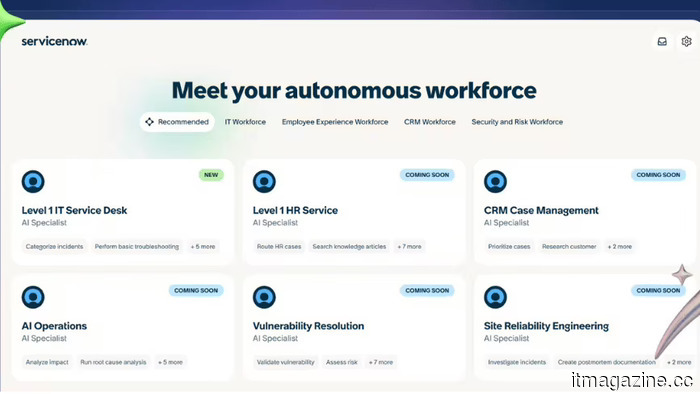 ServiceNow anticipates reaching $30 billion by 2030, with one-third of annual contract value (ACV) coming from AI.
ServiceNow forecasts $30 billion in subscription revenue for 2030, with 30% of that annual contract value coming from Now Assist, the company’s premier AI product. The presentation for investors addresses concerns about the potential displacement of AI in the SaaS sector.
ServiceNow anticipates reaching $30 billion by 2030, with one-third of annual contract value (ACV) coming from AI.
ServiceNow forecasts $30 billion in subscription revenue for 2030, with 30% of that annual contract value coming from Now Assist, the company’s premier AI product. The presentation for investors addresses concerns about the potential displacement of AI in the SaaS sector.
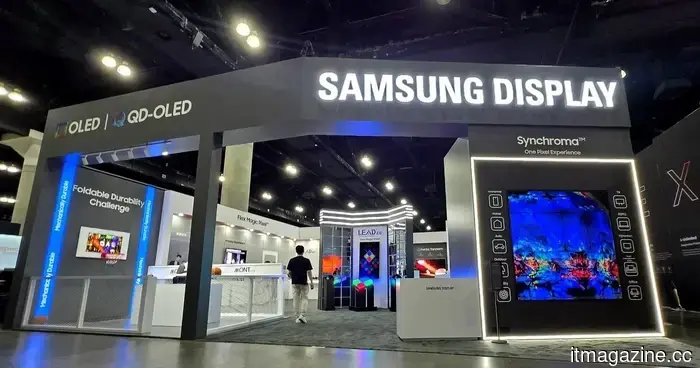 Samsung's upcoming display technology has the capability to monitor heart rate and blood pressure using your fingertip.
Samsung's latest Sensor OLED Display incorporates health sensors directly within the panel, allowing it to measure heart rate and blood pressure using just your fingertip, without the need for any wearables.
Samsung's upcoming display technology has the capability to monitor heart rate and blood pressure using your fingertip.
Samsung's latest Sensor OLED Display incorporates health sensors directly within the panel, allowing it to measure heart rate and blood pressure using just your fingertip, without the need for any wearables.
 Coinbase reduces its workforce by 14% and reorganizes around AI-focused pods as cryptocurrency revenue declines by 26% and trading volumes reach an 18-month low.
Coinbase is reducing its workforce by 660 employees and reorganizing into AI-focused teams with a maximum of five layers of management. Revenue for Q1 is projected to decline by 26% due to a 48% decrease in cryptocurrency trading volumes.
Coinbase reduces its workforce by 14% and reorganizes around AI-focused pods as cryptocurrency revenue declines by 26% and trading volumes reach an 18-month low.
Coinbase is reducing its workforce by 660 employees and reorganizing into AI-focused teams with a maximum of five layers of management. Revenue for Q1 is projected to decline by 26% due to a 48% decrease in cryptocurrency trading volumes.
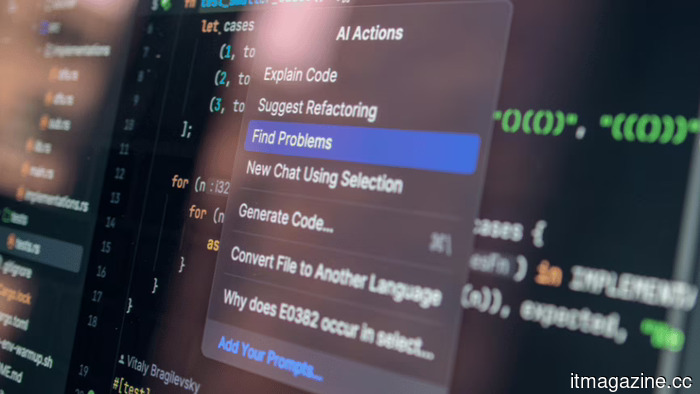 Google, Microsoft, and xAI have consented to provide pre-release evaluations of their government AI models as the Mythos crisis compels an increase in oversight.
Five leading AI laboratories are currently submitting their models for evaluation by the US government. This voluntary initiative lacks legal authority but includes all significant AI developers following the Mythos crisis.
Google, Microsoft, and xAI have consented to provide pre-release evaluations of their government AI models as the Mythos crisis compels an increase in oversight.
Five leading AI laboratories are currently submitting their models for evaluation by the US government. This voluntary initiative lacks legal authority but includes all significant AI developers following the Mythos crisis.
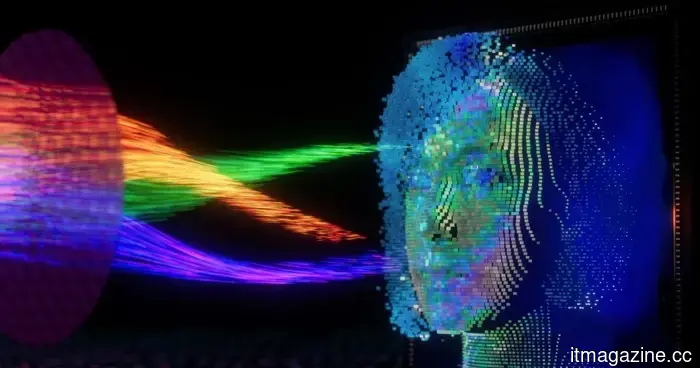 Metalenz's latest face scan technology is integrated beneath the phone display, eliminating the need for unsightly cutouts.
Metalenz has just demonstrated that payment-grade facial recognition can function with a fully lit display, a feat that Apple has been attempting to achieve for years without success.
Metalenz's latest face scan technology is integrated beneath the phone display, eliminating the need for unsightly cutouts.
Metalenz has just demonstrated that payment-grade facial recognition can function with a fully lit display, a feat that Apple has been attempting to achieve for years without success.
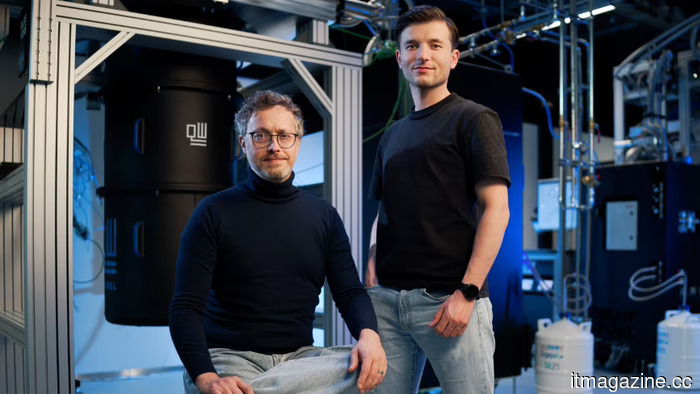 Inside QuantWare's €152 million funding round for the construction of KiloFab
QuantWare has successfully completed a €152 million Series B funding round, led by Intel Capital, In-Q-Tel, and ETF Partners, marking the largest deeptech financing round in the Netherlands to date.
Inside QuantWare's €152 million funding round for the construction of KiloFab
QuantWare has successfully completed a €152 million Series B funding round, led by Intel Capital, In-Q-Tel, and ETF Partners, marking the largest deeptech financing round in the Netherlands to date.
Tesla's rollout of FSD in Europe faces skepticism from regulators, as Musk has been indicating.
Reuters has released internal communications from EU regulators that reveal ongoing doubts about Tesla's claims regarding the safety of its FSD and its rollout approach, even after receiving type approval in the Netherlands in April.