

Metalenz's latest face scan technology is integrated beneath the phone display, eliminating the need for unsightly cutouts.
Face ID beneath the display has finally become a reality, and it isn't from Apple.
Metalenz has created a technology that enables facial recognition to function from beneath the display.
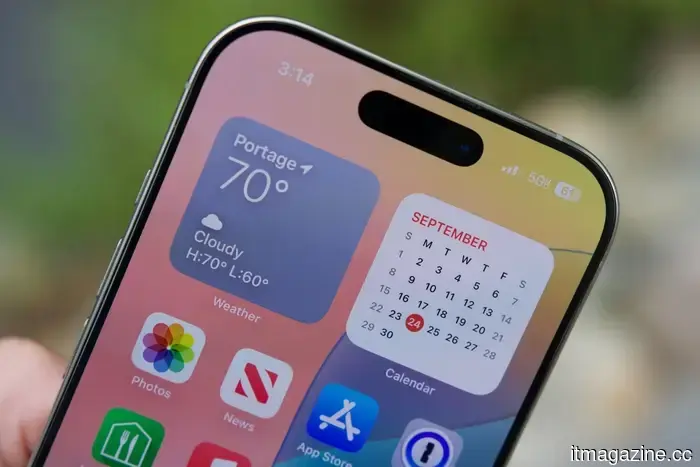
The notch, punch-hole cutout, and Dynamic Island—each phone manufacturer refers to it differently, but they all face the same issue: a significant portion of the display is removed to facilitate facial recognition. Metalenz may have found a solution.
At Display Week in Los Angeles, the company showcased its Polar ID technology operating beneath a fully lit OLED screen. There is no cutout needed, and it is completely secure.
Why is this noteworthy?
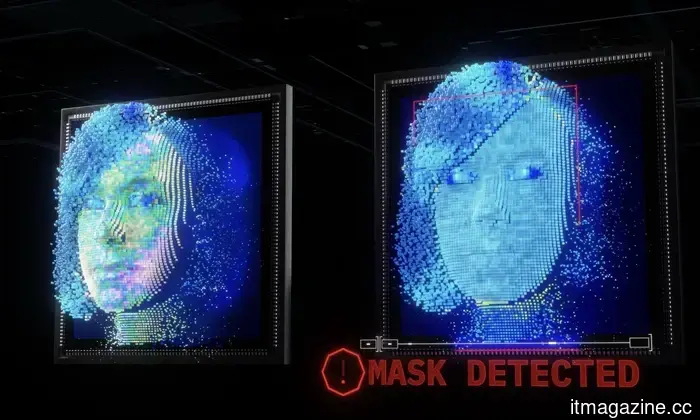
Facial authentication is not merely a camera gimmick. To prevent spoofing, where someone could use a photo or mask to deceive your phone, the system must capture depth and detail that traditional cameras cannot provide through a display.
That is why Apple’s Face ID technology is markedly superior to what many Android devices offer, as those only utilize a camera for unlocking the device. Due to their lack of security, they aren't viable for biometric authentication or for carrying out sensitive tasks like payment processing.
However, for Face ID to function, the sensors require a significant cutout since they can't conduct verification through the display. Reports have indicated that Apple is working on this issue but has yet to find an effective solution.
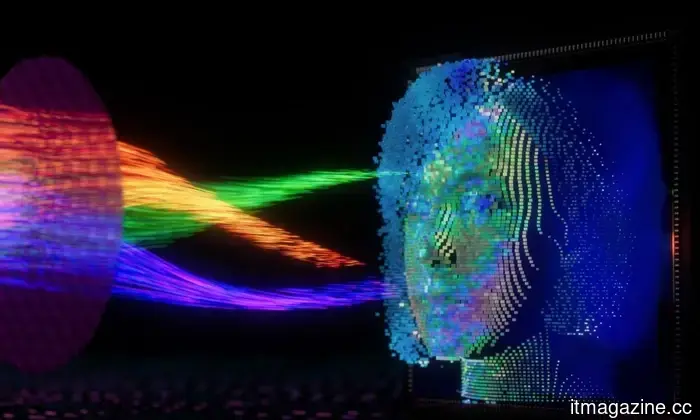
Metalenz has approached the problem differently. Its Polar ID technology utilizes a method called metasurface optics to capture polarized light. The innovative aspect is that this polarization signal can pass through the OLED display without any loss in quality, which has been the main challenge for others in the field.
The company asserts a 0% acceptance rate for spoof attempts, putting it on par with Apple’s Face ID in terms of security.
What does this imply for your next smartphone?
For Android users, this could be significant news. Currently, Android manufacturers provide face unlock primarily as a convenience feature rather than a secure method suitable for payments, primarily due to the difficulty of integrating an effective system under the display. Polar ID could change that equation.
If phone manufacturers embrace this technology, the notch and cutouts would become obsolete, and we may finally see the true all-screen phone that the industry has been promising for years.




Other articles
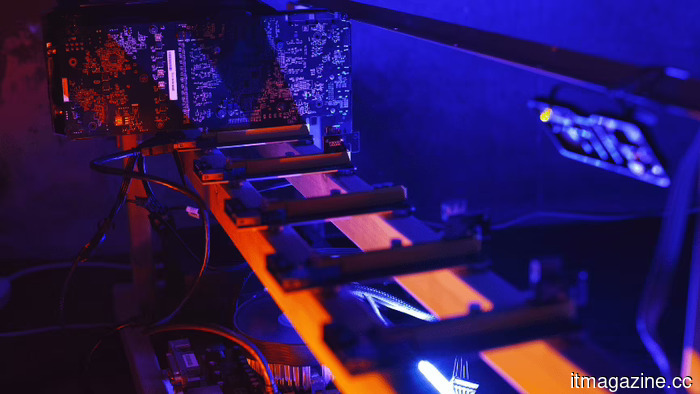 Nscale has invested €695 million in Portugal, while the crypto-to-AI neocloud has reached a valuation of $14.6 billion in just two years with the support of Microsoft.
Nscale will provide 66,000 Nvidia Rubin GPUs to Microsoft's 1.2 GW Sines campus. Once a crypto miner, it is now Europe's most valuable AI infrastructure startup, valued at $14.6 billion.
Nscale has invested €695 million in Portugal, while the crypto-to-AI neocloud has reached a valuation of $14.6 billion in just two years with the support of Microsoft.
Nscale will provide 66,000 Nvidia Rubin GPUs to Microsoft's 1.2 GW Sines campus. Once a crypto miner, it is now Europe's most valuable AI infrastructure startup, valued at $14.6 billion.
 Tesla's FSD rollout in Europe faces skepticism from regulators, as Musk has been indicating.
Reuters has revealed internal communications from EU regulators that express ongoing doubts regarding Tesla's assertions about the safety of its FSD and its rollout plan, even after receiving type approval in the Netherlands in April.
Tesla's FSD rollout in Europe faces skepticism from regulators, as Musk has been indicating.
Reuters has revealed internal communications from EU regulators that express ongoing doubts regarding Tesla's assertions about the safety of its FSD and its rollout plan, even after receiving type approval in the Netherlands in April.
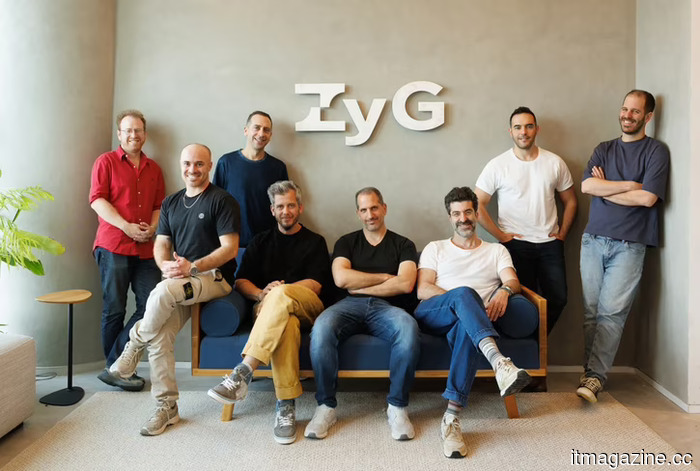 Founders of IronSource secure $60 million at a valuation of $500 million for Zyg, an agentic AI platform designed to automate advertising in e-commerce.
Zyg secured $60 million in funding, led by Accel, at a valuation of $500 million just two months following their stealth phase. The IronSource team is developing AI agents designed to take the place of human ad buyers for direct-to-consumer brands.
Founders of IronSource secure $60 million at a valuation of $500 million for Zyg, an agentic AI platform designed to automate advertising in e-commerce.
Zyg secured $60 million in funding, led by Accel, at a valuation of $500 million just two months following their stealth phase. The IronSource team is developing AI agents designed to take the place of human ad buyers for direct-to-consumer brands.
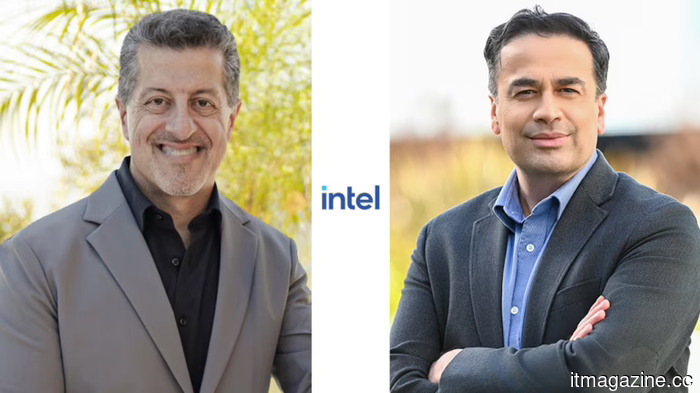 Intel has appointed Qualcomm veteran Alex Katouzian to head a new Client Computing and Physical AI division.
Intel has brought on Alex Katouzian, who spent 25 years at Qualcomm, to head a newly formed Client Computing and Physical AI division. This marks the second high-profile recruitment from Qualcomm during CEO Lip-Bu Tan's leadership.
Intel has appointed Qualcomm veteran Alex Katouzian to head a new Client Computing and Physical AI division.
Intel has brought on Alex Katouzian, who spent 25 years at Qualcomm, to head a newly formed Client Computing and Physical AI division. This marks the second high-profile recruitment from Qualcomm during CEO Lip-Bu Tan's leadership.
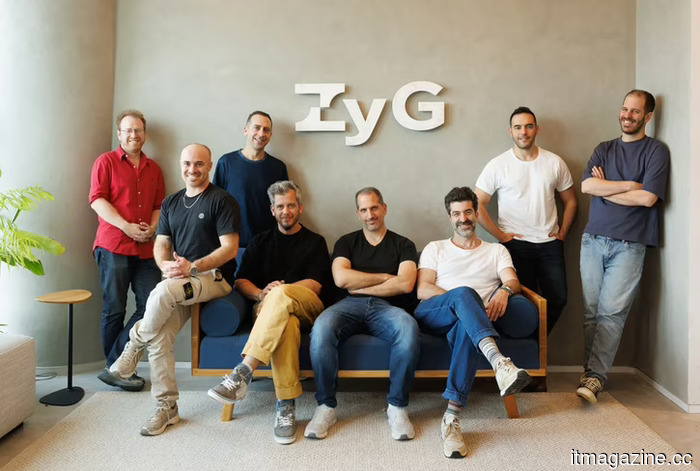 The founders of IronSource have secured $60 million at a $500 million valuation for Zyg, an AI platform designed to automate advertising in e-commerce.
Zyg secured $60 million in funding, with Accel leading the investment, at a valuation of $500 million just two months after emerging from stealth mode. The IronSource team is developing AI agents to take over the roles of human ad buyers for direct-to-consumer (DTC) brands.
The founders of IronSource have secured $60 million at a $500 million valuation for Zyg, an AI platform designed to automate advertising in e-commerce.
Zyg secured $60 million in funding, with Accel leading the investment, at a valuation of $500 million just two months after emerging from stealth mode. The IronSource team is developing AI agents to take over the roles of human ad buyers for direct-to-consumer (DTC) brands.
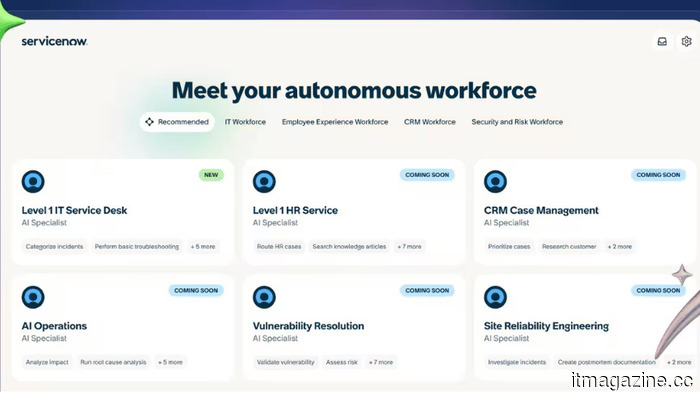 ServiceNow estimates that by 2030, it will reach $30 billion, with one-third of its annual contract value coming from AI.
ServiceNow anticipates $30 billion in subscription revenue by 2030, with 30% of that annual contract value (ACV) coming from Now Assist, the company's premier AI product. The presentation during the investor day addresses concerns regarding potential displacement by AI-SaaS.
ServiceNow estimates that by 2030, it will reach $30 billion, with one-third of its annual contract value coming from AI.
ServiceNow anticipates $30 billion in subscription revenue by 2030, with 30% of that annual contract value (ACV) coming from Now Assist, the company's premier AI product. The presentation during the investor day addresses concerns regarding potential displacement by AI-SaaS.
Metalenz's latest face scan technology is integrated beneath the phone display, eliminating the need for unsightly cutouts.
Metalenz has just demonstrated that payment-grade facial recognition can function with a fully lit display, a feat that Apple has been attempting to achieve for years without success.