
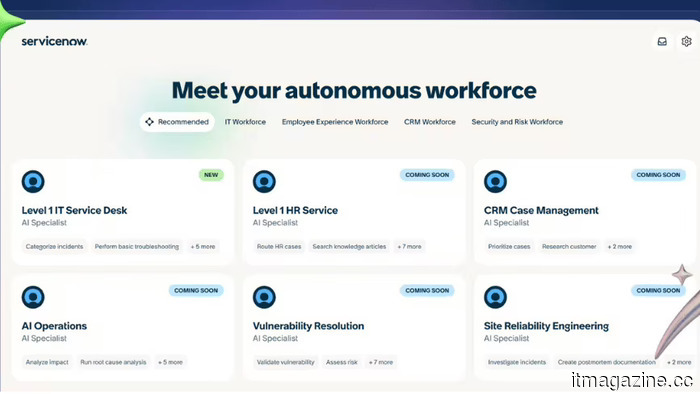
ServiceNow anticipates reaching $30 billion by 2030, with one-third of annual contract value (ACV) coming from AI.
**TL;DR** On May 4, 2026, ServiceNow utilized its investor day to forecast $30 billion in subscription revenue by 2030, with Now Assist expected to contribute approximately 30% of that annual contract value (ACV). This presentation serves as a strategic response to concerns over potential displacement by AI-SaaS.
By 2026, ServiceNow has emerged as a closely monitored case study to evaluate whether enterprise software firms can leverage the AI boom or be supplanted by it. On Monday, the company delivered its most compelling response thus far, with Bloomberg reporting that ServiceNow anticipates reaching $30 billion in subscription revenue by 2030. CFO Gina Mastantuono indicated that around 30% of that 2030 ACV would be attributed to Now Assist, the company's premier AI product.
The theme of the investor day was intentional. The Cerbat Gem described the presentation as a “Control Tower” narrative: positioning ServiceNow not as a vendor at risk of being overshadowed by general-purpose AI models, but as the coordination, governance, and production layer for enterprise AI. Mastantuono has increased the company’s near-term AI ACV goal from $1 billion to $1.5 billion, with the current Now Assist ACV estimated at about $750 million in Q1 2026, a rise from $600 million at the end of 2025.
**Why this matters now**
Throughout 2026, ServiceNow has needed to address a structural argument for investors. Fortune noted in April that despite strong earnings, the overarching anti-SaaS sentiment persisted, fueled by fears that AI agents and direct model implementations could undermine the workflow-software middleware that ServiceNow has historically occupied. TNW reported on new enterprise services from Anthropic and the establishment of the OpenAI Deployment Company occurring on the same day as the ServiceNow announcement, highlighting competitive moves that stir such worries. Both AI-focused solutions are strategically targeting the customer base that ServiceNow has cultivated over the last two decades.
ServiceNow is positioning itself as the operating system for enterprise AI deployments rather than merely a deployable product. Now Assist is framed as the orchestration layer, with ACV growth indicating that clients are interested in this positioning, and the $30 billion goal by 2030 serving as a projection that unifies these claims into a convincing long-term revenue narrative.
**The numbers, contextualized**
ServiceNow forecasts its 2026 subscription revenue to exceed its previous target by approximately $500 million, reaching around $15 billion organically. To achieve $30 billion by 2030, it would require sustained growth of about 19% annually, which is above the industry consensus for traditional SaaS yet below ServiceNow’s recent quarterly growth figures. The upside scenario presented by the CFO, predicting $32 billion by 2030, necessitates that Now Assist not only grows in dollar terms but also captures about one-third of the total ACV.
Achieving this will hinge on various factors, particularly investor skepticism in public markets. TNW has been observing the wider trend of AI-related multiple compression over the spring, marked by Palantir's decline and Citi’s price-target reductions. ServiceNow's shares have also been affected by this trend. The investor-day projection serves, in part, as a counter-argument: highlighting that ServiceNow possesses both a solid customer base and traction with its AI products, warranting a different valuation trajectory than what currently impacts the broader AI-SaaS sector.
**Signals to monitor**
Three factors will determine if the $30 billion vision materializes. Firstly, the trajectory of Now Assist's quarterly ACV: advancing from $600 million at the end of 2025 to $750 million in Q1, ultimately reaching $1.5 billion by year-end, requires intentional, compounded growth — a rarity in the enterprise software realm. Secondly, competitive friction: how many enterprise customers prefer having their AI deployments managed by ServiceNow over competitors like Anthropic-Blackstone or OpenAI’s DeployCo. Thirdly, margins: thus far, ServiceNow’s AI products have maintained gross margins consistent with the company average; sustaining these margins amid scaling computing costs will be crucial for generating the necessary cash flows to support the $30 billion target.
None of these questions can be answered by a slide presented on investor day. However, they are the pertinent inquiries, and ServiceNow appears willing to be judged against them. In 2026, this willingness itself serves as a competitive indicator.
Other articles
 Tesla's FSD rollout in Europe faces skepticism from regulators, as Musk has been indicating.
Reuters has revealed internal communications from EU regulators that express ongoing doubts regarding Tesla's assertions about the safety of its FSD and its rollout plan, even after receiving type approval in the Netherlands in April.
Tesla's FSD rollout in Europe faces skepticism from regulators, as Musk has been indicating.
Reuters has revealed internal communications from EU regulators that express ongoing doubts regarding Tesla's assertions about the safety of its FSD and its rollout plan, even after receiving type approval in the Netherlands in April.
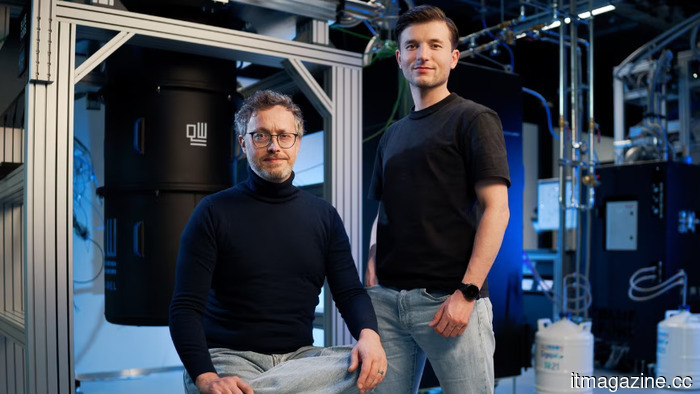 Inside QuantWare's €152 million funding round to develop KiloFab
QuantWare has finalized a €152 million Series B funding round, which was led by Intel Capital, In-Q-Tel, and ETF Partners, marking the largest deeptech financing round in the Netherlands to date.
Inside QuantWare's €152 million funding round to develop KiloFab
QuantWare has finalized a €152 million Series B funding round, which was led by Intel Capital, In-Q-Tel, and ETF Partners, marking the largest deeptech financing round in the Netherlands to date.
 Asus Zenbook A16 Review: A stylish competitor to the MacBook from the Windows camp?
Equipped with a beautiful 3K OLED display, the Asus Zenbook A16 offers impressive battery life in a sleek design, positioning itself as a robust AI-ready performance machine for Windows enthusiasts.
Asus Zenbook A16 Review: A stylish competitor to the MacBook from the Windows camp?
Equipped with a beautiful 3K OLED display, the Asus Zenbook A16 offers impressive battery life in a sleek design, positioning itself as a robust AI-ready performance machine for Windows enthusiasts.
 Tesla’s rollout of FSD in Europe faces skepticism from regulators, a sentiment that Musk has been conveying.
Reuters has released internal communications from EU regulators demonstrating ongoing doubt regarding Tesla's assertions about the safety of its FSD and its rollout approach, even after receiving Dutch type approval in April.
Tesla’s rollout of FSD in Europe faces skepticism from regulators, a sentiment that Musk has been conveying.
Reuters has released internal communications from EU regulators demonstrating ongoing doubt regarding Tesla's assertions about the safety of its FSD and its rollout approach, even after receiving Dutch type approval in April.
 Fervo Energy has initiated a $1.33 billion IPO, marking it as the largest climate-tech offering of 2026.
Fervo Energy has initiated its IPO roadshow with the goal of raising up to $1.33 billion by pricing shares between $21 and $24, in a Nasdaq listing identified as the climate-tech option for the AI infrastructure sector.
Fervo Energy has initiated a $1.33 billion IPO, marking it as the largest climate-tech offering of 2026.
Fervo Energy has initiated its IPO roadshow with the goal of raising up to $1.33 billion by pricing shares between $21 and $24, in a Nasdaq listing identified as the climate-tech option for the AI infrastructure sector.
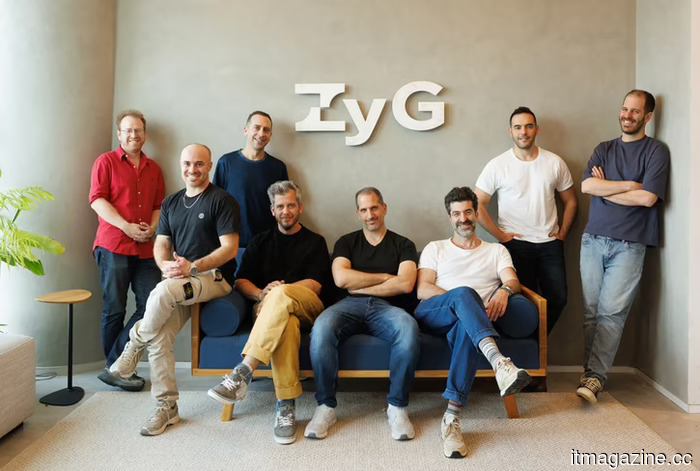 The founders of IronSource have secured $60 million at a valuation of $500 million for Zyg, an AI-driven platform that automates advertising in the e-commerce sector.
Zyg secured $60 million in funding, spearheaded by Accel, at a valuation of $500 million just two months following its stealth launch. The team at IronSource is developing AI agents designed to take the place of human ad buyers for direct-to-consumer brands.
The founders of IronSource have secured $60 million at a valuation of $500 million for Zyg, an AI-driven platform that automates advertising in the e-commerce sector.
Zyg secured $60 million in funding, spearheaded by Accel, at a valuation of $500 million just two months following its stealth launch. The team at IronSource is developing AI agents designed to take the place of human ad buyers for direct-to-consumer brands.
ServiceNow anticipates reaching $30 billion by 2030, with one-third of annual contract value (ACV) coming from AI.
ServiceNow forecasts $30 billion in subscription revenue for 2030, with 30% of that annual contract value coming from Now Assist, the company’s premier AI product. The presentation for investors addresses concerns about the potential displacement of AI in the SaaS sector.