
Inside QuantWare's €152 million funding round for the construction of KiloFab
The Series B funding round is the largest ever raised by a Dutch deeptech company and marks the biggest private round closed by any dedicated quantum-processor firm. Intel Capital, In-Q-Tel, and ETF Partners are joining an investor group that already included FORWARD.one and Invest-NL.
By 2026, there is a very specific vision of a European deeptech success story that policymakers have been trying to create, one that occurs only sporadically in the market. Delft-based QuantWare has announced it has successfully closed a Series B round of €152 million ($178 million), which is the largest amount ever raised by a Dutch deeptech company and globally the largest private round by a company focused on quantum processors.
The funding round was oversubscribed, and the list of new investors is notably impressive: Intel Capital, In-Q-Tel (a CIA-backed strategic investor), and ETF Partners have joined an existing syndicate that includes FORWARD.one, Invest-NL Deep Tech Fonds, InnovationQuarter Capital, Ground State Ventures, and Graduate Ventures. This marks the second European quantum scale-up Series B of the week, with this round being significantly larger than the previous one.
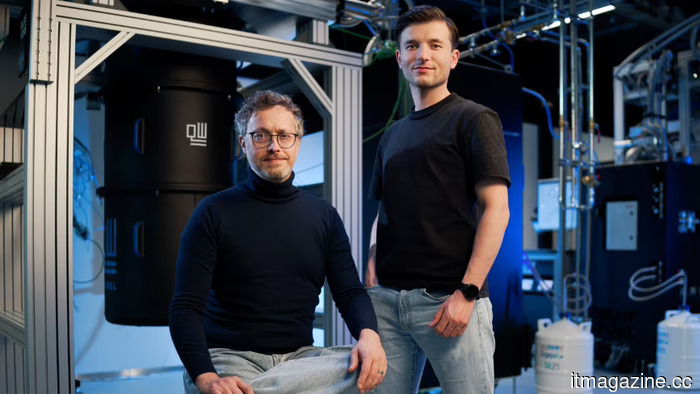
QuantWare was established in July 2021 by Matthijs Rijlaarsdam (chief executive) and Dr. Alessandro Bruno (chief technology officer), both of whom were formerly associated with QuTech, a quantum research institute operated by TU Delft and TNO. The company was first featured by TNW over a year ago, at which point its commercial volumes were already notable.
The firm has delivered functioning quantum processors to over 50 organizations across 20 countries and, according to its own description and HPCwire’s assessment, is the world's largest commercial provider of quantum processors by volume.
What distinguishes QuantWare from the broader quantum computing landscape is its unique architectural choice. Most superconducting qubit systems utilize 2D chip designs where signal lines are laterally routed across a single processor's surface, a method that uses space exponentially as qubit counts increase and ultimately limits commercial systems to smaller scales.
QuantWare’s VIO architecture is three-dimensional: chiplet modules are stacked vertically and linked through ultra-high-fidelity chip-to-chip connections, with signal lines running between the layers rather than across them. The architecture, as defined by the company, scales in a similar way to how commercial semiconductor processes have traditionally scaled.
The Series B funding follows the company's announcement in late April of VIO-40K, a new architecture generation designed for processors featuring 10,000 qubits. This number is approximately 100 times the current commercial benchmark, and the architecture accommodates up to 40,000 input-output lines through the chiplet stacking method.
Coverage of the architecture launch by Quantum Computing Report described it as the first credible commercial pathway to achieving processors at this scale without needing to network multiple smaller systems, which can introduce latency and fidelity challenges.
Reservations for VIO-40K are currently open, with first customer shipments anticipated by 2028, according to QuantWare's announcement. The architecture is what has made the magnitude of the Series B economically justifiable. Without a viable scaling strategy, quantum hardware companies had not attracted private rounds of this size until now. Having one substantially alters the potential market.
Most of the new capital will be directed towards KiloFab, which QuantWare labels as the world's first dedicated fabrication facility for Quantum Open Architecture devices and among the largest quantum processor production sites globally. Located at QuantWare's headquarters in Delft, the facility aims to increase the company's production capacity by approximately 20 times.
Currently, every major quantum computing company fabricates its own processors through vertically integrated facilities or sources from a limited number of academic-scale fabs with restricted capacity. KiloFab is intended to alleviate this limitation by acting as an open-architecture commercial supplier to the broader industry.
If QuantWare can maintain its role as an open-architecture supplier through the forthcoming wave of quantum processor demand, it will occupy a position in the quantum space similar to that of TSMC in classical semiconductors: not the brand the customer sees, but the manufacturing operation upon which others depend.
QuantWare’s customer base is surprisingly diverse for the industry's current stage. The company sells to various national technology institutes, large tech firms, and other commercial quantum computing entities. Its reach across 20 countries is significant, as most quantum hardware companies primarily serve local or regional clients. This geographic distribution indicates that QuantWare's open-architecture model attracts buyers wanting to manage their own quantum software stack rather than relying on vertically integrated systems.
The configuration of its investors reflects this same trend. Intel Capital’s involvement serves as a strategic hedge: Intel has been pursuing trapped-ion quantum research, and acquiring a stake in the leading commercial supplier of superconducting quantum processing units (QPUs) provides it with flexibility across different architectures.
In-Q-Tel’s participation indicates interest from customers linked to the US government. ETF Partners has invested based on a climate-focused investment thesis, aligning with Quant
Other articles
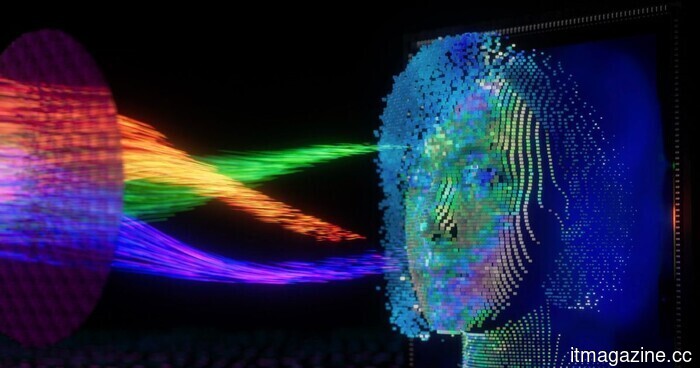 Metalenz's innovative face scanning technology is embedded beneath the phone's display, eliminating the need for unsightly cutouts.
Metalenz has demonstrated that payment-grade facial authentication can function with a fully powered-on display, a feat that Apple has attempted to achieve for years without success.
Metalenz's innovative face scanning technology is embedded beneath the phone's display, eliminating the need for unsightly cutouts.
Metalenz has demonstrated that payment-grade facial authentication can function with a fully powered-on display, a feat that Apple has attempted to achieve for years without success.
 iOS 26.5 is introducing encryption for RCS messages sent between Android and iPhone devices.
iOS 26.5 introduces encrypted RCS support for conversations between iPhone and Android devices, but users should check for the lock symbol before concluding that cross-platform chats are secure.
iOS 26.5 is introducing encryption for RCS messages sent between Android and iPhone devices.
iOS 26.5 introduces encrypted RCS support for conversations between iPhone and Android devices, but users should check for the lock symbol before concluding that cross-platform chats are secure.
 Employees at Google DeepMind have decided to unionize following a Pentagon AI agreement that contradicts eight years of ethical commitments.
Staff at DeepMind UK voted 98% in favor of joining the CWU and Unite following Google's signing of a classified Pentagon agreement for "any lawful purpose." They are advocating for the cessation of military AI applications and the reinstatement of ethical standards.
Employees at Google DeepMind have decided to unionize following a Pentagon AI agreement that contradicts eight years of ethical commitments.
Staff at DeepMind UK voted 98% in favor of joining the CWU and Unite following Google's signing of a classified Pentagon agreement for "any lawful purpose." They are advocating for the cessation of military AI applications and the reinstatement of ethical standards.
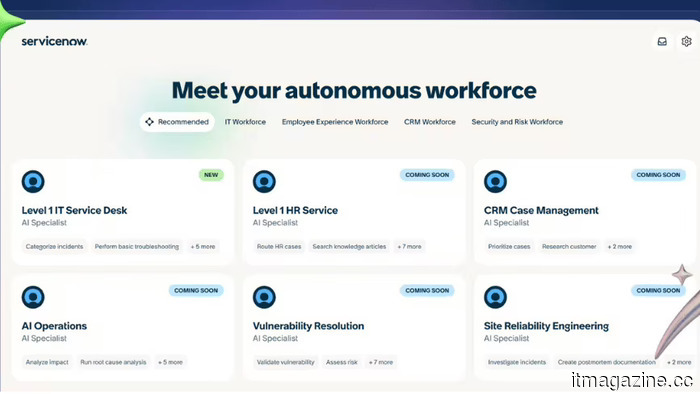 ServiceNow anticipates reaching $30 billion by 2030, with one-third of annual contract value (ACV) coming from AI.
ServiceNow forecasts $30 billion in subscription revenue for 2030, with 30% of that annual contract value coming from Now Assist, the company’s premier AI product. The presentation for investors addresses concerns about the potential displacement of AI in the SaaS sector.
ServiceNow anticipates reaching $30 billion by 2030, with one-third of annual contract value (ACV) coming from AI.
ServiceNow forecasts $30 billion in subscription revenue for 2030, with 30% of that annual contract value coming from Now Assist, the company’s premier AI product. The presentation for investors addresses concerns about the potential displacement of AI in the SaaS sector.
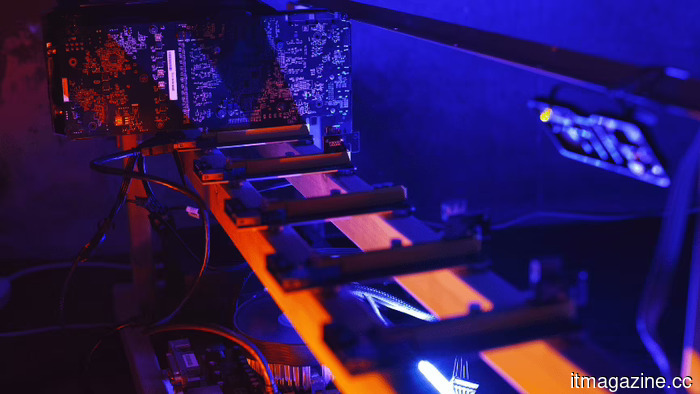 Nscale has invested €695 million in Portugal, while the crypto-to-AI neocloud has reached a valuation of $14.6 billion in just two years with the support of Microsoft.
Nscale will provide 66,000 Nvidia Rubin GPUs to Microsoft's 1.2 GW Sines campus. Once a crypto miner, it is now Europe's most valuable AI infrastructure startup, valued at $14.6 billion.
Nscale has invested €695 million in Portugal, while the crypto-to-AI neocloud has reached a valuation of $14.6 billion in just two years with the support of Microsoft.
Nscale will provide 66,000 Nvidia Rubin GPUs to Microsoft's 1.2 GW Sines campus. Once a crypto miner, it is now Europe's most valuable AI infrastructure startup, valued at $14.6 billion.
 Google, Microsoft, and xAI have consented to provide evaluations of AI models to the government before their release, as the Mythos crisis necessitates an increase in oversight.
Five leading AI laboratories are now presenting their models for assessment by the US government. This voluntary program lacks legal authority but includes all major AI developers following the Mythos crisis.
Google, Microsoft, and xAI have consented to provide evaluations of AI models to the government before their release, as the Mythos crisis necessitates an increase in oversight.
Five leading AI laboratories are now presenting their models for assessment by the US government. This voluntary program lacks legal authority but includes all major AI developers following the Mythos crisis.
Inside QuantWare's €152 million funding round for the construction of KiloFab
QuantWare has successfully completed a €152 million Series B funding round, led by Intel Capital, In-Q-Tel, and ETF Partners, marking the largest deeptech financing round in the Netherlands to date.