
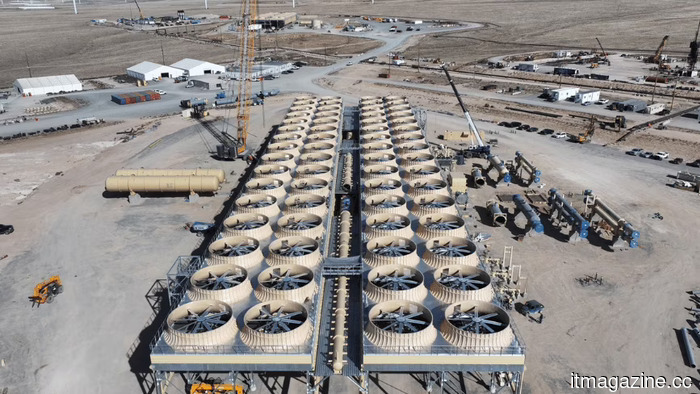
Fervo Energy has initiated a $1.33 billion IPO, marking it as the largest climate-tech offering of 2026.
TL;DR: Geothermal developer Fervo Energy is proposing approximately 55 million Class A shares priced between $21 and $24 each in a Nasdaq IPO, which is viewed as the most direct investment opportunity in climate-tech linked to AI infrastructure. On Monday, Fervo Energy officially kicked off its IPO roadshow, offering 55,555,555 shares of Class A common stock at a suggested price range of $21 to $24. If priced at the upper limit, Fervo could raise up to $1.33 billion, marking it as the largest climate-tech IPO of 2026 so far. The firm seeks to list on Nasdaq with the ticker symbol FRVO, aiming for pricing during the week of May 11. Fervo focuses on deploying enhanced geothermal systems at scale, utilizing advanced horizontal drilling, fiber-optic sensing, and reservoir engineering to harness geothermal energy from previously unviable hot dry rock formations. Coverage by Canary Media highlighted Fervo's advancement on its initial commercial-scale Cape Station project in Utah, which is being developed in phases and has secured power-purchase agreements with key customers like Google.
The company's appeal for the IPO lies in its ability to attract hyperscaler customers, making the geothermal energy sector more viable—traditionally limited to regions with naturally hot rock formations. Fervo's approach broadens the geographical scope for geothermal energy, while the ongoing AI expansion has created a customer base willing to enter long-term power-purchase agreements for reliable, carbon-free energy.
The significance of this IPO is underscored by the structural argument that AI infrastructure has, in 2026, become a major demand driver for clean baseload power. As tracked by TNW, hyperscaler capital expenditure is expected to surpass $725 billion this year, with a critical constraint on data center development being the availability of reliable, low-carbon power, rather than financial resources or hardware. Fervo positions itself as a solution to this power availability challenge.
TechCrunch remarked that Fervo has been closely monitored in the climate-tech sector for several years, backed by investors like Breakthrough Energy Ventures and Sumitomo Corporation. This IPO marks Fervo's shift from a private climate-tech investment to a public infrastructure operator. Renaissance Capital's IPO desk initially set the deal's valuation at $1.2 billion before increasing it to $1.33 billion at the indicated price range, reflecting strong demand for the higher figure.
However, the listing entails risks. Fervo's Cape Station has shown commercial feasibility during pilot phases, but the path from a single operational site to multiple large-scale geothermal facilities remains unproven. Bloomberg highlighted the risks associated with drilling cost inflation and the regulatory hurdles related to long-duration land and water permits that are essential for large-scale geothermal operations.
Additionally, the financing landscape is unpredictable. Climate-tech IPOs have varied in performance on public markets in recent years, and Fervo enters a market that has favored AI infrastructure ventures over climate-tech investments, despite their interconnection. The company's assertion that geothermal represents the most affordable source of continuous carbon-free power for hyperscalers will be evaluated based on the final order book and the share price's stability post-IPO.
There is a notable comparison to be made: recent reports indicated that SpaceX's pre-IPO disclosures indicate their orbital AI data centers depend on untested technologies, which may not achieve commercial success. Conversely, Fervo's business model is based on established practices, including terrestrial drilling, conventional fiber-optic sensing, and signed power-purchase agreements with prominent hyperscaler clients. If priced within the suggested range, the IPO would allow public investors to engage in AI infrastructure through a relatively advanced climate-tech venture.
The pricing is anticipated during the week of May 11, with J.P. Morgan, BofA Securities, RBC Capital Markets, and Barclays serving as joint lead bookrunners, and Baird, BBVA, Guggenheim, MUFG, Société Générale, William Blair, Piper Sandler, and Wolfe-Nomura as part of the broader syndicate. Overall, the support for this deal appears strong on paper, and the ultimate gauge of interest in climate-tech IPOs within the AI infrastructure cycle will be the order book.
Other articles
 Nscale has invested €695 million in Portugal, while Microsoft contributes to a crypto-to-AI neocloud that has reached a valuation of $14.6 billion in just two years.
Nscale is set to provide 66,000 Nvidia Rubin GPUs to Microsoft's 1.2 GW Sines campus. The company, which transitioned from crypto mining, is now the most valuable AI infrastructure startup in Europe, boasting a valuation of $14.6 billion.
Nscale has invested €695 million in Portugal, while Microsoft contributes to a crypto-to-AI neocloud that has reached a valuation of $14.6 billion in just two years.
Nscale is set to provide 66,000 Nvidia Rubin GPUs to Microsoft's 1.2 GW Sines campus. The company, which transitioned from crypto mining, is now the most valuable AI infrastructure startup in Europe, boasting a valuation of $14.6 billion.
 Metalenz's latest face scan technology is integrated beneath the phone display, eliminating the need for unsightly cutouts.
Metalenz has just demonstrated that payment-grade facial recognition can function with a fully lit display, a feat that Apple has been attempting to achieve for years without success.
Metalenz's latest face scan technology is integrated beneath the phone display, eliminating the need for unsightly cutouts.
Metalenz has just demonstrated that payment-grade facial recognition can function with a fully lit display, a feat that Apple has been attempting to achieve for years without success.
 Google, Microsoft, and xAI have consented to provide evaluations of AI models to the government before their release, as the Mythos crisis necessitates an increase in oversight.
Five leading AI laboratories are now presenting their models for assessment by the US government. This voluntary program lacks legal authority but includes all major AI developers following the Mythos crisis.
Google, Microsoft, and xAI have consented to provide evaluations of AI models to the government before their release, as the Mythos crisis necessitates an increase in oversight.
Five leading AI laboratories are now presenting their models for assessment by the US government. This voluntary program lacks legal authority but includes all major AI developers following the Mythos crisis.
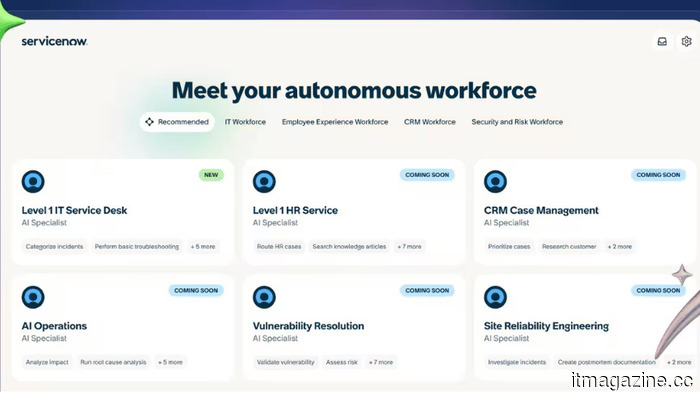 ServiceNow estimates that by 2030, it will reach $30 billion, with one-third of its annual contract value coming from AI.
ServiceNow anticipates $30 billion in subscription revenue by 2030, with 30% of that annual contract value (ACV) coming from Now Assist, the company's premier AI product. The presentation during the investor day addresses concerns regarding potential displacement by AI-SaaS.
ServiceNow estimates that by 2030, it will reach $30 billion, with one-third of its annual contract value coming from AI.
ServiceNow anticipates $30 billion in subscription revenue by 2030, with 30% of that annual contract value (ACV) coming from Now Assist, the company's premier AI product. The presentation during the investor day addresses concerns regarding potential displacement by AI-SaaS.
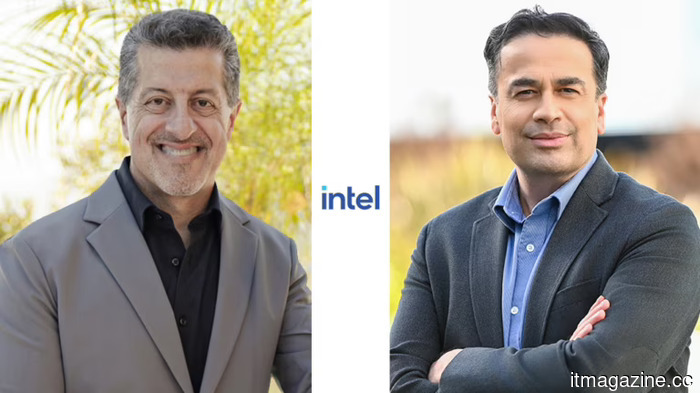 Intel has recruited Qualcomm veteran Alex Katouzian to head a newly formed group focused on Client Computing and Physical AI.
Intel has brought on Alex Katouzian, who spent 25 years at Qualcomm, to head a newly formed group that combines Client Computing and Physical AI. This marks the second senior recruitment from Qualcomm during CEO Lip-Bu Tan's time in office.
Intel has recruited Qualcomm veteran Alex Katouzian to head a newly formed group focused on Client Computing and Physical AI.
Intel has brought on Alex Katouzian, who spent 25 years at Qualcomm, to head a newly formed group that combines Client Computing and Physical AI. This marks the second senior recruitment from Qualcomm during CEO Lip-Bu Tan's time in office.
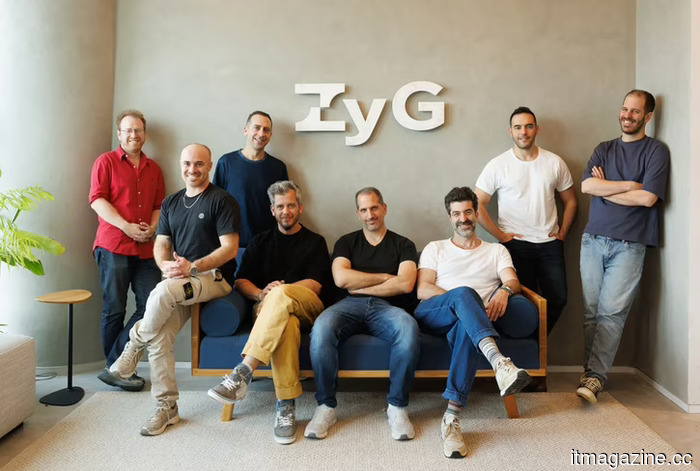 The founders of IronSource have secured $60 million at a $500 million valuation for Zyg, an AI platform designed to automate advertising in e-commerce.
Zyg secured $60 million in funding, with Accel leading the investment, at a valuation of $500 million just two months after emerging from stealth mode. The IronSource team is developing AI agents to take over the roles of human ad buyers for direct-to-consumer (DTC) brands.
The founders of IronSource have secured $60 million at a $500 million valuation for Zyg, an AI platform designed to automate advertising in e-commerce.
Zyg secured $60 million in funding, with Accel leading the investment, at a valuation of $500 million just two months after emerging from stealth mode. The IronSource team is developing AI agents to take over the roles of human ad buyers for direct-to-consumer (DTC) brands.
Fervo Energy has initiated a $1.33 billion IPO, marking it as the largest climate-tech offering of 2026.
Fervo Energy has initiated its IPO roadshow with the goal of raising up to $1.33 billion by pricing shares between $21 and $24, in a Nasdaq listing identified as the climate-tech option for the AI infrastructure sector.