
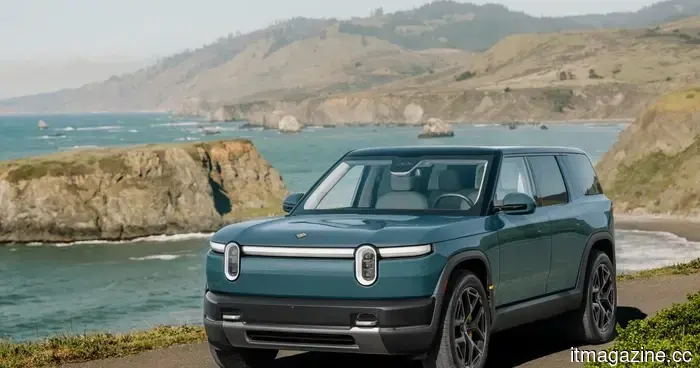
Rivian has managed to cut the production costs of the R2 EVs by 50%. Hopefully, this reduction will be reflected in prices for consumers.
Rivian claims that the R2 is 50% cheaper to produce, so why isn’t the price lower?
Rivian appears to have tackled one of the most challenging aspects of creating an affordable electric vehicle (EV) by successfully reducing production costs for one of its forthcoming models. During its recent earnings call, the company announced that the upcoming R2 has achieved over a 50% cost reduction compared to the R1. As the R2 aims to be a more accessible option in the mass-market EV sector, this is a significant development.
How Rivian managed to cut costs
As reported by InsideEVs, Rivian shared several strategies it employed to lower expenses. The company managed to shorten the R2’s wiring harness by 2.3 miles, decrease the number of connectors by 60%, and reduce high-voltage cabling by 70% by combining multiple power conversion units into a single unit. Additionally, the company simplified its new Maximus Drive unit, which contains 41% fewer parts compared to the Enduro drive units found in R1 vehicles. Rivian also mounted the inverter directly onto the drive unit and implemented improved cooling and packaging solutions to streamline parts and reduce manufacturing complexity.
While these manufacturing techniques might seem mundane, they are yielding tangible benefits. Fewer components typically lead to lower costs, more straightforward assembly, reduced failure points, and enhanced scalability.
The forthcoming Rivian R2 will feature a more straightforward mechanical arrangement, which reportedly resulted in a 70% reduction in front suspension costs by moving from a double-wishbone design to MacPherson struts.
Simultaneously, large die castings have led to a 90% reduction in underbody parts, and the complexity of the rear doors has been reduced by 65%. CEO RJ Scaringe anticipates a cost decrease of over 50% through design-for-manufacturing initiatives and increased production volumes. He noted that this approach is key to shipping the T2 profitably while maintaining an accessible price point without sacrificing performance or utility.
What does this mean for potential buyers?
Rivian is marketing the R2 as a more budget-friendly EV, targeting a price point around $45,000. However, the T2 Performance is expected to start at approximately $58,000 when deliveries commence. This pricing indicates that, while the R2 is positioned as a more affordable option, it is still not a low-cost vehicle compared to the R1S and R1T, which are categorized as premium offerings.
Vikhyaat Vivek is a tech journalist and reviewer with seven years of experience focusing on consumer hardware.
Grok is set to join ChatGPT and Perplexity on the CarPlay dashboard
The race for AI assistants has shifted from smartphones to environments where hands-free, voice-first interaction is crucial.
Apple CarPlay has become an intriguing platform, especially for AI chatbot enthusiasts. First, ChatGPT appeared on the iPhone mirroring system in March, followed by Perplexity in April. Now, Grok is preparing to follow suit, as reported by 9To5Mac.
The latest update of the Grok iPhone app includes a placeholder CarPlay interface that is not yet functional but indicates “Grok Voice mode coming soon to CarPlay.” The company, xAI, has not yet confirmed a launch date, but its arrival seems imminent.
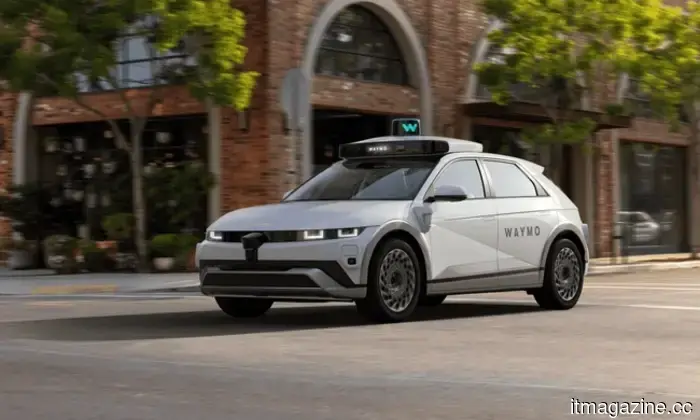
Self-driving vehicles will now face penalties in California as new regulations are enacted
The industry’s argument that driverless cars operate outside normal legal frameworks has officially ended in the largest autonomous vehicle market.
For years, California’s roads have had a perplexing double standard: a human driver caught making an illegal U-turn received a ticket, while a driverless vehicle committing the same offense went unpunished, potentially only receiving a call from the manufacturer. This situation has now changed.
The California DMV has introduced what it deems the most significant set of autonomous vehicle regulations in the U.S. For the first time, self-driving cars can be formally cited for violating traffic laws.
BYD may have solved a major EV ownership challenge
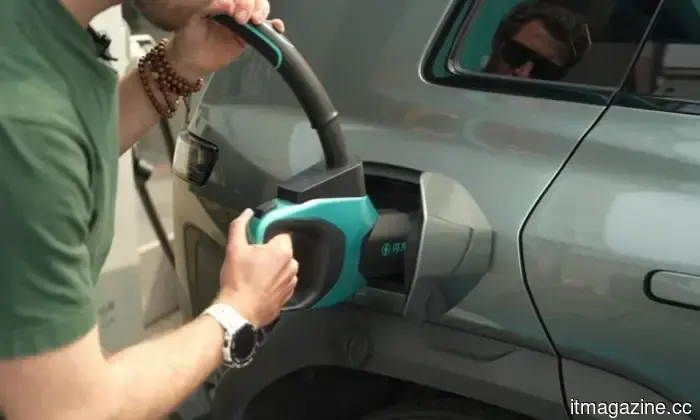
BYD’s new charging system aims to significantly reduce EV charging times to mere minutes.
While electric vehicles are now commonplace, charging remains a significant hurdle. Even when locating a fast charger, the wait can easily extend a trip by 30 minutes or more, complicating long-distance travel compared to refueling a gasoline car.
At BYD’s charging station in Beijing, the company is demonstrating a system designed to eliminate that wait. Vehicles are arriving, connecting, and charging with BYD’s second-generation Blade Battery and flash charging technology, providing a clearer understanding of how this innovation operates outside of a controlled prototype setting.


Other articles
 Haun Ventures has secured $1 billion for funds focused on crypto and AI agents following successful stablecoin exits that benefited LPs.
Katie Haun is moving from cryptocurrency into AI agents for financial services. Her first fund achieved exits with Bridge/Stripe and BVNK/Mastercard. Erebor represents the new investment thesis.
Haun Ventures has secured $1 billion for funds focused on crypto and AI agents following successful stablecoin exits that benefited LPs.
Katie Haun is moving from cryptocurrency into AI agents for financial services. Her first fund achieved exits with Bridge/Stripe and BVNK/Mastercard. Erebor represents the new investment thesis.
 Pinterest surpasses $1 billion in quarterly revenue as AI-driven visual search stimulates advertising growth that social media platforms are unable to replicate.
In Q1, Pinterest reached $1.008 billion in revenue with 631 million monthly active users. The Performance+ AI advertising produced 24% greater conversions. The key driver of growth is 80 billion monthly visual searches, rather than social feeds.
Pinterest surpasses $1 billion in quarterly revenue as AI-driven visual search stimulates advertising growth that social media platforms are unable to replicate.
In Q1, Pinterest reached $1.008 billion in revenue with 631 million monthly active users. The Performance+ AI advertising produced 24% greater conversions. The key driver of growth is 80 billion monthly visual searches, rather than social feeds.
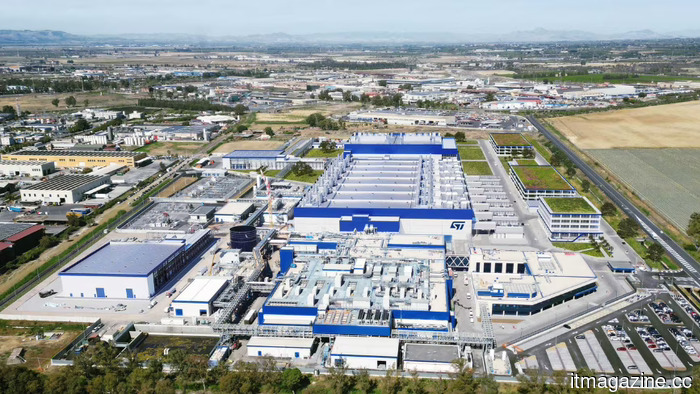 STMicroelectronics aims to generate over $3 billion from the space sector.
STMicroelectronics aims to achieve over $3 billion in total revenue from space chips between 2026 and 2028, boosted by the growth of Starlink.
STMicroelectronics aims to generate over $3 billion from the space sector.
STMicroelectronics aims to achieve over $3 billion in total revenue from space chips between 2026 and 2028, boosted by the growth of Starlink.
 iOS 27 enables users to generate personalized Wallet passes from any QR code, as Apple decides to stop waiting for developers.
Apple's iOS 27 introduces a "Create a Pass" feature that includes three templates. Following 14 years of anticipation for PassKit's adoption, Apple is now allowing users to create their own passes.
iOS 27 enables users to generate personalized Wallet passes from any QR code, as Apple decides to stop waiting for developers.
Apple's iOS 27 introduces a "Create a Pass" feature that includes three templates. Following 14 years of anticipation for PassKit's adoption, Apple is now allowing users to create their own passes.
 Pinterest surpasses $1 billion in quarterly revenue as its AI-driven visual search boosts advertising growth beyond what social platforms can achieve.
Pinterest achieved $1.008 billion in revenue in Q1, alongside 631 million monthly active users. Performance+ AI advertisements generated 24% more conversions. The driving force behind growth is 80 billion visual searches each month, rather than social feeds.
Pinterest surpasses $1 billion in quarterly revenue as its AI-driven visual search boosts advertising growth beyond what social platforms can achieve.
Pinterest achieved $1.008 billion in revenue in Q1, alongside 631 million monthly active users. Performance+ AI advertisements generated 24% more conversions. The driving force behind growth is 80 billion visual searches each month, rather than social feeds.
 Brockman testifies in the OpenAI trial following Musk's settlement message, while his personal journals refer to the nonprofit mission as 'deceptive.'
Musk sent a message to Brockman regarding a settlement just two days prior to the trial. In his journals, Brockman describes the nonprofit mission as "a lie." He will give his testimony on Monday in the $150 billion OpenAI case.
Brockman testifies in the OpenAI trial following Musk's settlement message, while his personal journals refer to the nonprofit mission as 'deceptive.'
Musk sent a message to Brockman regarding a settlement just two days prior to the trial. In his journals, Brockman describes the nonprofit mission as "a lie." He will give his testimony on Monday in the $150 billion OpenAI case.
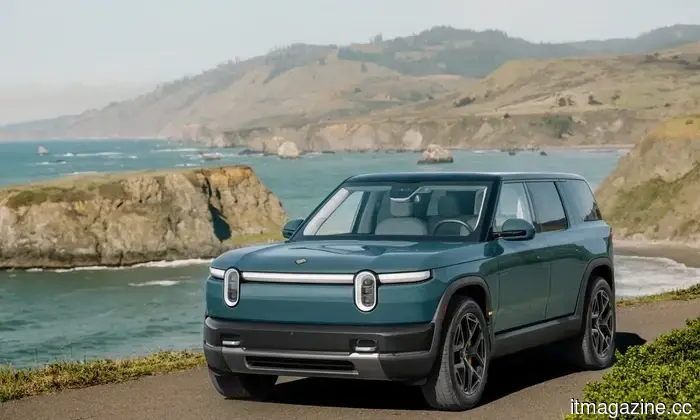
Rivian has managed to cut the production costs of the R2 EVs by 50%. Hopefully, this reduction will be reflected in prices for consumers.
Rivian claims that the R2 is more than 50% less expensive to manufacture compared to its R1 models, which represents a significant advance towards more affordable electric vehicles, provided that consumers recognize the value.