
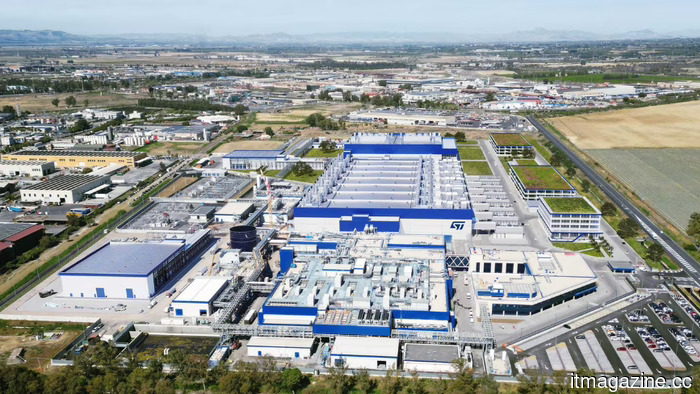
STMicroelectronics aims to generate over $3 billion from the space sector.
The Geneva-based semiconductor manufacturer has dispatched over 5 billion RF antenna chips to Starlink and anticipates that its low-Earth-orbit segment alone will generate more than $3 billion in cumulative revenue from 2026 to 2028. The company is also considering orbital data centres as a future option.
When STMicroelectronics first approved its chips for the European Space Agency in 1977, the satellite industry operated very differently. Programs were led by governments, hardware was customized, and the small share of the semiconductor market used for orbital missions was intended for unique tasks rather than bulk supply.
Now, nearly fifty years later, the Geneva-based chipmaker is experiencing what its own roadmap refers to as an unparalleled growth phase in this sector. On Monday, it updated investors on the magnitude of this growth.
According to a Reuters report shared via TradingView during the company’s dedicated investor call, STMicro is projecting more than $3 billion in cumulative revenue from its space semiconductor division between 2026 and 2028. The growth trajectory implied by this figure is particularly steep.
ST's low-Earth-orbit revenue, which the company reports separately, was approximately $175 million in 2021. By 2025, it had risen to around $600 million. By the end of 2026, the company forecasts it will approach $1 billion. In this context, the $3 billion cumulative target appears to be more a continuation of existing momentum than an overly ambitious goal.
Sources of revenue
As ST executives have outlined, the key driver behind this growth is the shift from government-led space initiatives to commercial satellite operators. SpaceX's Starlink is the primary customer in this new landscape.
Over the past decade, ST has supplied over 5 billion RF antenna chips to user terminals for Starlink, with predictions that this figure could double to nearly 10 billion by 2027 as the constellation expands. Other commercial players, such as Amazon's Kuiper and OneWeb, follow Starlink but are not yet at the same level.
The company also mentioned contracts in Europe that offer different compensation but are significant strategically. ST is providing components for inter-satellite laser communication links on future SpaceX missions and collaborating with Thales and Eutelsat on the European Union's planned Iris² sovereign satellite constellation, which is a key project for Europe's technological sovereignty policy.
TNW has extensively covered the broader European satellite competition, and the anticipated launch of Iris², scheduled for the end of the decade, positions ST as a critical supplier in the European initiative.
The engineering expertise that allows ST to secure volumes from Starlink also enables it to meet the specifications for Iris².
Beyond major customers, ST's space business includes a broader range of products than is typically recognized in discussions about the company. This includes radiation-hardened logic, voltage regulators, mixed-signal ASICs, and rad-hard discrete components for satellite systems.
The economics of these products vary among customers, but the foundational engineering required to develop chips that operate reliably in a vacuum, withstand extreme temperature cycles, and endure prolonged radiation exposure represents one of the higher-margin specialties in semiconductor manufacturing.
Understanding New Space
In ST's view, the business model shifted with the introduction of New Space. Until around 2018, the standard for radiation-hardened chips intended for satellites was a unique part tailored for a customer planning to produce a single, $200 million geosynchronous satellite.
However, constellation operators, which build hundreds or even thousands of identical low-cost satellites, required different types of rad-hard components: ones that could be produced in plastic packaging, in bulk, and at prices that would not undermine the economics of a 1,200-satellite constellation.
In 2022, ST launched its first cost-effective rad-hard line for New Space, featuring economical plastic packaging across power, analog, and logic categories. Now, four years later, that early move appears to have been well-timed.
The overall market conditions align with this trajectory. Independent assessments of the space semiconductor market estimate current global revenues to be between $5 billion and $7 billion, with mid-single-digit annual growth across most predictions.
ST's projected low-Earth-orbit revenue suggests it is capturing a significant portion of this growth. The $3 billion target spread over three years aligns with the company potentially holding around 25% of global space-semiconductor revenue at its peak.
Orbital data centres as a future opportunity
ST executives have also highlighted orbital data centres as a potential market for the future, but they clarified that no related revenue has been included in the current 2026–2028 target. This cautious approach is prudent. Earlier this year, TNW reported on SpaceX's pre-IPO disclosures, which indicated to investors that orbital AI data centres depend on "unproven technologies" and might never achieve commercial viability.
SpaceX's S-1 filing was notably frank for a company that had previously regarded orbital computing as almost inevitable. The thermal management
Other articles
 Microsoft announced that it is working on a solution for an Outlook issue that caused documents to appear blank.
Microsoft is implementing a server-side solution for a longstanding Outlook issue that caused shared Word, Excel, and PowerPoint files to open with a blank screen. In the meantime, browser-based alternatives are available until the fix is fully deployed.
Microsoft announced that it is working on a solution for an Outlook issue that caused documents to appear blank.
Microsoft is implementing a server-side solution for a longstanding Outlook issue that caused shared Word, Excel, and PowerPoint files to open with a blank screen. In the meantime, browser-based alternatives are available until the fix is fully deployed.
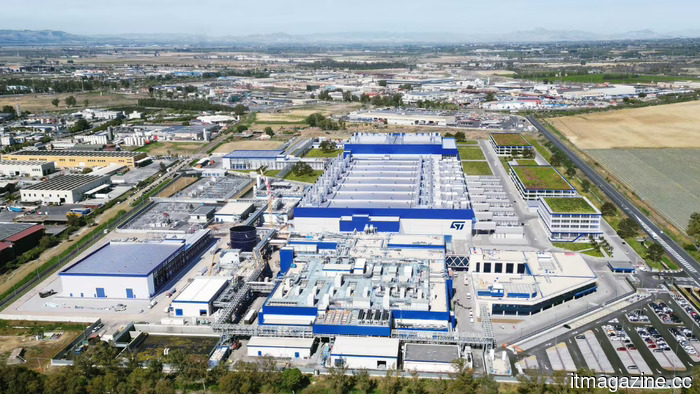 STMicroelectronics aims to exceed $3 billion from the space sector.
STMicroelectronics aims to achieve over $3 billion in total revenue from space chips from 2026 to 2028, propelled by the growth of Starlink.
STMicroelectronics aims to exceed $3 billion from the space sector.
STMicroelectronics aims to achieve over $3 billion in total revenue from space chips from 2026 to 2028, propelled by the growth of Starlink.
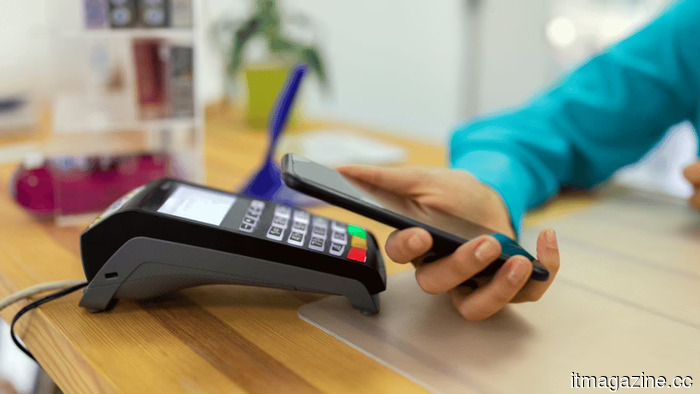 iOS 27 allows users to generate personalized Wallet passes from any QR code as Apple stops waiting for developers.
Apple's iOS 27 introduces a "Create a Pass" feature that includes three templates. After a 14-year wait for the adoption of PassKit, Apple is now allowing users to create their own passes.
iOS 27 allows users to generate personalized Wallet passes from any QR code as Apple stops waiting for developers.
Apple's iOS 27 introduces a "Create a Pass" feature that includes three templates. After a 14-year wait for the adoption of PassKit, Apple is now allowing users to create their own passes.
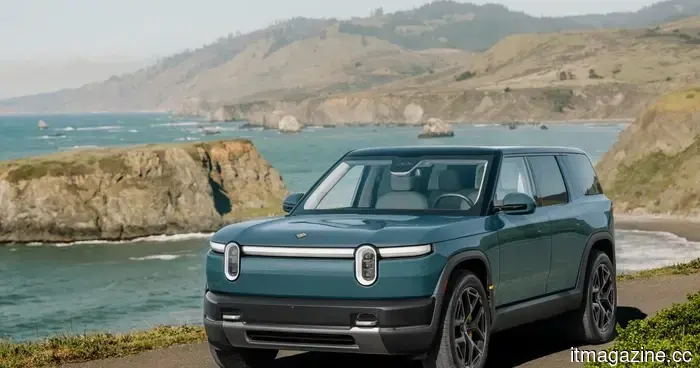 Rivian has managed to cut the production costs of the R2 EVs by 50%. Hopefully, this reduction will be reflected in prices for consumers.
Rivian claims that the R2 is more than 50% less expensive to manufacture compared to its R1 models, which represents a significant advance towards more affordable electric vehicles, provided that consumers recognize the value.
Rivian has managed to cut the production costs of the R2 EVs by 50%. Hopefully, this reduction will be reflected in prices for consumers.
Rivian claims that the R2 is more than 50% less expensive to manufacture compared to its R1 models, which represents a significant advance towards more affordable electric vehicles, provided that consumers recognize the value.
 GameStop offers $55.5 billion for eBay, backed by a $9 billion cash reserve, a $20 billion letter of credit from TD Bank, and a dwindling retail sector.
Ryan Cohen's GameStop proposes a $125 per share acquisition of eBay through cash and stock. The market views this as improbable, with eBay trading at $110, while GameStop's shares decline. Michael Burry is divesting his holdings.
GameStop offers $55.5 billion for eBay, backed by a $9 billion cash reserve, a $20 billion letter of credit from TD Bank, and a dwindling retail sector.
Ryan Cohen's GameStop proposes a $125 per share acquisition of eBay through cash and stock. The market views this as improbable, with eBay trading at $110, while GameStop's shares decline. Michael Burry is divesting his holdings.
 GameStop offers $55.5 billion for eBay, backed by a $9 billion cash reserve, a $20 billion letter from TD Bank, and a dwindling retail sector.
GameStop, led by Ryan Cohen, has proposed a bid of $125 per share for eBay in cash and stock. However, the market seems to doubt this offer, as eBay's shares are currently trading at $110 while GameStop's stock has declined. Michael Burry is offloading his shares.
GameStop offers $55.5 billion for eBay, backed by a $9 billion cash reserve, a $20 billion letter from TD Bank, and a dwindling retail sector.
GameStop, led by Ryan Cohen, has proposed a bid of $125 per share for eBay in cash and stock. However, the market seems to doubt this offer, as eBay's shares are currently trading at $110 while GameStop's stock has declined. Michael Burry is offloading his shares.
STMicroelectronics aims to generate over $3 billion from the space sector.
STMicroelectronics aims for over $3 billion in total revenue from space chips from 2026 to 2028, driven by the growth of Starlink.