
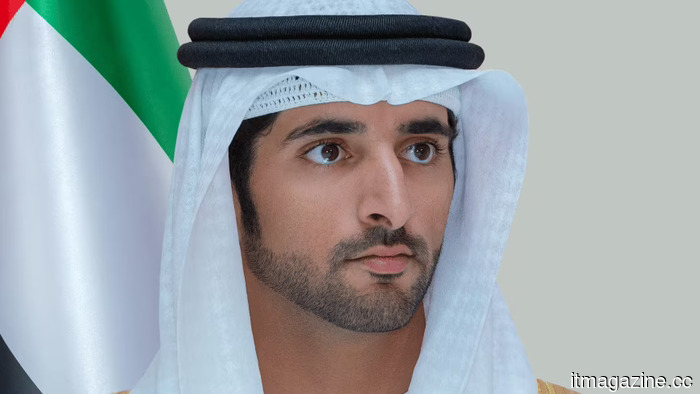
Dubai requires the private sector to adopt generative AI within two years, supported by incubators, training programs, and allocated funds.
**TL;DR** Dubai's Crown Prince Sheikh Hamdan has initiated a two-year program aimed at converting the emirate's entire private sector to agentic AI. This initiative includes training programs for all business councils, government-funded incubators for AI companies, and specific investment funds managed by the Dubai Chamber of Commerce. This follows an April directive from the UAE cabinet that mandates delivering 50% of federal government services via autonomous AI agents by 2028. With this, Dubai becomes the first city to set a clear timeline for private-sector AI adoption.
All major governments have strategies for AI, often featuring pilot projects and task forces without specific deadlines. In contrast, Dubai, on Sunday, unveiled a plan led by Crown Prince Sheikh Hamdan bin Mohammed bin Rashid Al Maktoum, to integrate agentic AI into the emirate's private sector within two years. This initiative will provide targeted training tracks for various business councils linked to the Dubai Chamber of Commerce, establish government-backed incubators for agentic AI ventures, and create dedicated investment funds. It aims to position Dubai’s economy as the leading adopter of agentic AI technologies, marking the most aggressive private-sector AI mandate from any government, just eleven days after the UAE cabinet’s announcement to deploy autonomous AI agents for half of federal services within the same timeframe.
**The Mandate**
This private-sector initiative builds on the federal directive announced on April 23 by Sheikh Mohammed bin Rashid Al Maktoum, which outlines a strategy to implement agentic AI—defined as systems capable of analyzing data, making decisions, and acting with minimal human intervention—across 50% of government operations by 2028. The execution is overseen by a task force led by Mohammed Al Gergawi, Minister of Cabinet Affairs, with Sheikh Mansour bin Zayed Al Nahyan responsible for implementation. The private-sector program mirrors this ambition, with the Dubai Chamber of Commerce managing training tracks designed to provide businesses with the necessary skills to implement AI agents in areas like customer service, procurement, logistics, compliance, and decision support. The incubators will be integrated within the Chamber's existing resources and financed by newly established investment vehicles directed by the Crown Prince. While specifics on fund size and eligibility have not been publicly disclosed, the mandate明确expected the Chamber to develop a new generation of agentic AI companies.
**The Context**
The UAE has been progressing toward this goal for years. Abu Dhabi announced its "Abu Dhabi Government Digital Strategy 2025 to 2027," which includes AED 13 billion ($3.5 billion) in funding and a vision to become the world’s first fully AI-native government by 2027. The Mohammed bin Zayed University of Artificial Intelligence, which has been in operation since 2019, is the world’s first graduate-level institution focused solely on AI research. Omar Sultan Al Olama, the first Minister of State for Artificial Intelligence in the world, has been serving since 2017. Additionally, Dubai AI Week, a five-day event at the Dubai AI Campus in the DIFC, has been established as a significant global AI event. The groundwork for a government-led AI transition is in place, but the novelty here is the explicit timeline for extending this transition to the private sector.
**The Agentic AI Framing**
The focus on agentic AI is intentional. This type of AI is shifting from research to practical application in sectors like engineering, manufacturing, and industrial design, with companies such as Synera deploying teams of AI agents that autonomously perform tasks across established enterprise tools in organizations like NASA, BMW, Airbus, and Hyundai. Dubai's initiative distinguishes between conventional AI, which aids human decisions, and agentic AI, which takes actions independently. The training tracks will provide businesses with skills to deploy systems that can manage procurement processes, regulatory requirements, customer interactions, and supply chain dynamics without continuous human involvement.
**The Gap**
While the ambition is evident, the path to execution remains unclear. The security and governance frameworks necessary for deploying agentic AI are not fully developed. A Deloitte survey indicates that although 74% of companies plan to implement agentic AI within two years, only 21% report having a mature governance model for autonomous agents. This disparity between intention and preparedness poses a significant challenge for governments looking to enforce large-scale agentic AI adoption. Dubai's private sector comprises global financial institutions under DIFC regulations, logistics firms managing operations at Jebel Ali port, construction companies involved in large projects, and numerous small and medium-sized enterprises with varying levels of technology adoption. The two-year timeline applies a blanket approach across all these entities.
The training tracks aim to address the knowledge gap but not the infrastructural gap. Effectively deploying agentic AI necessitates not only clarity on agent capabilities but also having the requisite data architecture, API integrations, security structures, and monitoring systems to enable agents to function safely within current business operations. Globally, many enterprises haven't established this infrastructure. While
Other articles
 YouTube's auto-dubbing lacks a vital option: a way to turn it off.
I didn't request to listen to Marques Brownlee speaking Japanese. YouTube made that choice for me, and there's no universal way to disable it.
YouTube's auto-dubbing lacks a vital option: a way to turn it off.
I didn't request to listen to Marques Brownlee speaking Japanese. YouTube made that choice for me, and there's no universal way to disable it.
 Rivian lowered the production cost of the R2 EVs by 50%. Let's wish that these savings are passed on to consumers.
Rivian claims that the R2 is more than 50% cheaper to produce than its R1 models, marking a significant move towards more affordable electric vehicles, assuming consumers recognize the advantages.
Rivian lowered the production cost of the R2 EVs by 50%. Let's wish that these savings are passed on to consumers.
Rivian claims that the R2 is more than 50% cheaper to produce than its R1 models, marking a significant move towards more affordable electric vehicles, assuming consumers recognize the advantages.
 STMicroelectronics aims to exceed $3 billion from the space sector.
STMicroelectronics aims to achieve over $3 billion in total revenue from space chips from 2026 to 2028, propelled by the growth of Starlink.
STMicroelectronics aims to exceed $3 billion from the space sector.
STMicroelectronics aims to achieve over $3 billion in total revenue from space chips from 2026 to 2028, propelled by the growth of Starlink.
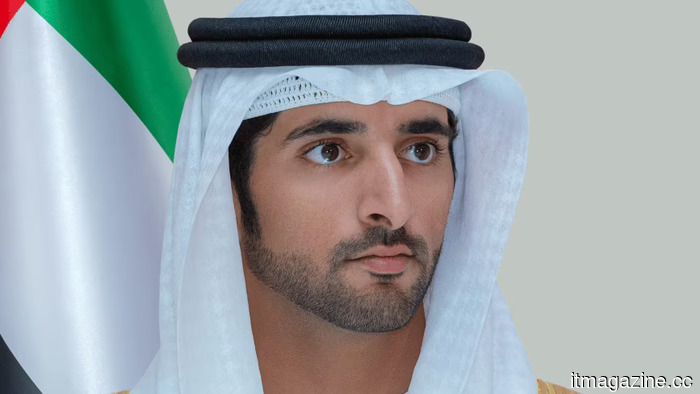 Dubai requires private sector companies to adopt agentic AI within two years, supported by incubators, training programs, and specialized funding.
Sheikh Hamdan initiates a two-year initiative aimed at encouraging Dubai's private sector to embrace agentic AI. Training will be provided to all business councils, incubators, and funds via the Chamber.
Dubai requires private sector companies to adopt agentic AI within two years, supported by incubators, training programs, and specialized funding.
Sheikh Hamdan initiates a two-year initiative aimed at encouraging Dubai's private sector to embrace agentic AI. Training will be provided to all business councils, incubators, and funds via the Chamber.
 Do you think music has been the most affected by slop? AI has also significantly impacted podcasts.
A surge of AI-generated podcasts is rapidly spreading across audio platforms, with a Bloomberg report indicating that approximately 39% of new podcast feeds established in a span of about nine days might have been created by machines.
Do you think music has been the most affected by slop? AI has also significantly impacted podcasts.
A surge of AI-generated podcasts is rapidly spreading across audio platforms, with a Bloomberg report indicating that approximately 39% of new podcast feeds established in a span of about nine days might have been created by machines.
 This PC is spacious enough to reside in and features its own air conditioning unit to cool the large internal components.
A Chinese creator constructed a room-sized RGB PC featuring a desk, oversized fake components, and a 12kW air conditioner, transforming desktop cooling into a walk-in display focused on heat and airflow.
This PC is spacious enough to reside in and features its own air conditioning unit to cool the large internal components.
A Chinese creator constructed a room-sized RGB PC featuring a desk, oversized fake components, and a 12kW air conditioner, transforming desktop cooling into a walk-in display focused on heat and airflow.
Dubai requires the private sector to adopt generative AI within two years, supported by incubators, training programs, and allocated funds.
Sheikh Hamdan initiates a two-year initiative aimed at encouraging the private sector in Dubai to embrace agentic AI. This will include training for all business councils, incubators, and funds facilitated by the Chamber.