

Why eliminating human involvement in care could weaken results.
The pitch deck for digital health typically presents the idea that AI will replace clinicians, leading to reduced costs, expanded access, improved outcomes, and benefits for all. This proposition has attracted significant venture capital investment in companies based on the belief that removing humans from healthcare is both feasible and advantageous. However, this premise has a flaw, which can be quantified.
Ruben Sandoval Davila, co-founder and CTO of Avena Health, points out that only two percent of active users remain on a clinical nutrition platform after three months. Previously, this platform had maintained a retention rate of 40% for patients over eleven months. Sandoval, who created the automation system, observed its failure firsthand and rebuilt the framework in response. Although the data has not been independently verified, the detailed nature of Sandoval's claim, along with his candid acknowledgment of his own mistake, lends it a credibility that broader statistics lack.
This unsettling data is troubling for the industry because it originates from within the organization. Sandoval didn’t critique someone else's automation experiment; he conducted the experiment with his own product and users, and the results were clear—full automation harmed patient engagement. While the AI performed its clinical functions accurately, patients disengaged.
“Healthcare doesn’t scale because providers are bottlenecked by time, not demand,” Sandoval explained. “What we’re developing changes that limitation. A provider’s capacity is not constrained by skill or willingness but by the administrative demands tied to each patient interaction. If we intelligently reduce that overhead, the same provider can handle a larger number of patients without compromising the quality of individual interactions.”
This statement appears to advocate for automation but instead suggests a more nuanced and challenging solution. Sandoval believes that while the bottleneck is genuine and AI has its merits, many companies misinterpret the relationship between efficiency and human involvement, assuming they are inversely related. His findings indicate otherwise; the most efficient version of his platform, which achieved a 40% long-term retention rate, keeps human specialists engaged at crucial clinical points while automating the remainder.
“Fully automated AI systems frequently struggle with retaining users,” he stated. “The advantage lies in combining hyper-personalization at the patient level with expert oversight.”
The key insight is not that humans are superior to AI in providing clinical care, but that patient behavior changes when a human is included in their treatment, even if most tasks are performed by AI. The 40% retention figure reflects patient behavior rather than clinical quality, and such behavior ultimately determines a digital health platform's longevity.
This issue is significant because the digital health sector faces a retention challenge that is rarely openly discussed. Various health apps—fitness trackers, mental health platforms, nutrition programs, and chronic disease management tools—experience similar trajectories: quick adoption followed by rapid abandonment. A 2023 analysis from the IQVIA Institute found that the average digital health app loses over three-quarters of its users within the first two weeks. Many venture-backed companies avoid highlighting retention numbers because while user acquisition figures are impressive, retention figures are often not.
The industry's response has been to rely on engagement strategies borrowed from consumer technology, such as gamification, tracking progress, and behavioral nudges. Sandoval, however, approached the issue differently, questioning whether the problem was indeed engagement or something deeper related to the lack of a human connection in the care experience.
Sandoval's system design treats the human specialist as a crucial component rather than an expense to be eliminated. The specialist engages in the actions that foster the desired behavioral outcomes: ongoing patient engagement, while the AI manages the remaining aspects.
“Agencies attract attention through marketing,” Sandoval noted, “while experts deliver results. The leverage comes from equipping each expert with the tools to control and expand their impact.”
This perspective clarifies why the system centers around the specialist rather than the patient or platform itself. The specialist serves as the retention driver, while AI provides efficiency. This relationship is one Sandoval has tested against the failure data he collected and refined through years of deployment.
The ramifications of this understanding reach beyond one company. If the key unresolved issue in digital health is not about clinical capacity but rather patient engagement over time, then companies focused solely on full automation are addressing the wrong challenge. They are creating efficient, scalable, yet ultimately ineffective products. The automation functions, but the users depart.
Now, Sandoval is preparing to test this theory in a market where AI buzz is most pronounced, and the retention issue is least acknowledged. Alva Health, the new platform his team is launching in the U.S., adopts the same hybrid framework that rejuvenated Avena’s retention following the automation setback. The U.S. digital health sector is replete with offerings aimed at excluding humans from the process. Sandoval enters this market convinced that the removal of human involvement is precisely what disrupts the delivery of care.
That two percent statistic is a data point that an industry focused on automation narratives might prefer to ignore. It implies that the most critical
Другие статьи
 Brockman testifies in the OpenAI trial following Musk's settlement message, while his personal journals refer to the nonprofit mission as 'deceptive.'
Musk sent a message to Brockman regarding a settlement just two days prior to the trial. In his journals, Brockman describes the nonprofit mission as "a lie." He will give his testimony on Monday in the $150 billion OpenAI case.
Brockman testifies in the OpenAI trial following Musk's settlement message, while his personal journals refer to the nonprofit mission as 'deceptive.'
Musk sent a message to Brockman regarding a settlement just two days prior to the trial. In his journals, Brockman describes the nonprofit mission as "a lie." He will give his testimony on Monday in the $150 billion OpenAI case.
 Do you believe music is the most affected by sloppiness? AI has also significantly tarnished podcasts.
A surge of AI-generated podcasts is rapidly spreading across audio platforms, with a Bloomberg report indicating that about 39% of new podcast feeds established in approximately nine days might be created by machines.
Do you believe music is the most affected by sloppiness? AI has also significantly tarnished podcasts.
A surge of AI-generated podcasts is rapidly spreading across audio platforms, with a Bloomberg report indicating that about 39% of new podcast feeds established in approximately nine days might be created by machines.
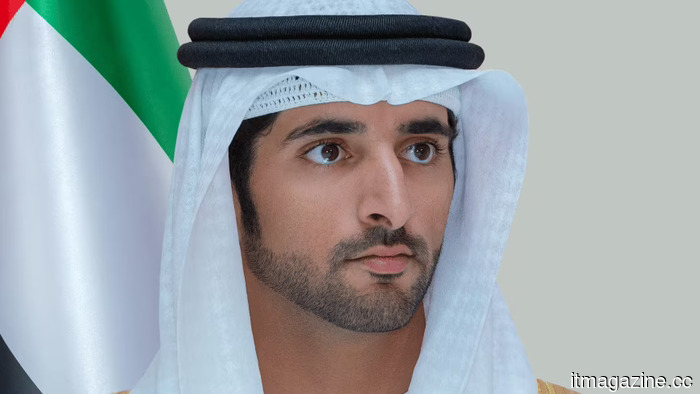 Dubai requires the private sector to adopt generative AI within two years, supported by incubators, training programs, and allocated funds.
Sheikh Hamdan initiates a two-year initiative aimed at encouraging the private sector in Dubai to embrace agentic AI. This will include training for all business councils, incubators, and funds facilitated by the Chamber.
Dubai requires the private sector to adopt generative AI within two years, supported by incubators, training programs, and allocated funds.
Sheikh Hamdan initiates a two-year initiative aimed at encouraging the private sector in Dubai to embrace agentic AI. This will include training for all business councils, incubators, and funds facilitated by the Chamber.
 STMicroelectronics aims to exceed $3 billion from the space sector.
STMicroelectronics aims to achieve over $3 billion in total revenue from space chips from 2026 to 2028, propelled by the growth of Starlink.
STMicroelectronics aims to exceed $3 billion from the space sector.
STMicroelectronics aims to achieve over $3 billion in total revenue from space chips from 2026 to 2028, propelled by the growth of Starlink.
 STMicroelectronics aims to generate over $3 billion from the space sector.
STMicroelectronics aims to achieve over $3 billion in total revenue from space chips between 2026 and 2028, boosted by the growth of Starlink.
STMicroelectronics aims to generate over $3 billion from the space sector.
STMicroelectronics aims to achieve over $3 billion in total revenue from space chips between 2026 and 2028, boosted by the growth of Starlink.
 Rivian lowered the production cost of the R2 EVs by 50%. Let's wish that these savings are passed on to consumers.
Rivian claims that the R2 is more than 50% cheaper to produce than its R1 models, marking a significant move towards more affordable electric vehicles, assuming consumers recognize the advantages.
Rivian lowered the production cost of the R2 EVs by 50%. Let's wish that these savings are passed on to consumers.
Rivian claims that the R2 is more than 50% cheaper to produce than its R1 models, marking a significant move towards more affordable electric vehicles, assuming consumers recognize the advantages.
Why eliminating human involvement in care could weaken results.
AI has the potential to enhance healthcare, but without the participation of humans, patient engagement diminishes. This is what a certain unsuccessful experiment shows about digital health.