
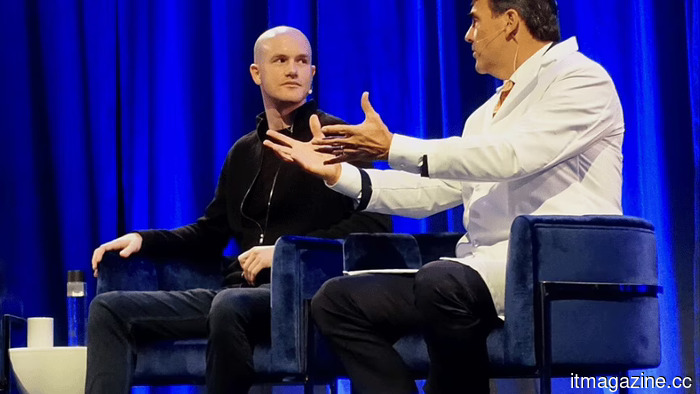
Coinbase reduces its workforce by 14% and restructures to focus on AI-driven pods as cryptocurrency revenue falls 26% and trading volumes reach an 18-month low.
TL;DR Coinbase is reducing its workforce by 14 percent, amounting to around 660 employees from a total of 4,700, as it restructures around AI-native "pods." This decision comes just two days before the company reveals disappointing earnings, with a 26 percent drop in revenue and crypto trading volumes at their lowest since October 2024.
Coinbase is laying off 14 percent of its workforce—approximately 660 employees just before announcing its worst quarterly results since becoming a public entity. CEO Brian Armstrong disclosed the layoffs in a staff letter that briefly acknowledged the downturn in the crypto market while primarily focusing on how artificial intelligence (AI) has transformed work processes at the company. Armstrong articulated that Coinbase's future lies in “intelligence,” with human input around the edges. The reorganization eliminates purely managerial roles, limits the hierarchy to five levels beneath the CEO and COO, and introduces AI-native pods—small teams, some consisting of just a single individual, utilizing AI tools to perform functions that previously required an entire department. This framing seems intentional, as Armstrong portrays the changes as a necessary structural evolution rather than a mere cost-cutting measure due to market collapse.
The figures tell a relevant story. Analysts anticipate Coinbase will report about 1.5 billion dollars in revenue for the first quarter of 2026, marking a 26 percent decrease compared to the same quarter the previous year. Earnings per share are expected to drop to 36 cents from 1.94 dollars last year. Consumer transaction revenue plummeted by 45 percent year-over-year to 734 million dollars, influenced by falling cryptocurrency prices and a shift to lower-fee trading tiers. Bitcoin experienced its worst first quarter since 2018, declining by 22 to 24 percent, while Ether fell by 41 percent. Global cryptocurrency exchange volume dropped nearly 48 percent from its peak in October 2025, reaching 4.3 trillion dollars in March—the lowest level seen since October 2024. Coinbase’s stock is currently valued 57 percent below its highest price of 444.65 dollars in the last year. The company’s operating expenses increased by 22 percent year-on-year to 1.5 billion dollars, growing at more than double the revenue growth rate, partly due to integration costs from the acquisition of the derivatives exchange Deribit. The restructuring is expected to incur severance costs of between 50 and 60 million dollars.
A single positive aspect is institutional trading, with revenue from institutional transactions increasing 31 percent year-on-year to 185 million dollars, buoyed by Deribit’s record derivatives performance. However, this cannot offset the significant drop in consumer trading volume, which has historically accounted for the majority of Coinbase's income. The company has projected subscription and services revenue to be around 590 million dollars for the first quarter, falling 22 percent short of Wall Street’s anticipated 761 million dollars even before the quarter concluded. These figures suggest that the restructuring is not merely a result of AI advancements but rather a necessity imposed by market dynamics.
Armstrong’s letter is tactfully written. While acknowledging the downturn, he frames the layoffs as a hastening of a pre-existing transformation. He mentioned how engineers now use AI to accomplish in days tasks that previously took weeks, and the restructuring aims to remove “pure management” positions in favor of player-coaches who both lead and contribute. AI-native pods are meant to operate with minimal oversight and utilize AI for various tasks including code generation, customer support automation, compliance management, and internal operations. Armstrong told employees that the company would focus on hiring individuals with strong AI skills moving forward, emphasizing that Coinbase's future hinges on an “AI-first” approach.
This language echoes sentiments from other companies. Klarna paused hiring in 2025, citing productivity improvements from AI, while Atlassian laid off 1,600 employees and changed its CTO, framing it as adjustment for the AI era. Block, which is led by Jack Dorsey, eliminated 4,000 positions earlier this year—almost 40 percent of its workforce—attributing the changes to AI rendering the old structure obsolete. In all cases, there’s emphasis on AI capabilities rather than the impact of the market on revenues, with financial realities suggesting the latter has played a more direct role.
This brings us to the concept of AI-washing, which involves linking layoffs to AI advancements without substantial evidence that AI has directly displaced the affected employees. A survey from December 2025 found that 59 percent of hiring managers admitted they highlighted AI in layoff communications because it “resonates better with stakeholders” than indicating economic factors. Research from Oxford Economics indicated that job cuts related to AI comprised only 4.5 percent of total layoffs in the first eleven months of 2025, while standard market conditions were responsible for nearly four times this number. OpenAI's Sam Altman characterized this trend as AI-washing, pointing out that fewer than one percent of
Other articles
 Google, Microsoft, and xAI have consented to share evaluations of AI models with the government before their release, as the Mythos crisis necessitates an increase in oversight.
Five leading AI laboratories are now providing models for evaluation by the US government. This voluntary program lacks statutory authority but includes all significant AI developers following the Mythos crisis.
Google, Microsoft, and xAI have consented to share evaluations of AI models with the government before their release, as the Mythos crisis necessitates an increase in oversight.
Five leading AI laboratories are now providing models for evaluation by the US government. This voluntary program lacks statutory authority but includes all significant AI developers following the Mythos crisis.
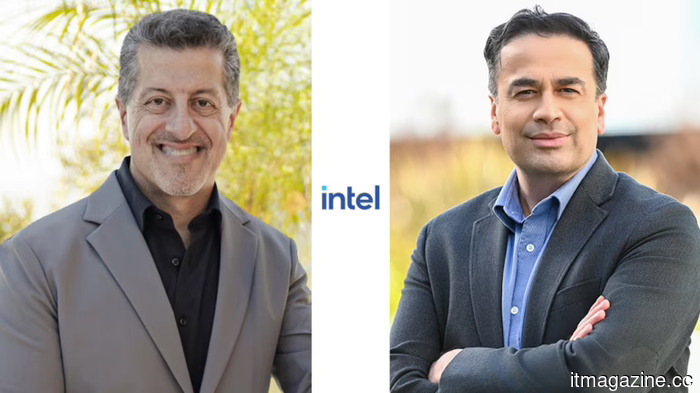 Intel has appointed Qualcomm veteran Alex Katouzian to head a new Client Computing and Physical AI division.
Intel has brought on Alex Katouzian, who spent 25 years at Qualcomm, to head a newly formed Client Computing and Physical AI division. This marks the second high-profile recruitment from Qualcomm during CEO Lip-Bu Tan's leadership.
Intel has appointed Qualcomm veteran Alex Katouzian to head a new Client Computing and Physical AI division.
Intel has brought on Alex Katouzian, who spent 25 years at Qualcomm, to head a newly formed Client Computing and Physical AI division. This marks the second high-profile recruitment from Qualcomm during CEO Lip-Bu Tan's leadership.
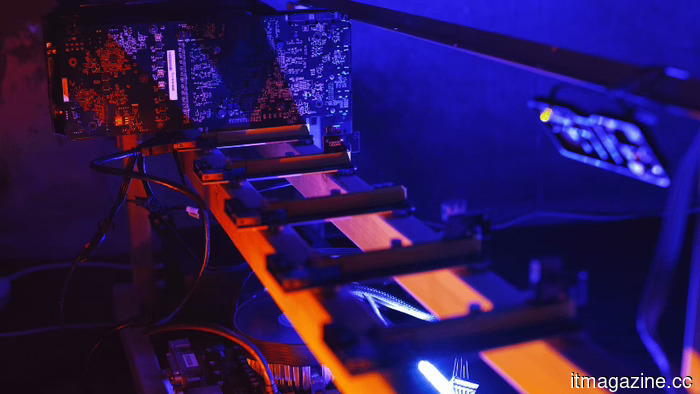 Nscale has invested €695 million in Portugal, while the crypto-to-AI neocloud reaches a valuation of $14.6 billion within two years, collaborating with Microsoft.
Nscale is set to provide 66,000 Nvidia Rubin GPUs for Microsoft's 1.2 GW Sines campus. Once a crypto miner, it has now become Europe's most valuable AI infrastructure startup, valued at $14.6 billion.
Nscale has invested €695 million in Portugal, while the crypto-to-AI neocloud reaches a valuation of $14.6 billion within two years, collaborating with Microsoft.
Nscale is set to provide 66,000 Nvidia Rubin GPUs for Microsoft's 1.2 GW Sines campus. Once a crypto miner, it has now become Europe's most valuable AI infrastructure startup, valued at $14.6 billion.
 Metalenz's latest face scan technology is integrated beneath the phone display, eliminating the need for unsightly cutouts.
Metalenz has just demonstrated that payment-grade facial recognition can function with a fully lit display, a feat that Apple has been attempting to achieve for years without success.
Metalenz's latest face scan technology is integrated beneath the phone display, eliminating the need for unsightly cutouts.
Metalenz has just demonstrated that payment-grade facial recognition can function with a fully lit display, a feat that Apple has been attempting to achieve for years without success.
 Google, Microsoft, and xAI have consented to share governmental evaluations of AI models before their release as the Mythos crisis prompts an increase in oversight.
Five leading AI laboratories are now presenting their models for evaluation by the US government. This voluntary program lacks legal authority but includes all significant AI developers following the Mythos crisis.
Google, Microsoft, and xAI have consented to share governmental evaluations of AI models before their release as the Mythos crisis prompts an increase in oversight.
Five leading AI laboratories are now presenting their models for evaluation by the US government. This voluntary program lacks legal authority but includes all significant AI developers following the Mythos crisis.
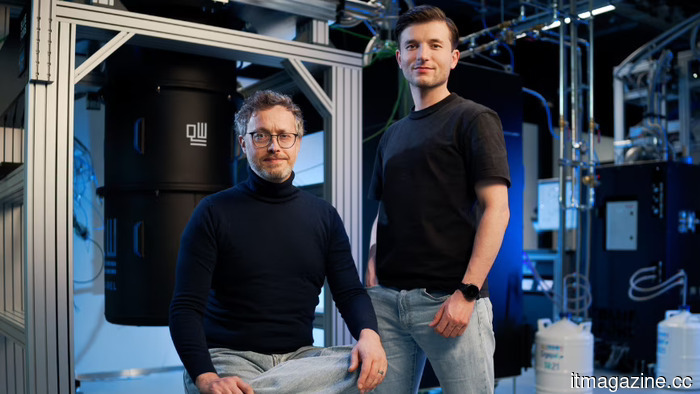 Inside QuantWare's €152 million funding round aimed at developing KiloFab.
QuantWare has completed a €152 million Series B funding round, spearheaded by Intel Capital, In-Q-Tel, and ETF Partners, marking the largest deep tech funding round in the Netherlands to date.
Inside QuantWare's €152 million funding round aimed at developing KiloFab.
QuantWare has completed a €152 million Series B funding round, spearheaded by Intel Capital, In-Q-Tel, and ETF Partners, marking the largest deep tech funding round in the Netherlands to date.
Coinbase reduces its workforce by 14% and restructures to focus on AI-driven pods as cryptocurrency revenue falls 26% and trading volumes reach an 18-month low.
Coinbase is reducing its workforce by 660 employees and reorganizing into AI-focused pods with a limitation of five management layers. Revenue for Q1 is projected to decline by 26% as cryptocurrency trading volumes decrease by 48%.