
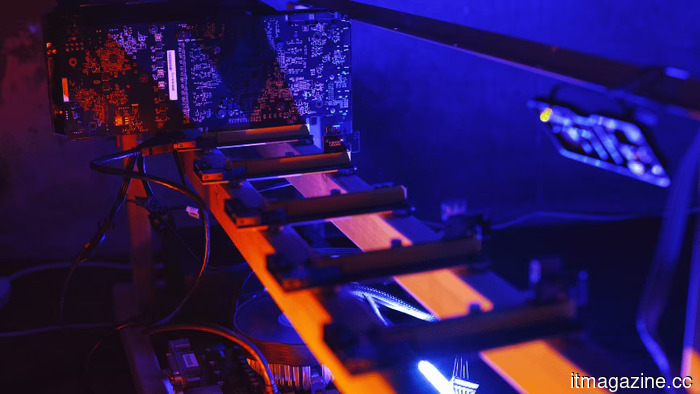
Nscale has invested €695 million in Portugal, while Microsoft contributes to a crypto-to-AI neocloud that has reached a valuation of $14.6 billion in just two years.
TL;DR
Nscale, which transitioned from being a crypto miner to a $14.6 billion neocloud, is investing €695 million in Portugal to provide 66,000 Nvidia Rubin GPUs to Microsoft's Start Campus in Sines. This initiative contributes to Europe's swiftest AI infrastructure development, fueled by private investment rather than government-backed computing programs.
Two years ago, Nscale operated as a cryptocurrency mining company. On Tuesday, it announced a new infrastructure investment of €695 million ($812 million) in Portugal, enhancing its collaboration with Microsoft to deliver over 66,000 Nvidia Rubin GPUs to a facility with 1.2 gigawatts of approved capacity. Following a $2 billion Series C funding round in March, backed by Nvidia, Lenovo, Dell, Citadel, Jane Street, and Nokia, Nscale's valuation stands at $14.6 billion. The organization runs data centers in the UK, Norway, Portugal, Iceland, and the United States, with plans to go public in 2026. The shift from a crypto miner to Europe’s leading AI infrastructure company occurred in just twenty-four months, raising the question of whether Europe's solution to the computing crisis will emerge from new companies rather than from governments or major cloud providers.
The deal involves a €230 million investment in shared infrastructure and €465 million for an additional 200-megawatt building at the Start Campus data center in Sines, a port town along Portugal’s Atlantic coast. With permission for a total of 1.2 gigawatts, Start Campus ranks as one of the largest data center undertakings in Southern Europe. Microsoft entered a multiyear agreement in October 2025 to lease capacity at this site, committing $10 billion to the development to alleviate computing capacity shortages affecting Azure's AI growth. Nscale's role is to provide the GPU infrastructure for Microsoft’s cloud customers, with Nscale offering the hardware while Microsoft manages customer relations.
The 66,000 Nvidia Rubin GPUs scheduled for delivery starting late 2027 represent a significant order of next-generation silicon. Rubin, which succeeds Nvidia's Blackwell architecture, began production in 2026, and demand is already surpassing supply. Nscale’s ability to secure this order highlights its relationship with Nvidia, which invested £500 million during Nscale’s Series C round, and the scale of Microsoft’s need for computing capacity in Europe. With partnerships in the UK with BT and Nvidia already delivering 14 megawatts of sovereign AI data center capacity, this expansion to Portugal spreads the same model to a location with lower energy costs and fewer grid limitations than the UK.
Nscale operates as a neocloud, a term describing cloud providers that focus exclusively on leasing GPU compute to AI developers without the extensive ancillary services offered by major players such as AWS, Azure, and Google Cloud. The model is straightforward in concept: acquire GPUs en masse, house them in data centers with ample power and cooling, and lease access to AI firms unable to obtain hardware directly from Nvidia. However, in practice, achieving this model demands significant capital, long-term contracts with reliable customers, and the capability to establish data center capacity more rapidly than larger cloud providers. CoreWeave, a leading player in the U.S., went public in 2025, securing over $50 billion in contracts with companies like OpenAI, Meta, and Anthropic. Nscale is adopting this same strategy, emphasizing that Europe needs its own computing layer and that the first company to build it will secure a foundational position in the continent’s AI landscape.
This transition from crypto to AI is central to the neocloud model; it is the very essence of the model. Nscale emerged from Arkon Energy, a cryptocurrency mining infrastructure firm, in early 2024. Crypto mining companies already possessed two crucial assets for AI infrastructure: access to large-scale power supply and experience in operating GPU-intensive computing environments in power-limited settings. When AI demand rendered GPU computation significantly more profitable per megawatt than Bitcoin mining, the financial rationale for the pivot was clear. In February 2026, Morgan Stanley classified the entire crypto mining sector as an energy infrastructure component for the AI economy. Nscale has simply executed this transition more rapidly and on a larger scale than any competitor, raising $3.1 billion across three funding rounds in under eighteen months.
In April, OpenAI halted its Stargate UK data center initiative, citing electricity prices that are four times higher than in the U.S. and unresolved copyright regulations. This decision highlighted the fragility of Europe’s position in the global computing race: even when a major cloud provider commits to establishing AI infrastructure in Europe, high energy prices and regulatory uncertainties can prevent investments from materializing before any GPUs are powered on. Portugal presents a more favorable scenario, with lower electricity prices compared to Britain, a wealth of renewable energy, and an Atlantic location providing connectivity to submarine cable networks linking Europe, the Americas, and Africa. Additionally, the Sines campus
Other articles
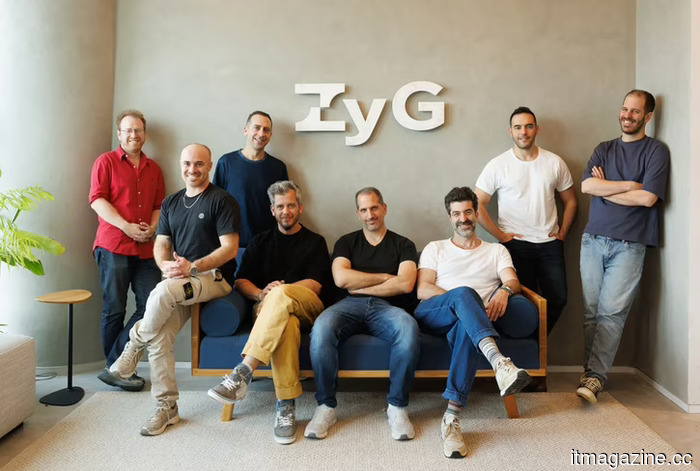 The founders of IronSource have secured $60 million at a $500 million valuation for Zyg, an AI platform designed to automate advertising in e-commerce.
Zyg secured $60 million in funding, with Accel leading the investment, at a valuation of $500 million just two months after emerging from stealth mode. The IronSource team is developing AI agents to take over the roles of human ad buyers for direct-to-consumer (DTC) brands.
The founders of IronSource have secured $60 million at a $500 million valuation for Zyg, an AI platform designed to automate advertising in e-commerce.
Zyg secured $60 million in funding, with Accel leading the investment, at a valuation of $500 million just two months after emerging from stealth mode. The IronSource team is developing AI agents to take over the roles of human ad buyers for direct-to-consumer (DTC) brands.
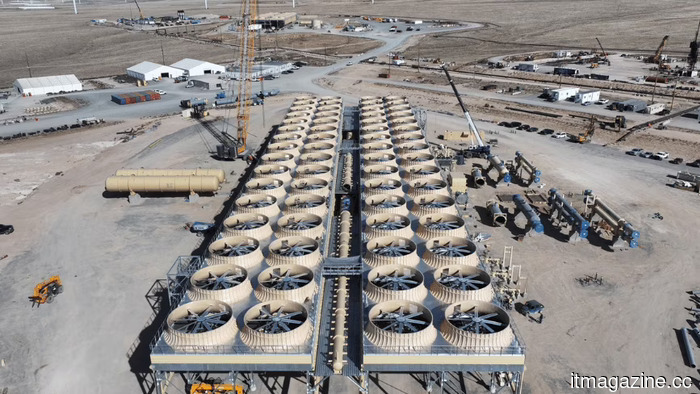 Fervo Energy has initiated a $1.33 billion IPO, marking it as the largest climate-tech offering of 2026.
Fervo Energy has initiated its IPO roadshow with the goal of raising up to $1.33 billion by pricing shares between $21 and $24, in a Nasdaq listing identified as the climate-tech option for the AI infrastructure sector.
Fervo Energy has initiated a $1.33 billion IPO, marking it as the largest climate-tech offering of 2026.
Fervo Energy has initiated its IPO roadshow with the goal of raising up to $1.33 billion by pricing shares between $21 and $24, in a Nasdaq listing identified as the climate-tech option for the AI infrastructure sector.
 Google, Microsoft, and xAI have consented to share evaluations of AI models with the government before their release, as the Mythos crisis necessitates an increase in oversight.
Five leading AI laboratories are now providing models for evaluation by the US government. This voluntary program lacks statutory authority but includes all significant AI developers following the Mythos crisis.
Google, Microsoft, and xAI have consented to share evaluations of AI models with the government before their release, as the Mythos crisis necessitates an increase in oversight.
Five leading AI laboratories are now providing models for evaluation by the US government. This voluntary program lacks statutory authority but includes all significant AI developers following the Mythos crisis.
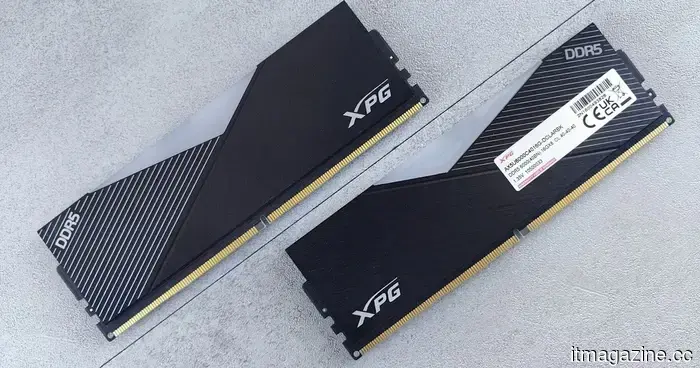 Next-generation DDR6 memory, boasting incredible speeds, is currently in development, but it will be a considerable wait.
Samsung, SK Hynix, and Micron have initiated early development of DDR6 in collaboration with substrate manufacturers, aiming for speeds that surpass DDR5 by more than two times, although mass production remains years in the future.
Next-generation DDR6 memory, boasting incredible speeds, is currently in development, but it will be a considerable wait.
Samsung, SK Hynix, and Micron have initiated early development of DDR6 in collaboration with substrate manufacturers, aiming for speeds that surpass DDR5 by more than two times, although mass production remains years in the future.
 Tesla’s rollout of FSD in Europe faces skepticism from regulators, a sentiment that Musk has been conveying.
Reuters has released internal communications from EU regulators demonstrating ongoing doubt regarding Tesla's assertions about the safety of its FSD and its rollout approach, even after receiving Dutch type approval in April.
Tesla’s rollout of FSD in Europe faces skepticism from regulators, a sentiment that Musk has been conveying.
Reuters has released internal communications from EU regulators demonstrating ongoing doubt regarding Tesla's assertions about the safety of its FSD and its rollout approach, even after receiving Dutch type approval in April.
 Metalenz's innovative face scanning technology is embedded beneath the phone's display, eliminating the need for unsightly cutouts.
Metalenz has demonstrated that payment-grade facial authentication can function with a fully powered-on display, a feat that Apple has attempted to achieve for years without success.
Metalenz's innovative face scanning technology is embedded beneath the phone's display, eliminating the need for unsightly cutouts.
Metalenz has demonstrated that payment-grade facial authentication can function with a fully powered-on display, a feat that Apple has attempted to achieve for years without success.
Nscale has invested €695 million in Portugal, while Microsoft contributes to a crypto-to-AI neocloud that has reached a valuation of $14.6 billion in just two years.
Nscale is set to provide 66,000 Nvidia Rubin GPUs to Microsoft's 1.2 GW Sines campus. The company, which transitioned from crypto mining, is now the most valuable AI infrastructure startup in Europe, boasting a valuation of $14.6 billion.