
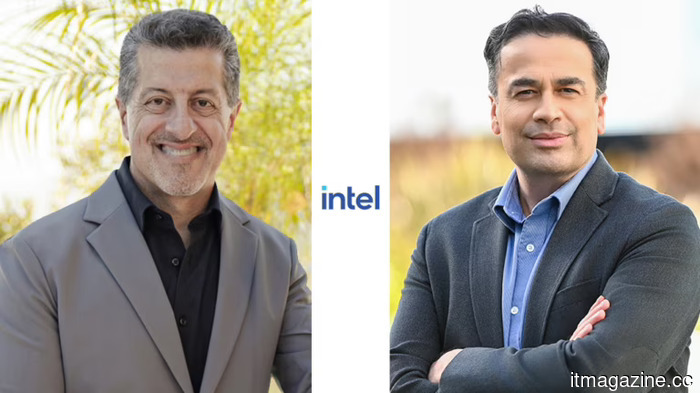
Intel has recruited Qualcomm veteran Alex Katouzian to head a newly formed group focused on Client Computing and Physical AI.
TL;DR
Alex Katouzian, a Qualcomm veteran with 25 years of experience, is joining Intel to lead the newly merged Client Computing and Physical AI business. This marks Lip-Bu Tan's second senior Qualcomm hire during his leadership.
Tan has consistently followed a recognizable pattern: sourcing talent from competitors, reorganizing based on these new hires, and rebuilding the company's team. On Monday, Intel announced Katouzian's appointment as executive vice-president and general manager of the newly established Client Computing and Physical AI Group, where he will oversee both areas.
Reuters noted that this is the second significant Qualcomm executive Tan has brought in recently, highlighting a focused approach to talent acquisition. Tom’s Hardware pointed out that this move aims to leverage Qualcomm's two decades of operational discipline and consumer CPU expertise.
What the new role actually entails
The new role includes a structural innovation with the introduction of the “Physical AI” aspect alongside Client Computing. Intel’s established client-computing sector, which produces chips for the majority of the world’s PCs, is being explicitly integrated with “physical AI”—a term for chips intended for robotics, autonomous devices, edge technology, and systems that require reliable on-device computation.
This category is not just theoretical; TNW has reported on Siemens and Nvidia’s deployments of humanoid-robot factories that utilize a mix of edge and cloud computing. The increasing demand for robotics, automotive technology, and industrial AI is leading to a need for chips that can perform local inference rather than depending solely on data centers. Therefore, Intel is reorganizing its client business to compete with Qualcomm and others in this emerging domain.
The timing and rationale for choosing Katouzian
This hiring aligns with Intel’s broader repositioning strategy. Tan’s foundry plan has aimed to position Intel’s manufacturing as a competitive alternative to TSMC. TNW revealed today that Apple is in the early stages of discussions with Intel and Samsung about producing some of its M-series chips. Katouzian's expertise complements this foundry strategy, allowing Intel to manufacture chips for external clients as well as its own client-compute and physical-AI silicon, with leadership drawn from a company that has dominated the consumer mobile chip market for the past decade.
Yahoo Finance remarked that this is the second senior Qualcomm executive Intel has enlisted in this push for AI talent. Tan’s strategy is now visible: instead of incremental hiring, Intel is reorganizing entire business units around external senior hires with relevant experience, matching the categories Tan aims for the company to compete in.
The execution challenge
The success of Tan’s strategy is contingent on Katouzian's ability to implement the disciplined margin and high-volume execution model he used at Qualcomm within Intel, a much larger and historically less agile organization. The PC business is Intel's largest revenue source, while physical AI could significantly influence its future. Combining both areas under a single executive with a proven track record of scaling execution seems strategically sound.
The next 18 months will provide the execution proof points: whether Intel successfully launches a credible line of physical AI chips, whether it retains market share in the PC segment against AMD and ARM competitors, and whether its foundry business secures significant contracts with companies like Apple or Google. None of these outcomes is certain, but Tan’s approach of hiring strategically, restructuring quickly, and evaluating results has brought an appearance of strategic movement to a company that had previously been stagnant for 18 months.
Other articles
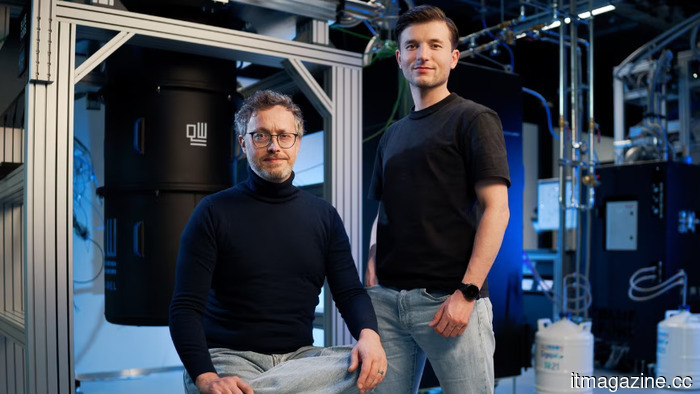 Inside QuantWare's €152 million funding round to develop KiloFab
QuantWare has finalized a €152 million Series B funding round, which was led by Intel Capital, In-Q-Tel, and ETF Partners, marking the largest deeptech financing round in the Netherlands to date.
Inside QuantWare's €152 million funding round to develop KiloFab
QuantWare has finalized a €152 million Series B funding round, which was led by Intel Capital, In-Q-Tel, and ETF Partners, marking the largest deeptech financing round in the Netherlands to date.
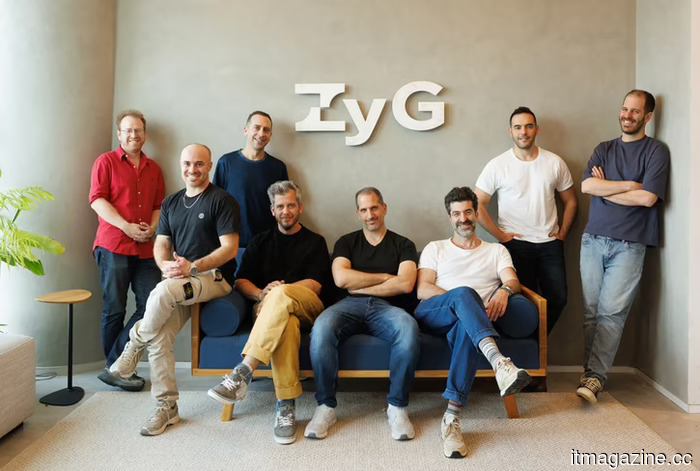 The founders of IronSource have secured $60 million at a valuation of $500 million for Zyg, an AI-driven platform that automates advertising in the e-commerce sector.
Zyg secured $60 million in funding, spearheaded by Accel, at a valuation of $500 million just two months following its stealth launch. The team at IronSource is developing AI agents designed to take the place of human ad buyers for direct-to-consumer brands.
The founders of IronSource have secured $60 million at a valuation of $500 million for Zyg, an AI-driven platform that automates advertising in the e-commerce sector.
Zyg secured $60 million in funding, spearheaded by Accel, at a valuation of $500 million just two months following its stealth launch. The team at IronSource is developing AI agents designed to take the place of human ad buyers for direct-to-consumer brands.
 Samsung showcases an exceptionally bright OLED display for smartphones that maintains color accuracy.
Samsung has introduced a new OLED panel that can reach brightness levels of up to 3,000 nits and offers expanded color coverage, with the goal of enhancing outdoor visibility and overall display quality.
Samsung showcases an exceptionally bright OLED display for smartphones that maintains color accuracy.
Samsung has introduced a new OLED panel that can reach brightness levels of up to 3,000 nits and offers expanded color coverage, with the goal of enhancing outdoor visibility and overall display quality.
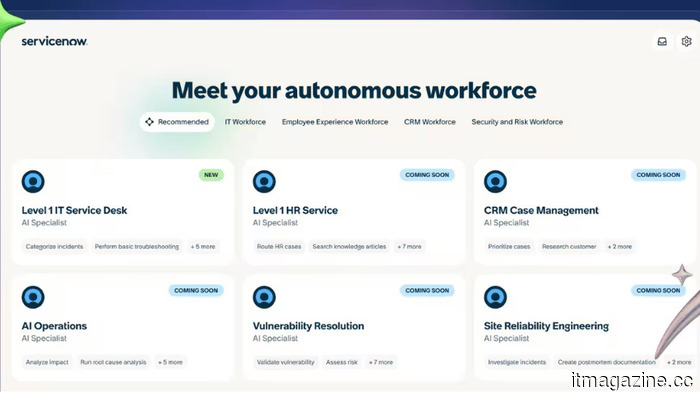 ServiceNow estimates that by 2030, it will reach $30 billion, with one-third of its annual contract value coming from AI.
ServiceNow anticipates $30 billion in subscription revenue by 2030, with 30% of that annual contract value (ACV) coming from Now Assist, the company's premier AI product. The presentation during the investor day addresses concerns regarding potential displacement by AI-SaaS.
ServiceNow estimates that by 2030, it will reach $30 billion, with one-third of its annual contract value coming from AI.
ServiceNow anticipates $30 billion in subscription revenue by 2030, with 30% of that annual contract value (ACV) coming from Now Assist, the company's premier AI product. The presentation during the investor day addresses concerns regarding potential displacement by AI-SaaS.
 Fervo Energy has initiated a $1.33 billion IPO, marking it as the largest climate-tech offering of 2026.
Fervo Energy has initiated its IPO roadshow with the goal of raising up to $1.33 billion by pricing shares between $21 and $24, in a Nasdaq listing identified as the climate-tech option for the AI infrastructure sector.
Fervo Energy has initiated a $1.33 billion IPO, marking it as the largest climate-tech offering of 2026.
Fervo Energy has initiated its IPO roadshow with the goal of raising up to $1.33 billion by pricing shares between $21 and $24, in a Nasdaq listing identified as the climate-tech option for the AI infrastructure sector.
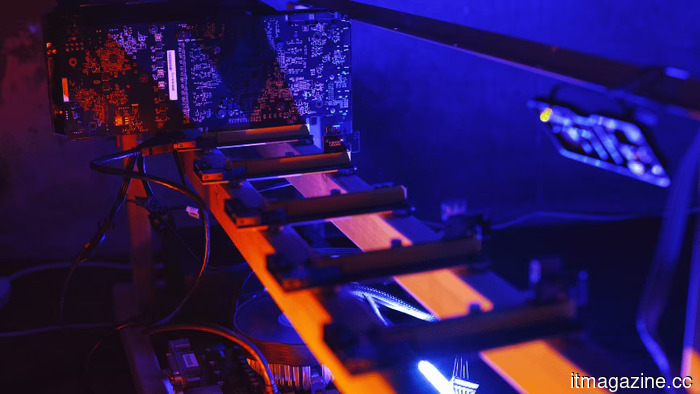 Nscale has invested €695 million in Portugal, while Microsoft contributes to a crypto-to-AI neocloud that has reached a valuation of $14.6 billion in just two years.
Nscale is set to provide 66,000 Nvidia Rubin GPUs to Microsoft's 1.2 GW Sines campus. The company, which transitioned from crypto mining, is now the most valuable AI infrastructure startup in Europe, boasting a valuation of $14.6 billion.
Nscale has invested €695 million in Portugal, while Microsoft contributes to a crypto-to-AI neocloud that has reached a valuation of $14.6 billion in just two years.
Nscale is set to provide 66,000 Nvidia Rubin GPUs to Microsoft's 1.2 GW Sines campus. The company, which transitioned from crypto mining, is now the most valuable AI infrastructure startup in Europe, boasting a valuation of $14.6 billion.
Intel has recruited Qualcomm veteran Alex Katouzian to head a newly formed group focused on Client Computing and Physical AI.
Intel has brought on Alex Katouzian, who spent 25 years at Qualcomm, to head a newly formed group that combines Client Computing and Physical AI. This marks the second senior recruitment from Qualcomm during CEO Lip-Bu Tan's time in office.