
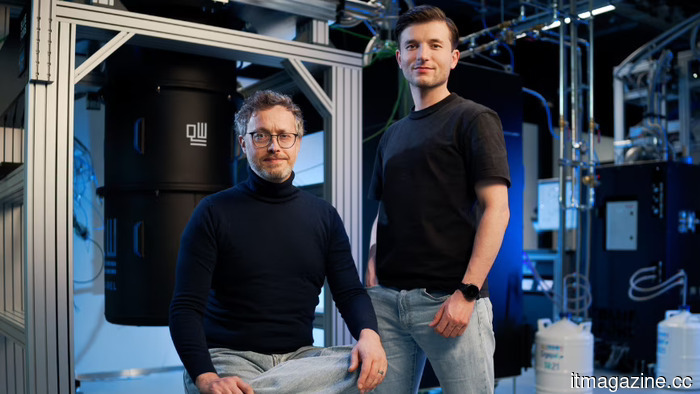
Inside QuantWare's €152 million funding round aimed at developing KiloFab.
The Series B round is the largest ever secured by a Dutch deeptech firm and marks the biggest private funding round for any company focused on quantum processors. Joining the existing syndicate that included FORWARD.one and Invest-NL are Intel Capital, In-Q-Tel, and ETF Partners.
In 2026, a particular type of European deeptech success story is being actively pursued by policy-makers, although such occurrences are infrequent in the market. Delft-based QuantWare has announced that it has successfully closed a Series B funding of €152 million ($178 million), breaking records for Dutch deeptech companies as well as for dedicated quantum-processor firms globally.
This round was oversubscribed, with a notably strong lineup of new investors. The new roster includes Intel Capital, In-Q-Tel (the CIA-backed strategic investor), and ETF Partners, alongside established members such as FORWARD.one, Invest-NL Deep Tech Fonds, InnovationQuarter Capital, Ground State Ventures, and Graduate Ventures.
This marks the second European quantum scale-up Series B announced in the same week, with QuantWare's round significantly surpassing the other in size.
Understanding QuantWare's operations
Founded in July 2021 by CEO Matthijs Rijlaarsdam and CTO Dr. Alessandro Bruno, both alumni of QuTech—a joint quantum-research institute of TU Delft and TNO—QuantWare was previously profiled by TNW over a year ago, when its commercial activities were already notable. The company has delivered functioning quantum processors to over 50 organizations across 20 countries and claims the title of the largest commercial supplier of quantum processors by volume globally.
What distinguishes QuantWare from other quantum computing firms is its architectural choice. While most superconducting qubit systems utilize 2D chip designs where signal lines are routed laterally on a single processor’s surface—an approach that increases space consumption with higher qubit counts and limits commercial scalability—QuantWare utilizes a three-dimensional VIO architecture. This innovative design stacks chiplet modules vertically and connects them via ultra-high-fidelity chip-to-chip links, allowing signal lines to run between layers instead of across them. The company argues that this architecture scales in the same manner as traditional semiconductor processes.
VIO-40K and the ambitious 10,000-qubit target
The Series B funding follows the announcement of VIO-40K in late April, representing a next-generation architecture capable of handling processors with 10,000 qubits—approximately 100 times the current commercial capabilities. This architecture is designed to accommodate up to 40,000 input-output lines through the chiplet stack approach.
Coverage from Quantum Computing Report highlighted that this design presents the first credible commercial avenue to achieving such scale without needing to network numerous smaller systems, which would introduce latency and fidelity challenges.
Reservations for VIO-40K are currently being accepted, with the first customer deliveries anticipated in 2028, according to QuantWare's announcement. The architecture is what underpins the significant size of the Series B funding; without a credible scaling strategy, no quantum hardware company has managed to attract private rounds of this magnitude. With a defined path, the potential market significantly expands.
KiloFab: allocation of funds
The majority of the new funding will be directed towards KiloFab, described by QuantWare as the world’s first dedicated fabrication facility for Quantum Open Architecture devices and one of the largest quantum processor production centers globally. Located at the company's headquarters in Delft, this facility is expected to increase QuantWare's production capacity by about 20 times.
Unlike other leading quantum computing companies which either produce their processors in vertically integrated settings or from a limited number of smaller academic fabs, KiloFab aims to eliminate these limits by acting as an open-architecture commercial supplier to the broader industry.
If QuantWare successfully continues its role as an open-architecture supplier in the upcoming phase of quantum processor demand, it could position itself similarly to TSMC in the classical semiconductor space—essentially a behind-the-scenes fabrication operation critical to other brands.
QuantWare’s clientele is notably diverse for the current stage of the industry. The company sells to a mix of national technology institutes, large tech firms, and other commercial quantum computing companies. Its distribution across 20 countries is significant, as many quantum hardware companies typically sell mainly to local or regional customers. This geographic spread indicates that QuantWare's open-architecture offering appeals to buyers interested in maintaining control over their quantum software stack rather than opting for a fully integrated system.
The investor composition reflects this dynamic as well. Intel Capital's involvement serves as a strategic hedge, given that Intel is involved in trapped-ion quantum research, and having a stake in the leading superconducting-QPU supplier offers Intel various strategic options. In-Q-Tel’s participation signifies interest from government-adjacent customers, while ETF Partners’ investment thesis, focused on climate, aligns with the energy efficiency of QuantWare's chiplet approach, which it claims offers significantly more computation per watt than competing scaling methods.
The existing
Other articles
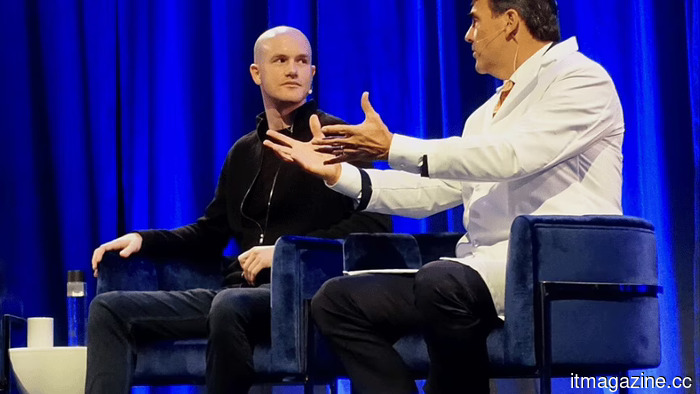 Coinbase reduces its workforce by 14% and restructures to focus on AI-driven pods as cryptocurrency revenue falls 26% and trading volumes reach an 18-month low.
Coinbase is reducing its workforce by 660 employees and reorganizing into AI-focused pods with a limitation of five management layers. Revenue for Q1 is projected to decline by 26% as cryptocurrency trading volumes decrease by 48%.
Coinbase reduces its workforce by 14% and restructures to focus on AI-driven pods as cryptocurrency revenue falls 26% and trading volumes reach an 18-month low.
Coinbase is reducing its workforce by 660 employees and reorganizing into AI-focused pods with a limitation of five management layers. Revenue for Q1 is projected to decline by 26% as cryptocurrency trading volumes decrease by 48%.
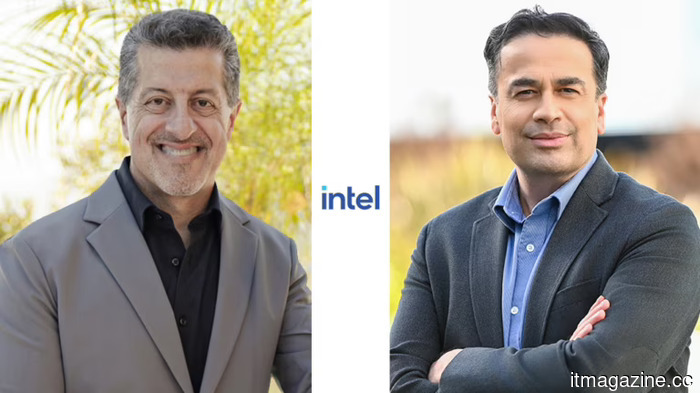 Intel has recruited Qualcomm veteran Alex Katouzian to head a newly formed group focused on Client Computing and Physical AI.
Intel has brought on Alex Katouzian, who spent 25 years at Qualcomm, to head a newly formed group that combines Client Computing and Physical AI. This marks the second senior recruitment from Qualcomm during CEO Lip-Bu Tan's time in office.
Intel has recruited Qualcomm veteran Alex Katouzian to head a newly formed group focused on Client Computing and Physical AI.
Intel has brought on Alex Katouzian, who spent 25 years at Qualcomm, to head a newly formed group that combines Client Computing and Physical AI. This marks the second senior recruitment from Qualcomm during CEO Lip-Bu Tan's time in office.
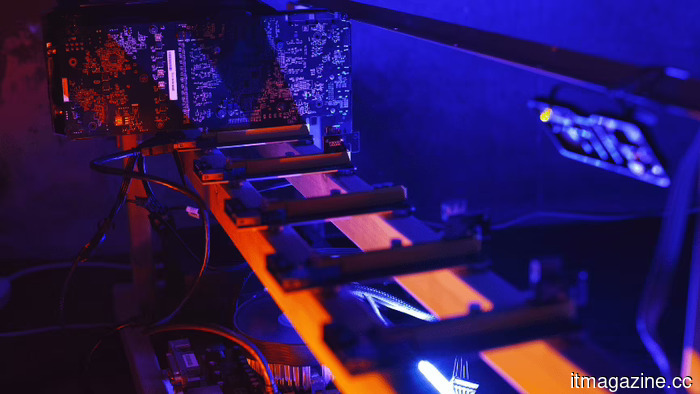 Nscale has invested €695 million in Portugal, while the crypto-to-AI neocloud has reached a valuation of $14.6 billion in just two years with the support of Microsoft.
Nscale will provide 66,000 Nvidia Rubin GPUs to Microsoft's 1.2 GW Sines campus. Once a crypto miner, it is now Europe's most valuable AI infrastructure startup, valued at $14.6 billion.
Nscale has invested €695 million in Portugal, while the crypto-to-AI neocloud has reached a valuation of $14.6 billion in just two years with the support of Microsoft.
Nscale will provide 66,000 Nvidia Rubin GPUs to Microsoft's 1.2 GW Sines campus. Once a crypto miner, it is now Europe's most valuable AI infrastructure startup, valued at $14.6 billion.
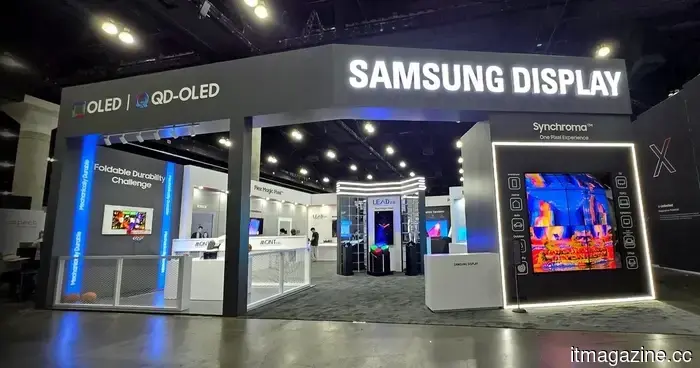 Samsung unveils a sleek, flexible display designed for your car's dashboard.
Samsung Display's enhanced Stretchable Display 2.0 achieves a resolution of 200 PPI and adapts dashboard visuals based on driving conditions, providing a clearer glimpse into how future vehicle instrument clusters might become more responsive.
Samsung unveils a sleek, flexible display designed for your car's dashboard.
Samsung Display's enhanced Stretchable Display 2.0 achieves a resolution of 200 PPI and adapts dashboard visuals based on driving conditions, providing a clearer glimpse into how future vehicle instrument clusters might become more responsive.
 iOS 26.5 is introducing encryption for RCS messages sent between Android and iPhone devices.
iOS 26.5 introduces encrypted RCS support for conversations between iPhone and Android devices, but users should check for the lock symbol before concluding that cross-platform chats are secure.
iOS 26.5 is introducing encryption for RCS messages sent between Android and iPhone devices.
iOS 26.5 introduces encrypted RCS support for conversations between iPhone and Android devices, but users should check for the lock symbol before concluding that cross-platform chats are secure.
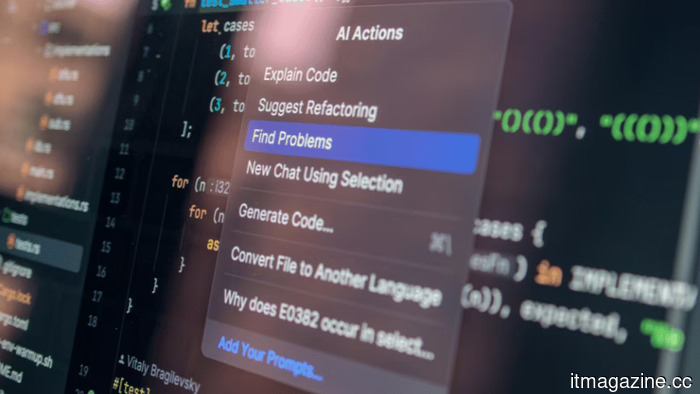 Google, Microsoft, and xAI have consented to share governmental evaluations of AI models before their release as the Mythos crisis prompts an increase in oversight.
Five leading AI laboratories are now presenting their models for evaluation by the US government. This voluntary program lacks legal authority but includes all significant AI developers following the Mythos crisis.
Google, Microsoft, and xAI have consented to share governmental evaluations of AI models before their release as the Mythos crisis prompts an increase in oversight.
Five leading AI laboratories are now presenting their models for evaluation by the US government. This voluntary program lacks legal authority but includes all significant AI developers following the Mythos crisis.
Inside QuantWare's €152 million funding round aimed at developing KiloFab.
QuantWare has completed a €152 million Series B funding round, spearheaded by Intel Capital, In-Q-Tel, and ETF Partners, marking the largest deep tech funding round in the Netherlands to date.