
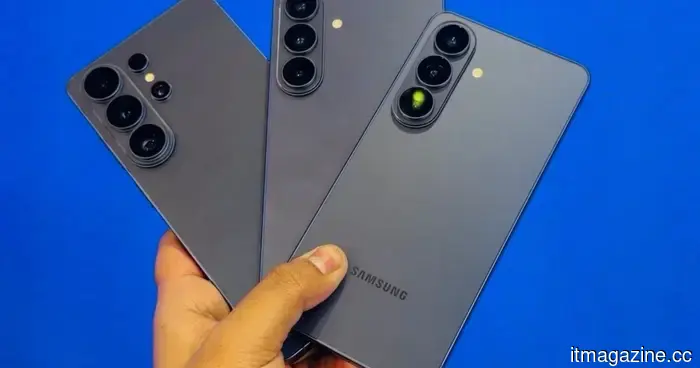
It's time we cease to uncritically accept that Snapdragon phones are the best.
For many years, discussions about smartphone chips have been relatively simple. A device equipped with a Snapdragon chip was typically regarded as the superior choice, while those featuring Exynos or MediaTek often faced skepticism. Qualcomm built its reputation over time, but by 2026, that structure seems less certain.
In recent times, MediaTek’s Dimensity 9000-series processors have been competing closely with Snapdragon 8-series chips, while Exynos usually lagged behind. However, the competition has become significantly more intriguing.
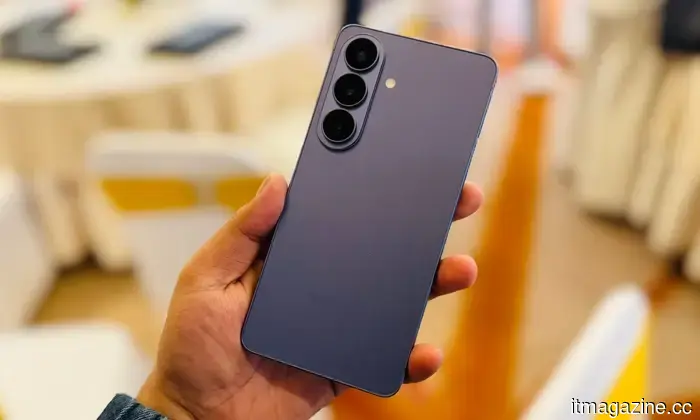
My recent experience with the Galaxy S26, which features the Exynos 2600, has already impressed me with its performance. When considering the Snapdragon 8 Elite Gen 5 in the S26 Ultra and the Dimensity 9500 in devices like the Oppo Find X9, the assumption that “Snapdragon automatically means better” begins to show vulnerabilities.
**Benchmark Results**
- Galaxy S26 (Exynos 2600)
- Galaxy S26 Ultra (Snapdragon 8 Elite Gen 5)
- Oppo Find X9 (Dimensity 9500)
- AnTuTu Total: 3,101,654 / 3,638,265 / 3,512,048
- Geekbench 6 Single-Core: 3,036 / 3,524 / 3,207
- Geekbench 6 Multi-Core: 10,534 / 10,823 / 9,345
- 3DMark Wild Life Extreme: 6,366 / 6,519 / 7,142
- 3DMark Wild Life Extreme Stress Test Stability (%): 53.5 / 63.2 / 54.9
- Temperature After Stress Test (°C): 40.2 / 38.7 / 39.2
**Galaxy S26 Offers Unexpected Performance**
Perhaps the most shocking revelation is that the Exynos 2600 doesn’t appear to be a significant weak link. During my tests, the standard Galaxy S26 achieved 3,036 single-core and 10,534 multi-core scores in Geekbench 6, alongside an AnTuTu score of 2,859,177. Historically, Samsung has released its flagship devices in two versions: Snapdragon models for North America, China, and Japan, while the rest of the world received Exynos chips. Samsung faced considerable criticism for this approach, as prior Exynos-powered flagships often lagged behind their Snapdragon counterparts.
Due to these concerns, as well as production issues with chips, Samsung went on to release several generations of the Galaxy S phones exclusively with Snapdragon processors. However, it appears that Exynos is making a comeback. The Galaxy S26 earned a score of 6,366 on 3DMark Wild Life Extreme. The results from the stress test were somewhat mixed, with stability at 53.5%. These figures are impressive for a smaller flagship, especially for a device many might have dismissed upon seeing “Exynos” on the specifications.
**S26 Ultra is Faster, but Not Dramatically So**
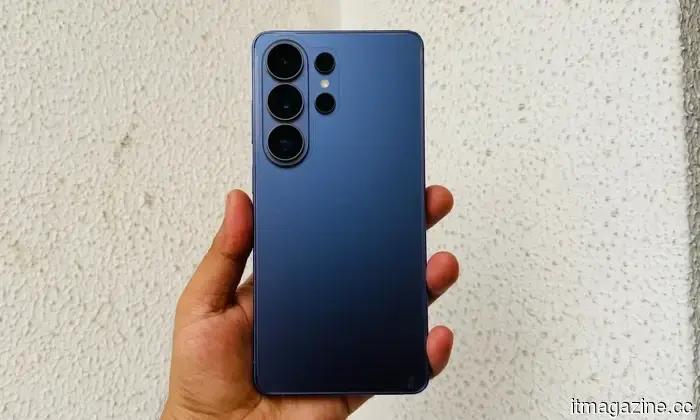
The Galaxy S26 Ultra has its advantages, which isn't surprising. Its Wild Life Extreme Stress Test achieved a top loop score of 6,519 with 63.2% stability, aided by its larger vapor chamber cooling system. Thus, while its thermal performance was better, the difference isn’t substantial enough to entirely shift the narrative compared to the standard S26. The S26 Ultra outperformed the S26 in both AnTuTu and Geekbench, but the difference is no longer so evident in everyday use.
The S26 Ultra is undeniably quicker, but the disparity is nowhere near as pronounced as previous comparisons between Snapdragon and Exynos. In terms of Geekbench scores, their performance is nearly identical. Despite not having the upgraded cooling system, the Galaxy S26 surprisingly managed to stay close behind the S26 Ultra in stress tests. Where the Ultra performs notably better is in stability, which is crucial for consistent performance under pressure.
**MediaTek Makes the Competition Engaging**
The Dimensity 9500 found in the Oppo Find X9 Pro adds an intriguing twist to this discussion. Its Geekbench 6 single-core score of 3,203 surpasses that of the base Galaxy S26, and its AnTuTu score of 3,512,048 is also higher. It achieved a score of 7,142 on 3DMark Wild Life Extreme, surpassing both the S26 and S26 Ultra.
MediaTek has shed its image as merely the “other” flagship chip brand. The numbers now place it in direct competition with Qualcomm and Samsung’s in-house chips. For an extended period, Dimensity chips were viewed as budget-friendly options powering mid-range and entry-level smartphones. Results like these indicate the significant progress MediaTek has made in the high-end market. However, it still has a drawback, as evidenced by the 54.9% stability in stress tests, which is

Other articles
 Razer enhances the Blade 16 by offering options for 64GB RAM and RTX 5090.
Razer has unveiled new configurations for the Blade 16, now featuring up to 64GB of LPDDR5X RAM and an RTX 5090 GPU, elevating the gaming laptop to the level of a workstation.
Razer enhances the Blade 16 by offering options for 64GB RAM and RTX 5090.
Razer has unveiled new configurations for the Blade 16, now featuring up to 64GB of LPDDR5X RAM and an RTX 5090 GPU, elevating the gaming laptop to the level of a workstation.
 OpenAI's Codex now features a small AI companion that provides updates while you code.
OpenAI has launched Codex Pets, animated companions that can be optionally added to its Codex desktop application. These companions reside on your screen and monitor the activities of the coding agent in real time.
OpenAI's Codex now features a small AI companion that provides updates while you code.
OpenAI has launched Codex Pets, animated companions that can be optionally added to its Codex desktop application. These companions reside on your screen and monitor the activities of the coding agent in real time.
 Won-Jin Lee assumes control of Samsung's TV division following a decline in profits.
Samsung has appointed Won-Jin Lee to lead its Visual Display division as the profit for Q1 from TVs decreased and TCL narrowed the gap to just one percentage point.
Won-Jin Lee assumes control of Samsung's TV division following a decline in profits.
Samsung has appointed Won-Jin Lee to lead its Visual Display division as the profit for Q1 from TVs decreased and TCL narrowed the gap to just one percentage point.
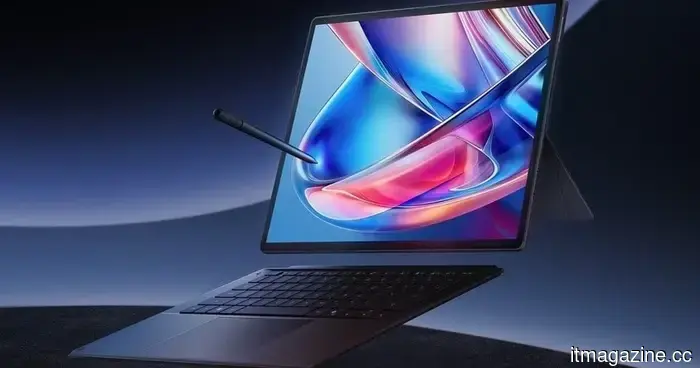 ASUS introduces the ProArt PZ14 featuring a 144Hz OLED display and Snapdragon X2 Elite.
The ASUS ProArt PZ14 has been unveiled, featuring the Snapdragon X2 Elite, a 144Hz OLED display, and a 2-in-1 design, with worldwide availability anticipated shortly.
ASUS introduces the ProArt PZ14 featuring a 144Hz OLED display and Snapdragon X2 Elite.
The ASUS ProArt PZ14 has been unveiled, featuring the Snapdragon X2 Elite, a 144Hz OLED display, and a 2-in-1 design, with worldwide availability anticipated shortly.
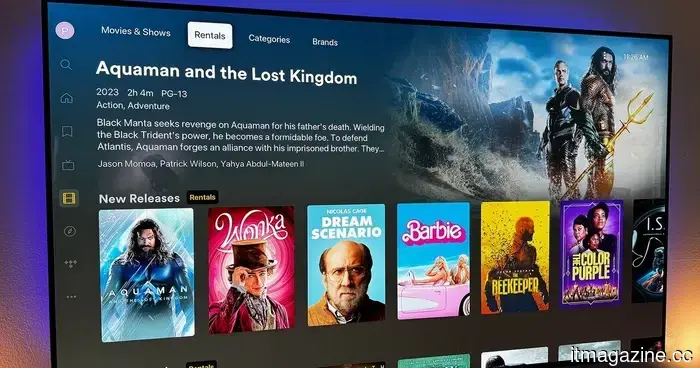 Plex is experiencing a significant increase in prices for remote streaming services.
Plex will conclude the introductory pricing for its Remote Watch Pass on June 1, increasing monthly charges to $2.99 and annual charges to $29.99.
Plex is experiencing a significant increase in prices for remote streaming services.
Plex will conclude the introductory pricing for its Remote Watch Pass on June 1, increasing monthly charges to $2.99 and annual charges to $29.99.
It's time we cease to uncritically accept that Snapdragon phones are the best.
While Snapdragon continues to produce outstanding chips, this year's results from Exynos and MediaTek challenge the previous notion that "Qualcomm always comes out on top."