

Won-Jin Lee assumes control of Samsung's TV division following a decline in profits.
Won-Jin Lee, a seasoned marketing professional, is now at the helm of the Visual Display unit following three months of declining profits in the TV sector. His predecessor will transition to a role focused on AI and robotics.
Samsung Electronics has appointed a new head for its television division for the first time in over two years, signifying a candid acknowledgment that the world's leading TV manufacturer is facing challenges.
On Monday, the company announced the appointment of Won-Jin Lee, who previously led the Global Marketing Office, to head the Visual Display segment. Yong Seok-woo, the outgoing leader of the division, who held the position for more than two years, is moving into an advisory capacity within the Device eXperience division, where his efforts will concentrate on future technologies such as artificial intelligence and robotics.
At first glance, this change seems like a standard personnel shuffle; however, it is more indicative of a strategic redirection.
Samsung is still widely considered the leading player in the television market. Its own reports proudly highlight that 2025 marks the company's twentieth consecutive year as the top global TV brand by revenue, boasting a 29.1 percent market share and an impressive 54.3 percent in the premium segment for televisions priced above $2,500. By most comparisons in consumer electronics, this is not a sector in dire need of rescue.
Yet, internally, Samsung has faced some discomfort in recent quarters. The company revealed in late April that profits from its TV division fell in the first quarter due to stagnant demand and increased raw material costs.
The official statement to Reuters accompanying Lee’s appointment indicated that the new leader is anticipated to provide "a fresh perspective and the necessary changes," language typically employed by Samsung when issues arise.
The competitor gradually encroaching on Samsung's leadership is not an American or Japanese brand, but rather TCL.
When considering unit shipments rather than revenue, the reality is closer than the headline figures imply. Counterpoint's monthly report for November 2025 indicated that Samsung held a 17 percent share of unit shipments, with TCL trailing at 16 percent and Hisense at 10 percent. Reports from SamMobile, FlatpanelsHD, and Broadband TV News noted that TCL is now just one percentage point behind, thanks to aggressive pricing on Mini-LED panels and swift growth in emerging markets in Eastern Europe, the Middle East, and Africa.
In March, TCL Electronics signed a binding agreement to acquire a controlling 51 percent stake in Sony’s TV division, a joint venture set to take effect in April 2027. This development represents a significant structural challenge to Samsung's leadership, as a Chinese brand with Japanese engineering backing poses a different kind of rivalry.
Samsung is not losing its grip on the TV market; however, for the first time in a long while, it is having to defend its position on terms set by others.
Why appoint a marketing chief now?
Lee’s former position provides key insight into his new role. The Global Marketing Office formulates Samsung’s branding and advertising strategies across various sectors, and according to the company's announcement, Lee played a crucial role in enhancing the services and content that complement its TV and mobile devices.
The Korea Herald aptly noted that Samsung is turning to a “marketing veteran to reboot the TV business,” emphasizing that this is not merely a reshuffle of hardware engineers.
This decision reflects where Samsung perceives future competition will lie. Differentiating hardware is increasingly challenging, especially in the mid-range market where Chinese competitors can match Samsung’s panel technology at significantly lower prices.
The area where Samsung can maintain its competitive edge lies in the connected-TV operating platform, advertising inventory through Samsung TV Plus, and subscription bundles that transform a one-time appliance sale into an ongoing relationship. While Samsung has pursued premium hardware positioning for years, such as with its modular MicroLED “Wall,” it is likely that the next decade's profit margins will come more from software and services associated with more modest panels.
In essence, Lee's mandate is to shift Samsung’s TV business perspective from a hardware company to a media enterprise. Whether the rest of the organization is structurally prepared for this transformation remains an open question—one that has historically posed challenges for Samsung.
A crucial aspect over the coming five years may be the shift involving Yong Seok-woo, the departing VD chief, as he becomes an advisor within the Device eXperience division on AI and robotics.
This is not merely a soft landing. The DX Division encompasses Samsung’s strategy for consumer electronics, mobile devices, and emerging technologies, with AI and robotics being key focus areas that Samsung is clearly signaling it wants to amplify through its investments in edge-AI chips and other AI-related acquisitions, such as the French ultrasound startup Sonio.
Yong has extensive knowledge of the home appliance and panel ecosystem, and entrusting him with robotics indicates Samsung’s vision of future living room devices as interfaces—possibly humanoid ones—that integrate displays, sensors, and content under one umbrella. The TV business is viewed as the
Other articles
 The era of brain monitoring devices, akin to Fitbits, may be nearer than we realize.
The upcoming major trend in wearables might not track steps or calories; instead, it could measure your concentration, tiredness, and preparedness.
The era of brain monitoring devices, akin to Fitbits, may be nearer than we realize.
The upcoming major trend in wearables might not track steps or calories; instead, it could measure your concentration, tiredness, and preparedness.
 Meta prefers to exit New Mexico rather than redesign its applications for children.
New Mexico is requesting that a judge in Santa Fe compel Meta to implement changes to its algorithms, establish age verification, and contribute to a $3.7 billion fund for teen mental health. The company has responded with a threat to exit the market.
Meta prefers to exit New Mexico rather than redesign its applications for children.
New Mexico is requesting that a judge in Santa Fe compel Meta to implement changes to its algorithms, establish age verification, and contribute to a $3.7 billion fund for teen mental health. The company has responded with a threat to exit the market.
 Grok is set to join ChatGPT and Perplexity on your CarPlay dashboard.
Your car dashboard is gradually becoming a highly sought-after space for AI in technology. Grok is the newest entrant aiming for a presence there, and unlike the two chatbots already available on CarPlay, it is focusing solely on Voice mode.
Grok is set to join ChatGPT and Perplexity on your CarPlay dashboard.
Your car dashboard is gradually becoming a highly sought-after space for AI in technology. Grok is the newest entrant aiming for a presence there, and unlike the two chatbots already available on CarPlay, it is focusing solely on Voice mode.
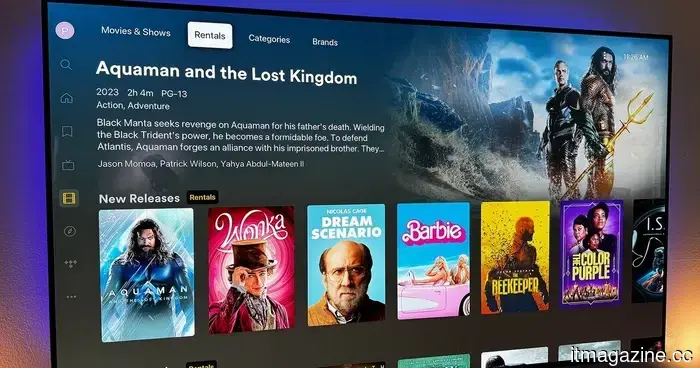 Plex is experiencing a significant increase in prices for remote streaming services.
Plex will conclude the introductory pricing for its Remote Watch Pass on June 1, increasing monthly charges to $2.99 and annual charges to $29.99.
Plex is experiencing a significant increase in prices for remote streaming services.
Plex will conclude the introductory pricing for its Remote Watch Pass on June 1, increasing monthly charges to $2.99 and annual charges to $29.99.
 The wisest life decision I made was to delete Instagram, which brought peace to my troubled spirit.
I impulsively deleted Instagram, but what came next was significantly calmer. Amid the restlessness and the calmness, I rediscovered my focus, reclaimed my time, and uncovered a version of my life that genuinely felt like mine once more.
The wisest life decision I made was to delete Instagram, which brought peace to my troubled spirit.
I impulsively deleted Instagram, but what came next was significantly calmer. Amid the restlessness and the calmness, I rediscovered my focus, reclaimed my time, and uncovered a version of my life that genuinely felt like mine once more.
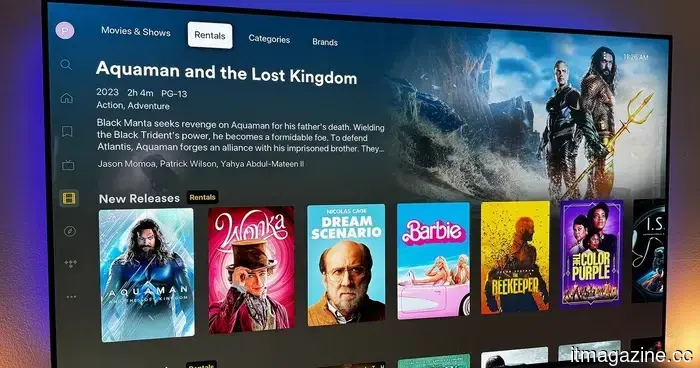 Plex is experiencing a significant increase in price for remote streaming.
Plex will conclude the promotional pricing for its Remote Watch Pass on June 1, increasing the monthly cost to $2.99 and the annual cost to $29.99.
Plex is experiencing a significant increase in price for remote streaming.
Plex will conclude the promotional pricing for its Remote Watch Pass on June 1, increasing the monthly cost to $2.99 and the annual cost to $29.99.
Won-Jin Lee assumes control of Samsung's TV division following a decline in profits.
Samsung has appointed Won-Jin Lee to lead its Visual Display division as the profit for Q1 from TVs decreased and TCL narrowed the gap to just one percentage point.