
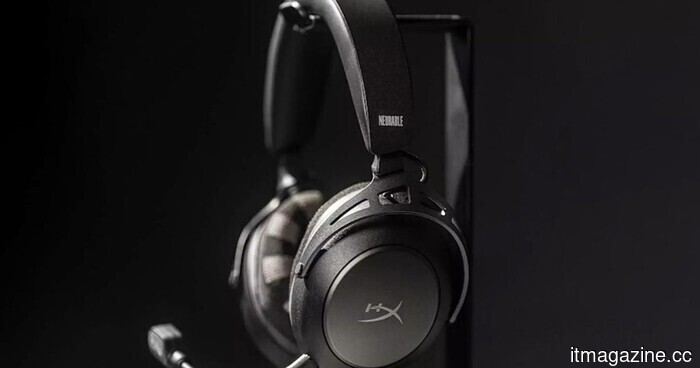
The era of brain monitoring devices akin to Fitbit may be nearer than we realize.
Over the past decade, consumer technology has converted the body into a collection of measurable metrics. Metrics such as heart rate, sleep phases, blood oxygen levels, recovery statistics, stress levels, and readiness have all been compiled into easy-to-read dashboards that provide clearer insights into your "health." The upcoming challenge might be more personal as it shifts focus to the brain—not literally, thankfully.
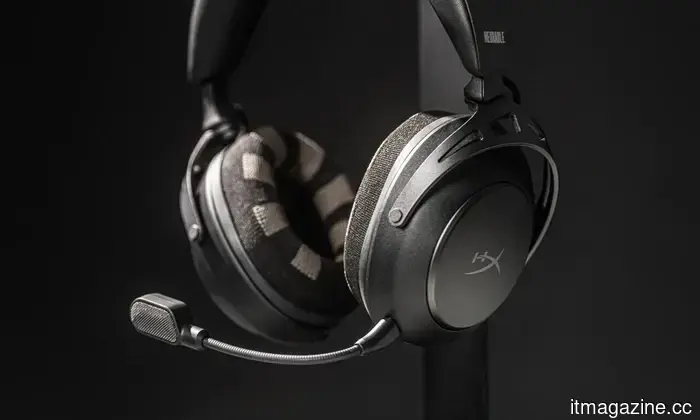
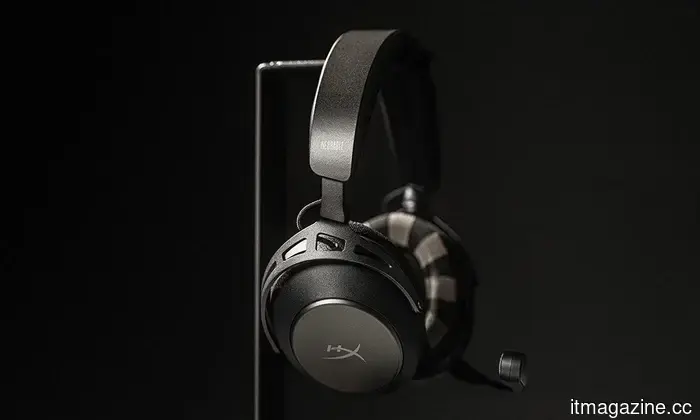
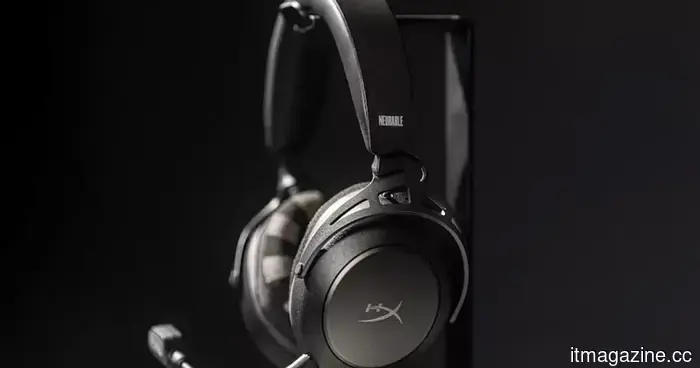
Neurable, a Boston-based company specializing in noninvasive brain-computer interface technology, is transitioning to a licensing model. This shift means their EEG-based system could soon be integrated into a broader array of consumer devices beyond their own headphones. Other manufacturers may incorporate this technology into well-known products such as gaming headsets, smart glasses, hats, helmets, and various hearables. One of the first products anticipated to feature it is a gaming headset created in partnership with HyperX.
The technology may sound futuristic, but it isn’t as far-fetched as it appears.
When many hear "brain tech," they likely envision Neuralink-style implants or some dramatic mind-reading technology. However, Neurable’s method is much more straightforward. Their system employs electroencephalography, or EEG, which investigates electrical activity in the brain via sensors placed on the scalp. These signals are then processed through software models designed to assess factors like focus, cognitive load, mental recovery, readiness, and anxiety.
Instead of interpreting thoughts, Neurable aims to convert broad brain state signals into consumer-accessible metrics and prompts that resemble the health insights already provided by smartwatches and fitness trackers. That’s precisely the direction the company is pursuing—making it feel similar to devices like smartwatches or fitness bands such as Fitbit.
A headset claiming to monitor concentration or gauge mental fatigue sits more comfortably alongside wellness devices than a laboratory instrument. Neurable discusses applications for their technology in areas such as gaming performance, student concentration, workplace fatigue, and recovery from cognitive stress. The language surrounding the product is notably crafted to avoid discussions of invasive monitoring, instead emphasizing self-optimization, routine management, and improved daily performance.
Reasons for quick integration into everyday life
The primary reason this technology may become popular very quickly is its design. Consumer neurotechnology is not appearing as an awkward or clinical device. The hardware is being incorporated into products that people are already familiar with and purchase. This is how new categories become socially accepted; fitness tracking transitioned in a similar manner on the wrist. Brain-state tracking now appears to pursue the same path through headphones and other head-mounted devices.
This approach is also reflected in the user experience. "Brain readiness" starts to resemble familiar health metrics terminology, much like sleep scores or heart rate variability. As more products begin to promise insights into mental workload, fatigue, or focus, a new category of wearables starts to emerge.
There are promising aspects, but significant concerns remain.
There is a legitimate appeal for consumers here. Many individuals would be interested in improved indicators of burnout, stress, or cognitive fatigue if those indicators are dependable and useful. From students to gamers, anyone whose daily performance relies more on mental agility than physical capability could find this appealing. A wearable that assists in identifying when focus wanes or when recovery is necessary fits seamlessly into a culture preoccupied with self-improvement.
However, trust becomes a tricky issue. Brain metrics inherently sound authoritative, which can quickly create problems. Privacy concerns intensify once companies begin gathering data that feels more intimate than step counts or sleep patterns. Neurable asserts that their practices are privacy-oriented and based on consent, but those assurances will be subjected to more rigorous scrutiny as the technology expands across additional brands and product categories.
The potential downside extends beyond privacy. A system designed to monitor focus and cognitive strain could easily attract firms interested in more than just wellness insights. It might serve as a means to assess whether employees appear alert, engaged, or sufficiently productive, thereby allowing consumer neurotechnology to shift from self-tracking to workplace surveillance.
The actual tension between these developments might go unnoticed due to the inviting packaging. A headset claiming to enhance focus seems beneficial enough. However, a market flooded with products evaluating your mental state every day is something people should consider more carefully before it becomes commonplace.
Other articles
 The era of brain monitoring devices, akin to Fitbits, may be nearer than we realize.
The upcoming major trend in wearables might not track steps or calories; instead, it could measure your concentration, tiredness, and preparedness.
The era of brain monitoring devices, akin to Fitbits, may be nearer than we realize.
The upcoming major trend in wearables might not track steps or calories; instead, it could measure your concentration, tiredness, and preparedness.
 Anthropic and Wall Street are creating a $1.5 billion pipeline for private equity.
Anthropic is completing a $1.5 billion joint venture with Blackstone, Hellman & Friedman, Goldman Sachs, and General Atlantic to implement Claude in portfolio companies of private equity.
Anthropic and Wall Street are creating a $1.5 billion pipeline for private equity.
Anthropic is completing a $1.5 billion joint venture with Blackstone, Hellman & Friedman, Goldman Sachs, and General Atlantic to implement Claude in portfolio companies of private equity.
 Won-Jin Lee assumes control of Samsung's TV division following a decline in profits.
Samsung has appointed Won-Jin Lee to lead its Visual Display division as the profit for Q1 from TVs decreased and TCL narrowed the gap to just one percentage point.
SK Hynix rises 12% as major tech companies increase their investment in AI memory.
SK Hynix shares surged by 12% as major technology companies confirmed their intentions to invest up to $725 billion in AI infrastructure, further intensifying the memory-chip supercycle.
Won-Jin Lee assumes control of Samsung's TV division following a decline in profits.
Samsung has appointed Won-Jin Lee to lead its Visual Display division as the profit for Q1 from TVs decreased and TCL narrowed the gap to just one percentage point.
SK Hynix rises 12% as major tech companies increase their investment in AI memory.
SK Hynix shares surged by 12% as major technology companies confirmed their intentions to invest up to $725 billion in AI infrastructure, further intensifying the memory-chip supercycle.
 Won-Jin Lee assumes leadership of Samsung's TV division following a decline in profits.
Samsung has appointed Won-Jin Lee to lead its Visual Display division as profits from TVs in Q1 decreased and TCL has narrowed the gap to just one percentage point.
Won-Jin Lee assumes leadership of Samsung's TV division following a decline in profits.
Samsung has appointed Won-Jin Lee to lead its Visual Display division as profits from TVs in Q1 decreased and TCL has narrowed the gap to just one percentage point.
 Meta would prefer to exit New Mexico rather than redesign its applications for children.
New Mexico is requesting a Santa Fe judge to mandate changes to algorithms, implement age verification, and create a $3.7 billion fund for teen mental health, targeting Meta. The company has warned of the possibility of exiting the market.
Meta would prefer to exit New Mexico rather than redesign its applications for children.
New Mexico is requesting a Santa Fe judge to mandate changes to algorithms, implement age verification, and create a $3.7 billion fund for teen mental health, targeting Meta. The company has warned of the possibility of exiting the market.
The era of brain monitoring devices akin to Fitbit may be nearer than we realize.
The forthcoming major trend in wearables might not track steps or calories; instead, it could assess your concentration, exhaustion, and preparedness.