

I utilize AI on a daily basis — here are three reasons why I chose to pay for Claude instead of ChatGPT.
I use AI daily, so I required a solution I could truly rely on, rather than just occasionally use. It became evident that for the consistency I desired, I would need to invest in it. The real dilemma arose when I had to make a choice between ChatGPT and Claude. I have been using ChatGPT for quite some time, and it already understands my thought process and requirements, which made it a comfortable option. However, as I explored Claude’s capabilities, the decision became increasingly difficult—it was no longer a straightforward choice.
I wavered for a while, balancing my familiarity with ChatGPT against Claude’s functionality. Ultimately, I opted for Claude, and in hindsight, I have no regrets about that decision.
The subtle satisfaction of effortless work
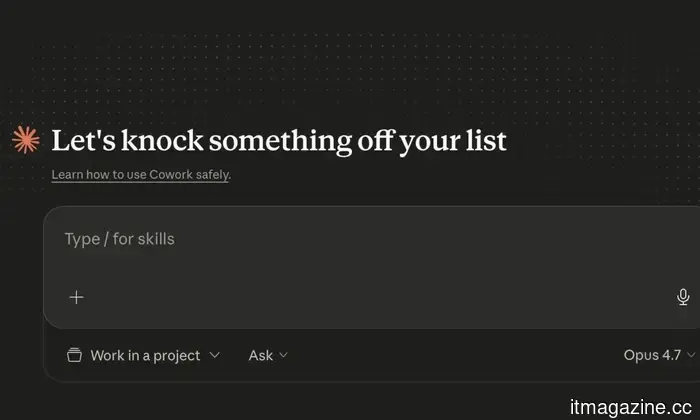
To be honest, what finally motivated me to subscribe to Claude Cowork was its automation feature, which quietly eliminates tasks from my day without requiring constant attention. My day used to be filled with tedious, low-effort tasks—those annoying jobs that you keep postponing, yet they never truly vanish. I delegated those tasks to Cowork, and now they just get accomplished. As long as I provide a clear prompt, it manages them daily without needing my involvement. It does request a few permissions to function effectively, and I hesitated a bit at first. However, it’s a one-time setup, and in exchange, I save time each day. That exchange feels entirely worthwhile once you see it in action.
What impressed me even more was how little oversight it requires. I’m not constantly checking or correcting it. It operates in the background, managing predictable tasks and allowing me to concentrate on what truly demands my attention. That shift is subtle initially.
Shimul Sood / Digital Trends
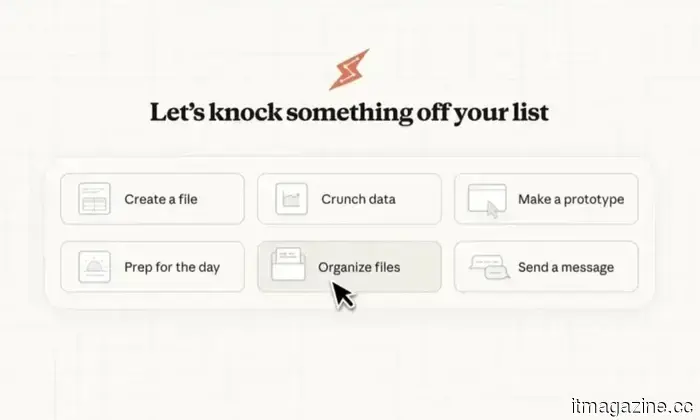
Recently, there was a moment that really highlighted this for me. I had a folder on my MacBook filled with nearly a thousand videos. It was chaotic—random filenames, duplicates everywhere, and nothing easy to locate. It had been sitting there for weeks because I simply didn’t want to tackle it. I granted Cowork access, provided a straightforward prompt, and let it work. It sorted through everything, organized the files, renamed them correctly, and eliminated duplicates. I didn’t have to micromanage or intervene. I only needed to be clear once, and it took care of the rest.
That’s when I realized most AI tools excel when tasks are simple and well-defined. However, when things become even slightly chaotic, with excessive context or many moving parts, they tend to oversimplify or struggle to keep up. Cowork feels entirely at ease in that disorder. It doesn’t require everything to be perfectly organized. It works through it and, crucially, removes a significant portion of it from your responsibilities so you can concentrate on the work that genuinely matters.
When your terminal gains intelligence
In addition to Cowork, another remarkable aspect of the experience is Claude Code. It functions as a version of Claude that not only suggests actions but actually takes them. It operates within your terminal, which may initially seem technical, but the interaction itself is straightforward. You simply describe what you want in plain language, such as “build a basic website,” “add a login system,” or even “explain what this block of code does.” From that point, it gets to work. It reviews your files, writes or modifies code, runs commands, and tests everything without needing you to piece it together manually.
To put it simply, regular Claude in a chat window feels like texting a very smart friend who gives you guidance. Claude Code feels like that same friend sitting at your computer, using your keyboard and completing the tasks while you supervise. This difference significantly alters the workflow. You no longer copy code from a chat and paste it into your editor, only to troubleshoot when something goes awry. Instead, the cycle becomes much more efficient—you describe, it executes, and you review.
The key to its effectiveness is the level of context it has access to. It can view your entire project, not just a snippet you’ve pasted in. This includes your files, structure, and even version history if you’re using Git. Consequently, its suggestions and modifications feel much more relevant to what you’re actually creating. It can also take tangible actions, install dependencies, run tests, and prepare commits. Importantly, you remain in control; it doesn’t make risky changes independently. If something could potentially cause issues, it asks first. Thus, it feels less like an assistant you consult and more like a collaborator.
It doesn’t require flawless prompts to succeed
This aspect is challenging to articulate, but it is perhaps the most crucial element of the experience. Many AI tools respond very literally. You ask for something, and they deliver exactly that but often miss the underlying intention. The result may be technically accurate yet not particularly useful. Eventually, you may find yourself needing to over-explain every prompt, attempting to address every edge case just to

Other articles
 Won-Jin Lee assumes leadership of Samsung's TV division following a decline in profits.
Samsung has appointed Won-Jin Lee to lead its Visual Display division as profits from TVs in Q1 decreased and TCL has narrowed the gap to just one percentage point.
Won-Jin Lee assumes leadership of Samsung's TV division following a decline in profits.
Samsung has appointed Won-Jin Lee to lead its Visual Display division as profits from TVs in Q1 decreased and TCL has narrowed the gap to just one percentage point.
 Plex is experiencing a significant increase in price for remote streaming.
Plex will conclude the promotional pricing for its Remote Watch Pass on June 1, increasing the monthly cost to $2.99 and the annual cost to $29.99.
Plex is experiencing a significant increase in price for remote streaming.
Plex will conclude the promotional pricing for its Remote Watch Pass on June 1, increasing the monthly cost to $2.99 and the annual cost to $29.99.
 Dot is the Mac calendar application I wish I had discovered earlier in 2026.
I've always enjoyed using menu bar calendar applications. They allow me to quickly view upcoming events, add new ones effortlessly, and access my calendar from anywhere. Dot is the best one I've encountered.
Dot is the Mac calendar application I wish I had discovered earlier in 2026.
I've always enjoyed using menu bar calendar applications. They allow me to quickly view upcoming events, add new ones effortlessly, and access my calendar from anywhere. Dot is the best one I've encountered.
 ASUS introduces the ProArt PZ14 featuring a 144Hz OLED display and Snapdragon X2 Elite.
The ASUS ProArt PZ14 has been unveiled, featuring the Snapdragon X2 Elite, a 144Hz OLED display, and a 2-in-1 design, with worldwide availability anticipated shortly.
ASUS introduces the ProArt PZ14 featuring a 144Hz OLED display and Snapdragon X2 Elite.
The ASUS ProArt PZ14 has been unveiled, featuring the Snapdragon X2 Elite, a 144Hz OLED display, and a 2-in-1 design, with worldwide availability anticipated shortly.
 Razer enhances the Blade 16 by offering options for 64GB RAM and RTX 5090.
Razer has unveiled new configurations for the Blade 16, now featuring up to 64GB of LPDDR5X RAM and an RTX 5090 GPU, elevating the gaming laptop to the level of a workstation.
Razer enhances the Blade 16 by offering options for 64GB RAM and RTX 5090.
Razer has unveiled new configurations for the Blade 16, now featuring up to 64GB of LPDDR5X RAM and an RTX 5090 GPU, elevating the gaming laptop to the level of a workstation.
 Anthropic and Wall Street are creating a $1.5 billion pipeline for private equity.
Anthropic is completing a $1.5 billion joint venture with Blackstone, Hellman & Friedman, Goldman Sachs, and General Atlantic to implement Claude in portfolio companies of private equity.
Anthropic and Wall Street are creating a $1.5 billion pipeline for private equity.
Anthropic is completing a $1.5 billion joint venture with Blackstone, Hellman & Friedman, Goldman Sachs, and General Atlantic to implement Claude in portfolio companies of private equity.
I utilize AI on a daily basis — here are three reasons why I chose to pay for Claude instead of ChatGPT.
I sought out a more effective AI and ultimately transformed my work processes. What began as mere curiosity has evolved into a resource I depend on daily.