
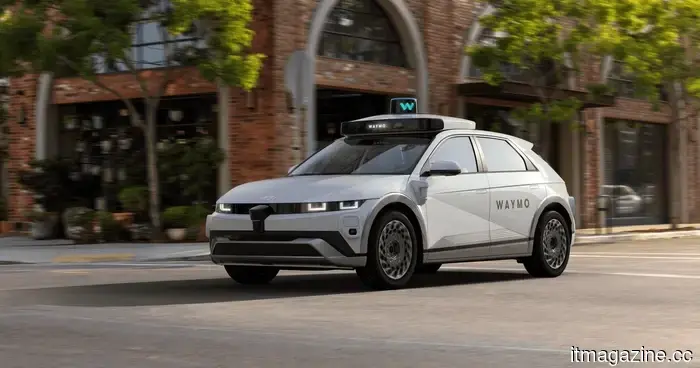
Self-driving cars in California will no longer escape penalties as new regulations take effect.
It's the moment when the industry's claim that driverless cars operate outside conventional legal frameworks officially ceased to hold water in the most significant autonomous vehicle market globally.
For years, California’s streets have reflected a subtle double standard: a human driver caught making an illegal U-turn received a ticket, while a driverless car committing the same offense often faced no consequences, typically resulting in just a call to the manufacturer. However, this is set to change.
The California DMV has introduced what it describes as the most crucial autonomous vehicle regulations in the country. For the first time, self-driving cars can now be formally ticketed for violating traffic laws (according to Futurism).
So, what can authorities do now?
Quite a bit, actually. With the new regulations, authorities can directly issue a “Notice of AV Noncompliance” to manufacturers whenever their autonomous vehicle (AV) violates traffic laws. These notices accumulate as a formal record that contributes to the DMV’s permit review process.
In addition to traffic tickets, AV companies must respond to first-responder calls within 30 seconds, ensure access to manual override systems, and comply with emergency geofencing directives (clearing restricted areas within two minutes of notification).
If self-driving vehicle manufacturers fail to adhere to these requirements, they risk facing suspension of permits, restrictions on fleet size, speed limits, and operational area constraints, which could negatively impact their business operations and revenue.
What about self-driving trucks?
The same regulations also pave the way for heavy-duty self-driving vehicles to operate on California roads for the first time, with new permits now accessible for trucks exceeding 10,000 pounds. Aurora, which has been operating autonomous freight trucks in Texas, has welcomed this advancement.
The good news is that AV companies have until summer 2026 to align with the new communication requirements, after which the DMV's enforcement will commence. Given the rapid scaling of robotaxi services in the U.S., implementing a citation system linked directly to operating permits could help maintain order.
The regulations were, in part, inspired by a September 2025 incident in San Bruno, where police found themselves unable to act against a Waymo vehicle that allegedly made an illegal U-turn, as well as by multiple instances of robotaxis obstructing emergency response routes across San Francisco.
For over five years, Shikhar has consistently clarified developments in consumer technology…
BYD may have just addressed the biggest drawback of owning an EV.
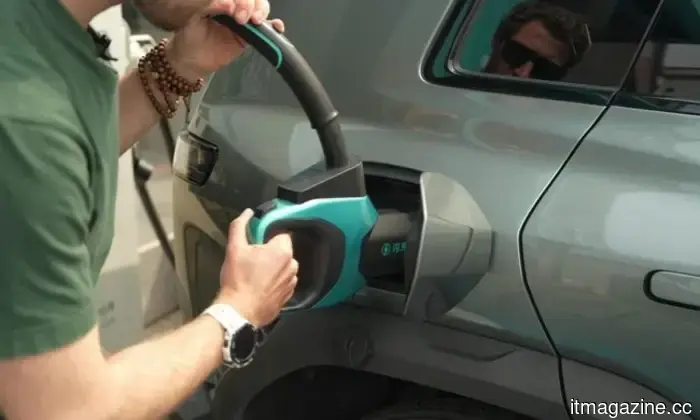
BYD’s new charging system is designed to reduce EV charging times to mere minutes.
Electric vehicles are increasingly common, yet charging remains a significant point of friction. Even when locating a fast charger, stopping can easily extend a trip by 30 minutes or more, making long-distance travel feel less convenient compared to refueling a gasoline vehicle. At BYD’s charging center in Beijing, the company is showcasing a system aimed at eliminating that delay. Vehicles are arriving, connecting, and charging using BYD’s second-generation Blade Battery and flash charging setup, offering a clearer view of the technology in action beyond a controlled prototype setting.
Your car’s Google Assistant is being phased out, and this is what will replace it.
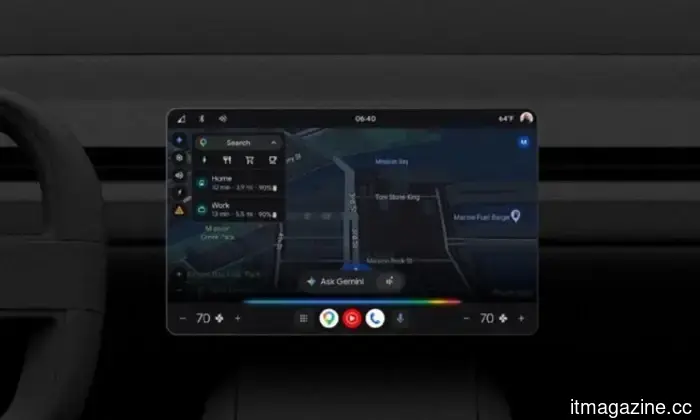
There is a unique kind of frustration associated with communicating with your car. You might say something perfectly reasonable, only for it to respond as though it’s hearing you for the first time: “I didn’t get that.” “Please try again.” Or worse, it confidently retrieves something entirely irrelevant. For years, in-car voice assistants have occupied that uncomfortable space—capable enough to keep you engaged. However, that might finally be changing. Google is introducing Gemini to vehicles with Google built-in, gradually shifting away from Google Assistant to something designed to understand natural, everyday speech. If the distinction between the two was apparent on your phone, in a car—where functionality is essential—it becomes even more significant.
Volkswagen introduces the ID. Polo, an electric car priced under $30k that boasts retro appeal.
The beloved Polo is transitioning to electric power, offering a range of 454 km and a surprisingly affordable starting price.
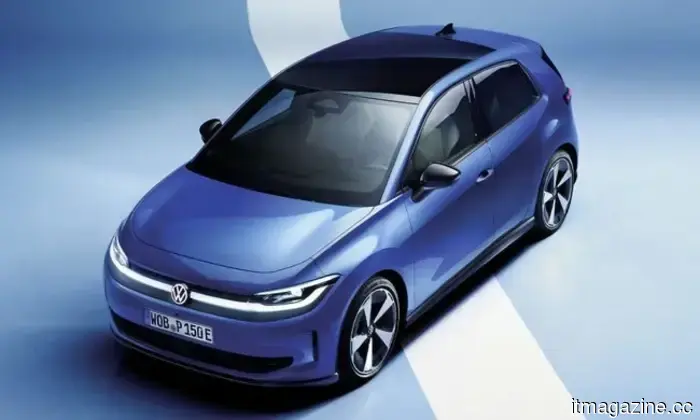
The Volkswagen ID. Polo is now officially unveiled, marking a significant milestone. The Polo has been one of VW's most cherished and iconic models, with over 20 million units sold, and it is now going fully electric. Developed in Wolfsburg, the ID. Polo begins at 24,995 euros in Germany, a reasonable entry price for a genuine electric vehicle.
In terms of core specifications, there are three power options: 85 kW, 99 kW, and 155 kW. The first two variants come with a 37 kWh battery, offering a range of up to 329 km. The top-tier 155 kW model features a 52 kWh battery and can cover up to 454 km on a single charge.

Other articles
 Alphabet approaches Nvidia in the race for the title of the world's most valuable company following strong Q1 earnings in cloud, search, and AI sectors.
Alphabet's market capitalization reached $4.6 trillion following a 22% increase in Q1 earnings. Google Cloud experienced a growth of 63%. Nvidia declined by 6%. The gap has narrowed to $200 billion.
Alphabet approaches Nvidia in the race for the title of the world's most valuable company following strong Q1 earnings in cloud, search, and AI sectors.
Alphabet's market capitalization reached $4.6 trillion following a 22% increase in Q1 earnings. Google Cloud experienced a growth of 63%. Nvidia declined by 6%. The gap has narrowed to $200 billion.
 These solar fence lights come with 11 modes and 9 colors, priced at $2.50 each, and their IP65 rating ensures they can be left outside throughout the year.
This post is shared as part of a paid collaboration with ESUNYD. Their outdoor lighting, which doesn’t need any wiring, operates solely on solar energy and is priced at $2.50 per light, making it an easy enhancement for any deck, fence, or patio. The 16-pack of ESUNYD solar fence lights illustrates this well at a price of $39.99, offering a $10 discount off the […]
These solar fence lights come with 11 modes and 9 colors, priced at $2.50 each, and their IP65 rating ensures they can be left outside throughout the year.
This post is shared as part of a paid collaboration with ESUNYD. Their outdoor lighting, which doesn’t need any wiring, operates solely on solar energy and is priced at $2.50 per light, making it an easy enhancement for any deck, fence, or patio. The 16-pack of ESUNYD solar fence lights illustrates this well at a price of $39.99, offering a $10 discount off the […]
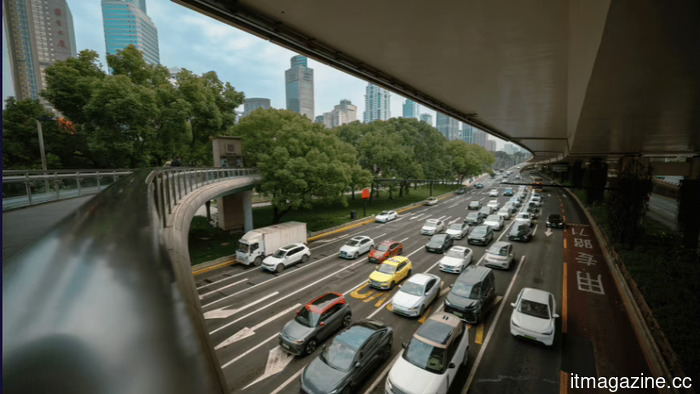 VW, Toyota, and Hyundai are relying on Chinese tech partners as local brands dominate 70% of the market.
The early 2026 market share increases for foreign automakers in China indicate a lingering effect of subsidies rather than a resurgence. The technology disparity has shifted.
VW, Toyota, and Hyundai are relying on Chinese tech partners as local brands dominate 70% of the market.
The early 2026 market share increases for foreign automakers in China indicate a lingering effect of subsidies rather than a resurgence. The technology disparity has shifted.
 VW, Toyota, and Hyundai are placing their bets on Chinese technology partners as local brands dominate 70% of the market.
The early 2026 market share increases of foreign automakers in China are indicative of a lingering effect from subsidies, rather than a resurgence. The technology gap has shifted.
VW, Toyota, and Hyundai are placing their bets on Chinese technology partners as local brands dominate 70% of the market.
The early 2026 market share increases of foreign automakers in China are indicative of a lingering effect from subsidies, rather than a resurgence. The technology gap has shifted.
 Microsoft has developed an AI assistant for lawyers within Word. Let's hope it doesn't act unpredictably.
A new AI legal assistant is set to be integrated into Word, as attorneys and the judiciary become increasingly aware of the high costs associated with inaccurate citations from chatbots.
Microsoft has developed an AI assistant for lawyers within Word. Let's hope it doesn't act unpredictably.
A new AI legal assistant is set to be integrated into Word, as attorneys and the judiciary become increasingly aware of the high costs associated with inaccurate citations from chatbots.
-interface-dramatically-differ-from-QuickBooks-Online?.jpg) Is the interface of the Intuit Enterprise Suite (IES) significantly different from that of QuickBooks Online?
This post is presented in collaboration with QuickBooks. The Intuit Enterprise Suite (IES) interface is not vastly different from QuickBooks Online. The primary navigation, workflows, and accounting features are still recognizable. The key distinction lies in the enhanced capabilities for handling multiple entities, user permissions, and consolidated reporting. This allows most users to adjust swiftly while benefiting from […]
Is the interface of the Intuit Enterprise Suite (IES) significantly different from that of QuickBooks Online?
This post is presented in collaboration with QuickBooks. The Intuit Enterprise Suite (IES) interface is not vastly different from QuickBooks Online. The primary navigation, workflows, and accounting features are still recognizable. The key distinction lies in the enhanced capabilities for handling multiple entities, user permissions, and consolidated reporting. This allows most users to adjust swiftly while benefiting from […]
Self-driving cars in California will no longer escape penalties as new regulations take effect.
An incident in September 2025, in which San Bruno police were unable to issue a ticket to a Waymo for making an illegal U-turn, contributed to the establishment of California's comprehensive new regulations for autonomous vehicles.