
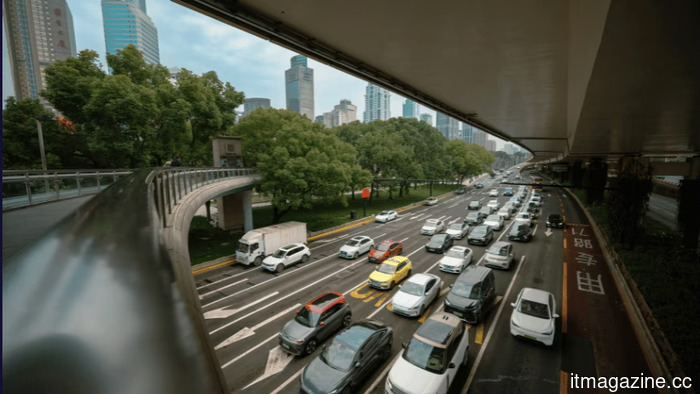
VW, Toyota, and Hyundai are placing their bets on Chinese technology partners as local brands dominate 70% of the market.
TL;DR: In early 2026, foreign automakers briefly saw a rise in market share in China following the expiration of EV subsidies and a decline in domestic sales. However, the overall situation remains unchanged, with Chinese brands holding nearly 70% of the passenger vehicle market, NEV penetration surpassing 54%, and foreign companies like Volkswagen and Hyundai now collaborating with Chinese AI and autonomous driving firms due to their inability to develop competitive software quickly.
In January and February 2026, Volkswagen regained the leading position in China’s passenger vehicle market with a 13.9% share, just ahead of Geely’s 13.8%. Toyota’s joint ventures accounted for 7.8%, while BYD, which led as the world's largest EV maker in 2024 and much of 2025, fell to fourth place with a 7.1% share after six months of declining sales, marking its largest drop since the pandemic. The statistics appeared to indicate a foreign resurgence, but this was merely a result of subsidy withdrawals.
The scale of the loss is significant, as foreign automakers have lost about a third of the Chinese market over five years. Domestic brands now command nearly 70% of passenger vehicle sales, up from less than 40% in 2020. New energy vehicles, including battery electrics and hybrids, are projected to comprise over 54% of all car sales in China in 2026, with Chinese brands dominating this segment, holding more than 85% of the NEV market. Former aspirational foreign brands like Volkswagen, Toyota, Honda, BMW, and Mercedes are now competing for the diminishing share that remains.
The consequences are substantial. In March, Skoda announced it would exit China by mid-2026 after seeing sales plummet 95% from a high of 341,000 vehicles in 2018 to 15,000 in 2025. Honda's sales have consistently declined over five years, dropping 24% in 2025 to 650,000 units, with January 2026 sales down another 16.5%. Volkswagen cut EV production globally as demand in its home markets decreased, and its joint ventures in China sold 2.69 million vehicles in 2025, an 8% decrease year on year.
The 2026 Beijing Auto Show, held in late April, showcased foreign brands’ strategies for adaptation. Most aimed to become more integrated with local markets. Volkswagen introduced the ID.UNYX 09, an electric sedan collaboratively developed with XPeng at VW’s new R&D center in Hefei. The company plans over 20 EV launches this year, expanding to 50 by 2030 within its Volkswagen, Audi, and Jetta sub-brands. Hyundai debuted its all-electric IONIQ brand with the IONIQ V, featuring an autonomous driving system co-developed with Chinese AI firm Momenta, utilizing a Qualcomm Snapdragon 8295 chipset. Nissan integrated DeepSeek AI into its N7 electric sedan and unveiled plans for five new energy vehicles in the next year.
This trend highlights foreign automakers partnering with Chinese tech companies due to their slower pace in software development. Chinese domestic brands frequently update their in-car software and autonomous features every few months. Even Tesla, which regained its global EV sales lead from BYD in Q1 2026, cannot operate its latest Full Self-Driving software in China. BYD’s God’s Eye system has been implemented in 2.3 million vehicles, and XPeng’s VLA 2.0 has received Level 4 pilot operation permits in Guangzhou, indicating a reversal in technology advantages that previously favored Western automakers.
An exception to this trend is Toyota, the only Japanese manufacturer to see growth in China during 2025, with sales of 1.78 million vehicles, a slight increase year-on-year. This success stemmed from a $15,000 electric vehicle tailored for the Chinese market and a hybrid lineup that benefits from the end of subsidies, as hybrids are cheaper to produce than full EVs.
GM reported nearly 1.9 million deliveries in China in 2025, a 2.3% increase, with new energy vehicle sales rising by 22.6%. Buick sales surged by 54%, and Cadillac's LYRIQ deliveries jumped by 90%. However, analysts point out that most of GM’s volume comes from SAIC-GM-Wuling, a joint venture focusing on ultra-low-cost mini EVs, leaving its own branded vehicles holding just about 2.1% of the passenger market.
Tesla's global sales decrease has created opportunities for competitors; however, in China, this advantage is primarily claimed by domestic brands. BYD sold 4.54 million vehicles in 2025, all of which were new energy vehicles. Geely surpassed Volkswagen to become the second-largest automaker in China, with 2.61 million sales driven by over 80% NEV growth
Other articles
 Apple has increased the cost of the Mac mini without changing its listed price.
Buying the Mac mini on a budget has become more difficult now that Apple has discontinued its $599 model amid a worsening shortage of memory and storage.
Apple has increased the cost of the Mac mini without changing its listed price.
Buying the Mac mini on a budget has become more difficult now that Apple has discontinued its $599 model amid a worsening shortage of memory and storage.
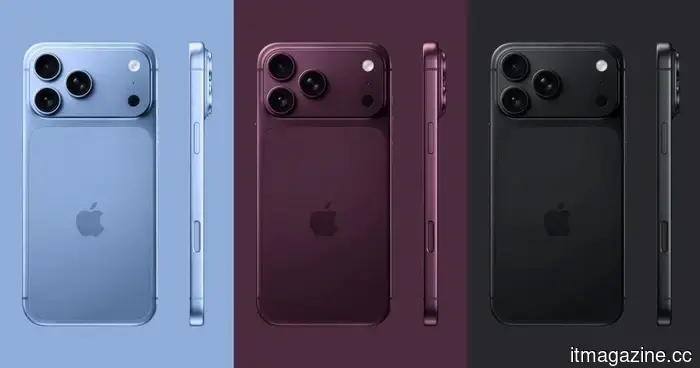 Similar to the MacBook Neo, Apple may deliver another pricing shock with the iPhone 18 Pro.
A leak regarding the pricing of the iPhone 18 Pro indicates that Apple might expand the distinction between the Pro and standard models, adopting a strategy akin to its MacBook Neo method.
Similar to the MacBook Neo, Apple may deliver another pricing shock with the iPhone 18 Pro.
A leak regarding the pricing of the iPhone 18 Pro indicates that Apple might expand the distinction between the Pro and standard models, adopting a strategy akin to its MacBook Neo method.
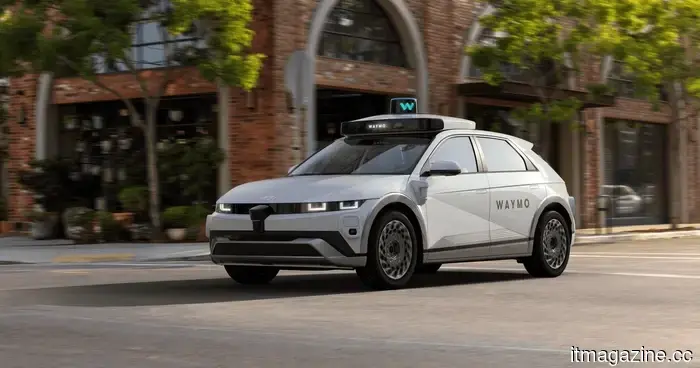 Self-driving cars in California will no longer escape penalties as new regulations take effect.
An incident in September 2025, in which San Bruno police were unable to issue a ticket to a Waymo for making an illegal U-turn, contributed to the establishment of California's comprehensive new regulations for autonomous vehicles.
Self-driving cars in California will no longer escape penalties as new regulations take effect.
An incident in September 2025, in which San Bruno police were unable to issue a ticket to a Waymo for making an illegal U-turn, contributed to the establishment of California's comprehensive new regulations for autonomous vehicles.
 Chinese courts have determined that using AI replacement as a reason for terminating employees is not legally valid, as global technology layoffs reach 78,000.
Two Chinese courts have determined that the implementation of AI is a business decision and does not constitute a valid reason for dismissal. In contrast, there is no comparable protection in the US and EU. This disparity is intentional.
Chinese courts have determined that using AI replacement as a reason for terminating employees is not legally valid, as global technology layoffs reach 78,000.
Two Chinese courts have determined that the implementation of AI is a business decision and does not constitute a valid reason for dismissal. In contrast, there is no comparable protection in the US and EU. This disparity is intentional.
 Alphabet approaches Nvidia in the race to become the world's most valuable company following strong Q1 earnings in cloud, search, and AI.
Alphabet's market capitalization reached $4.6 trillion following a 22% increase in Q1 earnings. Google Cloud experienced a 63% growth. Meanwhile, Nvidia saw a decline of 6%. The difference is $200 billion and is decreasing.
Alphabet approaches Nvidia in the race to become the world's most valuable company following strong Q1 earnings in cloud, search, and AI.
Alphabet's market capitalization reached $4.6 trillion following a 22% increase in Q1 earnings. Google Cloud experienced a 63% growth. Meanwhile, Nvidia saw a decline of 6%. The difference is $200 billion and is decreasing.
 Alphabet approaches Nvidia in the race for the title of the world's most valuable company following strong Q1 earnings in cloud, search, and AI sectors.
Alphabet's market capitalization reached $4.6 trillion following a 22% increase in Q1 earnings. Google Cloud experienced a growth of 63%. Nvidia declined by 6%. The gap has narrowed to $200 billion.
Alphabet approaches Nvidia in the race for the title of the world's most valuable company following strong Q1 earnings in cloud, search, and AI sectors.
Alphabet's market capitalization reached $4.6 trillion following a 22% increase in Q1 earnings. Google Cloud experienced a growth of 63%. Nvidia declined by 6%. The gap has narrowed to $200 billion.
VW, Toyota, and Hyundai are placing their bets on Chinese technology partners as local brands dominate 70% of the market.
The early 2026 market share increases of foreign automakers in China are indicative of a lingering effect from subsidies, rather than a resurgence. The technology gap has shifted.