
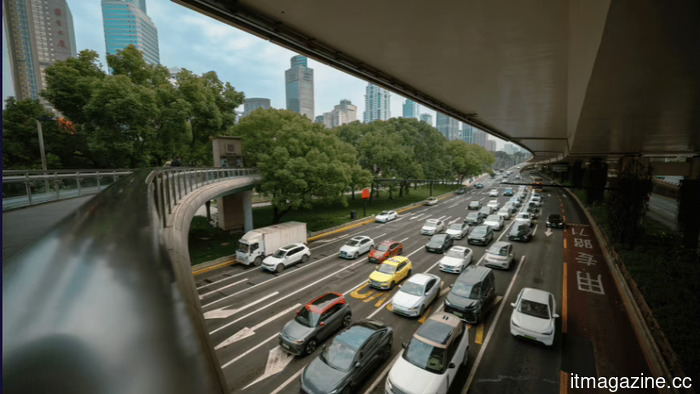
VW, Toyota, and Hyundai are relying on Chinese tech partners as local brands dominate 70% of the market.
**TL;DR** In early 2026, foreign automakers saw a brief increase in market share in China after the expiration of EV subsidies and a decline in domestic sales. However, the broader market dynamics remain unchanged: Chinese brands dominate almost 70% of the passenger vehicle market, NEV adoption is surpassing 54%, and foreign companies like Volkswagen and Hyundai are now collaborating with Chinese AI and autonomous driving firms because they struggle to develop competitive software quickly enough on their own.
In January and February 2026, Volkswagen regained its leading position in China's passenger vehicle market with a 13.9% share, just ahead of Geely, which had 13.8%. Toyota's joint ventures captured 7.8%, while BYD, which was the largest EV manufacturer in 2024 and most of 2025, fell to fourth with 7.1% after experiencing six months of declining sales, marking its steepest drop since the pandemic. While the numbers suggest a comeback for foreign brands, they are mainly a temporary effect of subsidy withdrawal.
Foreign automakers have lost around a third of their market share in China over the past five years. Domestic brands now account for nearly 70% of passenger vehicle sales, up from below 40% in 2020. New energy vehicles, which include battery electric and plug-in hybrid models, are anticipated to make up over 54% of car sales in China in 2026, with Chinese brands holding over 85% of the NEV market. Once sought-after brands like Volkswagen, Toyota, Honda, BMW, and Mercedes are now competing for a dwindling market share.
The consequences are significant. Skoda announced in March its exit from China by mid-2026 after its sales plummeted 95% from 341,000 vehicles in 2018 to 15,000 in 2025. Honda’s sales have decreased for five consecutive years, dropping 24% in 2025 to 650,000 units, with a further 16.5% decline in January 2026. Volkswagen has been reducing its EV production globally as demand in its home markets weakened, and in China, its two joint ventures sold 2.69 million vehicles in 2025, an 8% year-on-year decline.
At the 2026 Beijing Auto Show held in late April across 380,000 square meters with over 1,000 exhibitors, foreign brands presented their strategies for adaptation, predominantly focusing on collaboration with Chinese companies. Volkswagen introduced the ID.UNYX 09, an electric sedan developed with XPeng at VW’s new R&D facility in Hefei, aiming to launch over 20 EVs in China this year and expand to 50 by 2030 across its various brands. Hyundai debuted its all-electric IONIQ brand with the IONIQ V, which incorporates an autonomous driving system jointly developed with Chinese AI firm Momenta. Nissan integrated DeepSeek AI into its N7 electric sedan and announced five new energy vehicles to be launched within a year.
This trend indicates that foreign automakers are aligning with Chinese tech firms as they cannot keep pace with software development independently. Chinese domestic brands can update in-car software, autonomous driving capabilities, and AI assistants in a matter of months. Even Tesla, which reclaimed the top spot in global EV sales from BYD in Q1 2026, lacks functionality for its latest Full Self-Driving software in China. BYD's God’s Eye system has been implemented in 2.3 million vehicles, while XPeng’s VLA 2.0 has received Level 4 pilot operation permits in Guangzhou, highlighting that the technological advantage that once supported Western automakers has shifted.
Toyota stands as the only Japanese automaker to register growth in China in 2025, selling 1.78 million vehicles, a slight increase from the previous year, due to two pivotal strategies: a $15,000 EV tailored for the market and a hybrid lineup that benefited from the end of subsidies as hybrids are cheaper to manufacture and do not require purchase incentives to remain competitive. GM reported nearly 1.9 million vehicle deliveries in China in 2025, experiencing a 2.3% increase overall, with its NEV sales rising by 22.6%. Buick sales surged by 54%, and Cadillac’s LYRIQ saw an impressive 90% increase. However, analysts point out that a significant portion of GM’s volume stems from its SAIC-GM-Wuling joint venture, which markets ultra-low-cost mini EVs in a segment with minimal margins. GM’s branded vehicles account for roughly 2.1% of the passenger vehicle market, illustrating that the company is merely surviving rather than thriving.
Tesla’s dip in global sales has created openings for competitors, but in China, those openings are being filled primarily by local brands. BYD sold 4.54 million vehicles in 2025, all of which were NE
Altri articoli
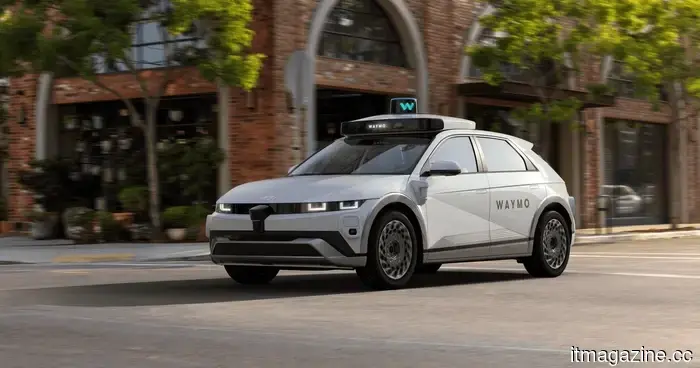 Le auto a guida autonoma non saranno più esenti da sanzioni in California poiché le penalità entreranno in vigore.
Un incidente di settembre 2025 in cui la polizia di San Bruno non è riuscita a multare un Waymo per una inversione a U illegale ha contribuito a innescare le nuove ampie normative sugli AV della California.
Le auto a guida autonoma non saranno più esenti da sanzioni in California poiché le penalità entreranno in vigore.
Un incidente di settembre 2025 in cui la polizia di San Bruno non è riuscita a multare un Waymo per una inversione a U illegale ha contribuito a innescare le nuove ampie normative sugli AV della California.
 Apple ha appena reso il Mac mini più costoso senza aumentare il suo prezzo.
Il Mac mini è diventato appena più difficile da acquistare con un budget dopo che Apple ha eliminato il suo modello da 599 dollari durante un peggioramento della crisi della memoria e dello storage.
Apple ha appena reso il Mac mini più costoso senza aumentare il suo prezzo.
Il Mac mini è diventato appena più difficile da acquistare con un budget dopo che Apple ha eliminato il suo modello da 599 dollari durante un peggioramento della crisi della memoria e dello storage.
-interface-dramatically-differ-from-QuickBooks-Online?.jpg) L'interfaccia di Intuit Enterprise Suite (IES) differisce notevolmente da QuickBooks Online?
Questo post è presentato in collaborazione retribuita con QuickBooks. L'interfaccia della Intuit Enterprise Suite (IES) non differisce in modo drammatico da QuickBooks Online. La navigazione principale, i flussi di lavoro e le funzioni contabili rimangono familiari. La principale differenza è la funzionalità aggiuntiva per gestire più entità, autorizzazioni degli utenti e reportistica consolidata. Ciò significa che la maggior parte degli utenti può adattarsi rapidamente mentre guadagna […]
L'interfaccia di Intuit Enterprise Suite (IES) differisce notevolmente da QuickBooks Online?
Questo post è presentato in collaborazione retribuita con QuickBooks. L'interfaccia della Intuit Enterprise Suite (IES) non differisce in modo drammatico da QuickBooks Online. La navigazione principale, i flussi di lavoro e le funzioni contabili rimangono familiari. La principale differenza è la funzionalità aggiuntiva per gestire più entità, autorizzazioni degli utenti e reportistica consolidata. Ciò significa che la maggior parte degli utenti può adattarsi rapidamente mentre guadagna […]
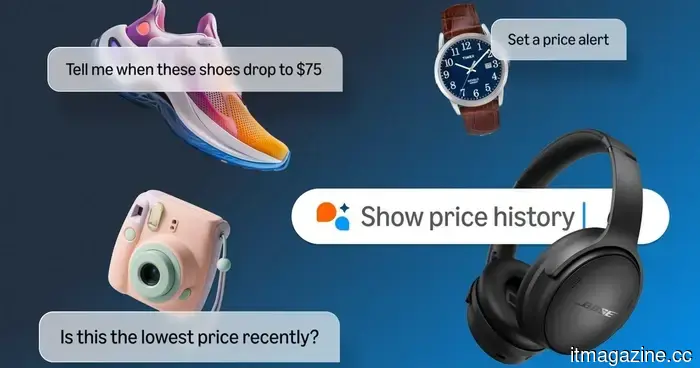 Ora puoi controllare la cronologia dei prezzi di un prodotto che copre un intero anno su Amazon.
Il Rufus di Amazon ora mostra un anno intero di cronologia dei prezzi su qualsiasi prodotto, gratuito per tutti i clienti, senza necessità di abbonamento Prime, così puoi finalmente capire se un “tempo limitato” è genuino o meno.
Ora puoi controllare la cronologia dei prezzi di un prodotto che copre un intero anno su Amazon.
Il Rufus di Amazon ora mostra un anno intero di cronologia dei prezzi su qualsiasi prodotto, gratuito per tutti i clienti, senza necessità di abbonamento Prime, così puoi finalmente capire se un “tempo limitato” è genuino o meno.
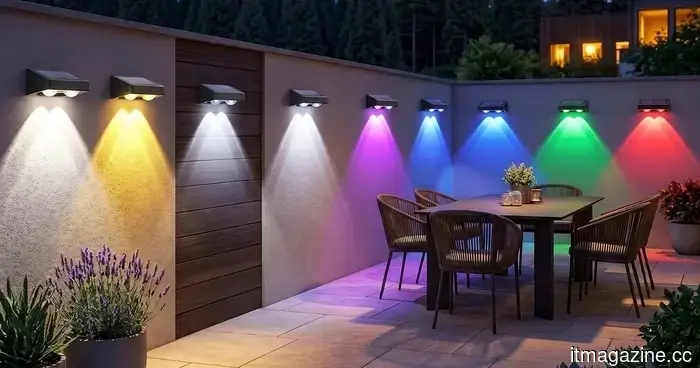 Queste luci solari per recinzione offrono 11 modalità e 9 colori a $2,50 per luce, e la classificazione IP65 significa che possono rimanere all'aperto tutto l'anno.
Questo post è presentato in collaborazione retribuita con ESUNYD. L'illuminazione da esterno che non richiede cablaggio, funziona interamente a energia solare e costa $2,50 per luce è un aggiornamento semplice per qualsiasi terrazza, recinzione o patio. Il pacchetto da 16 luci da recinzione solari ESUNYD lo dimostra chiaramente a $39,99. Questo rappresenta un risparmio di $10 rispetto al […]
Queste luci solari per recinzione offrono 11 modalità e 9 colori a $2,50 per luce, e la classificazione IP65 significa che possono rimanere all'aperto tutto l'anno.
Questo post è presentato in collaborazione retribuita con ESUNYD. L'illuminazione da esterno che non richiede cablaggio, funziona interamente a energia solare e costa $2,50 per luce è un aggiornamento semplice per qualsiasi terrazza, recinzione o patio. Il pacchetto da 16 luci da recinzione solari ESUNYD lo dimostra chiaramente a $39,99. Questo rappresenta un risparmio di $10 rispetto al […]
 I tribunali cinesi stabiliscono che la sostituzione con l'IA non è un motivo legale per licenziare i lavoratori mentre i licenziamenti tecnologici globali raggiungono quota 78.000.
Due tribunali cinesi hanno stabilito che l'adozione dell'IA è una scelta aziendale, non un motivo di licenziamento. Gli Stati Uniti e l'UE non hanno una protezione equivalente. Il divario è deliberato.
I tribunali cinesi stabiliscono che la sostituzione con l'IA non è un motivo legale per licenziare i lavoratori mentre i licenziamenti tecnologici globali raggiungono quota 78.000.
Due tribunali cinesi hanno stabilito che l'adozione dell'IA è una scelta aziendale, non un motivo di licenziamento. Gli Stati Uniti e l'UE non hanno una protezione equivalente. Il divario è deliberato.
VW, Toyota, and Hyundai are relying on Chinese tech partners as local brands dominate 70% of the market.
The early 2026 market share increases for foreign automakers in China indicate a lingering effect of subsidies rather than a resurgence. The technology disparity has shifted.