
Alphabet approaches Nvidia in the race for the title of the world's most valuable company following strong Q1 earnings in cloud, search, and AI sectors.
TL;DR: Alphabet's market cap surpassed $4.6 trillion following a 10% increase in stock price after Q1 2026 earnings exceeded expectations across all divisions. Google Cloud grew 63%, crossing $20 billion in revenue, and search queries reached an all-time high. The gap with Nvidia, which saw a 6% drop amid reports of OpenAI missing growth targets, has narrowed to about $200 billion, with options traders predicting a 53% chance that Alphabet will surpass Nvidia as the world's most valuable company before mid-May.
On Thursday, Alphabet's shares rose nearly 10% after the company announced Q1 revenue of $109.9 billion, a 22% increase year-over-year that surpassed analyst estimates by nearly $3 billion. Google Cloud achieved over $20 billion in quarterly revenue for the first time, showcasing a 63% growth. The cloud backlog almost doubled quarter-over-quarter to more than $460 billion. Earnings per share jumped 81%, and search queries peaked at an all-time high. The stock closed at $381.94, resulting in Alphabet's market capitalization exceeding $4.6 trillion. In contrast, Nvidia's stock closed at $198.61, down more than 6% over the previous two sessions, after reports emerged that OpenAI fell short of its targets for active users and monthly revenue.
The gap between the two companies is now approximately $200 billion. Options traders estimate a 53% probability that Alphabet will reach a $5 trillion valuation by May 15. If that occurs, and Nvidia does not see a rebound before its earnings report on May 20, Alphabet could reclaim its title as the most valuable company in the world, a position it last held in February 2016 when it briefly surpassed Apple.
The earnings report showed numbers that were not only large but also significantly different from the previous year's figures. Google Cloud's growth rate of 63% accelerated from 48% in the previous quarter, making it the fastest-growing division among the top three cloud platforms. AWS grew by 17%, while Microsoft Azure grew by 33%. Although Google holds the third position in market share, it is growing at nearly double Azure's rate and almost quadruple AWS's. Sundar Pichai mentioned on the earnings call that the company faced compute constraints in the short term, indicating that cloud revenue could have been even higher if capacity had matched demand. Revenue from products based on generative AI models saw an increase of nearly 800% year-over-year. YouTube advertising reached $9.9 billion, rising 11%, and Alphabet boasts 350 million paid subscriptions across YouTube Premium, YouTube Music, and Google One.
The capital expenditure guidance complements the story. Alphabet raised its full-year 2026 capex forecast to between $180 billion and $190 billion, up from the previously projected range of $175 billion to $185 billion. The combined capital expenditure commitment across the five major hyperscalers is on track to exceed $650 billion, a sum greater than the GDP of many European nations. Alphabet is investing significantly because Google Cloud’s growth rate indicates that returns on AI infrastructure investments are materializing more quickly than the market anticipated. The $460 billion backlog does not represent revenue but rather a pipeline of contracted demand that will translate into revenue over several years, confirming that Alphabet's cloud business is not speculative, as customers have already made commitments.
Nvidia’s recent challenges are not due to its fundamentals. The company reported $68.1 billion in revenue for its latest quarter, with data center revenue increasing by 75%. Its anticipated earnings report on May 20 is expected to reveal around $78 billion in revenue, a 78% increase year-over-year. Nvidia remains the leading supplier of GPUs that drive all major AI training and inference workloads globally. However, this week saw a shift in the narrative surrounding Nvidia’s largest clients. OpenAI's $852 billion valuation has been questioned since its growth metrics leveled off, and reports of internal revenue and user target misses negatively impacted Nvidia as the market perceived this as an indication that the demand for AI chips may not be limitless. Competitors AMD, Arm, and Broadcom also saw declines, reflecting a broader sell-off in the semiconductor sector due to doubts about the rapid growth of the largest AI chip consumer.
The divergence between Alphabet and Nvidia raises deeper questions about where value resides in the AI economy. Nvidia provides the AI infrastructure, while Alphabet utilizes that infrastructure to create applications and sell the resulting products. Google Cloud’s $20 billion quarter was driven by the sale of AI services to enterprises, and Google Search's record query volume was fueled by AI Overviews, enhancing user experience. YouTube’s ad revenue benefits from AI-based recommendations and content moderation. Alphabet is not merely acquiring AI chips; it is transforming them into revenue across three separate business lines, each generating more quarterly revenue than the annual output of many tech companies.
The market is starting to differentiate between firms
Other articles
 Oura unveils new hormonal health features that include tracking for birth control and menopause.
Oura unveils new features for hormonal health, which encompass tracking birth control and providing insights on menopause, with the goal of linking biometric data to real-life physiological changes.
Oura unveils new hormonal health features that include tracking for birth control and menopause.
Oura unveils new features for hormonal health, which encompass tracking birth control and providing insights on menopause, with the goal of linking biometric data to real-life physiological changes.
 VW, Toyota, and Hyundai are relying on Chinese tech partners as local brands dominate 70% of the market.
The early 2026 market share increases for foreign automakers in China indicate a lingering effect of subsidies rather than a resurgence. The technology disparity has shifted.
VW, Toyota, and Hyundai are relying on Chinese tech partners as local brands dominate 70% of the market.
The early 2026 market share increases for foreign automakers in China indicate a lingering effect of subsidies rather than a resurgence. The technology disparity has shifted.
 These solar fence lights come with 11 modes and 9 colors, priced at $2.50 each, and their IP65 rating ensures they can be left outside throughout the year.
This post is shared as part of a paid collaboration with ESUNYD. Their outdoor lighting, which doesn’t need any wiring, operates solely on solar energy and is priced at $2.50 per light, making it an easy enhancement for any deck, fence, or patio. The 16-pack of ESUNYD solar fence lights illustrates this well at a price of $39.99, offering a $10 discount off the […]
These solar fence lights come with 11 modes and 9 colors, priced at $2.50 each, and their IP65 rating ensures they can be left outside throughout the year.
This post is shared as part of a paid collaboration with ESUNYD. Their outdoor lighting, which doesn’t need any wiring, operates solely on solar energy and is priced at $2.50 per light, making it an easy enhancement for any deck, fence, or patio. The 16-pack of ESUNYD solar fence lights illustrates this well at a price of $39.99, offering a $10 discount off the […]
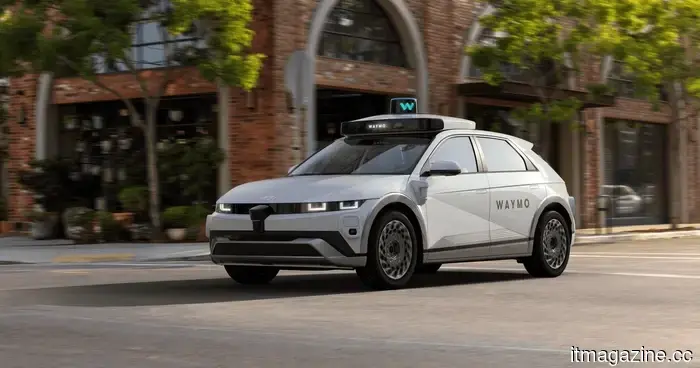 Self-driving cars in California will no longer escape penalties as new regulations take effect.
An incident in September 2025, in which San Bruno police were unable to issue a ticket to a Waymo for making an illegal U-turn, contributed to the establishment of California's comprehensive new regulations for autonomous vehicles.
Self-driving cars in California will no longer escape penalties as new regulations take effect.
An incident in September 2025, in which San Bruno police were unable to issue a ticket to a Waymo for making an illegal U-turn, contributed to the establishment of California's comprehensive new regulations for autonomous vehicles.
 Alphabet approaches Nvidia in the race to become the world's most valuable company following strong Q1 earnings in cloud, search, and AI.
Alphabet's market capitalization reached $4.6 trillion following a 22% increase in Q1 earnings. Google Cloud experienced a 63% growth. Meanwhile, Nvidia saw a decline of 6%. The difference is $200 billion and is decreasing.
Alphabet approaches Nvidia in the race to become the world's most valuable company following strong Q1 earnings in cloud, search, and AI.
Alphabet's market capitalization reached $4.6 trillion following a 22% increase in Q1 earnings. Google Cloud experienced a 63% growth. Meanwhile, Nvidia saw a decline of 6%. The difference is $200 billion and is decreasing.
 Chinese courts have determined that using AI replacement as a justification for terminating employees is not a valid legal reason, amid a global wave of tech layoffs totaling 78,000 positions.
Two courts in China determined that adopting AI is a business decision and does not warrant termination. There is no similar protection in the US and EU. This disparity is intentional.
Chinese courts have determined that using AI replacement as a justification for terminating employees is not a valid legal reason, amid a global wave of tech layoffs totaling 78,000 positions.
Two courts in China determined that adopting AI is a business decision and does not warrant termination. There is no similar protection in the US and EU. This disparity is intentional.
Alphabet approaches Nvidia in the race for the title of the world's most valuable company following strong Q1 earnings in cloud, search, and AI sectors.
Alphabet's market capitalization reached $4.6 trillion following a 22% increase in Q1 earnings. Google Cloud experienced a growth of 63%. Nvidia declined by 6%. The gap has narrowed to $200 billion.