

AI chip manufacturer Cerebras aims for an IPO of up to $4 billion, seeking a valuation of $40 billion.
Following a retreat influenced by CFIUS in 2024, the wafer-scale chip startup has returned with a deal with OpenAI and a more assertive stance against Nvidia. Eighteen months ago, Cerebras Systems appeared to be a cautionary example. The AI chip startup, based in Sunnyvale, had planned to file for an initial public offering in September 2024, only to have those ambitions halted by a national-security review regarding its largest customer. By October 2025, the application was withdrawn. The company, known for producing the largest commercial silicon chip globally, had not been defeated but rather silently removed from the competitive landscape. However, it has made a comeback with significantly greater ambitions.
On Friday, Bloomberg reported that Cerebras aims to raise up to $4 billion in its IPO, suggesting a valuation of approximately $40 billion, as indicated by sources familiar with the matter. This valuation is remarkable, nearly five times the $8.1 billion private-market valuation Cerebras had as recently as September 2025, and considerably above the $22 billion to $25 billion range analysts had anticipated when the company refilled its S-1 with the US Securities and Exchange Commission on April 17.
Cerebras plans to list on the Nasdaq Global Select Market under the ticker CBRS, with Morgan Stanley, Citigroup, Barclays, and UBS Investment Bank serving as joint book-running managers. If the pricing holds, it would mark the first major AI hardware listing of 2026 and one of the largest technology debuts in the US in recent memory.
A significant portion of the renewed interest can be attributed to a single contract. In its updated prospectus, Cerebras revealed a multi-year compute agreement with OpenAI valued at over $10 billion throughout its duration, covering up to 750 megawatts of inference capacity until 2028.
For a company that generated $510 million in revenue in 2025, a 76% increase from the previous year, this deal is transformative. It also partially accounts for the surge in valuation: Cerebras now possesses a key anchor customer that investors highly value in the AI infrastructure sector. While the OpenAI agreement does not replace Nvidia, which continues to dominate the GPU supply for most industry training workloads, it does provide Cerebras with a solid position in inference, where computing functions are executed rather than developed, and where margin pressures are most significant.
Cerebras's wafer-scale processors, which are physically numerous times larger than an Nvidia H100, are specifically designed for that workload. The company’s initial IPO attempt failed not due to technological issues but due to geopolitical concerns. Abu Dhabi-based G42, an AI conglomerate with past connections to Chinese partners, had become the largest customer and a significant shareholder, accounting for 87% of Cerebras's revenue in the first half of 2024.
The Committee on Foreign Investment in the United States initiated a review of G42’s stake, prompting Cerebras to suspend its filing. CNBC reported that CFIUS approval was ultimately granted on March 31, 2025, after G42 divested its Chinese investments and agreed to restructure its Cerebras holding into non-voting shares. The S-1 reflects this hard-won outcome, maintaining G42’s economic stake while limiting its governance influence. Whether this will assuage public-market investors' concerns about foreign exposure in US chip companies remains an open question, and the risk factors section of the prospectus addresses this in detail.
Between its first IPO attempt and the re-filing, Cerebras engaged in typical activity for well-financed growth companies during stalled public market conditions: it raised more funds privately. A $1.1 billion Series G in September 2025 valued the company at $8.1 billion. A subsequent $1 billion Series H in February 2026 raised that valuation to $23 billion, nearly tripling in five months. If the proposed $40 billion IPO valuation is achieved, it would represent another 74% increase in about three months.
Investors will consider this upward trend against the company's underlying performance. A revenue of $510 million is strong for a hardware entity at this point, and the OpenAI commitment offers visibility that few competitors can match. However, Cerebras remains heavily reliant on a concentrated customer base and a singular architectural strategy. The unique wafer-scale design that sets it apart from Nvidia also complicates mass production, and most analyst interpretations of the prospectus indicate that it has not yet achieved the gross-margin profile necessary for a company that has resolved this issue.
Cerebras is entering a market that has been more cautious than headline news implies. Several large AI-adjacent IPOs in late 2025 were priced below their expected ranges, and bankers have privately cautioned that public investors are no longer keen to pay private-market multiples for unprofitable infrastructure ventures. A $4 billion fundraising at a $40 billion valuation would directly test this theory.
There is
Other articles
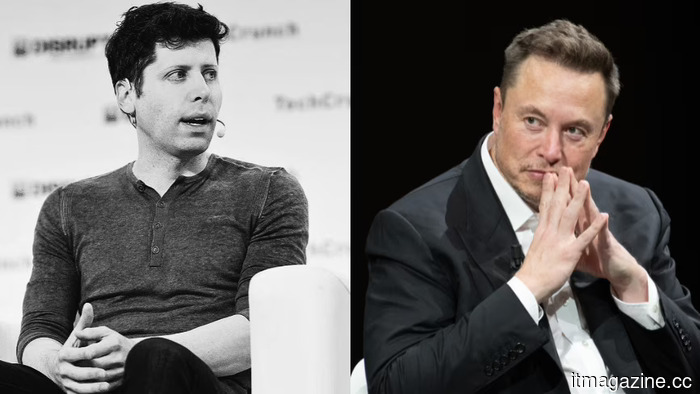 Musk’s lawsuit against OpenAI is situated around its initial week.
La demanda de Elon Musk por 130 mil millones de dólares contra OpenAI enfrentó varios obstáculos en su primera semana, incluyendo su reconocimiento de que xAI se entrena con los modelos de OpenAI.
Musk’s lawsuit against OpenAI is situated around its initial week.
La demanda de Elon Musk por 130 mil millones de dólares contra OpenAI enfrentó varios obstáculos en su primera semana, incluyendo su reconocimiento de que xAI se entrena con los modelos de OpenAI.
 GameStop is getting ready to make an offer on eBay as Cohen aims for a $100 billion valuation.
GameStop is getting ready to make a proposal for eBay. CEO Ryan Cohen is discreetly acquiring shares in the $46 billion marketplace as he aims for a company valuation of $100 billion.
GameStop is getting ready to make an offer on eBay as Cohen aims for a $100 billion valuation.
GameStop is getting ready to make a proposal for eBay. CEO Ryan Cohen is discreetly acquiring shares in the $46 billion marketplace as he aims for a company valuation of $100 billion.
 AI chip manufacturer Cerebras aims for an initial public offering (IPO) of up to $4 billion, with a valuation of $40 billion.
Cerebras aims to raise as much as $4 billion at a valuation of $40 billion in its Nasdaq IPO, supported by a $10 billion computing agreement with OpenAI and approval from CFIUS.
AI chip manufacturer Cerebras aims for an initial public offering (IPO) of up to $4 billion, with a valuation of $40 billion.
Cerebras aims to raise as much as $4 billion at a valuation of $40 billion in its Nasdaq IPO, supported by a $10 billion computing agreement with OpenAI and approval from CFIUS.
 Oracle's stock drops 50% even with a buy consensus from Wall Street, as concerns about concentration arise from a $300B deal with OpenAI.
Out of 51 analysts, 41 recommend Oracle as a buy. The stock has decreased by 50%. This difference represents a $300 billion wager on OpenAI's potential to increase its revenue tenfold.
Oracle's stock drops 50% even with a buy consensus from Wall Street, as concerns about concentration arise from a $300B deal with OpenAI.
Out of 51 analysts, 41 recommend Oracle as a buy. The stock has decreased by 50%. This difference represents a $300 billion wager on OpenAI's potential to increase its revenue tenfold.
 Why a Canadian bank is attempting to forecast earthquakes using quantum computers.
BMO has submitted a provisional patent for a quantum algorithm designed to predict earthquakes and employs AI to deploy mobile branches in areas affected by wildfires.
Why a Canadian bank is attempting to forecast earthquakes using quantum computers.
BMO has submitted a provisional patent for a quantum algorithm designed to predict earthquakes and employs AI to deploy mobile branches in areas affected by wildfires.
 Oracle's stock has dropped by 50% even though there is a buy consensus on Wall Street, as concerns about concentration have been heightened by a $300 billion deal with OpenAI.
Out of 51 analysts, 41 have given Oracle a buy rating. The stock has decreased by 50%. The difference represents a $300 billion wager on OpenAI's ability to increase its revenue tenfold.
Oracle's stock has dropped by 50% even though there is a buy consensus on Wall Street, as concerns about concentration have been heightened by a $300 billion deal with OpenAI.
Out of 51 analysts, 41 have given Oracle a buy rating. The stock has decreased by 50%. The difference represents a $300 billion wager on OpenAI's ability to increase its revenue tenfold.
AI chip manufacturer Cerebras aims for an IPO of up to $4 billion, seeking a valuation of $40 billion.
Cerebras aims to raise up to $4 billion in its Nasdaq IPO, which is valued at $40 billion, supported by a $10 billion computing agreement with OpenAI and clearance from CFIUS.